
Burglary of Unoccupied Dwelling in Florida: A Guide
Jason Goldsmith, Esq
In Florida, burglary of an unoccupied dwelling is still charged under the dwelling-burglary statute and is typically a second-degree felony, but it escalates to a first-degree felony punishable by up to life if the State proves a weapon, an assault or battery, a motor vehicle used in the offense, or more than $1,000 in damage.
A late-night knock comes first. Then the call from Broward County Main Jail or Turner Guilford Knight, and the shock of seeing a charging document that says burglary of a dwelling, even though nobody was home. Families often assume an empty house means a minor property case. Florida law doesn't treat it that way.
The label unoccupied dwelling describes the facts, not a separate Florida offense. The State still relies on section 810.02, and the difference between a second-degree and first-degree filing can turn on one disputed detail, such as a weapon, a vehicle, an assault, or the claimed amount of property damage.
This guide gives you a working roadmap. It addresses the elements prosecutors must prove, the penalty gap, the facts that raise the charge, defenses that can expose weaknesses, the path from arrest to arraignment, and the sober choice between negotiating and going to trial.
Table of Contents
Why This Charge Lands in Your Search
Florida's burglary statute separates dwellings, structures, and conveyances. That classification matters immediately. An empty house isn't treated like an empty warehouse or an empty car, because Florida keeps burglary of a dwelling in the dwelling-burglary category even when no occupant was present.
That distinction is one reason families in Fort Lauderdale, Broward County, Miami-Dade, Palm Beach, and surrounding South Florida communities search for answers as soon as an arrest happens. The arrest report may use casual language such as “break-in,” but the formal charge controls the legal exposure. A prosecutor may focus on the property type, the alleged intent, and any facts that support a higher subsection.
National data help explain why residential burglary allegations receive serious attention. FBI reporting for 2019 stated that residential properties accounted for 62.8% of all burglary offenses, as summarized in this Florida burglary overview for unoccupied dwellings. The same source summarizes federal research reporting that 72% of burglaries occurred when nobody was home, while a DOJ-based summary reported that 0.82% of households experienced burglary in 2019, the lowest level since 1993. Those figures don't decide an individual case, but they show why an empty residence remains a common and serious burglary setting.
Practical rule: Don't evaluate the case from the word “unoccupied” alone. Identify the exact property, the alleged entry, the claimed intent, and every fact the State says raises the degree.
A defense review should answer five questions quickly:
What was entered? A home, an attached area, another structure, or a vehicle?
What did the State say was intended? Theft, assault, battery, or another offense?
What aggravating fact is alleged? A weapon, violence, a vehicle, or damage?
What evidence identifies the accused? Video, fingerprints, DNA, statements, or witnesses?
What happened procedurally? Arrest, first appearance, charging, discovery, and arraignment?
Those answers shape the defense far more than the arrest headline.
How Florida Law Defines Burglary of a Dwelling
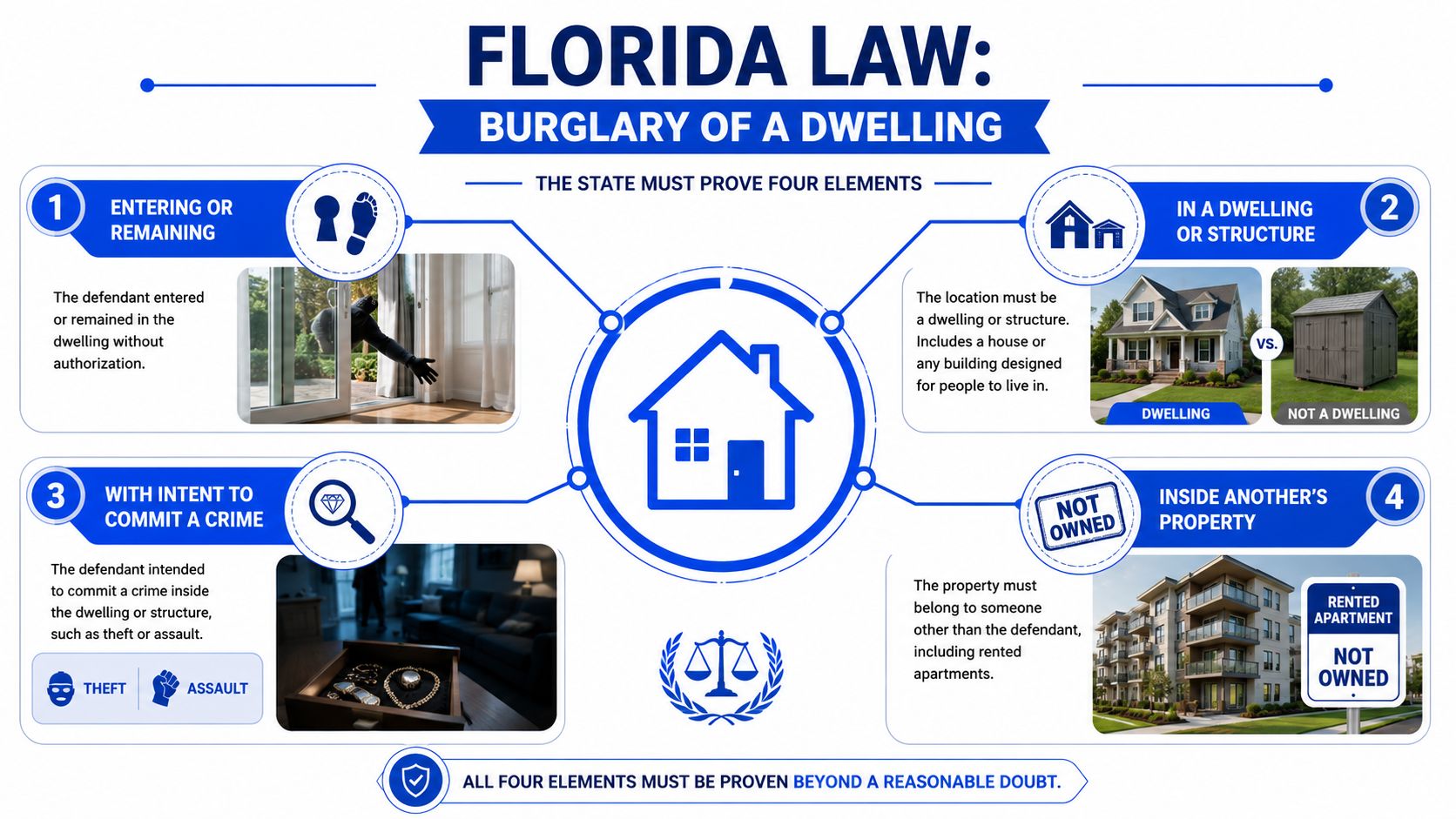
Section 810.02 starts with a broad definition. Florida burglary generally involves entering or remaining in a dwelling, structure, or conveyance with intent to commit an offense inside, unless the premises were open to the public or the person was licensed or invited to enter. The Florida criminal laws resource provides broader context for how these offenses fit within Florida's criminal statutes.
The entry or remaining requirement
The State must connect the accused to an entry or unlawful remaining. That can mean slipping through a patio door left ajar, climbing through a broken window, or reaching through an opening. Florida jury instructions emphasize that the entire body doesn't have to cross the boundary. A hand or another part of the body may be enough for entry, as reflected in this burglary defense explanation.
Remaining can create a different dispute. Someone may have entered lawfully and later stayed after permission ended, but the State still has to prove the legally required circumstances and criminal intent. A former guest, tenant, relative, or acquaintance may have a very different defense from a stranger captured outside a damaged window.
The property must qualify as a dwelling
The word dwelling carries more weight than “house” in ordinary conversation. Florida's jury-instruction materials recognize attached porches and attached garages as part of the dwelling category, which can make the exact location of the alleged entry decisive. A rented apartment or short-term rental can raise occupancy, permission, and property-status issues. A commercial space may instead qualify as a structure, which can change the degree.
The defense should inspect the boundary itself. An attached garage, patio, lanai, door, fence, or opening may determine whether the alleged conduct occurred in a dwelling or somewhere else.
Intent must exist when the entry occurred
The State must prove intent to commit an offense inside. That offense might be theft, assault, battery, or another felony or misdemeanor. Prosecutors rarely have a direct recording of a person's thoughts, so they build intent from circumstances such as gloves, a pry bar, stolen property, text messages, conduct before entry, or items found nearby.
Florida instructions also allow a jury to infer intent when entry was stealthy and without consent, as described in this Florida unoccupied-dwelling burglary discussion. An inference isn't automatic proof. The defense can challenge whether the entry was stealthy, whether the accused made the entry, and whether innocent explanations fit the evidence.
No occupant needs to be home for the State to allege dwelling burglary. But occupancy and separate aggravating facts can affect the subsection selected. A weapon, assault or battery, motor vehicle used to damage the dwelling, or more than $1,000 in damage can create first-degree exposure under the statute, according to the Florida Legislature's section 810.02 text.
Degrees and Penalties Under Florida Statute 810.02
A vacant home does not automatically mean a minor burglary charge. The unoccupied-versus-occupied distinction is the charging hinge, but one additional fact can change the exposure. A weapon, an assault or battery, a vehicle used to damage the dwelling, or qualifying damage can move the allegation from a second-degree felony to first degree, where the statutory maximum reaches life imprisonment.
Florida's statutory framework recognizes first-degree, second-degree, and third-degree burglary offenses. For an unoccupied dwelling, the State generally starts with the second-degree dwelling provision unless it can prove a listed aggravating fact. The statute preserves the relevant language from July 1, 2001.
The commonly cited second-degree maximums are up to 15 years in prison, a $10,000 fine, and five years of felony probation, as summarized in this Florida second-degree felony explanation. Those are maximum figures, not an automatic sentence. The actual outcome can depend on the scoresheet, prior record, offense details, and any applicable enhancement.
Florida Burglary of a Dwelling Penalty Comparison
Factor | Second-Degree Felony | First-Degree Felony |
|---|---|---|
Basic dwelling classification | Unoccupied dwelling burglary generally falls here without a listed aggravator | The dwelling allegation is moved to first degree when the State proves a statutory aggravating fact |
Occupancy | The home may be empty and still qualify as a dwelling | Occupancy can matter, but the listed aggravating facts control the immediate charging issue |
Weapon | No proven weapon aggravator | The State alleges the person was armed or became armed |
Assault or battery | No proven assault or battery aggravator | An assault or battery is alleged during the offense |
Vehicle or damage | No qualifying vehicle or damage aggravator proven | A motor vehicle is used to damage the dwelling, or damage exceeds $1,000 |
Maximum imprisonment | A lower statutory ceiling than first-degree burglary | Up to life imprisonment under the statutory framework |
The label in the arrest report does not prove the aggravator. A scratch on a door is not automatically worth more than $1,000. A parked car is not automatically a vehicle used to damage the dwelling. A tool is not automatically a dangerous weapon. The State must connect each fact to the statutory requirement.
That is where many cases weaken. Counsel should test photographs, repair estimates, video, witness statements, fingerprints, and the alleged weapon or tool. The charging document should identify the theory clearly enough to defend.
A qualifying prior record may create prison-releasee-reoffender exposure, but eligibility and application depend on the facts. Obtain the charging document, scoresheet, reports, photographs, video, and damage evidence before deciding whether the State's offer matches what it can prove.
Real-World Scenarios From South Florida Cases
The same South Florida allegation can look very different after the facts are separated. These examples are hypotheticals designed to show which detail controls the charging analysis.
An empty Fort Lauderdale home
A homeowner returns from vacation and finds a side window pried open. A laptop is missing, and no one was inside when the entry allegedly occurred. The State may pursue burglary of an unoccupied dwelling under the second-degree dwelling provision.
The defense should not stop at the empty-house fact. It should examine whether the accused can be placed at the window, whether the laptop is recovered, whether the video is usable, and whether the damage evidence supports any higher-degree theory. The hinge is not “property was taken.” It is whether the State can prove the required entry and intent, and whether any aggravator is supported.
An occupied Pembroke Pines home
A night-shift worker comes home and encounters an intruder upstairs. Occupancy becomes a central fact, and the State may rely on the occupied-dwelling provision or another aggravating theory depending on the evidence. The confrontation can also create separate questions about assault, battery, identification, and self-defense.
The key detail is the person's presence, but the defense must still test whether the witness saw the intruder clearly, whether lighting and stress affected identification, and whether the evidence proves the charged subsection.
A vehicle near a Hollywood residence
A man waits in a parked car while friends allegedly emerge from a house they had watched. Police stop him two blocks away. Prosecutors might argue that the motor vehicle was part of the offense and seek first-degree treatment.
That theory needs careful analysis. A car used merely to leave isn't automatically the same as a motor vehicle used to damage the dwelling. The State must prove the statutory connection it alleges, not rely on the word “getaway” as a substitute for evidence.
A borrowed drill in Hialeah
A tenant forgets to lock a back slider. A neighbor enters to retrieve a borrowed drill, believing the item is his or that he has permission to take it. Consent, license, ownership, and intent may reshape the entire case. The Florida stolen-property statute discussion is relevant if prosecutors also allege possession or transfer of property, but that charge has its own elements.
The small fact that flips this scenario is authorization. If the neighbor had permission, or perhaps lacked criminal intent, the burglary theory may fail even though entry occurred.
Defenses That Actually Move the Needle
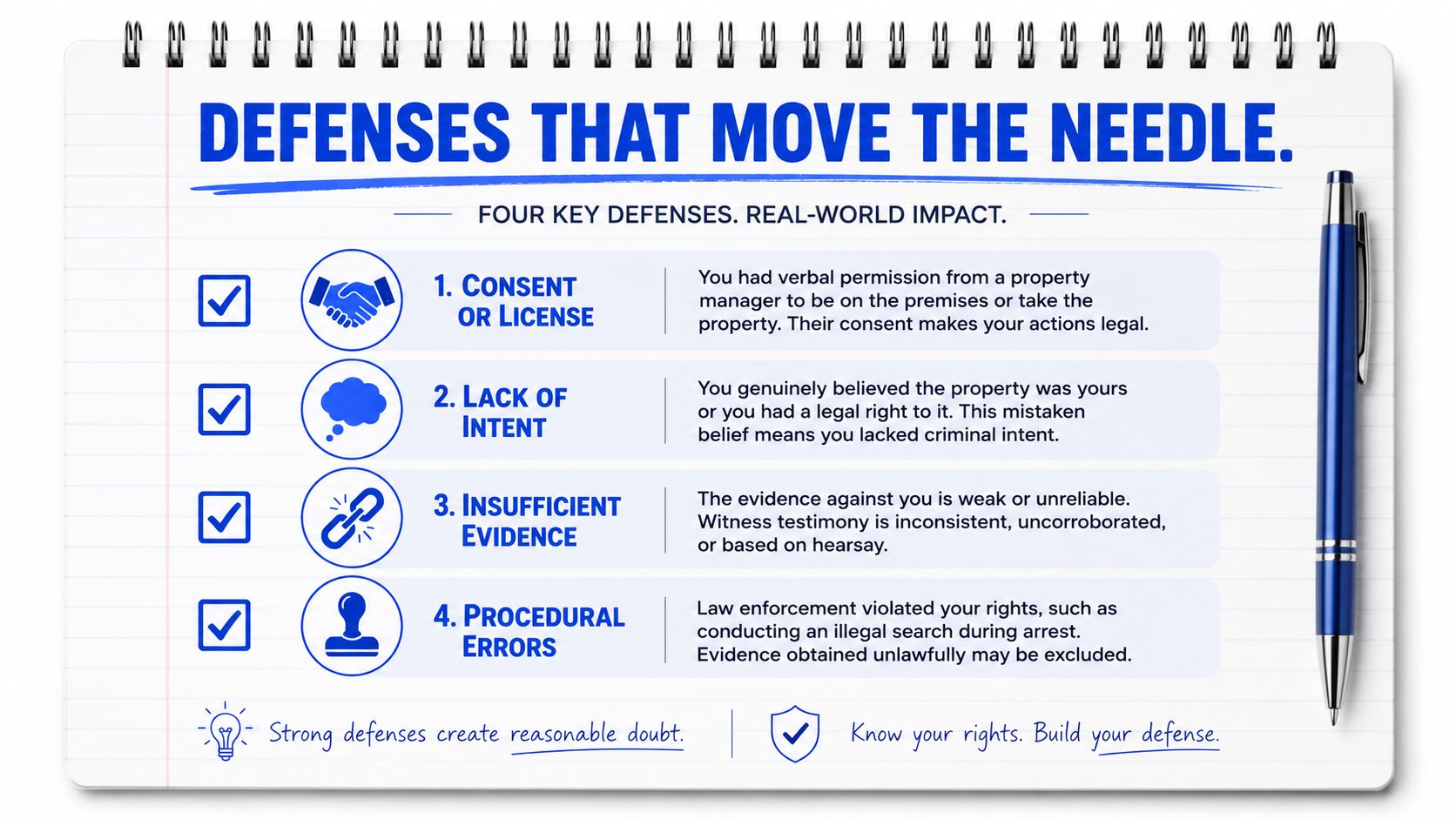
An empty home doesn't make the State's case easy, and it doesn't make the defense automatic. It removes one fact that often drives the most emotional part of a burglary allegation. The prosecutor still must prove the required elements and the applicable degree beyond a reasonable doubt.
Consent and license
Permission can come from an owner, tenant, property manager, family member, or other person with authority. A defendant may have been invited, may have believed permission existed, or may have lived at the location. Text messages, access codes, keys, prior visits, lease records, and witness testimony can matter.
Consent isn't always the end of the analysis. If permission was withdrawn, the State may focus on unlawful remaining and intent formed afterward. The defense should establish when permission began, when it allegedly ended, who communicated that change, and what the accused intended at each point.
No criminal intent at entry
This is often the pressure point. Florida burglary requires intent to commit an offense inside, not merely an unpleasant reason for being present. A wrong address, medical emergency, child-custody exchange, attempt to retrieve personal property, or genuine ownership dispute can create reasonable doubt about intent.
The question that matters: What evidence proves what the accused intended at the exact moment of entry?
Later conduct can influence a jury, but it doesn't automatically prove the necessary mental state when the person crossed the boundary. A defense lawyer should separate what happened after entry from what the State can prove existed before or during entry.
Mistaken identity and unreliable proof
Masked surveillance, generic clothing, poor lighting, and suggestive show-up procedures can make identification vulnerable. Fingerprints or DNA may show contact with an object or location without proving when the contact occurred or why it happened. A proper defense investigation compares the video, witness descriptions, phone records, and physical evidence instead of treating one identification as conclusive.
The State's proof may also fail on the aggravating fact. A camera that doesn't show a weapon, a tool without reliable forensic connection, or a vehicle parked away from the home may weaken first-degree exposure. These details can support a charge reduction even when the State still pursues a burglary theory.
The Florida criminal-defense guide to common defenses offers broader background. In a real case, the defense should tailor the theory to the dwelling status, entry method, intent evidence, identification, and alleged aggravator.
What Happens Between Arrest and Arraignment
The first hours are practical, not theoretical. A South Florida defendant may be transported to Broward County Main Jail or Turner Guilford Knight, booked, photographed, fingerprinted, and held for court review.
Arrest and first appearance
At first appearance, a judge addresses release, bond, probable cause, and conditions. The provided process description places first appearance within 24 hours of arrest, but the exact outcome depends on the charge, prior record, probable cause allegations, and local court rules.
A judge may impose no-contact conditions, location restrictions, reporting requirements, or other release terms. Don't discuss the facts with detectives without counsel, and don't contact the alleged victim. A text meant to apologize can become evidence, and a request to “clear things up” can lock in a damaging statement.
Filing and discovery
The prosecutor may file an information after reviewing the arrest materials. Defense counsel should request and analyze:
Police reports: Compare the narrative with dispatch records and officer observations.
Surveillance video: Preserve original files, timestamps, camera angles, and missing footage.
911 audio: Check what the caller reported before officers arrived.
Forensic results: Review fingerprints, DNA, tool marks, and chain of custody.
Warrants and searches: Test whether officers had lawful authority and followed required procedures.
Damage documentation: Demand photographs, estimates, invoices, and proof supporting any claimed amount.
The guide to what happens after an arrest provides general procedural context, but burglary cases require a charge-specific review.
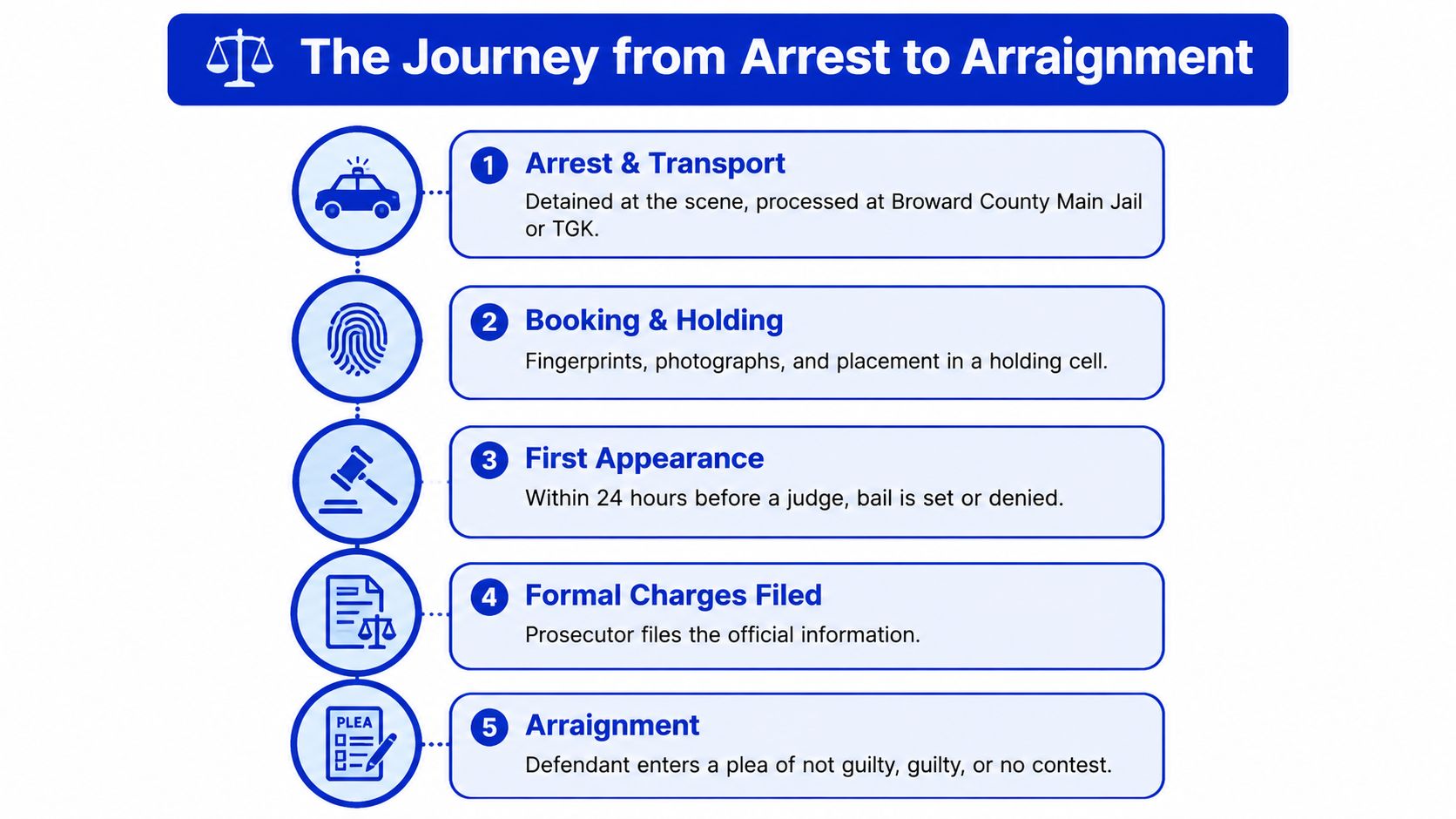
The arraignment is where the defendant enters a plea, commonly not guilty while counsel investigates. The weeks after arrest are used to preserve video, interview witnesses, inspect the property, challenge illegal searches, and calculate the actual sentencing exposure. The case isn't wasted time while waiting for court. It is the period when the defense builds strength.
Plea Options Versus Trial Strategy
A plea isn't automatically a failure, and trial isn't automatically courage. Each path carries a different risk profile, and the right decision depends on the proof, the degree, the client's record, immigration status, employment, and tolerance for uncertainty.
Plea agreement
A negotiated resolution may reduce the degree, remove an aggravator, limit incarceration, or seek probationary treatment where the facts and eligibility permit. A withhold, county-jail resolution, or reduced offense can have very different consequences from a prison sentence, but no lawyer should promise that any particular offer will be available.
The strongest negotiation usually starts with evidence, not emotion. Show the prosecutor why the dwelling classification is disputed, why intent is weak, why the identification is unreliable, or why damage and vehicle allegations don't meet the statute. Mitigation can include voluntary payment for verified damage, treatment completion where relevant, and a stable employment packet.
Diversion or alternative resolution
Pretrial diversion may exist in some circumstances, but eligibility varies by jurisdiction, charge, prior record, victim position, and prosecutor policy. A dwelling burglary allegation may receive more scrutiny than a lower-level property offense. Ask for the written conditions and understand what happens if the program is not completed.
Trial
Trial makes sense when the State can't prove entry, dwelling status, intent, identity, or an aggravating fact. It also carries uncertainty. A not-guilty verdict ends the charge, while a guilty verdict can expose the defendant to the full charged degree and additional consequences.
Factor | Plea Agreement | Trial Verdict |
|---|---|---|
Control | Negotiated terms provide more predictability | Jury decides disputed facts |
Degree | May reduce the charge if the State agrees | Charged degree remains in dispute |
Evidence | No trial testing if the case resolves early | Witnesses, video, searches, and forensic proof face examination |
Collateral issues | Counsel can assess immigration and licensing effects before acceptance | A conviction may produce consequences after verdict |
Risk | Requires giving up trial rights | Carries acquittal potential and conviction risk |
A new felony can also affect probation or create a violation-of-probation problem in an existing case. Immigration consequences and professional licensing issues require specialized advice before any plea. Do not accept a quick resolution until counsel reviews those consequences and the scoresheet.
Questions Families Ask After the Arrest
How much bond should we expect?
There is no reliable single bond figure for every Broward or Miami-Dade burglary case. Bond depends on the filed degree, probable cause, prior record, ties to the community, alleged violence, weapon allegations, and the judge's conditions.
A PFR hearing, meaning a pretrial release review, can change how release is evaluated. The court may impose no-contact terms, electronic monitoring, reporting, travel limits, or other conditions. Family members should obtain the booking number, court division, next hearing date, and exact charge before relying on an informal bond estimate.
Should the person take a quick plea if the facts look bad?
Not before reviewing immigration, licensing, prior-record, and probation consequences. A plea can resolve uncertainty, but a felony conviction or admission may create problems that aren't visible in the arrest report. Counsel should compare the charged degree, any reduced offer, scoresheet exposure, and the evidence supporting each element.
Should the family contact the alleged victim or detectives?
No. Don't pressure, threaten, bargain with, or repeatedly message the alleged victim. Don't ask the accused to explain the incident to detectives, and don't post about it online. Preserve potentially helpful material, including messages, location data, receipts, access records, and photographs, then give it to defense counsel without altering or deleting anything.
How long will the case take?
The timeline varies. Arraignment follows the initial court process, but movement afterward depends on discovery, forensic testing, video preservation, motions, witness availability, negotiations, and the court's calendar. A case may move quickly if the evidence is clear and the parties agree, or it may take substantially longer when the defense litigates identity, intent, search issues, or the degree of the offense.
The first family checklist is short:
Write down the timeline: Record where the accused was, who had permission, and what happened before the arrest.
Preserve evidence: Save messages, photos, videos, receipts, and location records.
Stop direct contact: Avoid the alleged victim, witnesses, detectives, and social-media discussion.
Get the paperwork: Obtain the booking information, bond conditions, and charging document.
Arrange a confidential consultation: Give counsel the complete story, including facts that feel embarrassing or unfavorable.
A Florida defense lawyer serving Fort Lauderdale, Broward County, Miami-Dade, Palm Beach, and nearby South Florida courts can then identify whether the case turns on dwelling status, intent, identity, consent, or an aggravating fact.
Ticket Shield, PLLC reviews burglary allegations, charging-degree issues, search and seizure concerns, and the evidence supporting intent in confidential consultations. Visit Ticket Shield, PLLC to discuss the arrest, protect your rights before making statements, and build a fact-specific defense plan for your Florida case.