
What Happens After Arrest in Florida
Jason Goldsmith, Esq
You just got the call no family wants to get at 2 AM. A spouse, parent, or sibling is in a Florida jail, nobody is giving straight answers, and the only thing you know for sure is that this can't be handled casually. The first mistake people make is treating arrest like the end of the story. It's not, it's the start of a fast-moving legal process where silence, speed, and smart decisions matter more than panic.
What happens after arrest in Florida is a series of forks in the road. The case may move through booking, first appearance, bond, release conditions, a DUI license suspension, and later charging decisions that can still change the outcome. The first 48 hours are where people accidentally hurt themselves by talking too much, signing too soon, or waiting for someone else to fix it. If you're trying to protect someone right now, focus on the next legal decision, not the headline of the arrest.
Table of Contents
The First 48 Hours After a Florida Arrest
At 2 AM, the phone rings and the deputy says your husband or son was arrested in Broward County. Nobody explains the next step in plain English. You're left trying to guess whether he's being released, booked, charged, or held until a judge sees him.
That confusion is normal, but it's also dangerous. The post-arrest phase moves quickly, and the Department of Justice says the initial hearing usually happens the same day or the day after arrest and charging in the federal system, where early decisions on detention, counsel, and next steps begin (DOJ initial hearing overview). In Florida, that early window matters just as much because the decisions made now can shape the whole case.
What happens first
The arrest itself is only the start. After that, law enforcement typically moves the person into booking, where identity is recorded, property is inventoried, and the jail checks for warrants and other custody issues. That process can be fast or slow depending on the county and the charge, but the family usually feels every minute of it.
Practical rule: don't assume silence from the jail means something went wrong. It usually means the paperwork and custody checks are still moving through the system.
Families also need to think about what happens outside the jail. A DUI case can trigger a license issue right away, and a domestic violence arrest can trigger a no-contact order before anyone has fully processed the arrest paperwork. If the car was towed or seized, read our separate guide on can police take your car so you don't lose time figuring out property issues while the criminal case is already moving.
What most people get wrong
The biggest mistakes happen in the first 48 hours. People call the station and start explaining. They text witnesses. They post online. They assume a quick release means the case is weak, or they wait until the first court date to get help.
That delay is costly. Even when the person is released, the case is still live, the record trail is still being built, and the prosecutor can still make charging decisions later. A calm, immediate response protects the right things, the timeline, the evidence, and the person's credibility.
Your Rights at the Scene and Common Mistakes
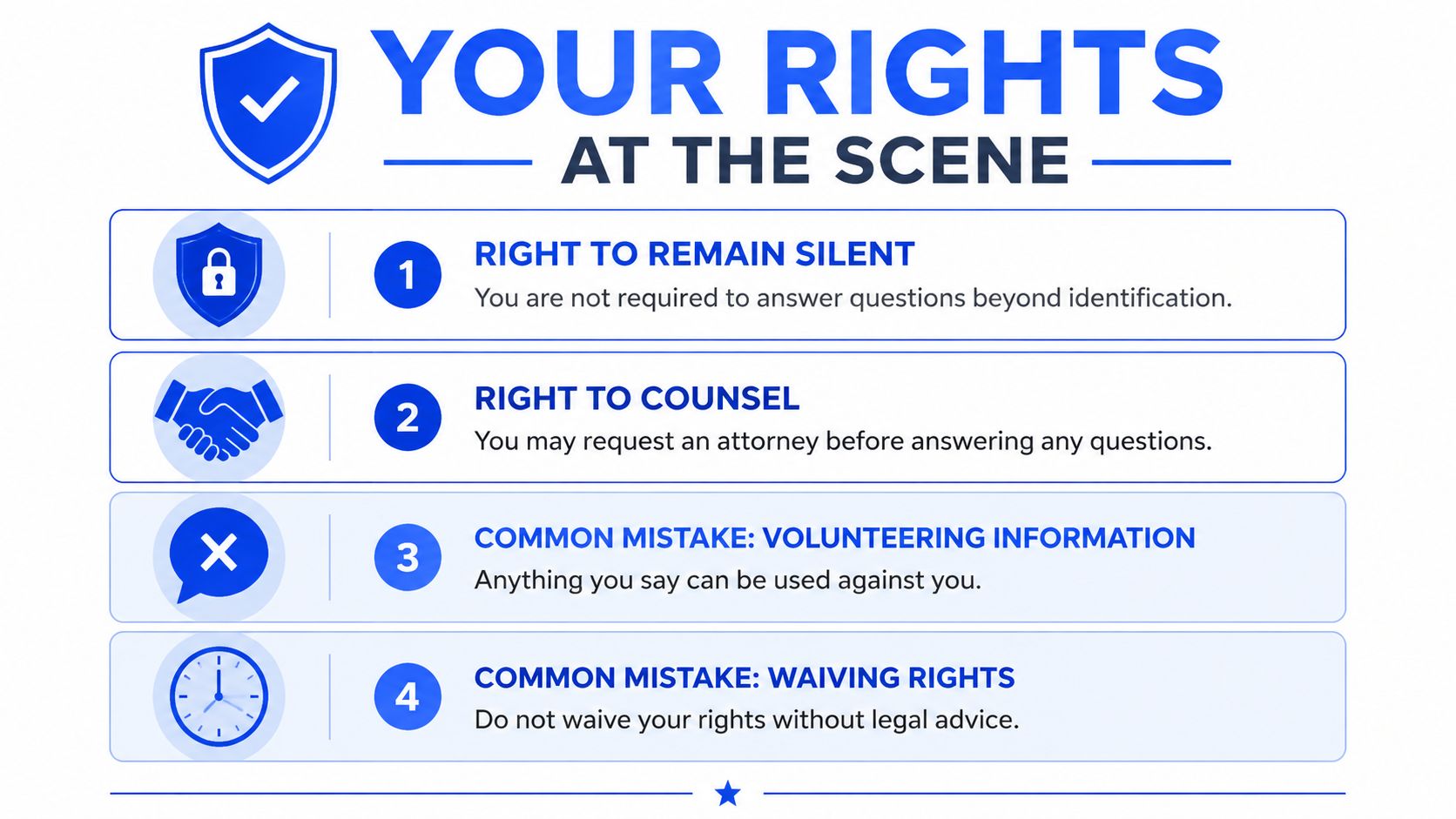
The moment of arrest is not the time to argue your case. It's the time to protect your rights and keep the state from building a stronger file with your own words. The two rights that matter most are simple, the right to remain silent and the right to counsel.
What to say and what not to say
Use a short script. Say, “I'm invoking my right to remain silent. I want a lawyer.” Then stop talking about the facts. You still need to give basic identifying information and comply with lawful commands, but you do not need to explain, justify, or “clear things up.”
Read our guide to what are Miranda rights if you want the cleanest explanation of when police must warn you and why that warning doesn't erase the damage from earlier voluntary statements. Miranda isn't magic protection. Statements made before warnings, or statements made after a voluntary waiver, can still be used.
Common mistakes that make cases worse
Don't hand officers a detailed story hoping they'll “understand.” They rarely treat it that way. What they usually hear is inconsistency, an admission, or a lead to more evidence.
Avoid these errors:
Volunteering facts: Anything beyond basic identification can be turned back against you.
Consenting to searches: Your phone, car, and social media can create separate evidence trails.
Talking in jail: Cellmates, recorded jail calls, and casual comments can all become evidence.
Waiving rights too fast: Don't sign or agree just because the process feels intimidating.
Your silence is not suspicious. It's strategic.
The clean rule is this, if an officer wants a statement, pause the conversation and ask for counsel. If the officer wants to search, don't help them build a case with your permission. The law gives you room to protect yourself, and smart defendants use that room immediately.
Booking and the First Court Appearance
Booking is mechanical, but it matters. The jail records the person's identity, takes fingerprints and photos, inventories property, checks for warrants, and places the person in a holding area until the next legal step. A typical booking process can take 1 to 4 hours according to a plain-language legal resource on post-arrest procedures (booking process overview), but busy facilities can take longer.
Why booking is more than paperwork
Every item booked into the system becomes part of the custody record. That record controls who can visit, whether the person can phone out, and when the jail can transfer the person to court. It also affects whether the jail treats the case as a quick release matter or as a hold-for-judge matter.
Florida's timing rules are tight. In Florida, a person who is arrested must be taken before a judicial officer within 24 hours of arrest, and if the person remains in custody, a nonadversary probable-cause determination must be made within 48 hours, with a possible 24-hour extension in extraordinary circumstances (Florida Bar Journal on first appearance). That deadline is why families should stop guessing and start tracking.
What happens at first appearance
At first appearance, the judge confirms the charge, looks at probable cause, and decides whether the person stays detained or gets released with conditions. If the court finds no probable cause, the immediate custody issue should end. If probable cause exists, the fight shifts to bond and release conditions.
Read more on arraignment meaning if you need to separate first appearance from the later arraignment date. People confuse those hearings constantly, and that confusion leads to missed chances to ask for better bond terms.
Bottom line: the first hearing is where the case starts to take shape. If the bond is too high, the conditions are too strict, or the charges are misstated, the damage begins right there.
An attorney who gets involved before first appearance can often raise release arguments immediately, even by phone if that's all the time allows. That hearing sets the tone for everything that follows.
Release Pathways and Bail Decisions
Not every arrest turns into jail time. Some people are released quickly, some post bail, some go into a supervised pretrial program, and some stay detained until a judge says otherwise. The key question is not “was there an arrest,” it's “which release pathway is this case on?”
The main options
Florida Release Pathways Compared | Typical Eligibility | Timeline to Release | Cost to Defendant/Family |
|---|---|---|---|
Cite and release | Lower-level cases, officer discretion, or minor matters | Very fast if used | Usually no jail bond cost |
Bail or bond | Cases where the court sets a monetary condition | After booking and payment | Cash, bond premium, or collateral depending on the situation |
Pretrial release | Defendants approved for supervised release without a full bond | After court approval | Often lower direct cost, but conditions can be strict |
Detention | Serious cases, high-risk cases, or cases where release is denied | No release until later court action | Highest personal and financial cost because the person stays in custody |
Florida's own pretrial release material shows how early release decisions are part of the initial case stage, not an afterthought (NY Courts pretrial release data). That point matters because charge type and court setting can change the release result fast.
What families should focus on
The smartest move is to build the release argument early. Bring proof of residence, employment, family ties, medical issues, and anything else that shows the person is not a flight risk. If a bail bond is involved, read the terms carefully before anyone signs, because the bond company controls more than most families realize.
A criminal defense lawyer can also push for lower conditions, supervised release, or release on recognizance when the facts support it. That's especially important in Broward County, Miami-Dade, and Palm Beach, where local practices can differ even on similar charges.
For a fuller explanation of supervised release, see what is pretrial release. The release label matters, but the issue is whether the person gets home and stays positioned to fight the case.
DUI Arrests and the Parallel License Suspension
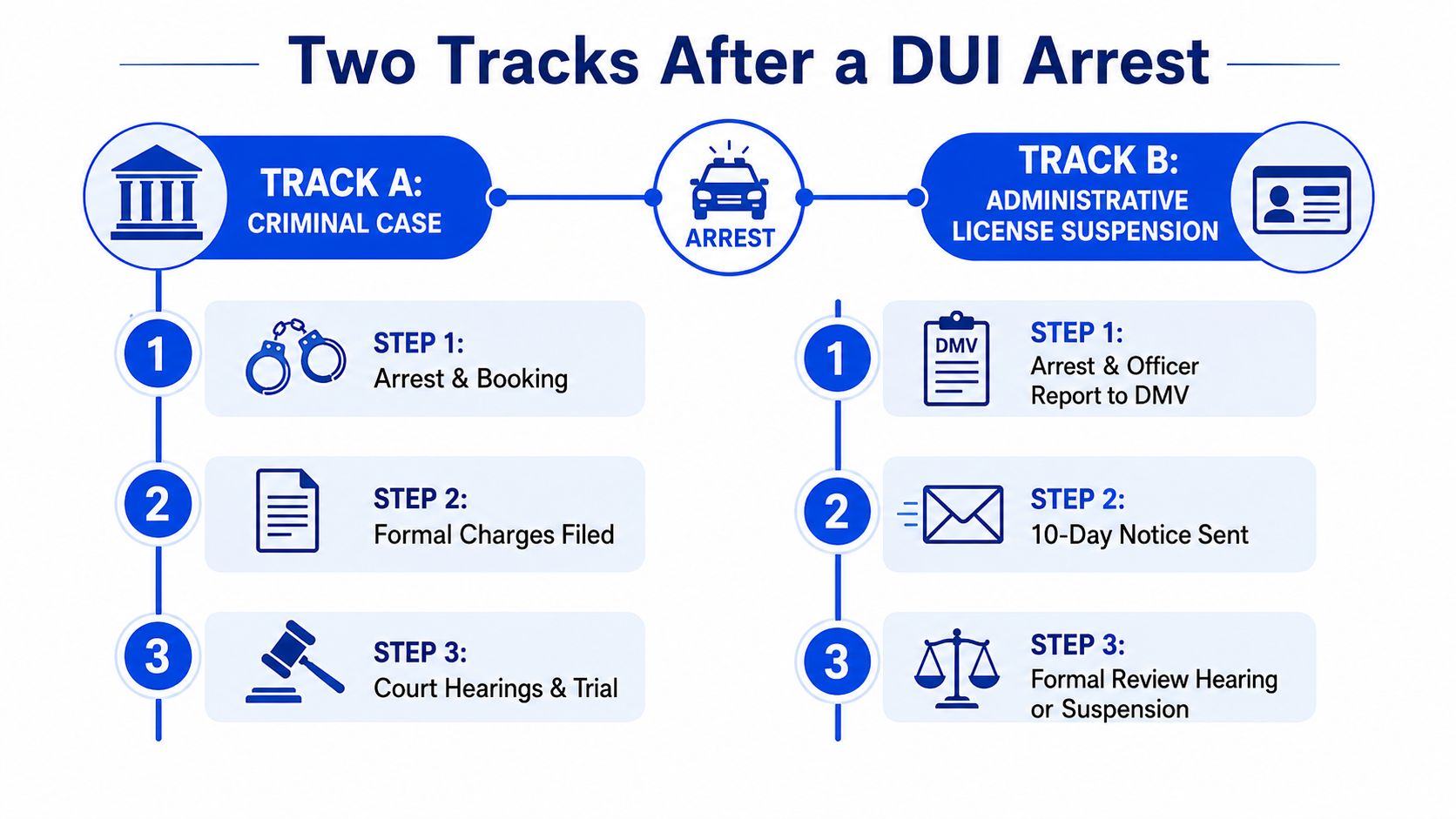
A Florida DUI arrest starts two legal tracks at once. One track is the criminal case in court. The other is the administrative license case with the Department of Highway Safety and Motor Vehicles, and too many people miss that second track until the suspension has already kicked in.
The deadline families miss
Florida DUI law gives the state immediate suspension power when a driver has a breath or blood alcohol level of 0.08 or higher, or refuses testing (Florida DUI administrative suspension law). Florida's driver-license agency also states that a driver over 21 with an alcohol level of 0.08 or above faces a six-month administrative suspension, while a driver under 21 with an alcohol level of 0.02 or above faces a one-year suspension (FLHSMV DUI administrative suspension laws).
That is the part people ignore at their peril. The criminal case can take months, but the license issue moves on its own clock. For a general overview of that process, read what is administrative license suspension.
Why the two tracks must be handled together
A defense lawyer has to protect both the courtroom case and the driving privilege case at the same time. The administrative hearing is not the criminal trial, and the hearing officer is not the judge who hears the DUI charge. If a driver does nothing, the suspension can take effect automatically.
Families should also understand that the hearing record can matter later. Statements made in the administrative process may become part of the broader defense picture, so careless language there can still cause problems in court.
If the arrest was for DUI, the license issue is not a side problem. It's part of the case from day one.
Florida's administrative rules draw a hard line between adults and under-21 drivers, and that difference can change immediate driving consequences in a serious way. A defense strategy that ignores the DMV side leaves the client exposed even if the criminal case later improves.
How Early Legal Representation Changes Outcomes
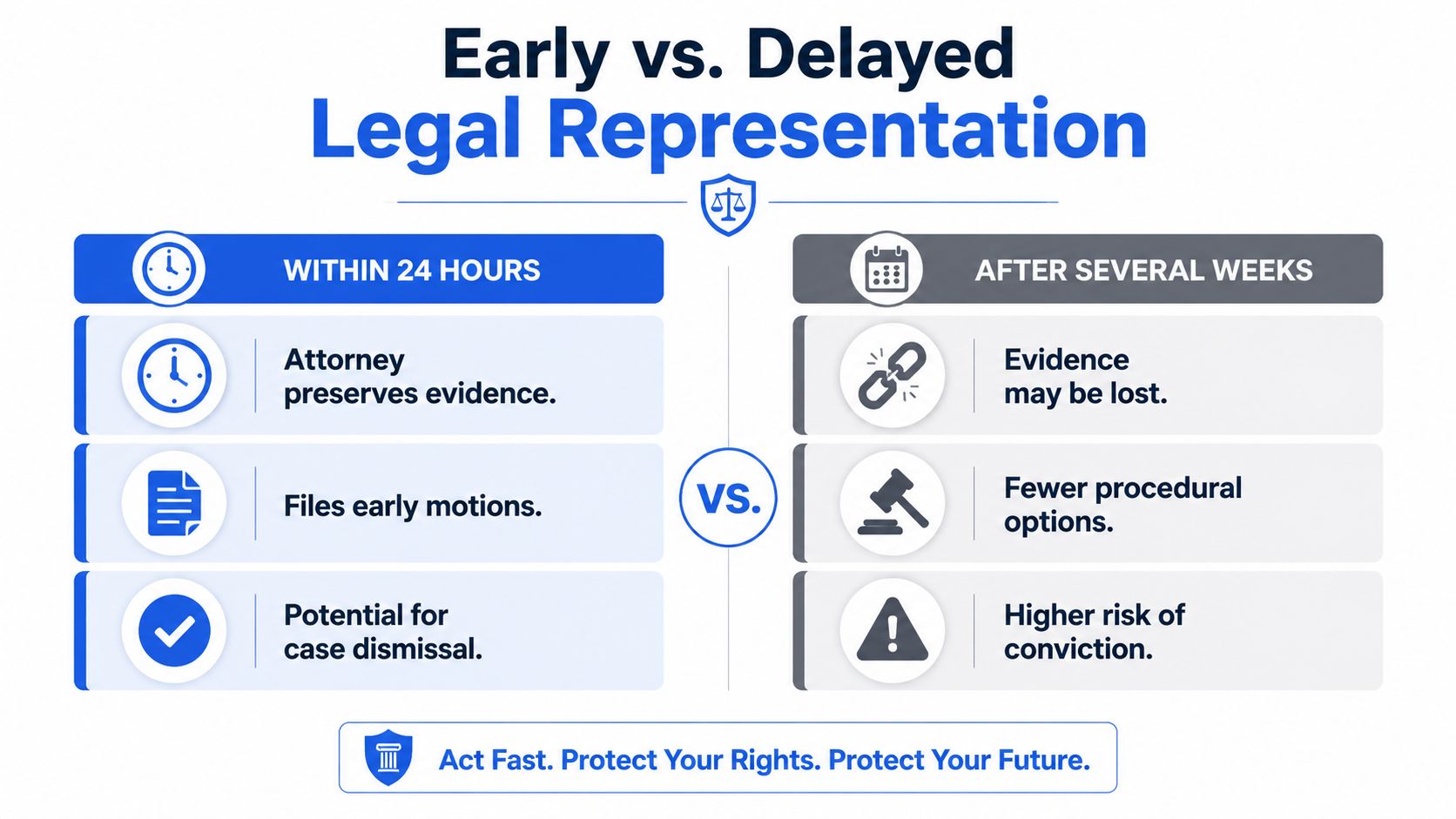
Counsel who contacts the jail within hours of arrest can stop a defendant from making voluntary statements that the State may later use in court. That early contact also gives the defense a chance to correct the booking record, address release conditions, preserve evidence, and protect the separate DUI license-suspension deadline.
What a defense lawyer does in the first 48 hours
A lawyer can take concrete steps immediately:
Protect silence rights: Tell the client to stop answering questions and avoid damaging statements.
Review paperwork: Check the charge, probable-cause information, bond, and approaching deadlines.
Push for release: Argue for lower bond or conditions that allow the client to return home.
Handle DUI timing issues: Act promptly on the administrative hearing request before the license deadline passes.
Preserve evidence: Seek video, texts, witness information, and timeline details before they disappear or become harder to obtain.
A former prosecutor examines the file with both sides in mind. The State looks for admissions, inconsistencies, and facts supporting the arrest. Defense counsel should test probable cause, identify missing evidence, examine procedure, and find weaknesses in the arrest report.
Ticket Shield, PLLC handles early responses in Florida criminal cases, including DUI, probation issues, weapons cases, theft, and other arrests where timing affects available choices. The first 48 hours contain separate decisions about statements, custody, evidence, and administrative penalties. Missing one can create a problem outside the criminal case itself.
Why waiting helps the state
Delay gives prosecutors time to organize reports, review statements, contact witnesses, and build a position before the defense has examined the record. Witness memories can change, records can become harder to obtain, and clients may post online or speak during a jail call without realizing those statements can be preserved and used.
The recommendation is straightforward. Contact counsel as soon as the arrest is confirmed, especially for a serious charge, and aim to have representation involved before the first court date. Early advice keeps the client from making avoidable admissions and lets counsel address both the criminal case and any separate deadline.
Watch this if you need a plain-language overview of the first stages after arrest:
Frequently Asked Questions About Post-Arrest Steps
How do I find someone who was just arrested in Florida
Start with the county jail roster or booking line for the county where the arrest happened. If the person was arrested in Broward, Fort Lauderdale, Miami-Dade, Palm Beach, or another South Florida county, the local jail record usually updates faster than court records.
Can they call me from booking
Sometimes, yes, but not always right away. The person may need to finish booking, property inventory, and custody checks before outgoing calls are allowed.
How long until the first court appearance
Florida requires a first appearance within 24 hours of arrest, with the probable-cause timeline tied to the 48-hour rule for someone who stays in custody (Florida Bar Journal on first appearance). That makes the first day especially important.
What should I bring to a bond hearing
Bring proof of address, employment information, family contact details, medical issues, and anything that supports release. If the case involves domestic violence, expect a no-contact order issue to come up quickly.
What if bail is denied
Then the case moves forward with the person still in custody until the court changes the release decision. That's when counsel should focus on reviewing the probable cause basis, the charge level, and any conditions that might support a later request for release.
What should families do right now
Contact a defense lawyer immediately: Time matters more than people think.
Save documents and screenshots: Preserve texts, photos, and call logs.
Avoid social media posts: Don't post about the arrest or the facts.
Gather character references: Helpful for release and bond arguments.
Track every deadline: Especially anything tied to DUI or court appearance notices.
If you need help now, contact Ticket Shield, PLLC for a confidential case evaluation. The first hours after arrest are where mistakes happen, and fast legal guidance can protect the case, the license, and the person's future.