What Is a Pretrial Conference in Florida Criminal Cases
Jason Goldsmith, Esq
You open the envelope, scan the court date, and feel your stomach drop. If you're dealing with a DUI, drug charge, domestic violence case, theft case, weapons charge, probation issue, or another criminal matter in South Florida, a pretrial conference can sound like another confusing stop in a process you never wanted to enter. It isn't a trial, but it is often one of the most important points in the case because it's where the court, the prosecutor, and your defense lawyer start deciding what happens next.
In Florida criminal court, this hearing is part of case management, not a formal determination of guilt. Federal rules describe the same concept as a tool to narrow issues, manage scheduling, and promote settlement in civil cases, and to promote a fair and expeditious trial in criminal cases Federal Rule 16. That basic structure matters in real life because it's often the point where a case gets positioned for dismissal, reduction, motion practice, or trial.
Table of Contents
Understanding Your Pretrial Conference Notice
A pretrial notice can feel alarming when it arrives in the mail, but the hearing usually is not a call to plead guilty or pick a jury. It is the court's way of telling you that the case has moved into the stage where the lawyers have to sort out the evidence, the deadlines, and the next move.
What the notice usually means
If you have already been through arraignment, the pretrial conference comes later in the case flow. Arraignment is where the charge is formally addressed, while the pretrial conference is where the defense and the State start testing the strength of the case before anything is set for trial. If you need a refresher on that early step, this explanation helps frame the sequence: what happens at arraignment.
A pretrial conference is a case management hearing. No jury is present, no verdict is being entered, and the judge is not deciding guilt that day. In federal practice, Rule 16 treats it as a way to speed up the case, control early deadlines, discourage wasteful pretrial activity, improve preparation, and help resolve matters efficiently Rule 16.
Practical rule: If your case is still early, the conference can shape everything that follows, even if the hearing itself feels short and routine.
What many people miss is that this hearing can expose weak spots before the case hardens into a trial track. Discovery gaps, motion deadlines, witness problems, and evidence issues often become clearer once the court asks the parties to state where the case really stands. That is why defense lawyers use the setting to press for disclosure, challenge shaky proof, and create an advantage for a better resolution. Courts have relied on this process for a long time because it forces clarity. Early Michigan data showed how powerful that could be. In 1935, 40% of 4,965 cases ready for trial were disposed of at pretrial without trial, rising to 49% in 1936 and 55.1% in 1937 Cornell Rule 16 background.
The Strategic Purpose Behind Pretrial Conferences
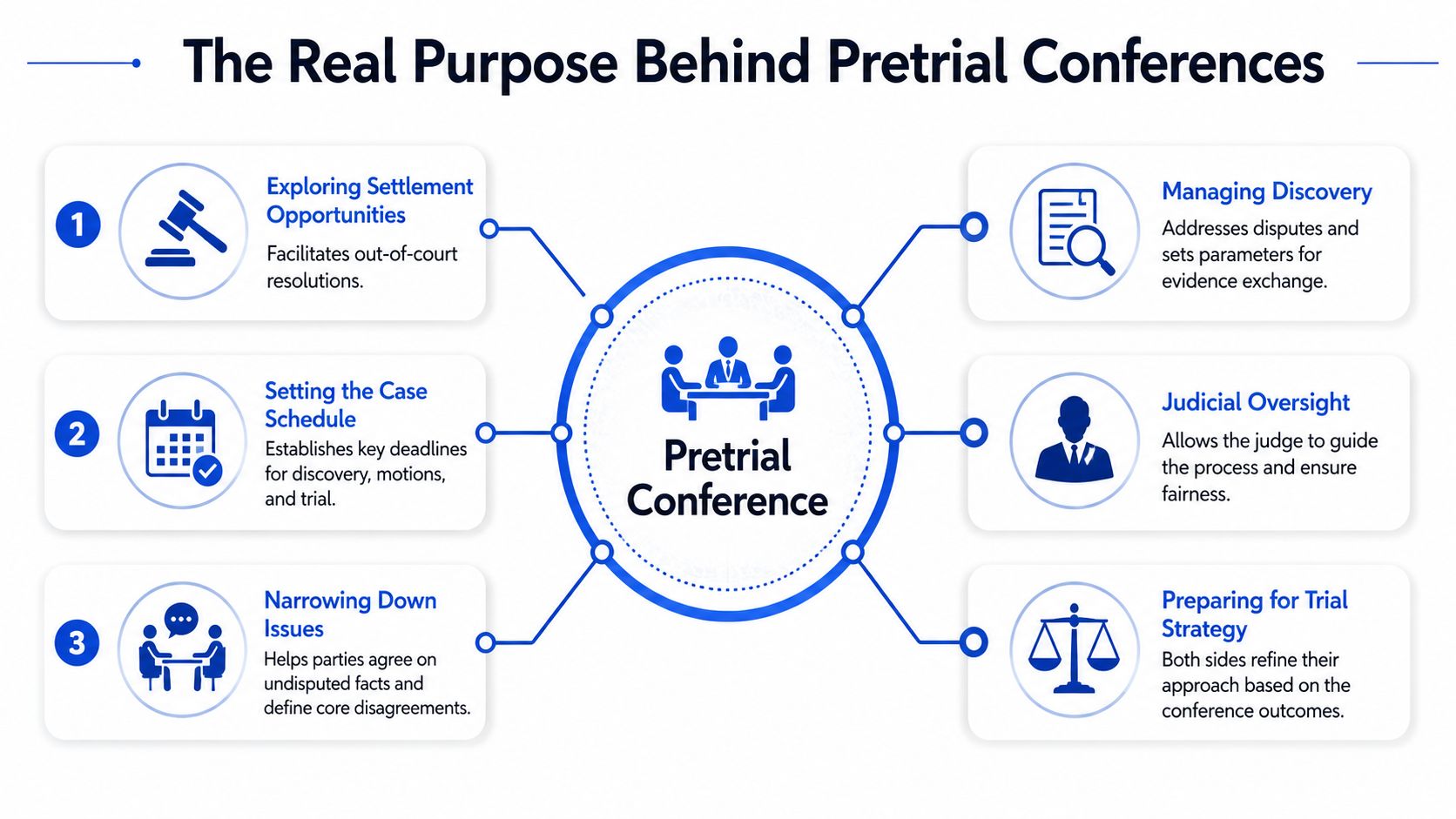
The first thing to understand is that a pretrial conference is where the case gets pressure-tested before anyone walks into a jury trial. The judge uses it to see what the file needs, the prosecutor measures the State's position, and the defense looks for weak points before the case settles into a trial track.
Why the hearing exists
The hearing exists to move the case, keep deadlines under control, reduce wasted effort, improve preparation, and create a path toward resolution. In criminal practice, that means the judge is not there just for a status update. The court is there to keep the case moving and make sure both sides are ready.
In South Florida courtrooms, that matters because crowded calendars reward the side that is organized. If the prosecutor is still sorting through the file, or the case has discovery problems, motion issues, or weak proof, those problems can come into focus quickly once the judge asks for a real update. Pretrial settings are also where attorneys and judges narrow disputed issues and address admissibility, including motions in limine that can keep prejudicial, irrelevant, or unconstitutional evidence away from the jury. The defense can use that pressure point to force the State to show its hand, and the prosecutor's decision-making often depends on how much discretion the State is willing to exercise once those weaknesses are visible.
How the defense uses it strategically
A strong defense lawyer uses the conference to improve the client's position, not just to check a procedural box. That means identifying illegal searches, unreliable testing, incomplete discovery, or a witness problem before the State settles on its trial theory. It also means pushing for motion deadlines that give the defense room to challenge the case instead of scrambling after the prosecution has already framed the issues.
The strategic value is often invisible from the hallway. The conference can set the terms for discovery, motion practice, and plea discussion long before a jury is involved.
The American Bar Association notes that judges use status conferences to manage timelines, set tentative trial dates, and encourage settlement, and it also explains that issue conferences may happen with lawyers alone so they can narrow disputes and agree on facts or points of law ABA pretrial conference overview. In a Florida criminal case, that structure can matter a great deal. It can create room for a reduction, expose a weak count, or put the case on a path that is better for the defense before trial pressure builds.
Who Attends and What Happens During the Conference
In most Florida criminal cases, the people in the room are the judge, the prosecutor, and your defense lawyer. Witnesses usually do not attend, and no testimony is taken. That makes this a working hearing, not a mini-trial.
What Gets Discussed
The judge will usually ask where the case stands. That conversation can cover discovery, pending motions, plea discussions, and scheduling. In criminal practice, pretrial conferences often happen after arraignment and before trial, and the defense and prosecution use them to address discovery, motions, plea offers, and timing.
The practical side matters just as much. Massachusetts court guidance explains that the pretrial conference is usually the next court date after arraignment, recommends speaking with a lawyer before that date, and says an unrepresented defendant who wants to go to trial must file a Waiver of Counsel form before speaking with the prosecutor; it also notes that either side can set motion deadlines and that discovery is exchanged at this stage Massachusetts pretrial process. In Florida courtrooms, that same structure gives defense counsel a real chance to test the State's case, press for missing discovery, and set up motions before the prosecution locks in its trial theory.
What gets shared matters too. A defendant should be able to review the complaint, police reports, and other evidence the State plans to use. Witnesses do not attend because no testimony is taken, and the focus stays on case management, disclosure, and the next legal step.
What You Should Do, and Not Do
Your lawyer may speak for you. You usually should not explain the facts yourself in open court unless your attorney tells you to. In Broward County, Miami-Dade, and Palm Beach courtrooms, that restraint matters because every word should be tied to strategy, not stress.
Stay quiet unless instructed otherwise. Your attorney should control the legal conversation.
Dress like you expect the judge to take the case seriously. That means clean, conservative clothing.
Bring the paperwork your lawyer asked for. Missing documents can slow down negotiation.
Do not talk to the prosecutor in the hallway. Loose comments can create problems later.
When the State's evidence is incomplete or shaky, the pretrial conference is often where a lawyer starts forcing the issue. A motion to suppress or a motion in limine can matter if police made a bad stop, search, seizure, or identification procedure. If you want a plain-English explanation of that tool, this guide helps: what is a motion to suppress evidence.
Possible Outcomes and What They Mean for Your Case
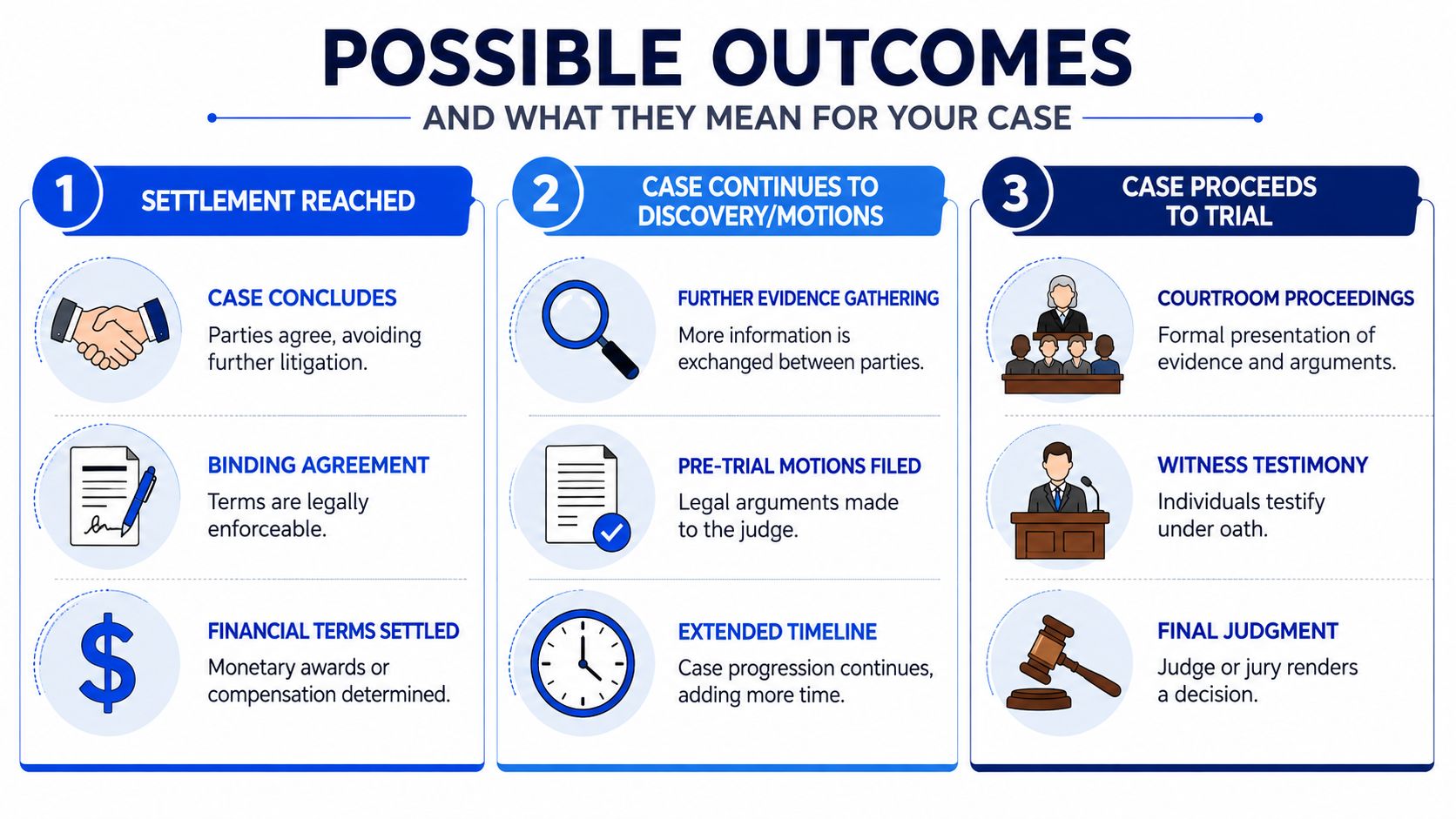
A pretrial conference can shift a case in several directions, and the result often depends on how strong the State's evidence is, how early your lawyer spots weaknesses, and how much room there is to negotiate.
Settlement, continued litigation, or trial
One common outcome is a negotiated resolution. That may mean a plea agreement, a reduction in charges, or terms that avoid the harshest consequences tied to the original filing. Another outcome is that the case stays active, with more discovery, motion deadlines, or another court date set so the lawyers can keep working through the evidence. A third outcome is that the judge sends the case toward trial because the defense and the State still disagree about what the evidence shows and what it means.
That matters because pretrial work often changes the pressure points in a Florida criminal case. If the prosecutor has not handed over everything required, or if the police report leaves gaps, the defense has room to press for disclosure, challenge evidence, and force the State to make decisions before trial posture hardens.
The Ontario pretrial study found that pretried cases settled more often than cases that were not pretried, and they resolved in less time on average Ontario pretrial study. The study also reported a separate experiment involving pretrial conferences where most paired cases in one conference format settled. Those numbers are not Florida-specific, but they do show why judges and lawyers treat the conference as a working stage of the case, not a formality.
What each outcome means for you
If the case settles, your lawyer should look closely at the terms, including the charge, the plea language, the record consequences, and any issue that could affect your driver's license or future background checks. In South Florida courtrooms, the details matter because a resolution that looks simple on paper can carry real long-term effects if the agreement is not handled carefully.
If the case continues, the next phase is usually about deadlines. Discovery needs to be completed, motions may need to be filed, and the defense has to decide which issues are worth pressing now instead of waiting for trial. That is where evidence challenges can create an advantage, especially if the stop, search, seizure, identification procedure, or recording raises a real problem.
If the case goes to trial, the pretrial conference often becomes the point where strategy firms up. The defense has to decide what theory to present, which witnesses matter, and which objections should already be in place before jury selection begins.
For some clients, the best result is not a trial at all, it is a diversion or other alternative resolution path. If that may be available in your case, this overview of pretrial diversion program Florida explains how that option fits into the larger process.
How to Prepare for Your Pretrial Conference
Preparation usually decides whether the conference moves your case forward or just burns a court date. Your lawyer can't negotiate from strength if the file is thin, the timeline is fuzzy, or the mitigation material never gets collected.

What to gather before court
Start with the basics. Get your court paperwork, bond paperwork, any notices from the clerk, and anything your lawyer asked you to bring. Then add the material that helps your attorney show context, not excuses.
Character references: These can help humanize you when the State is considering resolution.
Employment records: Stable work history can matter in negotiation.
Treatment or class completion proof: This is especially useful in DUI, domestic violence, and some drug cases.
A written timeline: Dates, times, locations, and who was present can expose problems in the State's version.
Screenshots or records: Texts, receipts, photos, rideshare logs, or calendars can help with factual disputes.
What to avoid
Don't post about the case on social media. Don't try to explain your side to friends who may later be witnesses. Don't call the alleged victim, complaining witness, or law enforcement officer unless your lawyer has told you that contact is allowed and strategically sound.
Practical rule: The less unfiltered information that circulates, the less material the State can use to box you in.
This is also the point to ask your attorney direct questions. What are the motion deadlines? What discovery is still missing? Is the State's evidence strong enough to justify a reduction, a dismissal argument, or a trial posture? If you're looking at a traffic matter that may still involve a pretrial stage, a lawyer-led process can sometimes keep the burden on the court system instead of on you. Ticket Shield, PLLC handles criminal defense matters statewide and also works on traffic defense matters where court appearances and pretrial handling matter, which can reduce unnecessary disruption for clients.
Why Legal Representation Matters at Pretrial Conferences
You can go to a pretrial conference without a lawyer. In practice, that often leaves you responding to a process the prosecutor already knows well and has already started shaping.
What a defense lawyer does at the conference
A criminal defense lawyer uses the conference to spot problems early. That can mean filing motions in limine to keep prejudicial or unconstitutional evidence out, challenging illegal searches under the Fourth Amendment, or attacking unreliable DUI field sobriety or breath test issues before they become trial exhibits. In criminal practice, the conference is also where the defense may review the State's complaint, reports, and evidence and decide whether the case is better negotiated or set for litigation.
The lawyer's role is tactical as well. In Broward County, Fort Lauderdale, Miami-Dade, and Palm Beach courts, local practice and courtroom habits matter. A lawyer who understands how prosecutors evaluate risk can sometimes push a weak case toward reduction, dismissal, or a better plea posture without waiting for trial.
Why timing matters
Early intervention can protect your license, employment, and record before the case starts snowballing. That matters in DUI, domestic violence, theft, gun and weapons, sex crime, juvenile, federal, and probation violation cases, where one poor decision early can shape the rest of the case. A pretrial conference is often where those decisions start to harden.
If you are trying to decide what kind of help you need, the question is not only whether someone can appear in court. It is whether they can read the evidence, identify strategic advantages, and use the conference to protect you. For people facing criminal charges in South Florida, that can be the difference between drifting through deadlines and actively defending the case.
Common Questions About Pretrial Conferences
Do I have to attend in person? Not always. In some misdemeanor cases, your lawyer can appear for you, but you need to confirm that with the court and your attorney. What if I miss it? Missing a required court date can create serious problems, including a warrant.
Can I switch lawyers before or after the conference? Usually yes, but timing matters. If you wait too long, you may lose momentum on discovery or motion deadlines.
Can statements from the conference be used against me? Your lawyer should protect you from saying anything unnecessary, and the conference itself is mainly about procedure and negotiation, not testimony.
What if I don't like the plea offer? You don't have to accept it on the spot. A good lawyer will compare the offer to the actual evidence and explain the risk of continuing.
Can there be more than one pretrial conference? Yes. Many cases need more than one because discovery, motions, and negotiations don't always finish at the first hearing.
If you're facing a pretrial conference in Fort Lauderdale, Broward County, Miami-Dade, Palm Beach, or anywhere in South Florida, Ticket Shield, PLLC can review the evidence, deadlines, and defense options before you walk into court. Visit Ticket Shield, PLLC to discuss your case with a defense team that focuses on protecting your freedom, license, and record.