A Guide to the Pretrial Diversion Program Florida
Jason Goldsmith, Esq
You're probably here because a charge just landed in your lap, or someone you love is trying to figure out whether there's a clean way out of court without taking a conviction. That's the right question to ask, but most online guides oversimplify the answer. In Florida, pretrial diversion can be a real path to dismissal, yet it's not automatic, it's not the same in every county, and it usually comes with more obligations than people expect.
If you're searching for a pretrial diversion program Florida guide because you want to protect your record, your license, or your job, the details matter. The biggest mistake I see is treating diversion like a coupon for dismissal. In practice, it's a structured deal with the prosecutor, and the fine print can decide whether the case disappears or comes roaring back.
Table of Contents
Three Common Misconceptions About Pretrial Diversion in Florida
How Broward, Miami-Dade, Palm Beach, and Orange County Programs Differ
Three Common Misconceptions About Pretrial Diversion in Florida
The first misconception is simple. People assume diversion means the charge disappears if they ask for it. Florida practice does not work that way. Diversion is a negotiated track that usually pauses the normal prosecution path, and the prosecutor decides whether the case is invited into the program at all, which is part of the broader prosecutorial discretion described in this Florida criminal defense discussion of prosecutorial discretion.
Florida has a long history of using diversion as a structured alternative to formal prosecution. Early Florida evaluation materials tracked preliminary investigations, intakes, unsuccessful terminations, and adult offenders diverted from the system, which shows how organized the model has always been NCJRS evaluation. That history matters because diversion is not a casual favor. It is a supervised process with rules and consequences.
Practical rule: if a client treats diversion like an easy dismissal, they usually miss deadlines, underbudget for fees, or ignore reporting requirements, and that is how a good case gets damaged.
The second misconception is that the program works the same way everywhere in Florida. It does not. The statutes are statewide, but county programs, State Attorney policies, and local supervision practices fill in the details. In Broward, Miami-Dade, and Palm Beach, the answer to “Can I get diversion?” often depends less on the charge label and more on the office handling the file.
The third mistake is thinking the issue ends once the prosecutor agrees. It does not. Diversion can require reporting, treatment, testing, restitution, community service, and written waivers. I tell worried clients to treat it like a temporary compliance contract, because that is what it becomes in real life.
The hard part is not the title of the program. It is whether the case is eligible, whether the county offers that program, whether the victim objects, whether the client can finish the conditions, and whether the window is still open. Those are the questions that decide whether diversion is available or whether the case stays on the path to conviction, a license problem, or a record that keeps showing up in background checks.
How Florida Pretrial Diversion Works
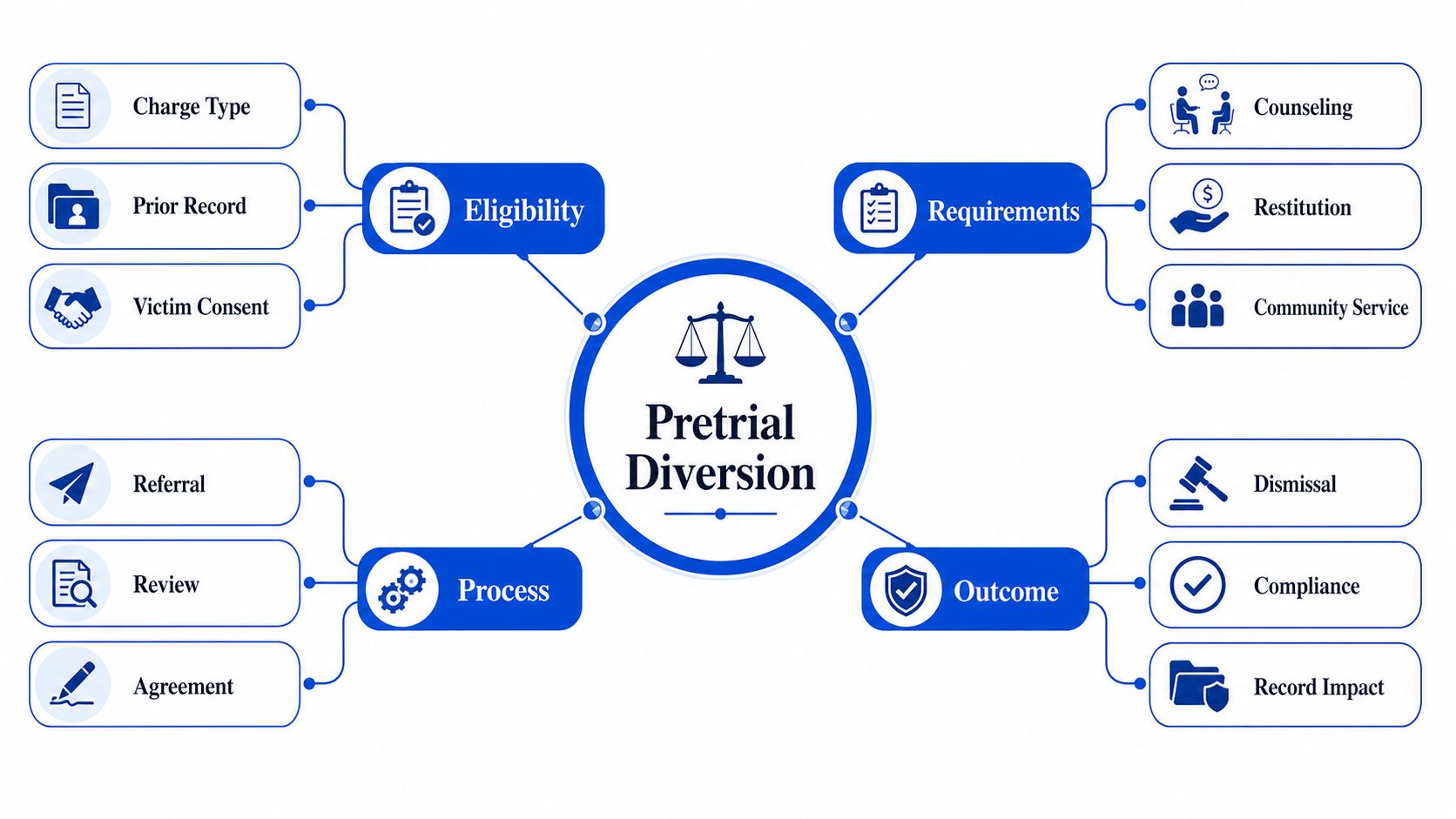
Diversion is a structured alternative to prosecution, and it only becomes available when the charge, the defendant's record, and the prosecutor's office line up. Even then, the case does not disappear on its own. The defendant still has to complete the program conditions before the file can be dismissed.
Florida's adult statute allows a court to withhold adjudication and place a defendant into a diversion-type program for a nonviolent misdemeanor or a nonviolent felony not punishable by life imprisonment, while also considering prior record and restitution issues. In practice, that means the case is still moving through the criminal system, but the end result can be dismissal instead of conviction if the participant finishes what the program requires.
PTI, PTD, and what dismissal really means
Florida lawyers and prosecutors use the terms pretrial intervention and pretrial diversion somewhat loosely. In practice, both labels usually describe a pretrial resolution in which the case is diverted away from conviction if the participant complies. The main question is the result at the end. If the participant finishes successfully, the State Attorney files dismissal paperwork, and the court case ends without an adjudication of guilt.
That dismissal matters because it is not a conviction. It also does not erase the arrest record by itself. If the case is later sealed or expunged, the record can be handled more completely under Florida law, but that is a separate process.
The people who usually touch the file are the state attorney, the judge, and the supervision officer or program administrator. The defense lawyer's job is to get the case into the right lane early, keep the conditions realistic, and make sure the client understands the obligations before signing anything. For a plain explanation of the court outcome after a case ends, see what adjudication withheld means in Florida.
A successful diversion is a dismissal, not a magical erasure. The criminal case ends cleanly, but the record questions still need to be handled the right way.
Who Qualifies and Why Some People Are Turned Down
A client can look like a good diversion candidate on paper and still get turned away at intake. That happens because eligibility starts with the charge, but approval starts with the prosecutor, and the office is usually reading the whole file, not just the statute. Florida's adult program is aimed at nonviolent misdemeanor and qualifying nonviolent felony cases, and prior record and restitution can matter in the screening process. The formal rules set the floor. The local office decides how hard it wants to enforce them.
The legal filter is only part of the decision
A person may meet the basic charge-based criteria and still lose the chance because the prosecutor sees a pattern of arrests, a prior diversion, an unresolved victim issue, or facts the office does not want to send into a diversion track. County intake rules can matter too, along with victim participation in some offices. Two people with the same charge can walk into different outcomes depending on where the case is filed and what the file shows.
That unevenness shows up in the eligibility numbers as well. A Florida-focused analysis cited in secondary reporting found that only 16% of Black felony defendants were eligible for diversion, compared with 23% of white defendants and 28% of Hispanic defendants Florida diversion eligibility analysis. Those figures do not point to one single cause, but they do show that the screening process is not applied evenly in practice.
Why good candidates still get rejected
Prosecutors can decline diversion for reasons that have little to do with guilt and a lot to do with office policy. Prior record concerns come up often, especially where the office sees repeated contact with law enforcement. Victim objections and unresolved restitution questions can stop the offer. County-specific exclusions also matter, especially in DUI and other higher-risk cases. Residual residency or supervision problems can sink a case too if the office doubts the person can report reliably or finish the program.
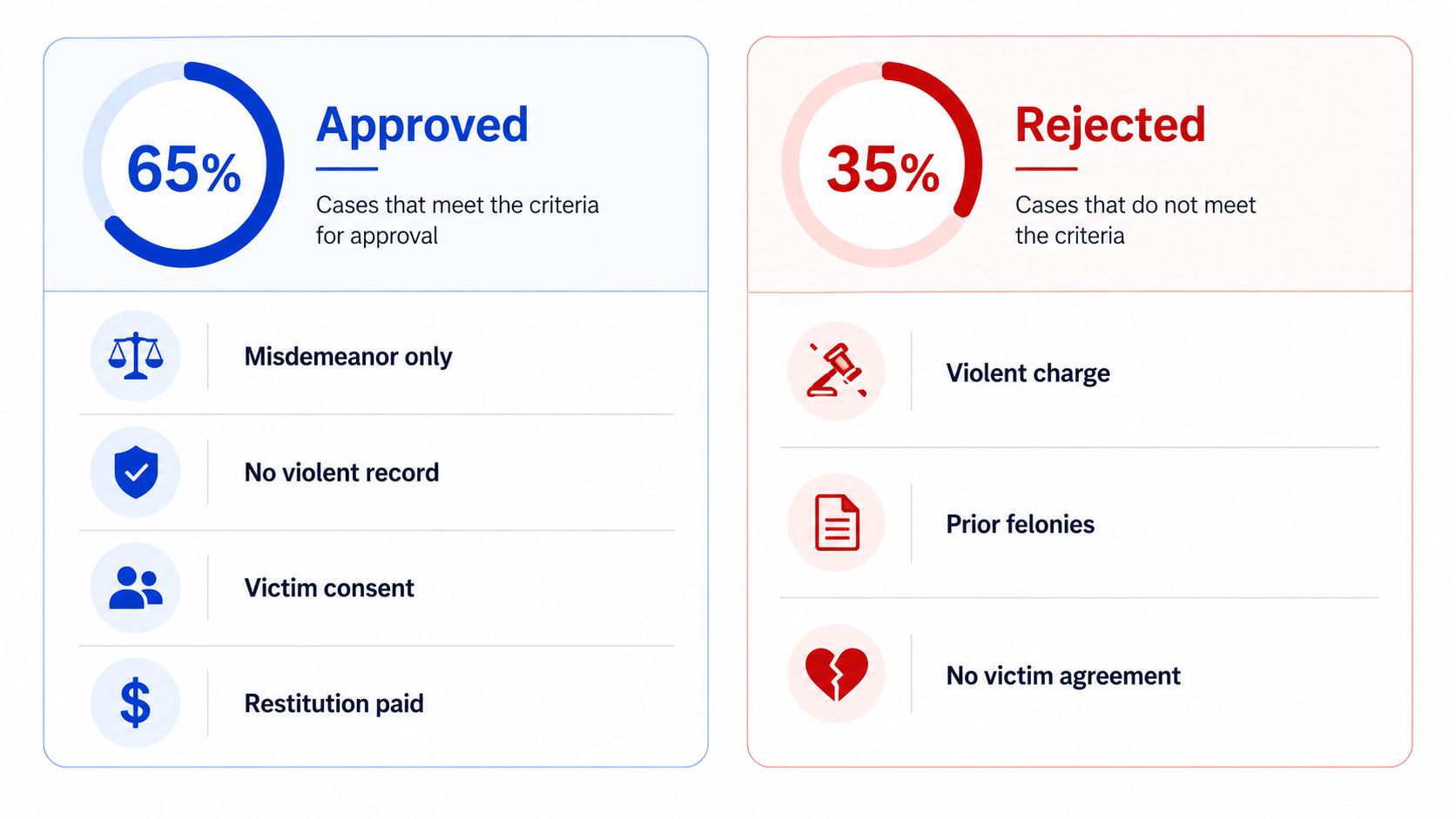
The lesson is simple. Selection into the program is often the hard part, not completion. Many explainers stop at the eligibility checklist, but the practical fight is getting a favorable intake decision from the office that controls the file.
If the county will not invite the case into diversion, technical eligibility does not help much. Local policy and prosecutorial discretion usually decide the result first.
Requirements Behind a Diversion Offer
Diversion functions like a short-term probation sentence that ends in dismissal if you stay compliant. That wording is more accurate than the usual “second chance” language, because the conditions can be demanding, closely monitored, and unforgiving if you miss the mark.
What participants usually have to do
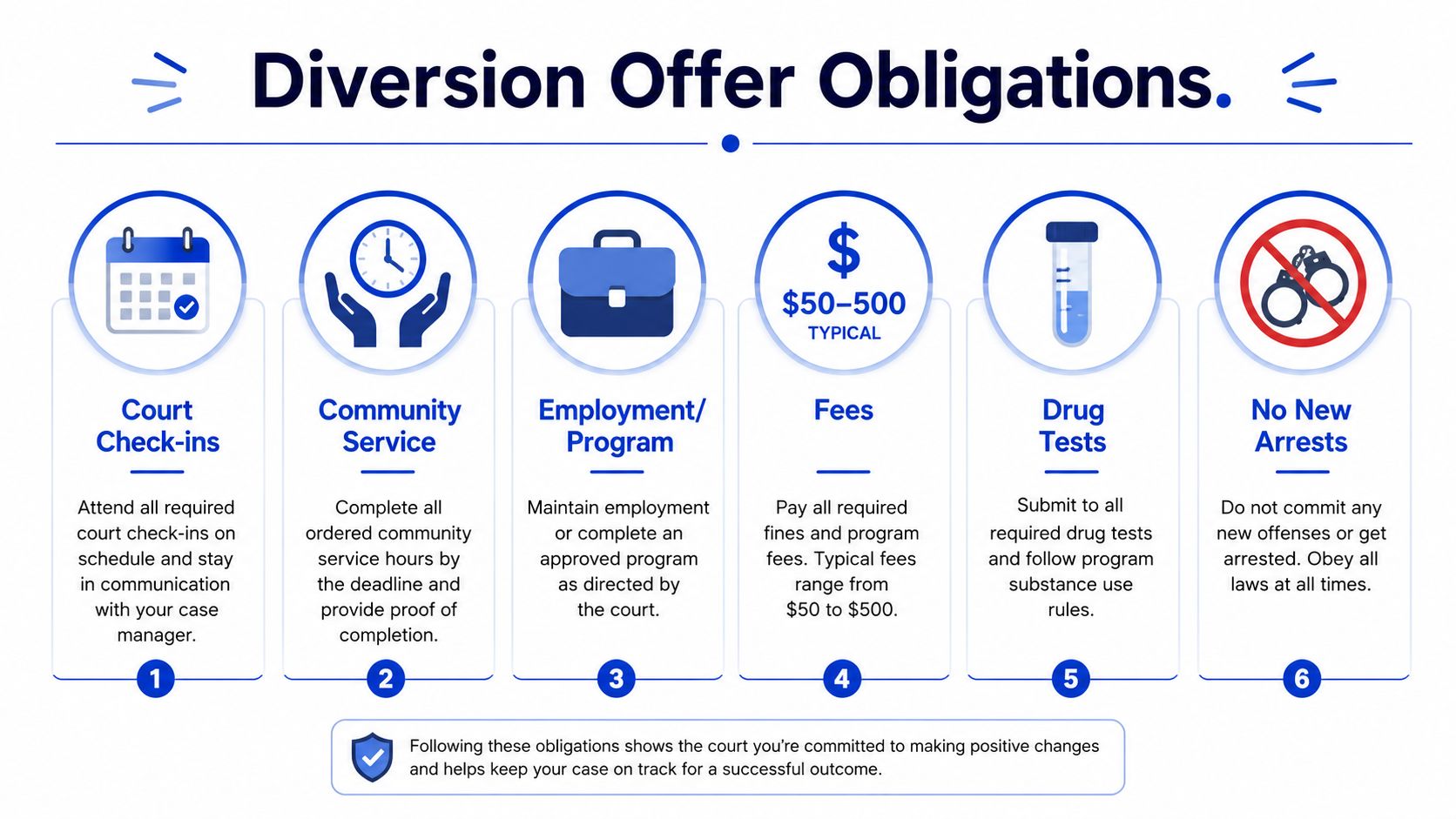
Florida programs can require supervision, drug testing, community service, restitution, reporting, counseling, and waivers of certain rights. Participants may have to sign paperwork, check in with probation or a supervision officer, and avoid any new arrests while the case is open. Miss one of those requirements, and the prosecutor can move to revoke the program and put the case back on the regular docket.
The financial piece matters just as much as the legal one. In some counties, published DUI diversion fee tiers include $500 and $1,000 Florida diversion cost discussion. Those numbers are not universal, but they show why a client should ask about the full financial picture before signing anything.
What makes completion realistic or unrealistic
The hardest part usually is not the paperwork. It is the calendar. Someone working overnight shifts, caring for children, relying on public transportation, or starting treatment while also paying fees can run into a practical burden that looks manageable on paper and becomes difficult very quickly.
Here is the part clients should hear clearly:
Court Check-ins: reporting has to happen on schedule, not whenever it is convenient.
Community Service: hours must be completed and documented.
Program Compliance: counseling, treatment, or DUI-related classes cannot be skipped.
Fees: payment plans matter, but missing payments still creates risk.
Drug Tests: a positive result can unravel a good case.
No New Arrests: a fresh arrest can trigger revocation and stop the dismissal path.
Diversion works best for people who can live inside the program's rules for the full supervision period. If the job, transportation, treatment access, or finances make that unlikely, a defense strategy should address those issues before the offer is accepted.
How Broward, Miami-Dade, Palm Beach, and Orange County Programs Differ
Florida does not use one uniform diversion form. Each State Attorney's Office and local program adds its own screening rules on top of the general framework, so the same arrest can lead to very different answers depending on whether the case is filed in Broward, Miami-Dade, Palm Beach, or Orange County.
Local policy shapes the answer
Broward's felony PTI program shows how much county policy matters. The State Attorney's Office requires an application within 45 days of arraignment, and the program is aimed at first-time felony offenders who may avoid the stigma of a conviction if they complete the diversion track Broward felony PTI. Orange County works differently. Its misdemeanor pretrial diversion program is a deferred prosecution model supervised by Community Corrections, and DUI cases there use a .220 BAC cutoff, exclude cases with a crash, and impose 12 months of supervision for DUI Tier 1 cases under .15% and 15 months for DUI Tier 2 cases over .15% Orange County diversion PDF.
Miami-Dade and Palm Beach also rely on local screening, but the practical lesson is the same. The office, the intake rules, and the supervision model matter as much as the charge itself. A lawyer who already knows the county's playbook can save time and keep a client from chasing a program that is unlikely to fit the case.
County Pretrial Diversion Programs at a Glance | |||
|---|---|---|---|
County | Common Intake Window | Typical Supervision Length | Notable Conditions |
Broward | 45 days of arraignment for felony PTI applications | Varies by program and charge | First-time felony focus, dismissal on completion |
Orange County | Case-specific intake through Community Corrections | 12 months or 15 months for DUI tiers | .220 BAC cutoff, no crash cases |
Miami-Dade | Case-specific, office-driven | Case-specific | Local prosecutor discretion shapes access |
Palm Beach | Case-specific, office-driven | Case-specific | County rules and charge type control screening |
Why South Florida clients need county-specific advice
A lawyer cannot responsibly promise the same result in every courthouse. The right approach is to read the county policy first, then build the application and negotiation around that policy. What happens at arraignment in Florida matters here because diversion timing often starts immediately after that stage, and a missed deadline can close off a path before the defense has a chance to argue for it.
In South Florida, diversion can exist on paper and still be hard to secure in practice. Broward may move quickly on a narrow felony PTI window, Orange County may use a structured local intake process, and Miami-Dade or Palm Beach may give the prosecutor more room to screen cases one by one. The trade-off is simple, the earlier a defense lawyer understands those local limits, the better the client can decide whether to accept an offer, keep negotiating, or prepare for a different outcome.
What the Process Looks Like From Arraignment to Dismissal
A diversion case usually starts with a hard deadline, not a long investigation. The person is arrested, released, and then brought back for arraignment. From there, the defense has to move fast because the county's window for review can narrow quickly if the filing or screening step is missed. What happens at arraignment in Florida
A typical timeline
At arraignment, the court reads the charge and sets the next court date. The defense lawyer then reviews the county's diversion rules, checks the deadlines, and submits the application or asks the prosecutor to review the file. In Broward felony PTI, that timing matters because the office requires submission within 45 days of arraignment.
If the state attorney approves the case, the client accepts the program terms. Reporting starts after that. Depending on the county and the charge, that can include monthly check-ins, treatment referrals, community service coordination, fee payments, drug testing, and strict instructions not to get arrested again. Orange County's DUI tiers show how specific the supervision period can be, with 12 months or 15 months depending on the BAC tier.
During the program, the defense lawyer usually keeps an eye on compliance because missed appointments and late payments create avoidable problems. The failures often happen in the middle, not at the start. A client gets busy, a treatment class gets rescheduled, or a payment falls behind. Once the program administrator flags noncompliance, the office can react quickly.
Practical insight: the cases that finish cleanly are usually the ones where the lawyer keeps the client organized before the first missed deadline, not after.
What dismissal changes, and what it doesn't
Once the client finishes successfully, the prosecutor files to dismiss the charge, and the court closes the case. The criminal case ends without an adjudication of guilt, which matters for employment, licensing, and the way a future defense attorney can evaluate the record. The arrest record may still exist, so sealing or expungement can still matter after the dismissal.
Driving cases need separate attention. A dismissed DUI does not automatically fix every administrative issue tied to the license. DHSMV consequences, point-related concerns, surcharges, and ignition interlock issues can still require a separate defense plan, depending on the facts and the charge. The courtroom result matters, but it is only part of the picture.
How a Defense Attorney Improves the Outcome at Every Stage
The biggest mistake clients make is waiting until the prosecutor has already made up their mind. Early defense work changes the file before it hardens. That matters in diversion cases because the office is deciding whether to offer the program at all, and later deciding whether the client has complied.
What a lawyer actually does
A good Florida criminal defense lawyer looks at the charge, the county policy, the client's record, the victim issue, and the timeline immediately. From there, the lawyer can push for the right program, submit the application in time, and frame the case in a way the state attorney is more likely to accept. That includes gathering documents, building mitigation, and making sure the client doesn't accidentally create a problem before the offer is finalized.
The lawyer also helps the client understand the trade-offs before acceptance. If the program involves fees, treatment, reporting, or travel that the client can't realistically sustain, it may be smarter to negotiate the conditions or explore another defense route. The point is to avoid a diversion failure that could have been prevented with better planning.
What a Florida criminal defense lawyer does in a diversion case
Where local experience matters most
Inside view matters in these cases. Prosecutors and diversion administrators care about different facts in different counties, and a lawyer who works Florida criminal defense regularly can often tell which conditions are negotiable and which ones aren't. That's particularly important in Broward, Miami-Dade, and Palm Beach, where local practice can shape whether a case is accepted quickly or sits unresolved.
One option some clients use for coordinated help is Ticket Shield, PLLC, a Florida criminal defense firm that handles diversion-related strategy alongside other defense work, including DUI, drug charges, theft offenses, and probation violations. The value isn't magic. It's getting someone who knows how the State Attorney's Office reads the file and what needs to happen before the case is locked into a bad path.
If the program ends successfully, counsel can also help coordinate the dismissal paperwork, review sealing or expungement eligibility, and spot any remaining license or background-check issues. That follow-through is often what turns a technical victory into a real cleanup of the case.
Frequently Asked Questions About Florida Pretrial Diversion
Will diversion show up on a background check?
The arrest and case can still remain in public records after dismissal. Diversion helps, and dismissal matters, but it does not automatically erase the record. If clearing the record matters, sealing or expungement may still need to be pursued after the case ends.
Can a non-citizen do diversion without immigration problems?
Not safely without individualized legal advice. Diversion may avoid a conviction, but immigration consequences turn on the charge, the plea posture, and the record created during the process. A non-citizen should get specific advice before accepting any program terms.
What happens if the prosecutor says I violated the program?
A technical violation can put the case back at risk. That may include missed reporting, failed tests, or unpaid fees, depending on the county and the agreement. The practical move is to contact defense counsel right away before the issue becomes a formal revocation.
Can someone apply for diversion more than once?
Sometimes, but it is not something to assume. Earlier Florida materials show that re-enrollment can happen in rare cases, and it still depends on the administrator, the prosecutor, the judge, and often the victim's position. If someone has already used diversion once, they need county-specific advice before expecting another chance.
If you're facing a charge in Broward, Fort Lauderdale, Miami-Dade, Palm Beach, or anywhere in South Florida, Ticket Shield, PLLC can review whether diversion is realistically available, what the county will require, and how to protect your record from the start. Visit Ticket Shield, PLLC to request a confidential consultation and get a strategy built around your charge, your county, and your deadlines.