
Probable Cause DUI Arrest: A Florida Defense Guide
Jason Goldsmith, Esq
A traffic stop can turn ordinary plans into a criminal case within minutes. You may have been leaving dinner in Miami, driving through Fort Lauderdale, or heading home across Broward County when police lights appeared behind you. The officer's questions, the request to step out, and the decision to place you in handcuffs can feel final. Legally, however, the arrest still depends on a specific question: did the officer have probable cause to believe you committed DUI?
For a Florida driver, that question affects far more than the arrest itself. It can influence field-sobriety evidence, chemical testing, license consequences, statements, and whether evidence survives a constitutional challenge. A probable cause DUI arrest must fit the Fourth Amendment and Florida's rules governing warrantless misdemeanor arrests.
Table of Contents
The Night Everything Changed on a Florida Road
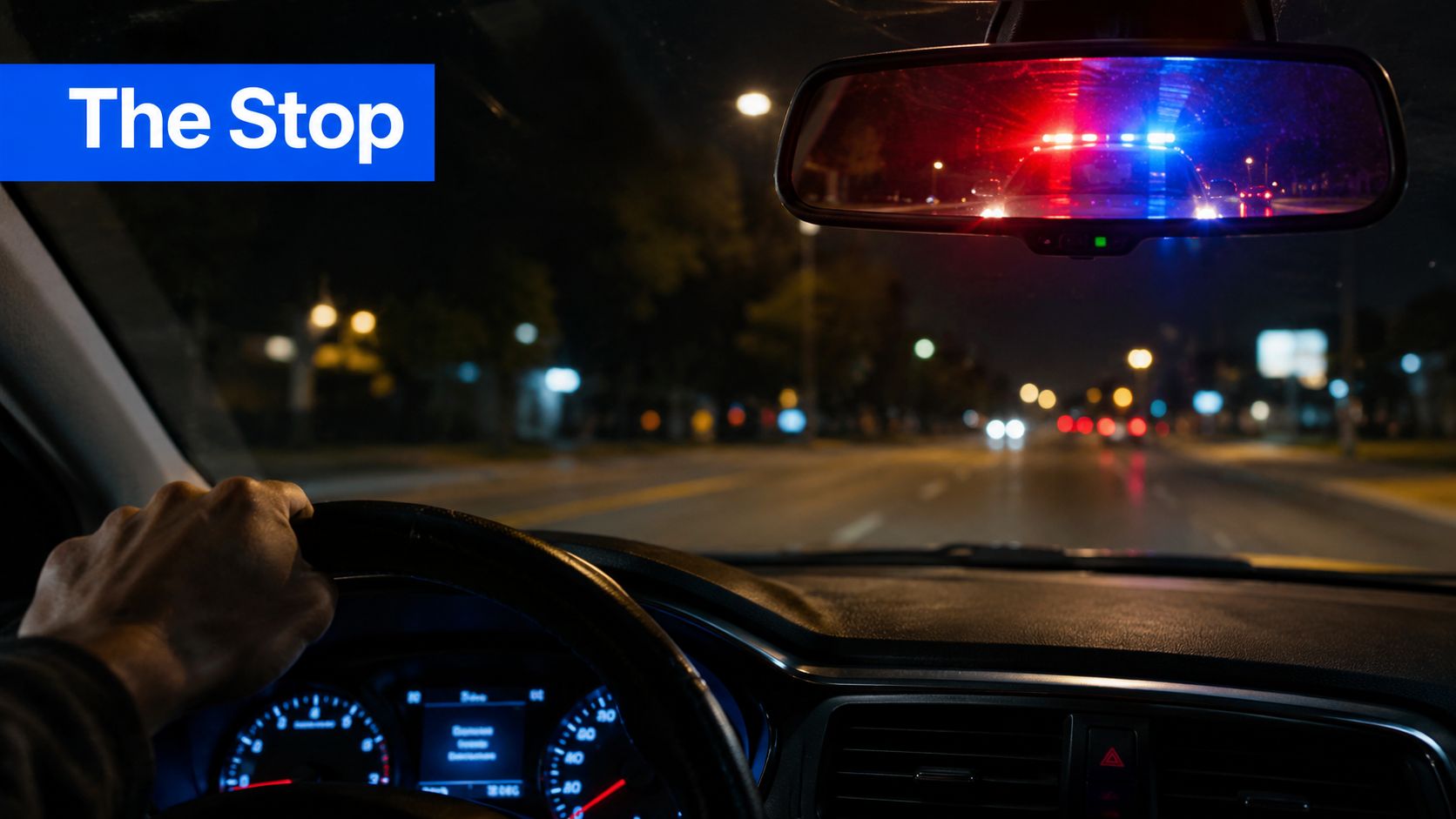
You're leaving a restaurant in Miami after dinner. Traffic is light, the dashboard is dark except for the glow of the instrument panel, and then red and blue lights fill the rearview mirror. A siren sounds. The lights flash across the steering wheel as you pull over.
The officer approaches and asks where you're coming from. You answer, but your words sound slower than usual because you're nervous. The officer says there's an odor of alcohol, asks whether you've been drinking, and requests your license and registration. You reach into the console, fumble briefly, and hear the next instruction: step out of the car.
On the roadside, the officer watches your eyes, speech, balance, and responses. You're asked to follow a pen with your eyes or perform other field-sobriety exercises. You may not understand what the officer is looking for, especially if the pavement is uneven, your shoes are uncomfortable, the weather is poor, or a medical condition affects your balance. Then the handcuffs appear.
The arrest report may later describe the stop in confident language. It may list a driving pattern, an odor, slurred speech, red eyes, admissions, and test performance. But a report isn't the legal standard. The State still has to show that the facts known to the officer at the moment of arrest created a legally sufficient basis to believe you committed DUI.
The question isn't whether the arrest felt justified. The question is whether trustworthy, objective facts supported it under Florida law.
A warrantless DUI arrest without probable cause can be challenged under the Fourth Amendment, the constitutional protection against unreasonable searches and seizures. In Florida, the challenge may also focus on whether the arrest fit one of the limited situations allowing a warrantless misdemeanor arrest. That framework can determine whether the State keeps the evidence it collected after the stop.
What Probable Cause Actually Means Under Florida Law
Probable cause means a fair probability, based on reasonably trustworthy facts, that a person committed an offense. It's more than a hunch and less than proof beyond a reasonable doubt. The judge asks what the officer knew at the time of the arrest, not what later testing or investigation eventually revealed.
The Fourth Amendment, ratified in 1791, provides the constitutional foundation for probable-cause arrests in the United States. In practical terms, a warrantless arrest must rest on facts that would lead a reasonable person to believe a crime occurred. Florida appellate decisions describe the inquiry in similar terms, asking whether the officer had reasonably trustworthy information sufficient to cause a person of reasonable caution to believe an offense was being committed. Florida's appellate discussion of probable cause and warrantless arrest reflects that objective approach.
The three Florida pathways
Florida law limits a warrantless misdemeanor DUI arrest to three general situations:
Officer-witnessed offense: The officer personally observes each element of the offense.
Accident investigation: The officer investigates a crash and develops probable cause that the driver committed DUI.
Combined officer observations: Multiple officers combine what each observed to establish probable cause.
Florida's Fourth District Court of Appeal describes these limits in its discussion of warrantless misdemeanor DUI arrests. The Florida decision addressing the three arrest situations is important because an officer can't label an arrest lawful without connecting the facts to one of these recognized pathways.
The second pathway drives many ordinary DUI cases. An officer stops a driver, observes conduct during the investigation, and decides whether the combined evidence supports arrest. If the observations are weak, exaggerated, or contradicted by video, the arrest may lack the required foundation.

Probable cause can come from several officers and several types of evidence. It doesn't require a completed breath or blood result before arrest. At the same time, the absence of a chemical result doesn't excuse an officer from showing a fair probability of impairment through reliable observations.
For a broader explanation of the legal concept, see this guide to the definition of probable cause.
What Officers Look For Before Making a DUI Arrest
An officer usually builds a DUI arrest decision from categories of observations rather than one isolated fact. Florida materials identify indicators such as driving behavior, physical signs, statements, and field-sobriety performance. The legal question is how those facts fit together and whether they're reliable in the circumstances.
Driving behavior
The initial driving pattern may include weaving, drifting, speeding, unusually slow driving, wide turns, or a near collision. A traffic violation can justify the stop, but it doesn't automatically establish probable cause for DUI. The officer still must connect the driving conduct to a reasonable belief that alcohol or drugs impaired your normal faculties.
Personal and behavioral indicators
After the stop, an officer may document bloodshot or watery eyes, slurred speech, an odor of alcohol, a flushed face, fumbling with documents, confused answers, visible containers, or an admission to drinking. These facts can matter, but context matters too. Anxiety, fatigue, allergies, illness, medication, language barriers, and the stress of bright lights can affect how a person looks and speaks.
A statement such as “I had a drink” doesn't necessarily establish impairment. It may become one part of the totality of circumstances, but the defense will examine exactly what you said, when you said it, and whether the officer's report accurately captured the exchange.
Field-sobriety exercises
Field sobriety exercises can support probable cause, but they're not standalone proof of guilt. The National Highway Traffic Safety Administration recognizes standardized field-sobriety testing, including horizontal gaze nystagmus, as a tool officers may use alongside other indicators. NHTSA materials also explain that officers may consider a drug-recognition evaluation when the exercises and other observations suggest impairment but alcohol doesn't adequately explain the signs. NHTSA's discussion of horizontal gaze nystagmus and field-sobriety evidence addresses the probabilistic nature of this evidence.

A defense lawyer typically compares the report against the actual record:
Timing: When did each observation occur, and when did the arrest occur?
Words: What did the officer ask, and what did you say?
Conditions: Were lighting, traffic, weather, pavement, footwear, or injuries documented?
Testing: Did the officer give clear instructions and demonstrate the exercise?
Video: Does body-camera or dash-camera footage support the written description?
The video often provides the most useful reality check. It may show that a supposed stumble was a normal step, that speech was understandable, or that the officer omitted important conditions from the narrative.
Reasonable Suspicion vs Probable Cause in DUI Stops
The officer needs reasonable suspicion to begin a detention, but probable cause to make a DUI arrest. Those standards operate at different points in the encounter. A driver can lose a challenge to the stop while still having a strong challenge to the arrest.
Element | Reasonable Suspicion | Probable Cause |
|---|---|---|
Standard | Specific, articulable facts suggesting a traffic violation or possible criminal activity | A fair probability, based on trustworthy facts, that DUI occurred |
What it justifies | A brief traffic stop and investigation | A custodial DUI arrest and related arrest procedures |
Who decides | The officer initially decides at the roadside | A judge can later review the officer's objective basis |
Evidence that counts | Driving pattern, traffic violation, or other observable facts | Combined driving, physical, behavioral, admission, and testing indicators |
If the officer gets it wrong | The stop and later evidence may be suppressed | The arrest and resulting evidence may be challenged and excluded |
Reasonable suspicion isn't a mere feeling. The officer must be able to explain the specific facts supporting the stop. Probable cause requires the officer to move beyond suspicion and identify facts supporting a fair probability that the driver committed DUI.
The distinction matters during a suppression hearing. A lawyer may challenge the initial stop, the continued detention, the request for field sobriety exercises, or the arrest itself. Each stage has its own legal question. A motion that attacks the wrong stage can miss the strongest constitutional issue.
Read more about reasonable suspicion compared with probable cause.
Three Common DUI Stop Scenarios in South Florida
The same legal standard can produce different results because the facts change. Consider three South Florida examples.
A routine traffic stop on I-95
An officer sees a driver swerve within the lane and stop abruptly. During the contact, the officer reports an odor of alcohol, slurred speech, red watery eyes, and poor performance on field sobriety exercises. If the video supports those observations, a court may find probable cause from the combined evidence.
That result isn't automatic. The defense can ask whether the swerve was real, whether traffic or roadway conditions explained it, whether the odor came from the driver or the vehicle, and whether the reported speech matches the recording. The court evaluates the complete picture, not the most damaging sentence in the arrest affidavit.
A single-vehicle accident on US-1
An officer arrives after a crash and investigates. Probable cause may develop from the collision evidence, statements at the scene, admissions about drinking or drug use, physical signs, and field observations. The accident-investigation pathway exists because the officer may not have witnessed the driving personally.
The defense still examines the investigation carefully. Did witnesses describe the driving? Were statements recorded accurately? Did medical treatment, pain, shock, or head injury affect the driver's behavior? Did the officer distinguish facts observed before treatment from facts observed afterward?
A DUI checkpoint
A checkpoint requires attention to the stop itself. Officers must operate within constitutional limits, and individualized probable cause still must develop before an arrest. The defense may examine the checkpoint plan, spacing between vehicles, supervisor approval, officer instructions, and whether the video shows consistent treatment of drivers.
Checkpoint cases often turn on the record rather than a single exchange. A defense lawyer may compare the written plan with what officers did and compare the arrest narrative with body-camera footage. A lawful checkpoint doesn't give officers automatic authority to arrest every driver they question.
Implied Consent and What Happens Right After the Arrest
Florida's implied-consent law applies after a lawful DUI arrest. By driving in Florida, a driver is deemed to have consented to breath, blood, or urine testing when lawfully arrested for DUI, and refusal can trigger administrative consequences. Florida's implied-consent overview explains that the law operates as a condition connected to driving in the state.
That timing matters. An officer's request for chemical testing doesn't repair an arrest that lacked probable cause. A defense lawyer can challenge the arrest foundation while separately reviewing whether the officer followed testing procedures and properly advised the driver.
You should also understand the difference between a lawful request and an informal roadside exercise. Florida sources state that officers need reasonable suspicion to request field sobriety exercises, while probable cause is required for the actual DUI arrest. This Florida guide to field sobriety testing and probable cause identifies observations such as bloodshot eyes, slurred speech, alcohol odor, containers, and test performance as potential contributors to the arrest decision.
After arrest, avoid volunteering explanations or trying to argue the case roadside. Tell the officer you want to speak with a lawyer, follow lawful instructions, and preserve your ability to challenge the stop, arrest, and testing later. The details of what happened during this period can become important in both the criminal case and any license proceeding.
For a practical explanation of the statute and process, review Florida's implied-consent law.
How Defense Attorneys Attack Weak Probable Cause
A Florida defense attorney may file a motion to suppress under Florida Rule of Criminal Procedure 3.190(h) when evidence resulted from an unlawful search or seizure. The Fourth Amendment provides the constitutional foundation. A judge, not a jury, examines the legal basis for the stop, detention, arrest, and collection of evidence.
The arrest theory must fit the facts
The State's theory should fit Florida's warrantless-arrest framework. In a case discussed under State v. Taylor, the defense may examine whether the officer personally observed the offense, investigated an accident, or properly relied on combined observations from multiple officers. If the facts don't fit the applicable pathway, the arrest may be vulnerable.
Counsel also tests the quality of the evidence:
Video timelines: Dashcam and body-camera timestamps can show when observations occurred and whether the report accurately describes them.
Testing procedure: Field exercises may be affected by injury, footwear, age, weather, roadway conditions, language barriers, or drug impairment. Courts scrutinize how officers administer the exercises and what the results establish.
Training and compliance: The defense may examine the officer's training, including the 18-month NHTSA curriculum, and whether standardized procedures were followed.
Chemical requests: Counsel reviews whether the officer made the breath request after a lawful arrest and whether required procedures were followed.
Document conflicts: The arrest affidavit, report, dispatch record, video, and witness accounts may not tell the same story.
A recent Florida-focused legal analysis describes field-sobriety results as potentially admissible to help establish probable cause in a DUI-drug investigation while recognizing that courts may scrutinize administration and reliability. The analysis of field-sobriety evidence in Florida DUI-drug investigations captures the central defense question: what did the exercises prove under the roadside conditions?
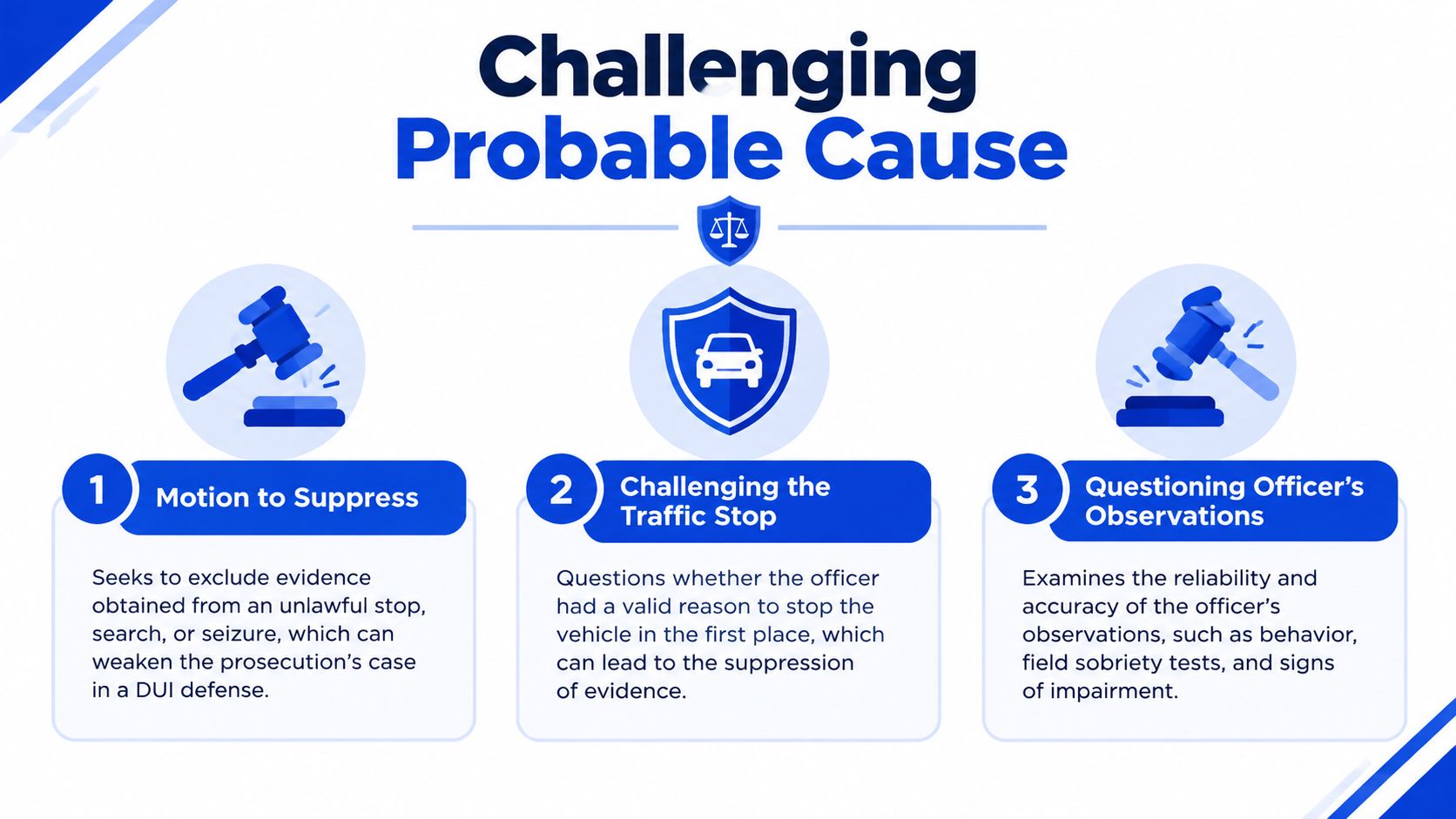
A successful suppression motion can remove critical evidence before trial. If the State loses the observations, statements, test results, or other evidence flowing from an unlawful seizure, prosecutors may have fewer usable facts with which to prove the charge. That doesn't guarantee dismissal, but it can materially change the case's posture.
Learn how a motion to suppress evidence works.
Protecting Your Rights and Your Next Move
Anything you say during the stop may become part of the officer's probable-cause narrative. Field sobriety exercises are generally voluntary in Florida, and you should avoid guessing, debating, or supplying extra explanations before speaking with counsel.
Write down what you remember while the details remain clear. Include the weather, lighting, road surface, footwear, medical conditions, medications, injuries, language issues, officer instructions, and anything the body camera may have captured. Preserve paperwork from the arrest and license process, and ask counsel to obtain available body-camera and dash-camera footage.
The implied-consent process creates time-sensitive license concerns, including the 10-day warning window referenced in Florida DUI practice. Contact a lawyer promptly, preserve your driving record, and don't answer additional written requests from prosecutors without legal advice. Use these questions to ask a DUI attorney when evaluating your next step.
Ticket Shield, PLLC reviews Florida DUI arrests for probable-cause, search-and-seizure, field-testing, and chemical-evidence issues, serving clients in Broward County, Fort Lauderdale, Miami-Dade, Palm Beach, and surrounding South Florida communities. Visit Ticket Shield, PLLC for a confidential consultation about protecting your license, challenging unreliable evidence, and planning a defense.