
How to Bail Someone Out of Jail in Florida
Jason Goldsmith, Esq
The phone rings after midnight, and the message is blunt. Your husband, brother, son, or friend is in jail somewhere in South Florida, and the first thought is usually the same, how do I get them out fast without making this worse? Start by getting the exact jail, the exact charge, and the exact name used at booking. If you skip those three details, you can burn hours driving to the wrong facility, calling the wrong desk, or trusting bad information from someone who's just as confused as you are.
Bail is not just a payment problem. It decides whether a person waits for court at home or in a cell, and in Florida that difference can affect work, family, housing, and the defense itself. The goal is simple, but the process isn't. Move quickly, stay organized, and don't sign anything until you know exactly what you're promising.
Table of Contents
What to Do Immediately After the Arrest Call
The worst part is usually the first five minutes. Someone calls from an unknown number, the story is rushed, and the details are half-right. A South Florida family can waste half the night on a simple mistake if they start guessing before they start verifying.
Get the arrest facts before you move
First, write down the full legal name, date of birth, the agency that made the arrest, and whether the arrest happened in Broward County, Miami-Dade, Palm Beach, or another county. If the caller knows the charge, write that down too, but treat it as provisional until you confirm it at the jail. Then ask one direct question, which facility is the person in right now?
Practical rule: Don't leave home until you know the jail name and the booking status. “He got picked up” is not enough.
Second, check whether the person has been booked. People often assume an arrest means the defendant is already available for release, but booking can lag behind the arrest itself. If booking hasn't happened yet, the jail may not have a bail amount, and you'll only get the runaround if you keep calling before intake is complete.
Don't let panic create bad logistics
If the arrest happened in Fort Lauderdale, Hollywood, Miami, or West Palm Beach, the agency and detention site may not be the one you expected. South Florida is crowded with overlapping jurisdictions, and families lose time when they assume the nearest jail is automatically the right one. Ask for the arresting agency, the detention center name, and the booking number as soon as anyone can give it to you.
A clean first call should answer three things, where is the person, what is the charge, and has booking been completed? If you have those answers, you're no longer wandering. You're ready to locate the defendant and confirm release conditions without making the situation more expensive or more chaotic.
Locating the Defendant and Confirming the Bail Amount
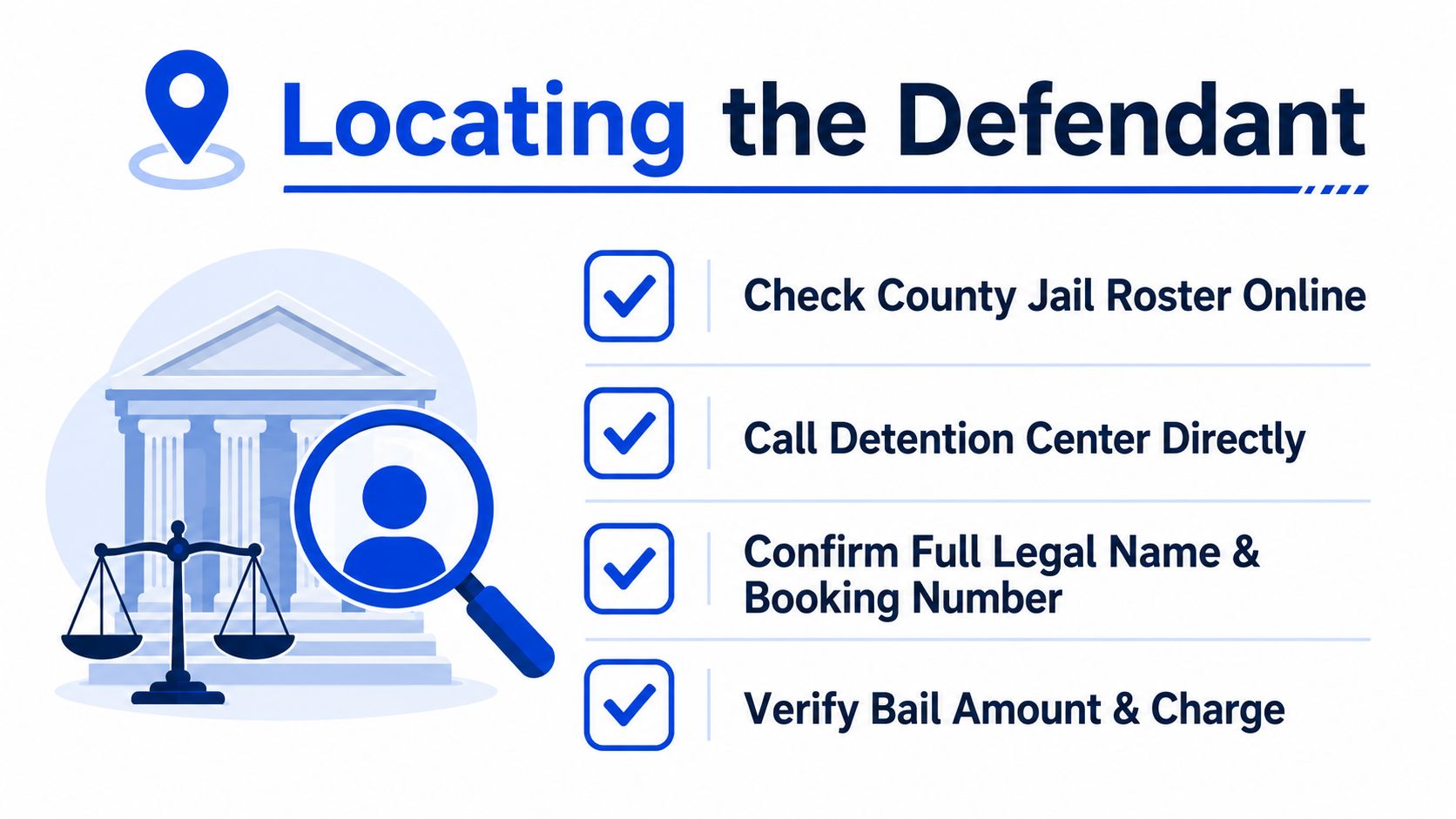
If the family member is still unbooked, living out of a car, bouncing between addresses, or getting moved across county lines, guessing will waste time and money. Start with the booking number if you have it. If you do not, get the full legal name, date of birth, arresting agency, and the jail where the person is likely being held. Those details keep you from calling the wrong facility and hearing the same answer over and over.
Use the jail roster, then verify by phone
Start with the county jail roster or inmate lookup portal, then verify it by calling the detention center directly. Online records help you spot a mistaken county, a duplicate name, or a booking record that has not fully updated yet. A person arrested in Broward can be transferred later, and someone picked up in Miami-Dade may end up in a different facility by the time you call, so do not rely on a single search result.
Use a short checklist and keep it in front of you.
Check County Jail Roster Online: Use the county inmate search first so you are not guessing.
Call Detention Center Directly: Ask whether the person has been booked and whether a bail amount is available.
Confirm Full Legal Name & Booking Number: Those details speed up every later step.
Verify Bail Amount & Charge: Make sure the amount matches the actual booking record, not hearsay.
If the person has unstable contact info, no fixed address, or is coming from out of state, write that down now. A bondsman will ask, and a family member cosigning a bond needs to know whether the defendant can receive calls, show up for court, and return the property or paperwork tied to release.
Know whether the bond is preset or judge-set
Some cases use a preset bail schedule, while others wait for a judge to set the bond. If judicial review is still pending, the amount may not be available right away. That delay is normal. The bail amount also does not mean the person is ready to walk out. The jail still has to process the paperwork, accept the correct form of payment, and complete release steps.
A lot of families fixate on the charge and ignore the booking record. That is the wrong focus. The booking number, detention center, and exact bail amount control the timeline. They also control the risk for anyone who signs as a cosigner, because a vague call from a relative is no substitute for the actual release conditions.
For a broader explanation of pretrial release in Florida, use the booking record to confirm whether the person is eligible for release or still waiting on a court decision.
Cash Bond Versus Surety Bond in Florida
Florida families usually face two paths. They either pay the full amount directly, or they use a bondsman to post the bond for a fee. Those are different choices, and mixing them up can cost real money and create avoidable problems for the person who signs.
A cash bond is simple on paper. You pay the full bail amount directly, and if the defendant makes every required court appearance, that money is generally refundable in the sense explained by what pretrial release means in criminal cases. The refund can still take time, and deductions can still come out before money is returned. A surety bond uses a licensed bondsman who guarantees the appearance, while the family pays a non-refundable premium for that service. That premium buys speed and access when the full amount is out of reach.
Compare the two options before you commit
Feature | Cash Bond | Surety Bond |
|---|---|---|
Upfront payment | Full bail amount | Premium paid to bondsman |
Refundability | Potentially refundable if conditions are met | Premium is non-refundable |
Who posts the bond | Family or defendant | Bail bondsman |
Best fit | Families who can cover the full amount | Families who need release without paying the full bond |
Financial risk | You tie up more cash | You pay for the service and may face cosigner exposure |
The legal definition matters too. In the United States, bail is the release of an arrested person on a promise to appear later in court, and that promise may be secured or unsecured. That is the foundation of the process, even when local practice gets rushed or confusing.
Direct advice: If you can afford the full cash bond without wrecking rent, payroll, or mortgage payments, cash keeps the cost cleaner. If you cannot, a surety bond may be the practical path, but only if you understand the paperwork before you sign.
Working With a Bail Bondsman and Understanding Cosigner Risks
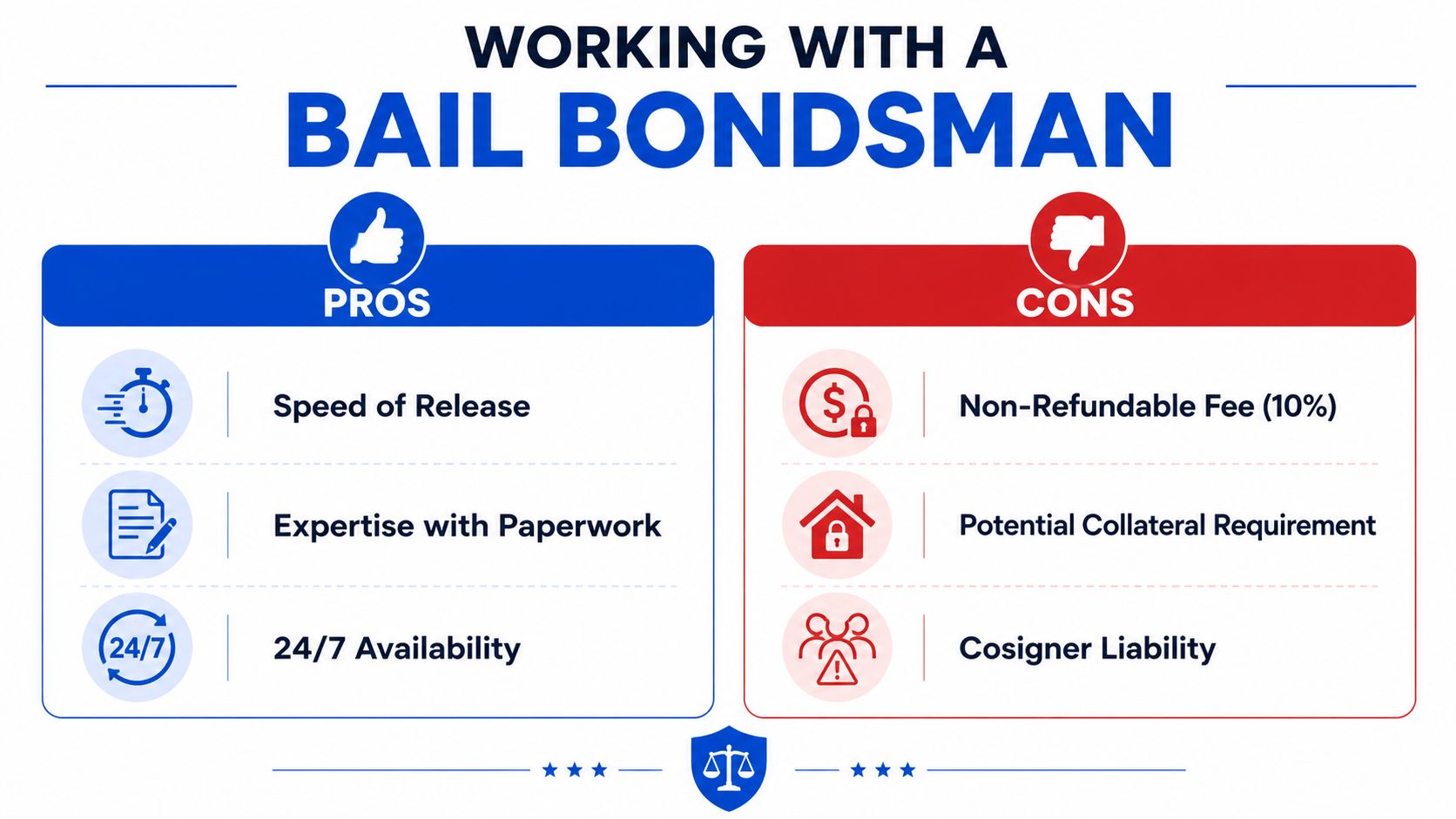
For a lot of families, the bondsman is the only realistic path to release. That doesn't mean you should sign the first paper someone puts in front of you. A licensed bondsman should be able to explain the premium, the collateral request, and exactly who is on the hook if the defendant misses court.
Ask the hard questions before you sign
Before you agree to anything, ask whether the company is licensed to write bonds in the county where the person is held, what collateral they want, and whether the agreement makes you an indemnitor. That term matters. If you indemnify the bond, you're promising to cover losses the bondsman suffers if the defendant fails to appear.
Bring the paperwork they will ask for. The usual items include your ID, the defendant's full name, booking number, date of birth, charge information, and contact details for everyone involved. If you're moving fast after a night arrest in Broward or Miami-Dade, having those details ready can save you a second trip.
Know what you are really promising
The hidden cost is not just the premium. Exposure can include collateral, collection efforts, and ugly fallout if the defendant misses court. A missed appearance can trigger financial enforcement, and the bond can become more than a temporary inconvenience.
Practical rule: Never sign a bond agreement you haven't read end to end. If the paper says you're responsible for the full bond, believe it.
This is the part most guides skip. Families often understand the basic fee, but they don't ask whether the bondsman can pursue them for the full amount, what happens to collateral, or whether the agreement creates long-term financial problems. Neutral bail-process sources usually stop at the mechanics, but your real concern is the risk to your money, your credit, and your assets.
Ticket Shield, PLLC handles criminal defense matters in Florida, including cases where release strategy and court deadlines are already in motion, and that kind of early legal input can keep a family from making a bad financial decision under pressure.
Costs, Timelines, and Court Appearance Requirements
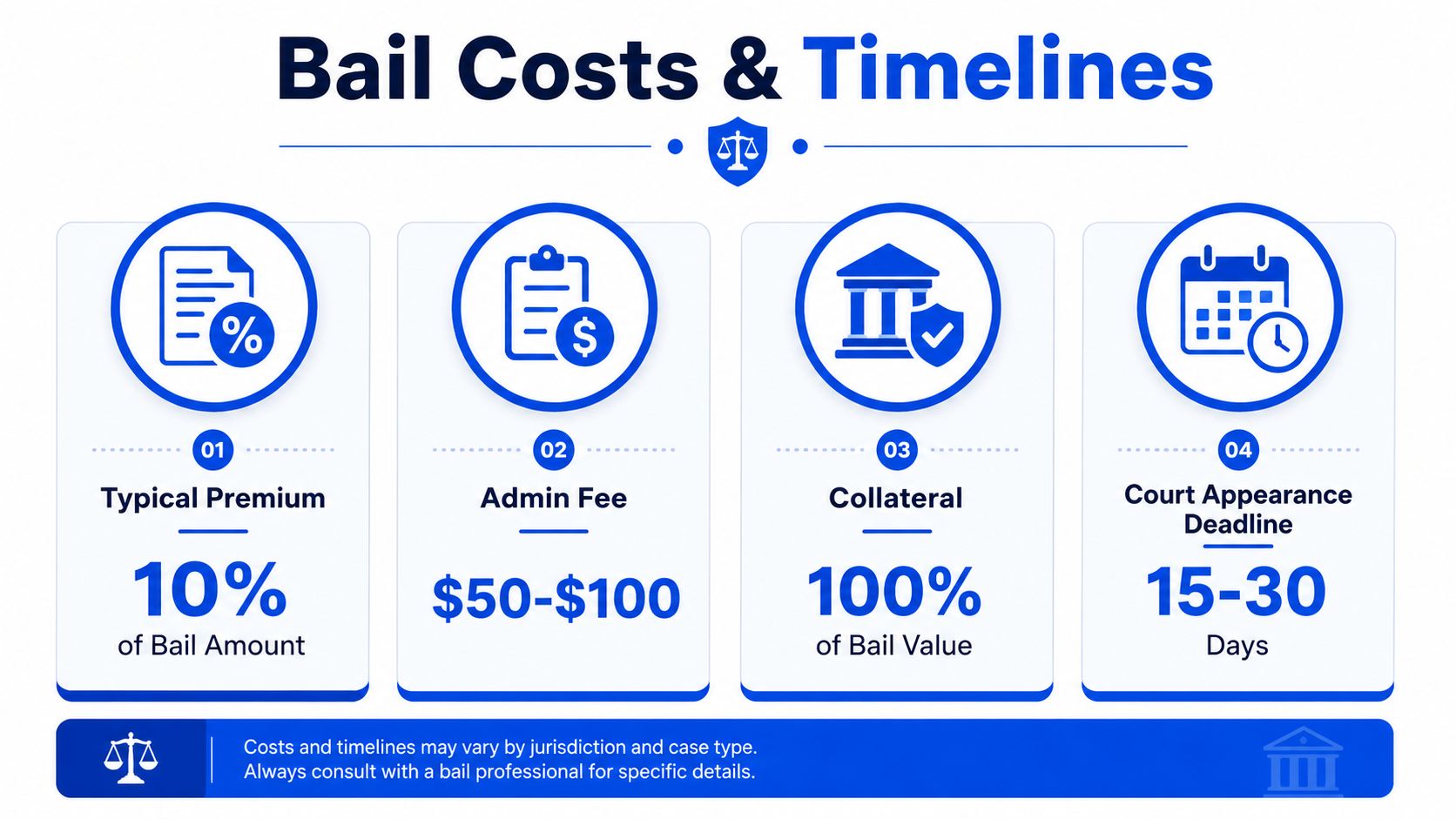
The true cost of bail is rarely just the headline number. Families pay the premium, maybe collateral, and sometimes extra administrative friction that nobody explained clearly at 2 AM. The money problem is only one side of it, because release also comes with court obligations that can affect the whole case.
What the money picture actually looks like
A surety bond usually means the family pays a premium rather than the full bond. A cash bond means the full amount is posted directly, and the refund question only matters if the case is handled cleanly and the defendant appears as required. In either setup, bail is a financial guarantee tied to court appearances, not a free pass to ignore the case.
Florida charges like DUI, drug possession, domestic violence, theft, gun crimes, and probation violations can all bring different bond situations depending on the facts, criminal history, and the judge's release decision. That's why the amount you hear from a friend is often useless. The correct number is the one in the actual booking record.
Timelines are slower than families expect
Even after payment, release can take hours because the jail still has to process the bond, complete administrative forms, and finish the release workflow. That lag is normal, and it's one reason a person can be “bailed out” in theory but still sitting inside well after someone has paid. If the defendant's paperwork is incomplete, or if the jail is waiting on the correct name or booking number, the clock keeps running.
Court appearances are not optional. If the person misses a hearing, the bond exposure becomes real fast, and the release strategy turns into a forfeiture problem. That's true whether the case is a misdemeanor traffic matter or a more serious felony charge.
Bottom line: Getting someone out is step one. Staying out requires discipline, reminders, and someone keeping track of court dates from day one.
For arraignment timing and why the first court date matters, see this Florida arraignment guide.
Common Pitfalls and Complicating Factors
A clean arrest with a quick release is the exception, not the rule. Real families run into housing problems, travel problems, missed-notice problems, and cases that are already tangled with other legal issues. If you ignore those complications, you can get someone out of jail and still set them up to fail.
Homelessness, no fixed address, and unstable contact information
If the defendant is homeless or bouncing between addresses, release gets harder to manage. Court notices go missing, transportation is unreliable, and a simple obligation like “show up on Tuesday” can become a trap if nobody can reach the person consistently. That's why getting someone out is less useful when no one has solved where they'll sleep, how they'll get to court, or how they'll get reminders.
Out-of-state defendants and multi-county confusion
Bailing someone out from another state adds another layer of logistics. If you aren't physically in Florida, you have to coordinate timing, paperwork, and payment across distance, and the detention facility still controls the actual release. If there are outstanding matters in multiple counties, don't assume one bond solves everything. It might not.
Other problems that can block release
Probation Issues: A probation violation can change how bond is handled and may trigger separate court concerns.
Warrants in Other Counties: A second case can keep the person locked up even after one bond is posted.
Paperwork Mistakes: A wrong name, missing booking number, or incomplete indemnity agreement can stall release.
Unlicensed Help: If the bondsman isn't properly authorized, the whole transaction can go sideways.
The hidden issue families miss is that release conditions are only half the battle. Transportation, housing, and reliable contact information matter just as much as the bond paperwork itself, and recent research tying poverty and homelessness to jail stays makes that reality hard to ignore.
For a deeper look at what happens when someone fails to appear, see this warrant guide for Florida cases.
When to Contact a Criminal Defense Attorney
Call a criminal defense lawyer as early as possible, ideally before the bond is posted or immediately after the arrest call. Bail is about release, but the criminal case is about survival, and those two decisions are linked from the start. A lawyer can push for better bond conditions, raise constitutional issues, and start preserving evidence before it disappears.
Why early representation matters
A lawyer can intervene at the first appearance stage, argue for lower or different conditions, and begin building a defense while everyone else is still figuring out the jail name. That matters in DUI, drug crime, domestic violence, theft, weapons, and probation cases because the State starts its file immediately, and your side should too. If release conditions include no-contact orders, location restrictions, or other limits, those details need to be handled carefully from the beginning.
If you need a Florida criminal defense lawyer, Ticket Shield, PLLC can help with the immediate release issue and the bigger case strategy at the same time.
The arrest is not the whole case. It's the beginning of the fight.
If you're trying to bail someone out in Broward County, Fort Lauderdale, Miami-Dade, Palm Beach, or anywhere else in South Florida, don't handle the pressure alone. Ticket Shield, PLLC provides direct, attorney-led criminal defense guidance when the jail clock is already running. Call now for a confidential consultation, get clear direction on the bond process, and protect your loved one's freedom before a small mistake turns into a bigger legal problem.