
Motion to Return Property in Florida
Jason Goldsmith, Esq
You leave the courthouse expecting one problem to be over, then discover that law enforcement still has your phone, vehicle, cash, computer, or other personal belongings. The criminal case may have ended, but your property remains locked in an evidence room. Calls to an agency may produce vague answers, delays, or no response at all.
A motion to return property is the formal legal tool used to ask a Florida court to order the government to give seized property back. The request sounds simple. The procedure isn't. A deficient filing, the wrong court, an unresolved evidence issue, or a missed deadline can defeat a claim that may otherwise be legitimate.
Table of Contents
Understanding the Motion to Return Property in Florida
A motion to return property asks the court to address continued government possession after a seizure. It can concern tangible personal property such as cash, vehicles, firearms, documents, jewelry, phones, computers, and other belongings taken during an investigation or criminal case. The fact that police seized an item doesn't automatically mean the State owns it or may keep it indefinitely.
The timing and purpose of the request matter. While an investigation or prosecution is active, the State may argue that an item remains necessary as evidence, is subject to forfeiture, or has another lawful basis for continued detention. Once that justification ends, the owner or another person with a legitimate possessory interest can seek judicial relief rather than relying on an evidence custodian's discretion.
Why a routine request often fails
Many people begin with a phone call or a written demand to the police department. That may help identify where the property is stored, but it doesn't replace a properly filed motion. Law enforcement may still hold the item because prosecutors haven't authorized its release, the agency believes it relates to a forfeiture proceeding, or no one has reviewed the file after the case ended.
You also need to separate a return request from a challenge to the legality of the search. A person may pursue issues involving an illegal search and seizure, but a motion seeking the return of property focuses on possession, evidentiary need, and the government's legal authority to keep the item. The facts can overlap, but the remedies aren't identical.
What the court needs to decide
The judge generally needs a clear answer to several practical questions:
What was seized: Identify each item precisely, not merely “my belongings.”
Who may possess it: Show ownership or another lawful possessory interest.
Why it should be returned: Explain why the property isn't the fruit of criminal activity and isn't being held for an evidentiary purpose.
What the State claims: Anticipate evidence, forfeiture, or another superior possessory interest.
A criminal arrest doesn't erase ownership rights. It does, however, place the burden on the person seeking relief to present a legally sufficient and factually supported request. If the property is important to your work, communication, transportation, finances, or family responsibilities, treat the recovery issue as a legal matter immediately, not as an administrative inconvenience.
Determining Eligibility and Filing Jurisdiction
The first mistake is assuming that one universal motion works in every court. The forum controls the procedure. Florida state court and federal court use different legal frameworks, and even a strong ownership claim can be delayed when the filing goes to the wrong county, district, or case.
A person filing must show a genuine possessory interest. That may be the owner, a lawful bailee, or another person who can prove a right to possess the item. Mere access to a phone, vehicle, or account may not be enough. Gather purchase records, registration documents, receipts, photographs, account information, insurance records, and any property receipt issued during the search.
Florida state court and federal court are not interchangeable
In federal practice, Rule 41(g) of the Federal Rules of Criminal Procedure permits a person aggrieved by an unlawful search, seizure, or deprivation of property to seek return in the district where the property was seized. The rule provides a post-seizure remedy, but it isn't automatic. Courts generally require proof of a possessory interest and may examine whether the movant has acted with “clean hands” concerning the property. The federal framework is explained in this guide to filing a federal motion for return of property.
Federal courts decide the motion in the district where the seizure occurred. If the parties dispute facts, the court must take the evidence needed to resolve those disputes. If the court grants relief, it may impose reasonable conditions that preserve the government's access to the property for later proceedings, as reflected in the federal court decision addressing Rule 41(g) procedure.
Florida state proceedings require attention to Florida's own pleading requirements and the court connected to the criminal case or seizure. Don't assume that filing where you currently live, where the criminal case was prosecuted, or where the agency headquarters sits will always be correct.

The jurisdiction trap
The most important preliminary questions are:
Which agency seized the property?
Where did the seizure occur?
Was the case filed in Florida state court or federal court?
Has a forfeiture process begun?
Did the criminal case end, and when?
A case may be prosecuted in one location while the property was seized in another. That distinction can control venue. The same problem arises when no criminal case was filed. In that situation, the correct procedural route may depend on the nature of the seizure, the agency involved, and whether the government asserts a separate forfeiture claim.
If your vehicle was taken during an investigation, don't treat the issue as merely a transportation problem. The legal basis for the seizure and any police authority to take a car can affect the correct strategy. Confirm the forum before drafting, filing, or paying a filing fee.
The Three Requirements for a Facially Sufficient Motion
Florida courts apply a threshold called facial sufficiency. The judge first reviews what the motion alleges. If the filing doesn't state the required facts, the court may never reach the underlying dispute about whether the State still has a lawful reason to retain the property.
A proper motion must identify the property specifically and allege three core points. These aren't suggestions. They are the foundation that allows the court to require a response from the State.
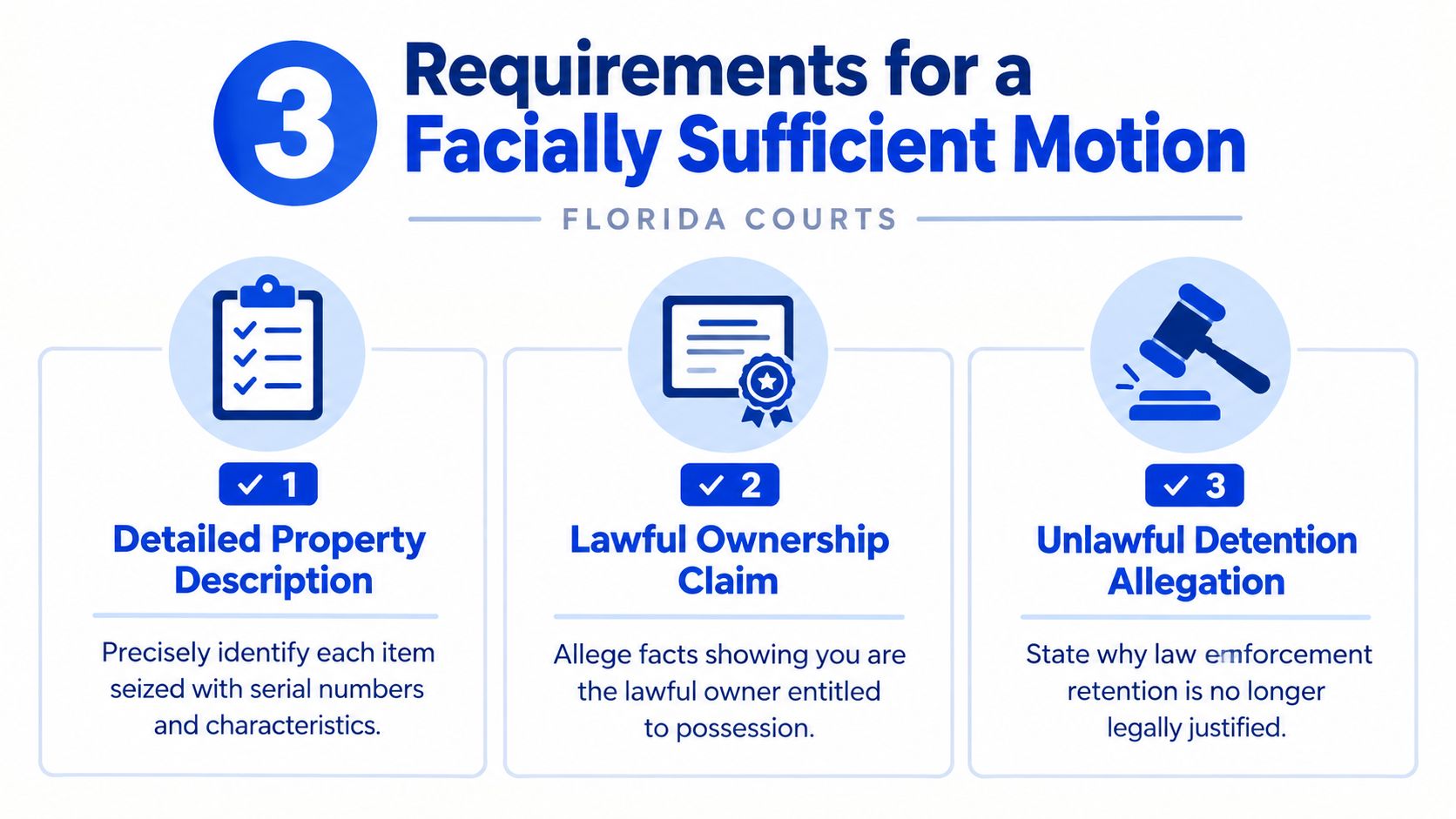
First, identify the property and claim personal ownership
The motion should describe each item with enough detail to distinguish it from other property. Include the type, make, model, color, serial number, vehicle identification information, account identifier, or other unique characteristics when available. A broad statement such as “return everything taken from me” creates avoidable uncertainty.
Florida authority requires the motion to allege that the property is the movant's own personal property. That allegation should be supported by facts, not just a conclusion. Explain how you acquired the item and attach available documentation when appropriate. Florida cases also require specific identification of the items, and they recognize that a deficient motion should receive an opportunity for amendment after the court identifies the defects, as described in Florida case law on identifying seized property.
Second, state that the property isn't the fruit of criminal activity
The motion must allege that the property wasn't obtained through or produced by illegal activity. This requirement doesn't mean the court has already decided the entire criminal case. It means the filing must address the State's potential claim that the item itself is connected to criminal conduct.
Be precise. If the property is money, identify its lawful source when that fact is relevant. If it is a vehicle or electronic device, explain its ordinary ownership and use. Don't make unnecessary admissions, but don't leave the central allegation unexplained either.
Third, explain why the item isn't being held as evidence
The motion must allege that the property isn't being held for evidentiary purposes. That issue often becomes the central factual dispute. The State may respond that the item was admitted into evidence, remains relevant to another proceeding, or is subject to forfeiture.
Once the motion meets the facial threshold, the State can defeat it by showing that the property was entered into evidence or is subject to forfeiture. Florida courts describe this as a possession-and-evidence contest, not an automatic return process. The court may examine whether law enforcement still possesses the item and whether another person or entity has a superior possessory interest, as explained in Florida authority on the three required allegations.
Practical rule: A motion should tell the judge exactly what the property is, why you are entitled to possess it, and why the State has no continuing legal reason to keep it.
Handling Digital Evidence and Forensic Data Disputes
A phone isn't just a physical object. It may contain family photographs, private messages, business records, privileged communications, financial information, location history, and cloud credentials. When investigators seize a device, they may also create or retain a forensic copy. Recovering the phone therefore doesn't always resolve the government's continued access to the data.
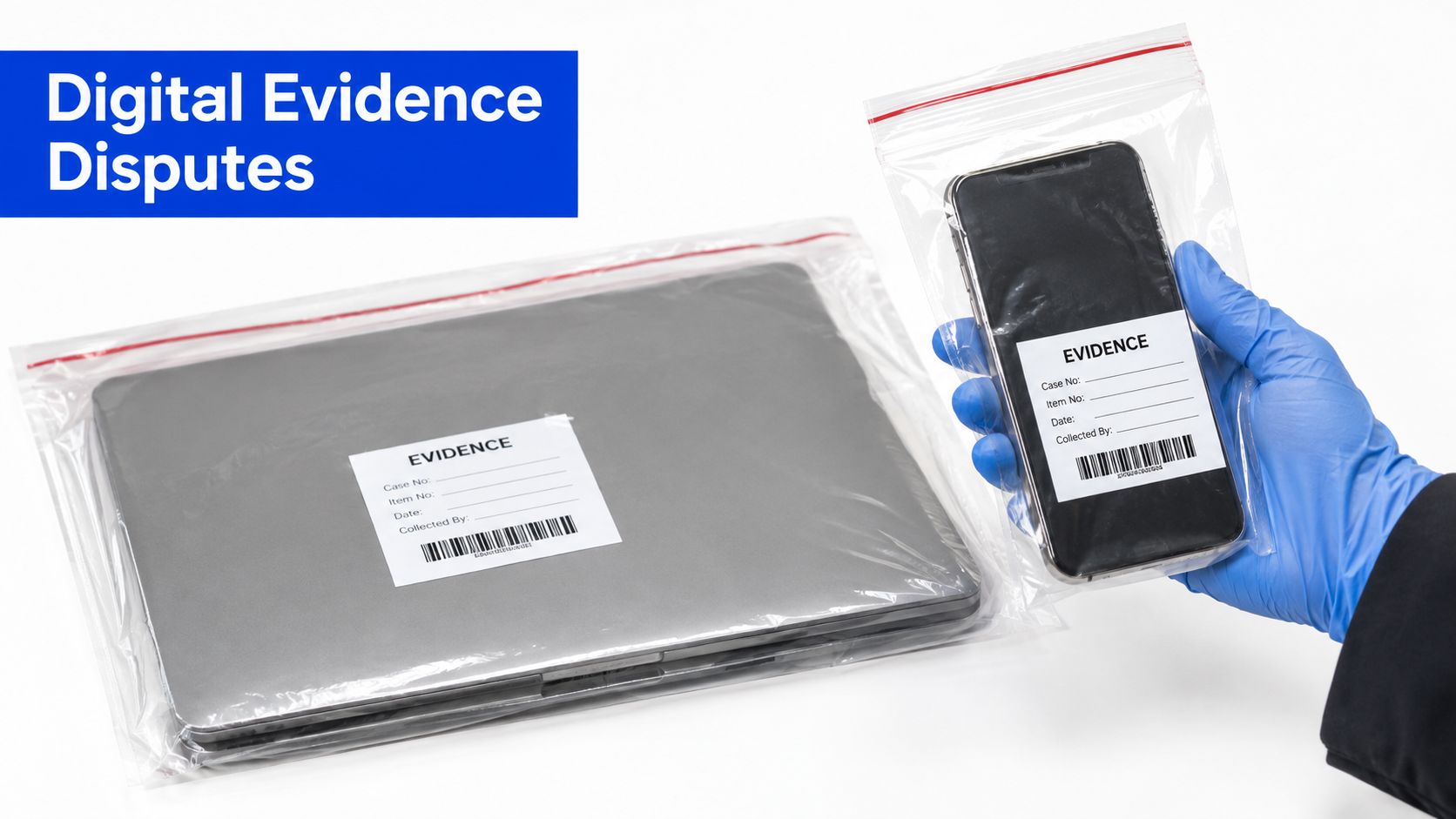
Oregon's statute expressly treats raw data obtained through forensic imaging of portable electronic devices and computers as property that may be the subject of a return motion. That statutory treatment demonstrates why a return request shouldn't be limited to the physical phone or laptop. The dispute may involve the extracted files, forensic image, copied messages, or other retained data, as shown by the Oregon provision addressing forensic data.
Ask for a remedy that matches the evidence
A judge may need to balance two legitimate interests. The government may need to preserve evidence for a later proceeding, while the owner needs the device and protection from indefinite retention of personal information. Rule 41(g) allows a federal court to impose reasonable conditions preserving later access and use, which can support a carefully crafted request rather than an all-or-nothing demand.
Depending on the facts, the requested relief might include:
Return of the physical device: Ask for the phone, computer, or storage media when continued possession isn't justified.
Preservation without continued possession: Propose a documented, limited process that preserves relevant evidence while returning the original device.
Control of copied data: Request restrictions on access, use, duplication, or dissemination of forensic material.
Removal of unrelated information: Seek redaction or segregation of privileged, personal, or irrelevant data.
Destruction of unnecessary copies: If the government no longer needs a forensic image, address its continued retention directly.
Don't wipe, alter, sell, or transfer a device that may still be relevant to a court proceeding. Preserve communications with investigators and obtain the seizure inventory, warrant, return, and property receipt. The chain of custody for evidence may become important when the State claims it needs continued access or insists that the original device cannot be returned.
The practical argument should be specific. Identify what the government needs to preserve, what it no longer needs, and how a proposed condition protects both sides.
Here is a video resource that can help explain the evidentiary issues surrounding seized property:
The 60-Day Deadline and Post-Case Timeline
Florida's most unforgiving property-return rule begins after the criminal proceeding concludes. Under section 705.105(1), title to unclaimed evidence or tangible personal property can vest permanently in the law enforcement agency 60 days after the conclusion of the proceeding if no action is taken. That creates a short post-case window for a defendant or owner to seek return before the government's claim becomes permanent, as detailed in Florida's property-return guidance.
The clock isn't a reason to guess. You need to determine what event concluded the proceeding, document that date, and confirm whether a motion, claim, or other action was filed. A dismissal, final judgment, or other ending of the case can have consequences beyond the criminal record. Waiting for the police to contact you is a poor strategy because the agency may treat silence as abandonment.
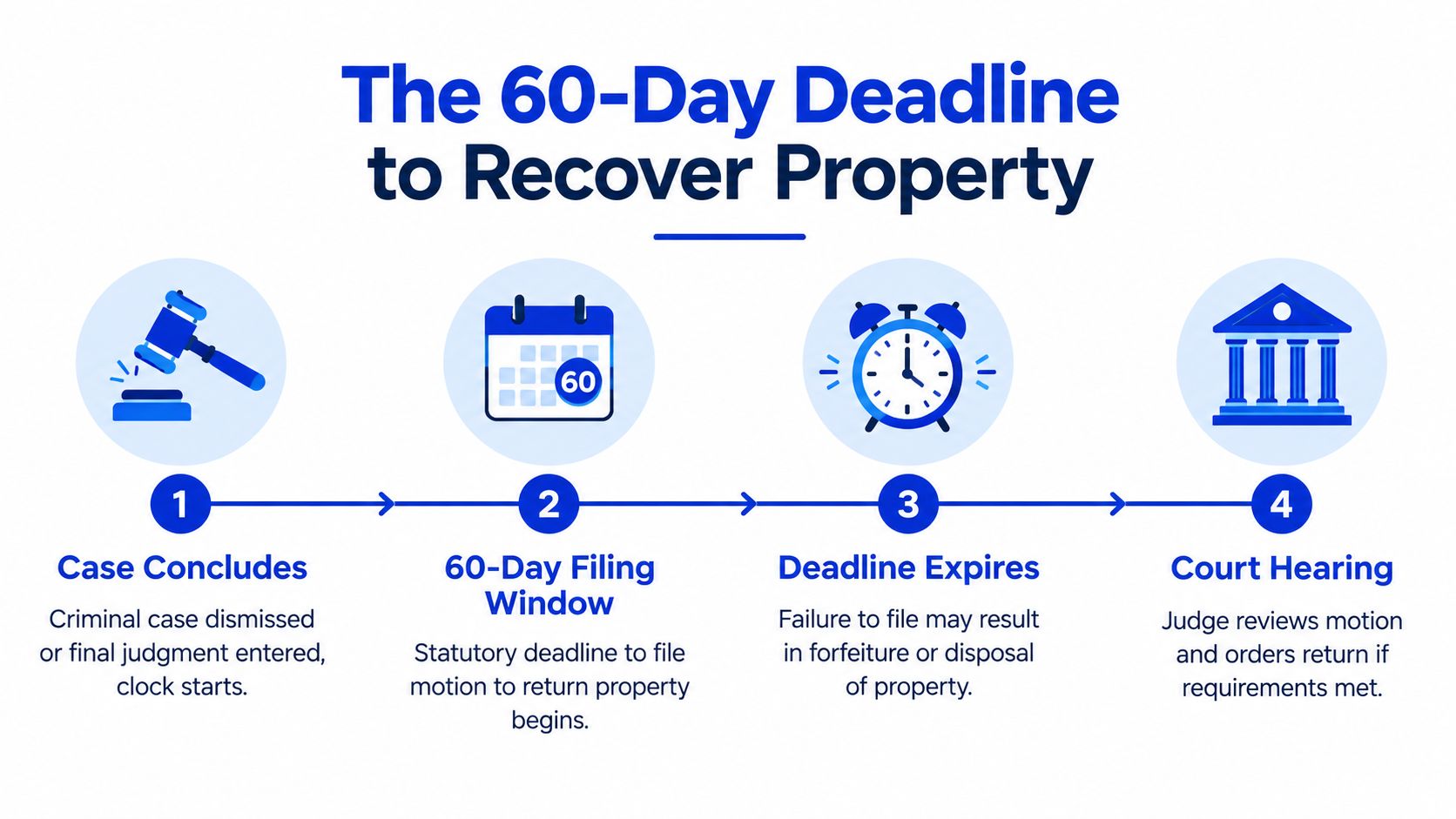
What to do before the clock expires
Use the post-case period to assemble a complete record:
Confirm the end date: Obtain the docket entry, order, judgment, or other document showing when the proceeding concluded.
Locate the property: Identify the agency, evidence unit, prosecutor, or court holding the item.
Secure the inventory: Obtain the receipt, warrant return, inventory, photographs, and case reports.
Prepare the allegations: State ownership, lawful source, and the absence of continuing evidentiary need.
File and serve correctly: Use the proper court and follow local filing and service requirements.
A motion filed after the relevant period may face a serious title problem. If the State contends that title already vested, the dispute may no longer be limited to whether the item was needed as evidence. It may become a contest over permanent ownership.
That deadline also affects people whose cases ended through a nolle prosequi. A prosecutor's decision not to proceed doesn't mean every property issue resolves automatically. Track the case-ending event and address the property separately.
Do not confuse case closure with property recovery. The criminal charge can disappear while the evidence-room problem remains.
Strategic Next Steps and Securing Legal Representation
The strongest property-return strategy starts with documents, not frustration. Preserve every property receipt, inventory, warrant, case disposition, agency email, voicemail, and letter. Write down what was taken, when it was taken, which officer or agency handled it, and what anyone told you about its status.
Build the ownership record
Proof should match the item. Vehicle registration and insurance records can support a vehicle claim. Purchase receipts, photographs, serial-number records, bank statements, repair invoices, and account records can help establish ownership of other property. For digital devices, record the make, model, identifying number, carrier account, and any evidence showing who purchased or routinely possessed the device.
Don't exaggerate your claim. If the property belongs to someone else, that person may need to assert the possessory interest. If several people claim an item, identify the competing interests rather than hiding them. A court is more likely to focus on the dispute when the filing is precise.
Prepare for the State's response
The State may argue that the item was admitted into evidence, remains connected to another investigation, is subject to forfeiture, or belongs to someone with a superior right. A complete response should address each point with records and a proposed solution.
For digital evidence, request specific relief. You may need to propose returning the hardware while preserving a controlled copy, separating privileged material, limiting access, or requiring a documented protocol. The correct remedy depends on the warrant, the case status, the data involved, and the government's stated need.
Why experienced counsel matters
A motion can become an evidentiary hearing when the facts are disputed. Counsel may need to question the agency's evidence custodian, challenge an unsupported retention claim, establish ownership, address forfeiture, and protect against statements that could affect a separate criminal matter. A former prosecutor also understands how agencies describe evidence, how prosecutors evaluate continued retention, and which factual gaps matter to the court.
You may find general background about selecting a Florida criminal defense lawyer, but property recovery requires case-specific review. The attorney should examine the seizure location, filing jurisdiction, case-ending date, inventory, warrant materials, ownership proof, and any forfeiture notice before recommending a filing.
If your property was seized in Broward County, Fort Lauderdale, Miami-Dade, Palm Beach, or another South Florida jurisdiction, don't wait for an evidence unit to solve the problem on its own. A timely, facially sufficient motion can preserve your claim, while a careless filing can create delay or leave the State with a stronger argument for continued possession.
Ticket Shield, PLLC reviews seized-property disputes, including Florida motions to return property involving vehicles, cash, phones, computers, and other evidence. Visit Ticket Shield, PLLC to request a consultation, review the filing deadline and proper court, and develop a focused plan to protect your possessory rights.