Florida Statute Stalking: Laws, Penalties & Defense
Jason Goldsmith, Esq
You're up late, staring at your phone, and every new text makes the knot in your stomach worse. Maybe it started as a breakup, a bad argument, or a messy divorce. Then the messages kept coming, the drive-bys started, the posts turned pointed, and now you're wondering whether this is just ugly drama or a criminal case in Florida.
Florida treats stalking as a serious offense, and prosecutors in South Florida use it fast when they think the conduct is repeated and directed at one person. The statute matters, but the core issue is usually the same every time: whether the State can prove a true course of conduct instead of a single ugly moment. If you're scared, accused, or already served with papers, don't guess your way through this.
Table of Contents
The Four Elements the State Has to Prove Beyond a Reasonable Doubt
Misdemeanor Stalking, Aggravated Stalking, and Cyberstalking
Defense Strategies and Your First 72 Hours After a Stalking Charge
When a Situation Crosses From Drama Into a Stalking Charge
A Fort Lauderdale breakup doesn't usually start with a handcuffing. It starts with a text, then another, then a call at work, then the same car parked outside the gym in Miami-Dade, then a complaint to police because the messages stopped feeling like a breakup and started feeling like pressure. That's how a lot of Florida stalking cases are born, not from one shocking act, but from a chain of small ones that the State says add up to criminal conduct.
Florida's statute is built around that idea. Under Florida's stalking statute, section 784.048, stalking means willfully, maliciously, and repeatedly following, harassing, or cyberstalking another person, and the basic offense is a first-degree misdemeanor punishable by up to 1 year in jail under sections 775.082 or 775.083 (Florida Senate stalking statute). That repeated-behavior requirement is the part people miss when they panic over a single bad message.
Many people contact me after stating, “It was just one text,” or “We only argued once.” That's not how prosecutors view it. The central issue is whether there were at least two incidents, whether they were directed at a specific person, and whether the State can establish a pattern that appears willful and malicious rather than emotional, foolish, or a combination of both.
Practical rule: If the evidence looks like a short-lived breakup fight, the defense should attack the State's attempt to turn it into a pattern.
Police often file these cases after a complainant says they're afraid, but fear alone doesn't prove the charge. The State still has to show the conduct fits the statute. That's why defense work in these cases starts with the timeline, the messages, and the context, not with emotional assumptions.
If you want a plain-English explanation of the kind of facts police usually need before making an arrest, I've laid that out in this probable-cause guide.
How Florida Statute 784.048 Defines Stalking
Read the words the way prosecutors do
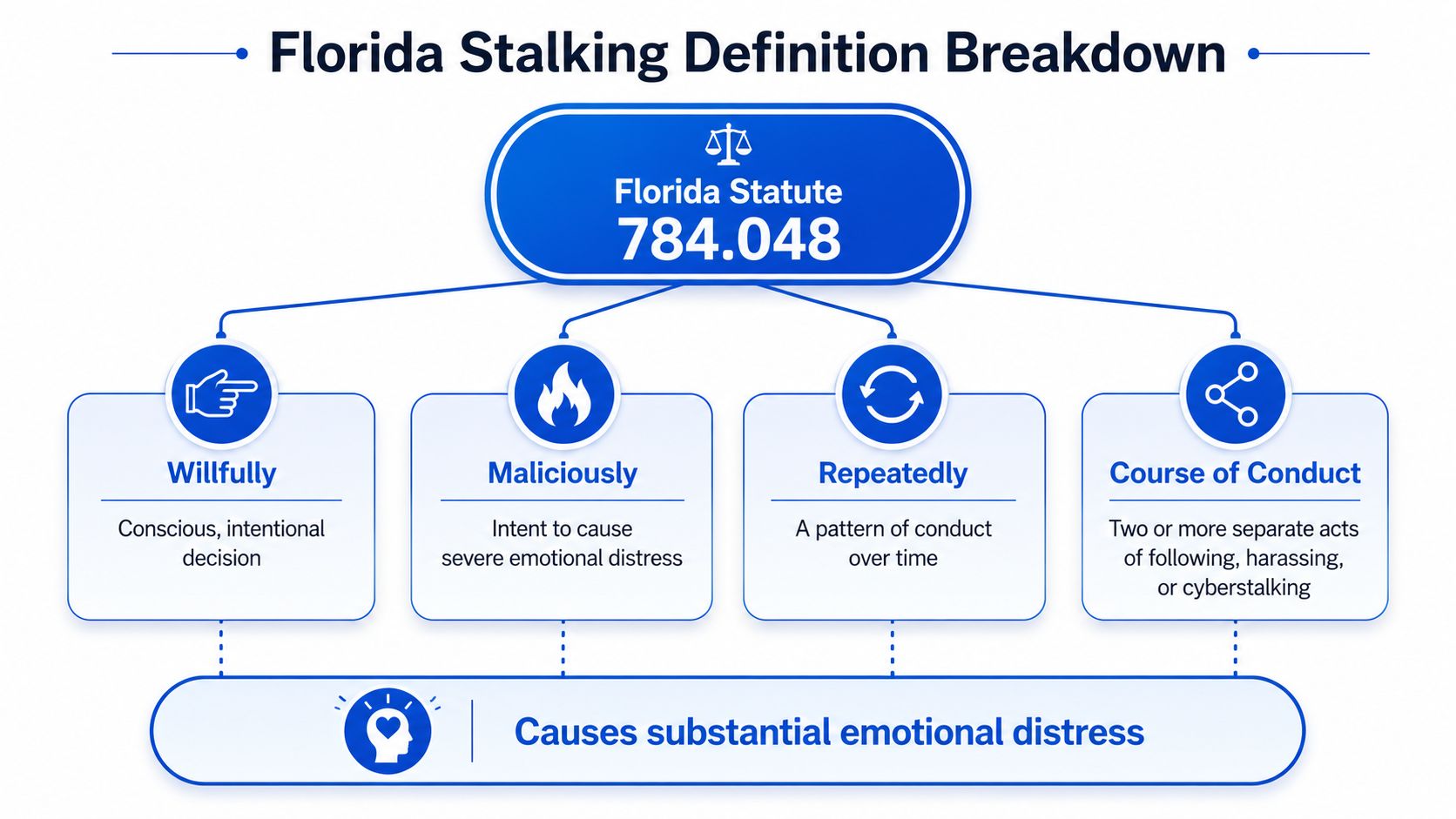
Florida Statute 784.048 uses plain words, but each one carries weight. Willfully means the conduct was deliberate, not accidental. Maliciously means more than irritation, it means conduct aimed at causing harm or distress and serving no legitimate purpose. Repeatedly means the conduct has to happen more than once, because stalking is a course of conduct, not a one-off blowup (Florida Bar analysis).
That is the backbone of the statute. The law also covers following, harassing, and cyberstalking. The statute defines harass in a way that matters a lot in real cases, because it requires conduct that causes substantial emotional distress and serves no legitimate purpose (An infographic detailing the four legal requirements of Florida Statute 784.048 for defining stalking and emotional distress.). In plain English, an annoying text thread is not enough, and a messy breakup is not automatically a crime.
Why the course-of-conduct requirement matters
This is the part that changes cases. A course of conduct means the State has to prove a pattern directed at one specific person. Florida law treats stalking as repeated behavior, not a single confrontation, and that is why so many charges weaken once you strip out the emotion and look at the dates, times, and content.
Under Florida Statute § 784.048, stalking is committed when a person willfully, maliciously, and repeatedly follows, harasses, or cyberstalks another person, and it is a first-degree misdemeanor under Florida's general misdemeanor sentencing statutes (Florida Statute 784.048). That plain language tells you what the State must prove and where the defense should press.
If the alleged conduct does not show repetition, if the contact had a legitimate explanation, or if the messages do not show the kind of emotional impact the statute requires, the case gets harder for the State. That is not a technicality. That is the defense.
The Four Elements the State Has to Prove Beyond a Reasonable Doubt
What the prosecutor has to build
A stalking charge in Florida rises or falls on proof, not outrage. The State has to show intent, course of conduct, targeting of a specific person, and conduct that fits following, harassing, or cyberstalking in a way that causes substantial emotional distress and serves no legitimate purpose (Florida Bar analysis). Miss one of those pieces, and the case gets much harder.
Here's the prosecution's problem, at least from a defense perspective. The State often has texts, screenshots, and a very upset complainant, but that doesn't automatically prove criminal stalking. It only proves contact. The law wants repeated acts, and it wants those acts tied to a specific person, with the right mental state behind them.
Single incidents, by themselves, are usually not enough. Florida stalking cases turn on repeated conduct, not one bad exchange.
Where defense counsel attacks first
The weakest spots are usually obvious if you know where to look. A message thread may be messy, but if it shows both sides arguing, responding, or baiting each other, the prosecution's clean narrative gets complicated. Same thing if the contact had a legitimate purpose, like a child exchange, property return, or work-related issue.
A smart defense also looks at whether the State is stretching ordinary communication into harassment. The statute doesn't criminalize every unpleasant interaction. It criminalizes repeated conduct that causes substantial emotional distress and serves no legitimate purpose. That's a high bar when the communications are mixed, ambiguous, or tied to a real-world dispute.
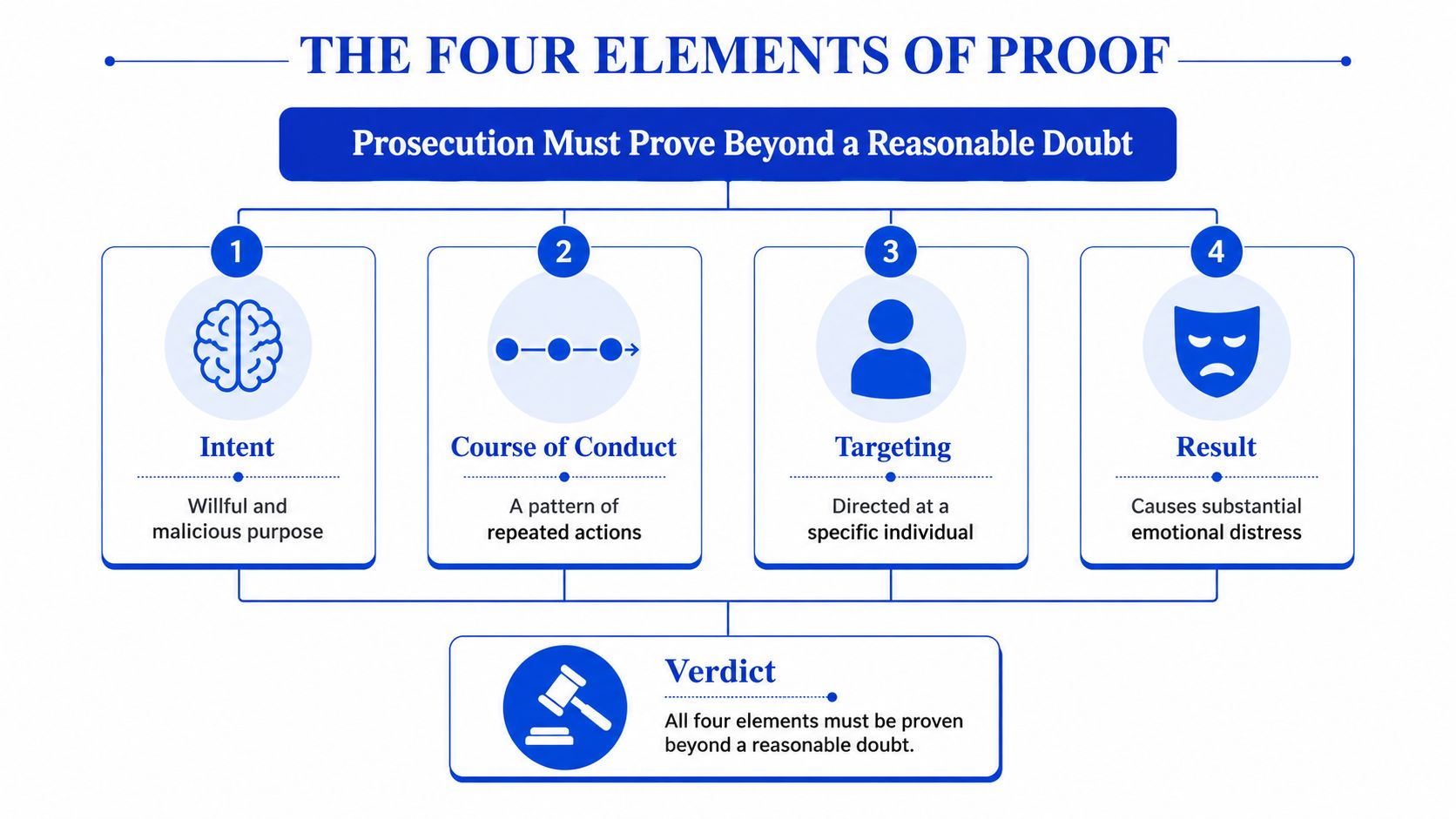
Element | What the State Tries to Prove | Defense Angle |
|---|---|---|
Intent | The conduct was willful and malicious | Show context, not criminal purpose |
Course of Conduct | Repeated acts over time | Attack the timeline and missing incidents |
Targeting | Directed at a specific person | Challenge identity, audience, or recipient |
Result | Substantial emotional distress with no legitimate purpose | Show lawful reason or exaggerated impact |
That's the battleground. Most stalking defenses aren't won by arguing the messages never happened. They're won by showing the messages don't satisfy the statute.
Misdemeanor Stalking, Aggravated Stalking, and Cyberstalking
The charge can move fast
A stalking case in Florida can start as a petty back-and-forth and end in felony court before the person on the receiving end realizes what changed. The State usually starts with misdemeanor stalking, the basic first-degree misdemeanor charge. If prosecutors can tie the conduct to a credible threat, they push it into aggravated stalking, a third-degree felony. That jump changes everything, from bond to plea negotiations to the risk a client faces if the judge believes the threat claim.
Cyberstalking is not some separate, softer category. It is stalking by digital means, texts, DMs, emails, social media posts, location tags, and other online contact that prosecutors say was used to harass or cause substantial emotional distress. In South Florida, that is often the battleground, because the State builds these cases from screenshots, timestamps, and platform records instead of hallway witnesses.
Florida stalking charge tiers at a glance
Charge Tier | Statutory Basis | Credible Threat Required | Maximum Penalty |
|---|---|---|---|
Stalking | § 784.048 | No | 1 year in jail |
Aggravated stalking | § 784.048 | Yes | Up to 5 years in Florida State Prison |
The Florida courts benchcard also notes that children aged 14 or 15 who commit aggravated stalking can be prosecuted as adults in Florida. That point matters because it shows how quickly the charge can move from a domestic dispute or school-related conflict into adult criminal court (Florida courts benchcard). Prosecutors like that pathway because it gives them more pressure points, and defense lawyers have to challenge whether the facts really support the felony label.
Procedurally, aggravated stalking is usually handled with a lot less patience from the court. Judges tend to treat it as a case that needs tighter no-contact conditions, stricter bond terms, and faster hearings on pretrial release. In South Florida, that can mean a client walks into first appearance facing an objection from the State to any meaningful contact at all, especially if there is already an injunction or a police report with screenshots attached.
A misdemeanor stalking case can still be ugly, but it usually leaves more room to fight the wording, the context, and the alleged pattern. Once the charge is filed as aggravated stalking, the defense has to deal with a felony file, a more aggressive bond posture, and the State's habit of presenting the same text thread as proof of both the course of conduct and the threat element. That is where many prosecutions overreach, and that is where the defense needs to slow the case down.
The same conduct can also be charged through a protective-order violation theory when the facts involve an existing injunction or no-contact restriction. That handoff matters because a civil order often becomes the State's bridge into a criminal case, and once that bridge is crossed, every message can get reframed as proof of willful defiance. If that is already happening in your case, read the practical fallout of a no-contact order violation before you send another message trying to explain yourself.
The bottom line is simple. Misdemeanor stalking gives the State a lower rung. Aggravated stalking gives them felony pressure and a much harder position against the accused. Cyberstalking gives prosecutors a way to turn online contact into the stalking conduct itself, which is why the smartest defense work starts by separating real harassment from the kind of messy communication the State likes to exaggerate into a felony.
How Stalking Injunctions Quietly Become Criminal Cases
Civil court often starts the pipeline
A lot of stalking matters do not begin with an arrest. In Florida, they often begin with an injunction for protection against stalking in circuit court. A civil petition can be filed before any criminal charge, and the court can enter temporary restrictions while the case is still being heard. The Florida Senate's stalking-injunction statute sets out that process (Florida stalking injunction statute).
That catches people off guard. A judge can impose no-contact terms, stay-away conditions, and other limits that carry real consequences the moment they are entered. If someone ignores those terms, the State can use that conduct to push the case into a harsher posture, and the alleged violation may become part of the criminal file.
The sequence is simple on paper, petition, hearing, final order, then strict compliance. In real life, it is where one message, one view of a social media profile, or one indirect contact can get recast as a willful violation. If you are already in that situation, read the practical consequences of a no-contact order violation before sending another message you think will explain everything.
A bad injunction strategy can poison the criminal case before the criminal case even starts.
Why defense lawyers treat injunctions strategically
A defense lawyer has to deal with the injunction hearing early, not after the damage is done. The testimony, the wording of the order, and the judge's findings can all shape what the prosecutor argues later. If the injunction is vague, overbroad, or built on one-sided allegations, that problem should be attacked before it hardens into a criminal narrative.

Civil court and criminal court are linked more often than people think. A stalking injunction can affect bond, probation, and plea talks fast, because prosecutors treat the order as a key factor once there is any claimed contact after entry. The legal system does not care that someone thought the civil case was “just paperwork.” The record follows the person.
Misconceptions That Get People Charged
Messages alone can absolutely matter
The first bad assumption is that stalking requires someone hiding in bushes or following a car down I-95. It doesn't. Florida's statute includes cyberstalking, and official guidance confirms the conduct can be directed at a specific person through electronic communication (Florida courts benchcard). Texts, DMs, emails, and posts can all matter if they fit the statute.
The second mistake is thinking the alleged victim controls the charge. They don't. A complainant can say they want it dropped, then the State Attorney still pushes forward if prosecutors think they have enough evidence. That's why people get angry when “we worked it out” doesn't end the case.
What people get wrong in real life
A third misconception is that “no contact” means “no problem.” Wrong. If there's an injunction, a probation term, or a bond condition, a single message can create a new problem even if you thought it was harmless.
The fourth mistake is assuming mutual harassment cancels the case. It doesn't. If both sides are sending ugly messages, the State may still charge one person, or both, depending on the evidence. Mutual bad behavior is not a shield.
The defense angle is the same in each of these. Pull the emotions out, look at the dates, and test the statute. The prosecution still has to prove repeated conduct aimed at a specific person, not just a heated relationship or a run of bad decisions.
What Happens After the Arrest in South Florida Courts
The first day matters more than people think
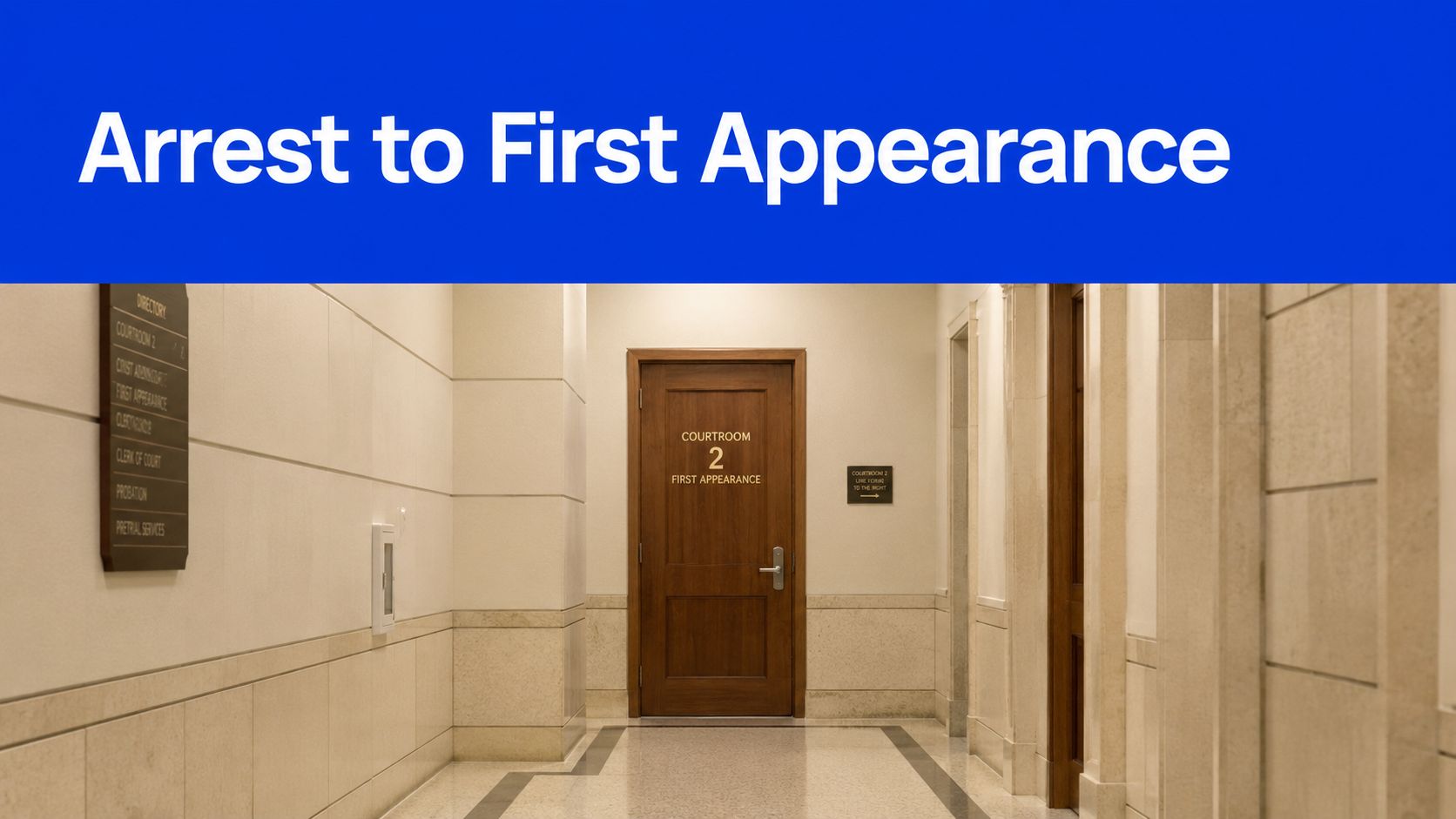
After a stalking arrest in Broward, Miami-Dade, or Palm Beach, the process moves fast. Booking happens, the person waits for first appearance, and the court sets bond and no-contact conditions early in the case. If the charge is aggravated stalking, the conditions can be more restrictive, and pretrial services often becomes part of the picture.
The State then starts collecting the digital trail. That usually means texts, screenshots, social media exports, witness statements, and sometimes location data. Those records can help the State, but they can also help the defense if the context shows mutual contact, consent, or a legitimate reason for communication.
The Florida courts' domestic-violence materials show stalking behavior in 33% (9 of 27) of perpetrators reviewed in the 2022–2023 Office of Domestic Violence Annual Report (Florida courts benchcard). That number doesn't prove guilt in any single case, but it does show how often stalking allegations show up inside broader abuse disputes.
Why early lawyer involvement changes the case
The biggest mistake people make is trying to “explain it” themselves after arrest. They send another message, delete a thread, or post online, and the State uses that behavior as more proof of the course of conduct. Once that happens, the defense has more cleanup work and less advantage.
For a plain-English overview of the arraignment stage, see what happens at arraignment. The key point is simple, don't wait until the first court date to get serious about the evidence.
Defense Strategies and Your First 72 Hours After a Stalking Charge
The defenses that matter first
The first defense I look at is whether the State can prove a true course of conduct. If the alleged incidents are thin, isolated, or explainable, the prosecution's story weakens fast. Next comes legitimate purpose, because a text about property, children, work, or logistics is not automatically criminal just because the other side is upset.
I also look hard at identity. Who sent the message, who controlled the account, who had access to the device, and who posted what? Then I check for fabrication, exaggeration, and constitutional problems with how the evidence was collected. If the police or the complainant overreached, the defense may have a suppression issue.
For a deeper dive on evidence issues, read what is a motion to suppress evidence.
Your first 72 hours checklist
Stop all contact immediately. No texts, no calls, no DMs, no indirect messages through friends.
Preserve everything. Save screenshots, call logs, emails, location history, and any messages that show context.
Do not delete anything. Deleting data looks bad and can destroy helpful evidence.
Do not post about the case. Social media gives the State easy material.
Route every response through counsel. One impulsive message can turn a defensible case into a harder one.
A stalking case is one of those charges where panic makes people do the worst possible thing. Slow down, lock down the evidence, and force the State to prove every element.
If you're facing a Florida stalking charge, injunction, or no-contact violation, Ticket Shield, PLLC can review the evidence, attack the State's course-of-conduct theory, and build a defense plan around your actual facts. Reach out to Ticket Shield, PLLC for a confidential consultation, and get help before a bad text, a bad hearing, or a bad assumption makes the case worse.