
DUI Manslaughter Penalty in Florida: What You Face
Jason Goldsmith, Esq
You're sitting at home after a fatal crash, replaying the same questions: How much prison time could I face? Can the State prove I caused the death? What should I do before arraignment? A DUI manslaughter arrest in Florida creates immediate pressure from prosecutors, investigators, insurance companies, and the victim's family. The label on the arrest affidavit matters, but it doesn't decide the outcome by itself.
The DUI manslaughter penalty depends on the statute, the Criminal Punishment Code scoresheet, the evidence of impairment, causation, prior convictions, post-crash conduct, and whether your defense lawyer finds grounds to suppress or challenge critical evidence. If this happened in Fort Lauderdale, Broward County, Miami-Dade, Palm Beach, or elsewhere in South Florida, don't discuss the facts with anyone connected to the case until you've obtained legal advice.
Table of Contents
What DUI Manslaughter Means Under Florida Law
A late-night single-vehicle crash can become a DUI manslaughter case when a passenger dies and investigators claim the driver was impaired. The State doesn't need a murder theory or proof that the driver intended anyone to die. It must prove the statutory DUI violation, operation of the vehicle, and a causal connection between that operation and the death.
Florida Statute section 316.193(3)(c)3 applies when a person drives or is in actual physical control of a vehicle while impaired, or has a blood or breath alcohol level of 0.08 or higher, and causes the death of another person or a viable fetus through the operation of the vehicle. The statute classifies the offense as a second-degree felony, not as a separate murder offense. The Florida DUI manslaughter statute authorizes up to 15 years in prison, up to 15 years of probation, and a fine of up to $10,000, while imposing a mandatory minimum prison term of 4 years.
The elements prosecutors must prove
The State generally must establish these points beyond a reasonable doubt:
Lawful operation privilege: The accused had the legal privilege to operate the vehicle.
Driving or actual physical control: The accused drove or controlled the vehicle.
Impairment or unlawful alcohol level: The accused was impaired by alcohol, drugs, or a chemical substance, or had an alcohol level of 0.08 or higher.
Causation and death: The operation caused or contributed to causing the death.
Causation is often the hardest issue. Being present in a fatal crash doesn't automatically prove DUI manslaughter. The prosecution must connect the alleged impairment and vehicle operation to the death.
DUI manslaughter differs from vehicular homicide under section 782.071, which focuses on reckless operation likely to cause death or great bodily harm and doesn't require proof of impairment. Ordinary DUI becomes far more serious when a death is alleged because the death element transforms a typical misdemeanor-style DUI prosecution into a felony case carrying state prison exposure. A detailed explanation of the charge is available in this Florida manslaughter defense resource.
Criminal Punishment Code Scoresheet and Real Sentencing Exposure
The phrase “up to 15 years” does not show the sentence a defendant is likely to face. Florida courts also apply the Criminal Punishment Code scoresheet, which calculates a lowest permissible sentence. That floor may sit well above the statutory mandatory minimum prison term of 4 years.
Legal analyses classify DUI manslaughter as a Level 8 offense. One commonly cited calculation assigns 29 primary offense points and 64 victim injury points for a death, creating 93 points before prior convictions or other factors are added. The classification and calculation appear in this Florida DUI manslaughter sentencing guidance.
For a first-time defendant with no prior record, the scoresheet may produce a sentence around the mandatory-minimum range or higher. The statutory second-degree felony ceiling remains 15 years, with up to 15 years of probation and a fine of up to $10,000. The charge also falls within the framework described in this Florida second-degree felony overview.
How the scoresheet changes the analysis
Scoresheet Factor | Points Added | Effect on Sentence |
|---|---|---|
Primary DUI manslaughter offense | 29 | Establishes the principal offense score |
Victim injury resulting in death | 64 | Adds substantial victim-injury points |
Prior DUI conviction | 8 to 16 | Raises the total based on the prior offense |
Prior violent offense | Additional points | Can increase the lowest permissible sentence |
Combined score | 93 before other additions | Places the case within the serious felony sentencing structure |
A prior DUI conviction can add 8 to 16 points, while a prior violent offense adds more. Once the total exceeds 44 points, the scoresheet can push the lowest permissible sentence toward double-digit years. The cited Criminal Punishment Code analysis addresses those scoring figures.
Practical rule: Do not evaluate the case by reading only “up to 15 years.” Before arraignment, preserve evidence, avoid discussing the facts with anyone except your lawyer, and have counsel obtain the scoresheet, verify every prior conviction, and challenge unsupported points.
A judge generally must impose at least the lowest permissible scoresheet sentence unless a lawful downward departure applies. Defense work before sentencing therefore matters. Contesting causation, impairment, prior convictions, or the charge classification can change the sentencing range before the court accepts the scoresheet, rather than relying on a mercy request afterward.
Enhancements That Push Exposure to 30 Years
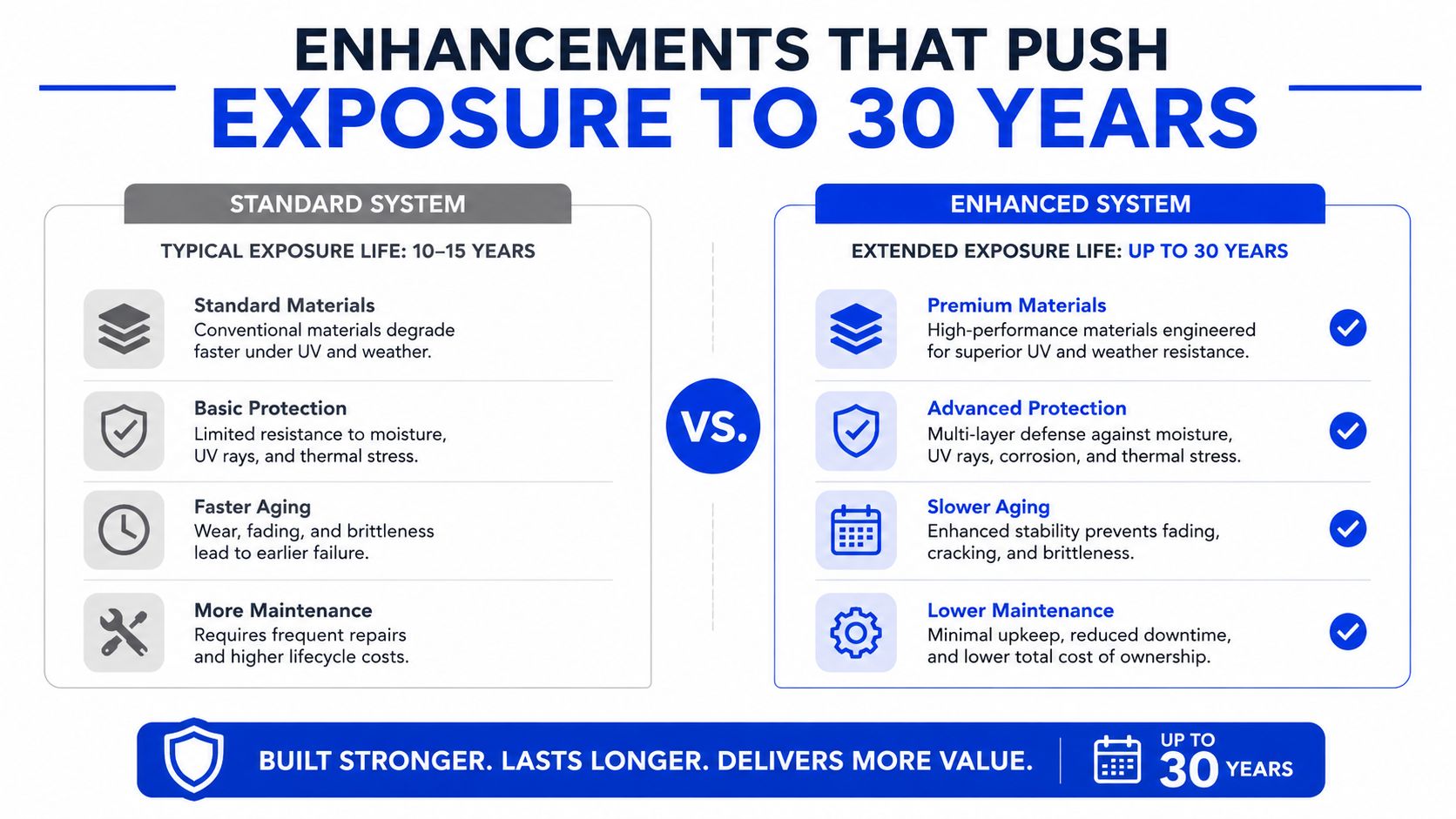
Not every DUI manslaughter case carries the same ceiling. The standard charge is a second-degree felony with a maximum of 15 years, but Florida law makes the offense more severe when the driver knew or should have known a crash occurred and failed to stop and render aid. That conduct changes the charge to a first-degree felony with exposure of up to 30 years, while the fine cap remains $10,000, according to Florida administrative suspension guidance.
The facts that change the range
Scenario | Classification or scoring concern | Practical consequence |
|---|---|---|
Standard DUI manslaughter | Second-degree felony | Maximum of 15 years, with a 4-year mandatory minimum |
Driver leaves the scene | First-degree felony | Maximum increases to 30 years |
Qualifying prior conviction | Enhanced repeat-offender exposure | The case can move into a more severe sentencing level |
Multiple deaths | Additional victim-injury allegations | The scoresheet can become substantially more severe |
Separate felony counts | Independent allegations from the same event | Consecutive sentencing may create aggregate exposure |
A prior DUI conviction can affect scoring, but the precise treatment depends on the conviction, the applicable law, and how prosecutors charge the case. Multiple fatality allegations can also add victim-injury points rather than leaving the court with a single uncomplicated score. Claims involving extreme indifference, wanton disregard, or driving while suspended may lead prosecutors to file additional counts, though the State still must prove each count and consecutive sentencing isn't automatic.
The distinction between ordinary and enhanced exposure is why a generic online sentence estimate is unreliable. A Florida repeat-offense sentencing discussion can provide background, but your lawyer must examine the charging document, crash evidence, prior records, and the exact dates involved.
Leaving the scene is not a detail to explain away later. It can change the felony degree and expose you to decades instead of the standard statutory ceiling.
Civil Wrongful Death Liability Beyond the Criminal Case
A DUI manslaughter arrest can also lead to a separate wrongful death lawsuit. The decedent's estate and eligible surviving family members may seek damages under Florida's wrongful death framework, including claims governed by section 766.103 and related provisions. The civil action continues independently from the criminal prosecution, so resolving one case does not automatically end the other.
The proof requirements are different. Criminal prosecutors must prove guilt beyond a reasonable doubt. Civil plaintiffs generally must prove the claim by a preponderance of the evidence, meaning the evidence shows that the claim is more likely true than not.
Potential civil damages
Depending on the facts and the survivors involved, a wrongful death claim may seek:
Medical and funeral expenses connected to the death.
Lost income and benefits the decedent would have provided.
Loss of companionship and support for eligible survivors.
Punitive damages when the conduct meets the required standard of gross negligence or intentional misconduct.
Insurance may not protect you from the full financial impact. A policy can exclude impaired driving or create a coverage dispute, and the insurer may deny or limit protection based on the policy language and facts. A civil judgment can therefore reach your personal assets.
Civil discovery can affect the criminal case while it remains pending. Plaintiffs may request statements, records, phone data, medical information, and other evidence. Do not give a careless statement to an insurance adjuster or opposing lawyer. It may become evidence for the civil plaintiff or the State.
Florida's wrongful death limitations period is generally two years under section 95.11, subject to the claim rules and applicable exceptions. If both proceedings are active, your defense team must coordinate them from the beginning.
A no-contest plea may carry consequences beyond the criminal sentence. Review those risks before entering one, including this Florida no-contest plea explanation.
Common Defenses and Mitigation Strategies
A strong defense starts by testing the State's theory rather than accepting the arrest affidavit as fact. In Broward, Miami-Dade, and Palm Beach cases, the central questions often concern causation, impairment evidence, collection procedures, and constitutional violations.
Causation deserves independent investigation
The State may argue that impaired driving caused or contributed to the death. The defense can challenge that conclusion through crash reconstruction, medical review, and physical evidence.
A reconstruction expert may examine vehicle damage, debris, roadway conditions, electronic data, witness accounts, and final resting positions. The defense may argue that another vehicle struck the accused, a mechanical failure caused the collision, the victim's conduct supplied the decisive cause, or an intervening medical error caused death independently of the crash.
The legal question isn't whether the crash was tragic. It's whether the prosecution can prove the required causal connection beyond a reasonable doubt.
Test the DUI evidence
Counsel should scrutinize the entire investigative chain:
Traffic stop: Was there lawful reasonable suspicion or probable cause?
Field sobriety exercises: Did officers follow proper instructions, account for injuries, and record the encounter accurately?
Breath testing: Were the instrument, observation period, maintenance records, and operating procedures reliable?
Blood or urine testing: Were collection, storage, preservation, chain of custody, and laboratory analysis proper?
Searches and seizures: Did officers obtain a warrant when required, or rely on an invalid checkpoint or warrantless draw?
Suppression motions can remove evidence obtained through an unlawful stop, checkpoint, search, seizure, or blood draw. The defense may also challenge missing video, inconsistent reports, contaminated samples, and unreliable toxicology interpretations.
Mitigation is not an admission
Mitigation can include voluntary ignition interlock installation, substance abuse treatment, counseling, character witnesses, carefully prepared letters, and cooperation handled through counsel. Those steps may help during bond negotiations, plea discussions, or sentencing, but they don't replace litigation and don't guarantee leniency.
Prosecutors may consider reduced charges such as vehicular homicide or reckless driving causing death when impairment, operation, or causation evidence is vulnerable. The available resolution depends on the facts, admissible evidence, victim impact, and the prosecutor's assessment of trial risk. Additional defense concepts appear in this overview of criminal defenses.
The following video provides general background on Florida criminal defense procedure. It isn't a substitute for advice about your case.
Court Process and Plea Options in South Florida
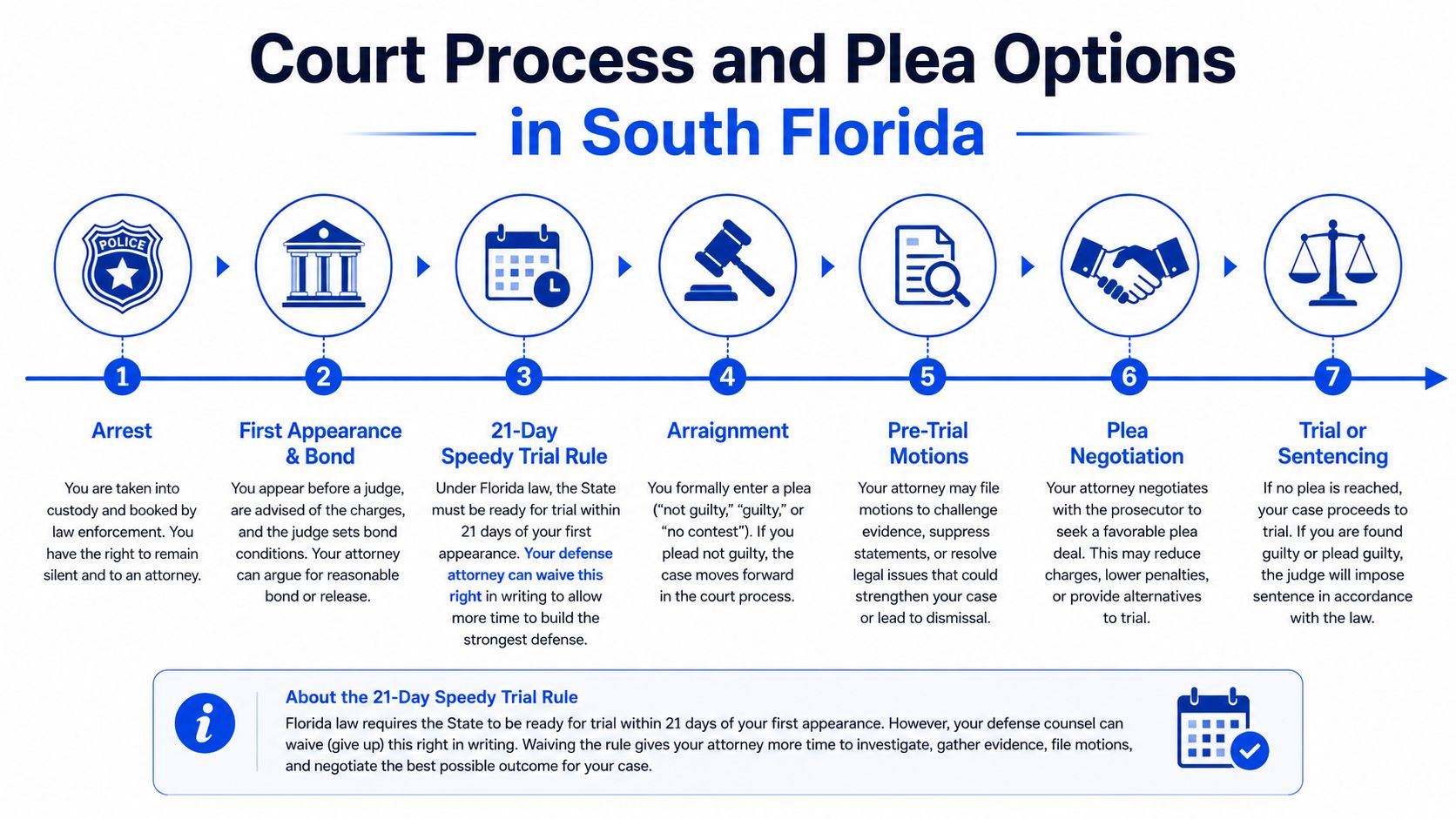
A fatal DUI case moves through several stages, and each stage creates a different strategic decision. In Broward County, the precise courtroom and scheduling details may vary, but the basic sequence remains familiar.
What happens after arrest
First appearance and bond: The judge addresses custody, probable cause, release conditions, and restrictions. A lawyer should present a focused plan addressing community safety, court appearance, driving restrictions, treatment, and other conditions.
Speedy trial decisions: Florida's criminal procedure includes a 21-day speedy trial rule in the early process. Defense counsel may waive or manage that protection strategically when more time is needed for depositions, toxicology review, reconstruction, subpoenas, and motions. Waiving a deadline isn't surrendering the case. It can prevent the defense from being forced into trial before the evidence is ready.
Arraignment: The defendant enters a plea, commonly not guilty while counsel investigates. The arraignment isn't the time to give a public explanation of the crash.
Investigation and litigation
During discovery, defense counsel may depose the arresting officer, crash investigators, medical witnesses, and an FDLE toxicologist. Motions can challenge the stop, statements, blood draw, breath evidence, chain of custody, or expert opinions.
The parties may then attend a resolution hearing or negotiate with the prosecutor. An open plea asks the judge to impose sentence without a negotiated sentencing recommendation. A negotiated plea may involve a reduced charge, a sentencing cap, or a recommendation. A trial produces a verdict based on admissible evidence and the State's burden of proof.
Sentencing after a plea or verdict
At sentencing, the court reviews the scoresheet, legal minimums, applicable maximums, departure arguments, and victim impact statements under section 921.143. The court may hear mitigation and aggravation before imposing sentence. In prison cases, gain-time rules matter, including the 85 percent requirement applicable to the relevant sentence.
No responsible lawyer can promise that a plea will beat a trial result or that a trial will produce an acquittal. Serious fatal DUI cases require an evidence-based choice, not a decision made solely from fear of the headline maximum.
Immediate Steps After a Fatal DUI Charge
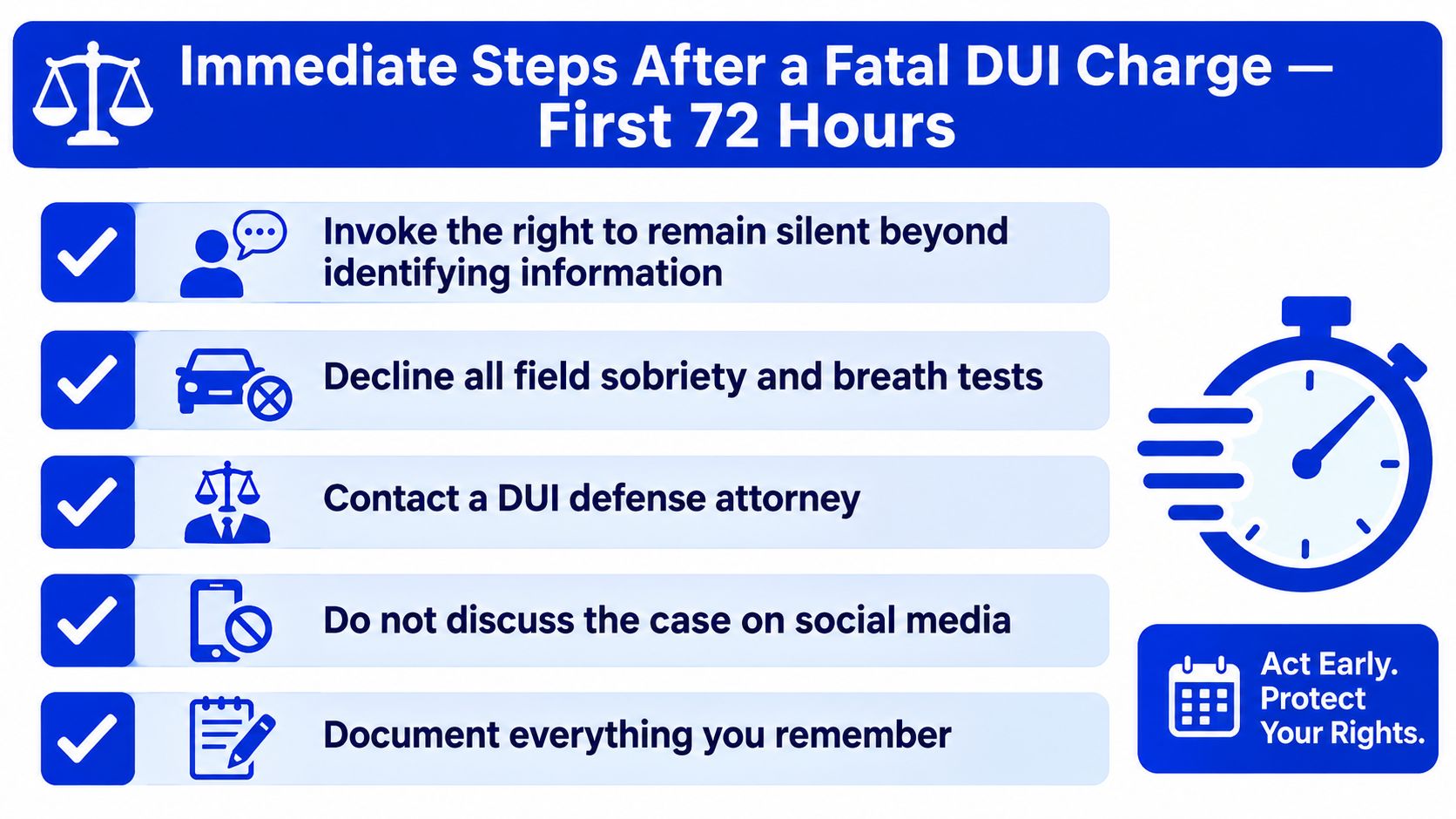
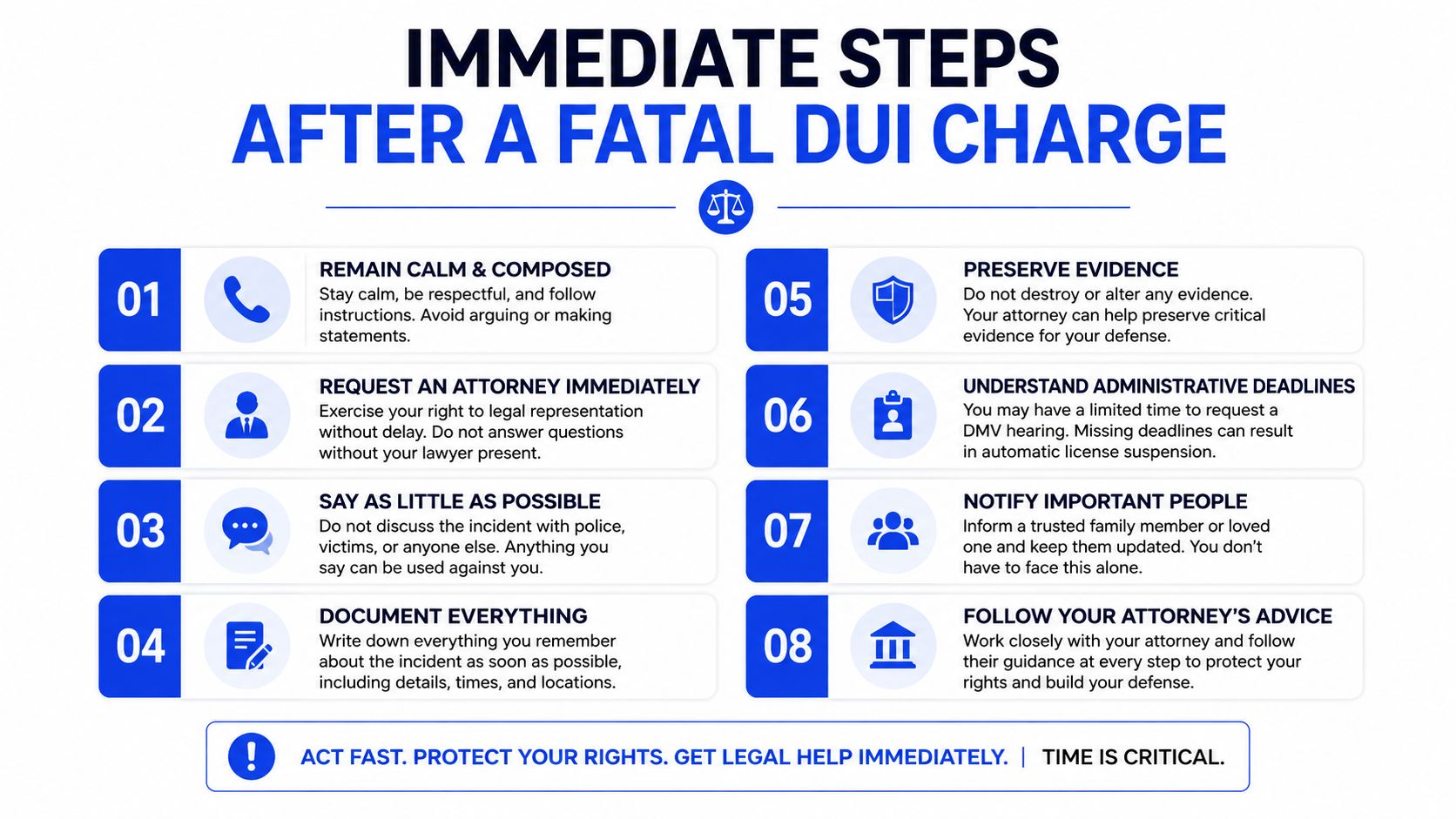
The first 72 hours can affect evidence, bond, public statements, and the defense's ability to investigate. Do these things carefully and in the right order.
Protect your statements and records
Invoke your right to remain silent beyond basic identifying information. Don't try to explain the crash to detectives, insurance adjusters, the decedent's family, or anyone else without counsel present. Don't post about the accident, your alcohol use, your injuries, or the investigation on social media.
Decline field sobriety or breath testing only after speaking with a lawyer about Florida's implied-consent consequences. A refusal can create separate legal and licensing issues, so don't treat a roadside decision as simple.
Preserve evidence before it disappears
Write down everything you remember while the memory is fresh, but keep the document private and provide it only to your lawyer. Preserve your phone's location records, messages, photographs, navigation history, vehicle telematics, and insurance information. Don't delete, edit, reset, or replace the phone.
Ask counsel to preserve or obtain:
Vehicle evidence: Damage, event data, mechanical condition, and any repair records.
Scene evidence: Timestamped photographs, roadway conditions, signage, lighting, and nearby camera footage.
Witness information: Names, contact details, and what each witness personally observed.
Medical records: Treatment, blood-draw documentation, medications, and injury information.
Employment and insurance records: Information that may matter to bond, mitigation, or the civil case.
Forward every law-enforcement subpoena, court notice, and DMV hearing notice to your lawyer immediately. Don't ignore a license-suspension deadline while focusing only on the criminal charge.
Get counsel involved before arraignment
A Florida criminal defense lawyer can request a bond hearing under Florida Rule of Criminal Procedure 3.790, seek workable release conditions, and begin reviewing video, breath-machine records, blood-draw procedures, crash evidence, and medical records. Early investigation can also identify witnesses and physical evidence before conditions change.
Your first legal objective is control. Stop unnecessary statements, preserve evidence, meet every court requirement, and give counsel time to test the State's theory before you make an irreversible decision.
Ticket Shield, PLLC provides defense for serious Florida criminal charges, including DUI manslaughter, by investigating the evidence, protecting constitutional rights, addressing bond and license issues, and pursuing charge reductions or trial defenses where appropriate. Contact Ticket Shield, PLLC for a confidential consultation about your South Florida case and the immediate steps that can protect your future.