
Will Florida Extradite for a Probation Violation
Jason Goldsmith, Esq
Florida has the legal authority to extradite someone for a probation violation, but whether authorities pursue extradition depends heavily on the seriousness of the alleged breach, any signed waiver, and the demanding jurisdiction's resources. A probation violation isn't automatically treated like a new criminal charge, and Florida won't automatically transport every person another state claims.
You may be reading this after learning that a Florida warrant is active while you're living in Georgia, Texas, New York, or another state. Perhaps a probation officer says you missed reporting, failed a test, traveled without permission, or violated another condition. Your family may be asking the urgent question, will Florida extradite for a probation violation, and whether you'll be arrested during a traffic stop or held until Florida sends someone to get you.
The answer turns on details that aren't visible from the warrant's existence alone. Florida may have authority to issue an out-of-state warrant, but legal authority and actual transportation are separate questions. The seriousness of the original offense, the alleged breach, the warrant's extradition coding, the demanding state's decisions, and available resources can all affect what happens next.
An out-of-state hold also creates two separate legal matters. The extradition process determines whether and how you can be returned. The Florida probation case determines whether you violated supervision and what consequence the sentencing court may impose. A lawyer must address both, not assume that winning an extradition objection resolves the underlying violation.
Table of Contents
Understanding Florida Extradition for Probation Violations
Florida law permits interstate extradition when a person is accused of breaking probation, parole, bail, or another release condition. Florida Statute §941.03 recognizes an extradition demand supported by an authenticated judgment of conviction or sentence, along with a statement from the demanding state's executive authority that the person escaped confinement or broke the terms of probation, parole, or bail. The statute also requires the demand to identify the person, establish the underlying conviction or sentence, and describe the alleged breach. Read the Florida extradition statute governing the demand for the framework.
That authority doesn't make extradition automatic. Florida does not automatically return every person because another jurisdiction alleges a violation. The demanding state generally must initiate the process, submit legally authenticated documents, and pursue the required executive and court procedures. Authorities may decide that transport is justified, or they may leave the matter as an active warrant or hold without committing the resources needed for physical return.
Legal permission is not the same as transport
The practical decision often reflects several considerations:
The underlying offense: A serious felony usually creates greater pressure to pursue a return than a less serious matter, although no universal rule guarantees either result.
The alleged violation: A new-law allegation may receive more urgent attention than a missed appointment or travel violation, but technical violations still can support arrest and return proceedings.
The person's location: Authorities must coordinate with the state where the person is found, and the arresting state's procedures affect the immediate custody process.
Available resources: The demanding jurisdiction must assign personnel, prepare paperwork, and arrange transportation. Resource limitations can influence what prosecutors and supervising agencies do.
An active warrant therefore deserves immediate attention even when no one has contacted you. A person can be arrested outside Florida before the Florida violation hearing occurs, and the hold can disrupt employment, housing, family responsibilities, and access to counsel.
Practical rule: Treat an out-of-state probation warrant as an unresolved legal case, not as paperwork that will disappear because Florida hasn't yet sent an agent.
The underlying Florida case remains important after any return. The sentencing court may consider whether the violation occurred, whether it was technical or involved new criminal conduct, and what response is authorized. Defense counsel should investigate the alleged breach, supervision records, notices, testing records, travel permissions, and any explanation for noncompliance.
For a plain-language overview of the underlying issue, review this Florida probation violation guide. It can help you identify the questions to raise with counsel before making decisions about surrender or waiver.
The Legal Standards and Paperwork Requirements
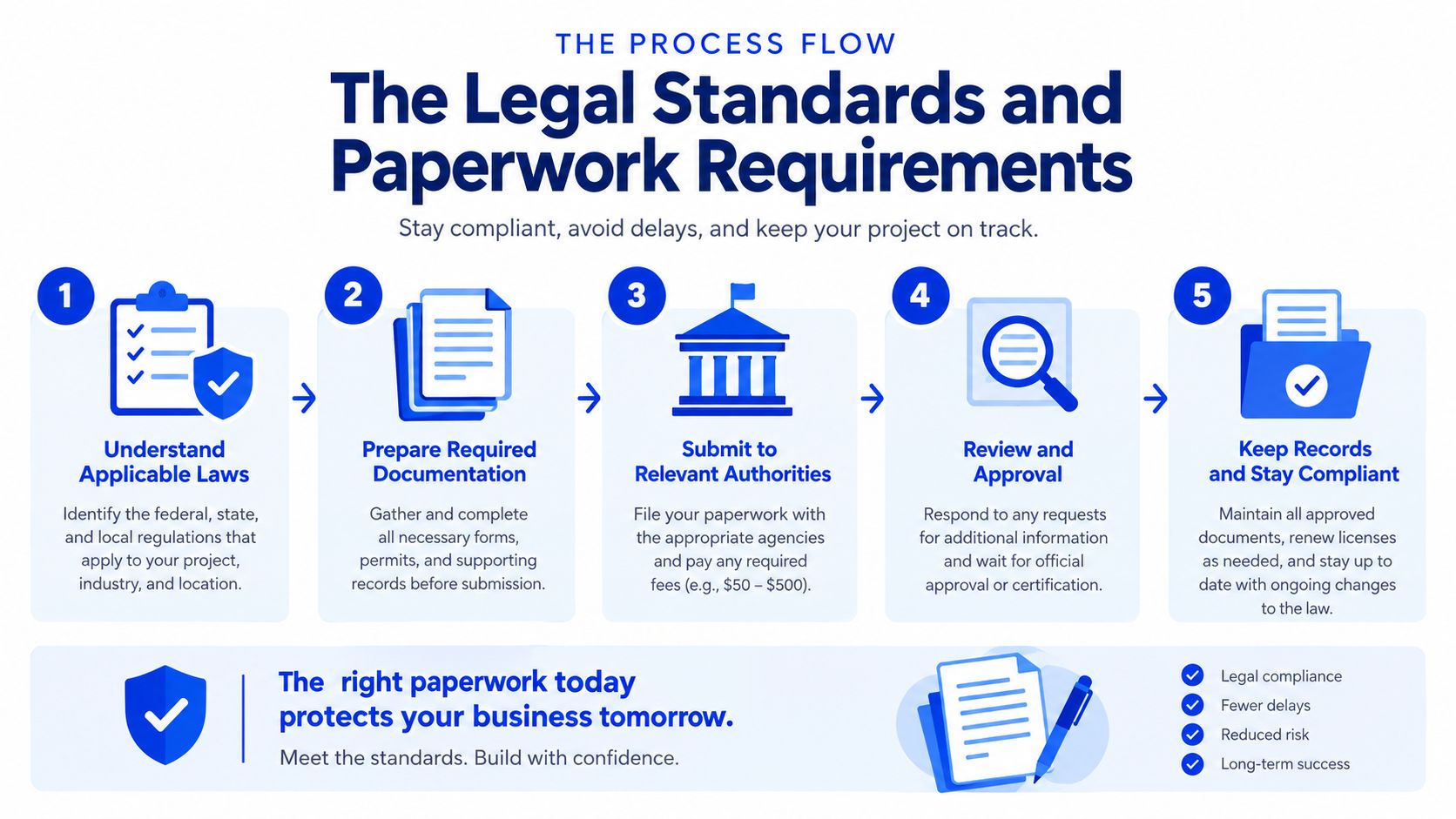
An extradition demand must satisfy legal requirements. The demanding state generally carries the responsibility for starting the process and presenting documentation that connects the person in Florida to the underlying conviction or sentence and alleged probation breach. That paperwork matters because extradition isn't a second trial on the violation. It's a limited process focused on identity, the existence of the qualifying case, and compliance with the governing procedures.
What the demand must establish
Under Florida Statute §941.03, the demand should include an authenticated judgment of conviction or sentence. It also must include a statement from the demanding state's executive authority that the person escaped confinement or broke probation, parole, bail, or another qualifying release term. The documents must identify the person and describe the alleged breach with enough clarity to connect the demand to the correct case.
A typical review should ask:
Does the documentation identify the right person? Names, identifying information, and case records must align. Mistaken identity is a real issue in interstate custody matters.
Is there an authenticated judgment or sentence? The demand must establish the underlying conviction or sentence rather than relying only on an unverified allegation.
Does an authorized executive official support the demand? The requesting state's formal authorization is part of the extradition structure.
Does the paperwork describe the alleged violation? A vague or incomplete demand may create grounds to challenge statutory compliance.
What warrant has been issued? The existence, scope, and extradition request on the warrant can affect what the arresting state does.
Why the governor's warrant matters
A formal extradition may involve a governor's warrant, court proceedings, and challenges to identity or statutory compliance. Under Florida Statute §941.22, when Florida's Governor demands the return of someone accused of breaking probation, bail, or parole terms, the Governor issues a warrant under the state seal to an authorized agent. That agent is directed to receive the person if another state delivers them and transport the person to the appropriate Florida officer in the county where the offense occurred. See the Florida statute on the governor's extradition warrant.
The paperwork review is not a technical exercise without consequences. A defect may support a challenge, delay, or negotiation. It may also reveal that authorities are relying on an allegation that doesn't match the sentence, the person, or the alleged conduct.
The defense should obtain the warrant, affidavit, violation report, judgment, sentencing documents, and any waiver signed as a condition of probation or release. Don't assume that a jail database entry tells the whole story. The documents control the legal analysis.
How Warrants and Tolling Prevent Probation Expiration
Leaving Florida doesn't ordinarily allow probation to expire while a properly initiated violation remains unresolved. Florida law provides that the probation period is tolled, or paused, after a violation affidavit is filed and a warrant is issued, or after a warrantless arrest or notice to appear, until the court rules on the alleged violation. The governing Florida probation violation statute makes the timing issue central.
That rule defeats a common avoidance strategy. A probationer may believe that moving away or waiting until the original supervision end date will make the warrant irrelevant. If tolling applies, the supervision clock stops rather than continuing toward expiration. The unresolved case remains available for court action.
Arrest authority can reach beyond the original county
Florida law also authorizes a probation officer, or an officer acting at the probation officer's request, to arrest the probationer without a warrant wherever found. A judge may issue a violation warrant based on sworn facts, and the statute directs that an arrested person be returned to the sentencing court. The phrase “wherever found” supports the possibility of an arrest outside Florida, although it doesn't guarantee that Florida will arrange transportation in every case.
A routine encounter in another state can therefore become an interstate custody matter. A traffic stop, a background check connected to employment, or contact with local law enforcement may expose an active warrant. The arresting state may then decide whether to hold the person while Florida pursues the required process.
Leaving the state may change where you're arrested. It usually doesn't erase the underlying violation or restart the probation clock.
The Interstate Agreement on Detainers generally doesn't supply the ordinary speedy-trial mechanism for probation-violation detainers. The U.S. Department of Justice explains that the Agreement applies to detainers based on charges requiring a trial and is inapplicable to probation-violation detainers. That distinction can leave families expecting a deadline that doesn't apply.
Florida rules also require a recorded violation hearing before a pending violation warrant is dismissed. The practical response is not passive waiting. Verify the warrant, identify the filing date, determine whether tolling applies, and ask counsel whether a prompt Florida hearing, negotiated surrender, or modification is possible. You can also review this explanation of a Florida failure to appear warrant, while recognizing that a probation warrant involves its own legal analysis.
Technical Violations Versus New Criminal Offenses
A missed report, failed drug test, unauthorized trip, or failure to follow a supervision condition can be serious without being a new criminal offense. An allegation that the probationer committed a new violation of law presents a different factual and procedural concern. Florida law recognizes that distinction when addressing arrest warrants, but it doesn't create a guaranteed safe harbor for technical violations.
The allegations can affect urgency
A new-law allegation may prompt faster attention because it suggests additional criminal conduct and may create a separate prosecution. Authorities may view a technical violation as a supervision problem instead, particularly when the alleged breach can be addressed through a hearing, modification, treatment, or another court response. That is a practical difference, not a promise that extradition won't occur.
Technical allegations still matter. Missing reporting, failing a test, or traveling without authorization can support a warrant, toll the probation period when the statutory conditions are met, and create custody exposure. The defense must examine whether the condition was clear, whether the client violated it, whether the supervising officer documented it accurately, and whether a lawful excuse or mitigating circumstance exists.
Issue | Technical allegation | New-law allegation |
|---|---|---|
Nature of conduct | Failure to follow a supervision condition | Conduct alleged to violate a criminal law |
Separate prosecution | Not necessarily a new criminal case | May create an additional criminal case |
Extradition impact | Depends on the warrant, paperwork, seriousness, and resources | Often increases urgency, but no outcome is guaranteed |
Defense focus | Conditions, notice, compliance records, and explanation | Probable cause, identity, evidence, and the separate charge |

Interstate supervision creates another layer
Compact supervision can complicate the picture. A person supervised across state lines may have records held by the sending state, the receiving state, the probation office, and compact administrators. National FY2025 compact reporting identified 8,210 NCIC-verified active warrants in the compact system, as reported in the Interstate Compact national FY2025 report. That figure reflects an operational issue, not a prediction about your case.
The same national FY2025 reporting found that in more than half of reviewed cases, compact paperwork wasn't established. This can mean administrative gaps complicate the transfer decision. It doesn't mean a warrant is invalid, and it doesn't eliminate the need to investigate the specific records.
Families should avoid treating “technical” as harmless or “new offense” as automatically extraditable. The relevant questions are narrower: What does the warrant request? What conduct is alleged? Does the conduct support a separate charge? Was the person under an interstate compact? What does the paperwork show? A detailed technical probation violation explanation can help frame those questions before counsel reviews the actual file.
The Risks of Waiving Extradition and Your Legal Rights
People arrested in Florida on an out-of-state probation allegation may be handed a written waiver and told that signing will make the process faster. It may. The speed benefit, however, comes from giving up procedural steps that could expose defects in the demand or create time to negotiate a different resolution.
Florida Statute §941.26 allows a person arrested in Florida for allegedly breaking probation, parole, bail, or another form of release in another state to waive issuance and service of the normal extradition warrant. When a person previously signed a waiver as a condition of current probation, parole, bail, or release, Florida law permits the holding law-enforcement agency to deliver that person to an authorized agent of the demanding state without requiring a governor's warrant. Review the Florida statutory provisions on extradition waivers.
What a waiver changes
A waiver can remove the need for the ordinary Governor-to-Governor process. It may allow the demanding state to obtain custody comparatively quickly and may eliminate opportunities to contest formal defects in the extradition demand. That doesn't make the waiver unlawful, but it makes the decision consequential.
A waiver also doesn't decide the probation case. It doesn't establish that the violation occurred, dismiss the violation, reduce the sentence, or prevent the sentencing court from imposing consequences. It changes the transportation and extradition process, not the merits of the underlying allegation.
Signing without counsel | Waiting for legal review |
|---|---|
May accelerate transfer | May preserve procedural options |
Can eliminate challenges to formal defects | Allows counsel to examine identity and paperwork |
Doesn't resolve the probation allegation | Creates time to discuss surrender or court strategy |
May complicate negotiations | May support a voluntary-return proposal |
Don't sign an extradition waiver simply because someone presents it as routine. Ask to speak with counsel and learn what rights the document removes.
A formal process may provide a window to challenge identity, question statutory compliance, seek bond where available, or negotiate voluntary surrender. Counsel in Florida may also coordinate with counsel in the demanding state when the underlying matter is there. The best strategy depends on the warrant, the waiver language, the requesting jurisdiction, and the alleged breach.
Once returned, the probationer still needs a defense to the violation. That may involve disputing the alleged conduct, showing compliance, explaining a documented misunderstanding, addressing treatment or testing records, or negotiating a lawful resolution. Information about preparing for a Florida probation violation hearing can help you understand why the extradition decision is only one part of the case.
Strategic Next Steps for Probationers and Families
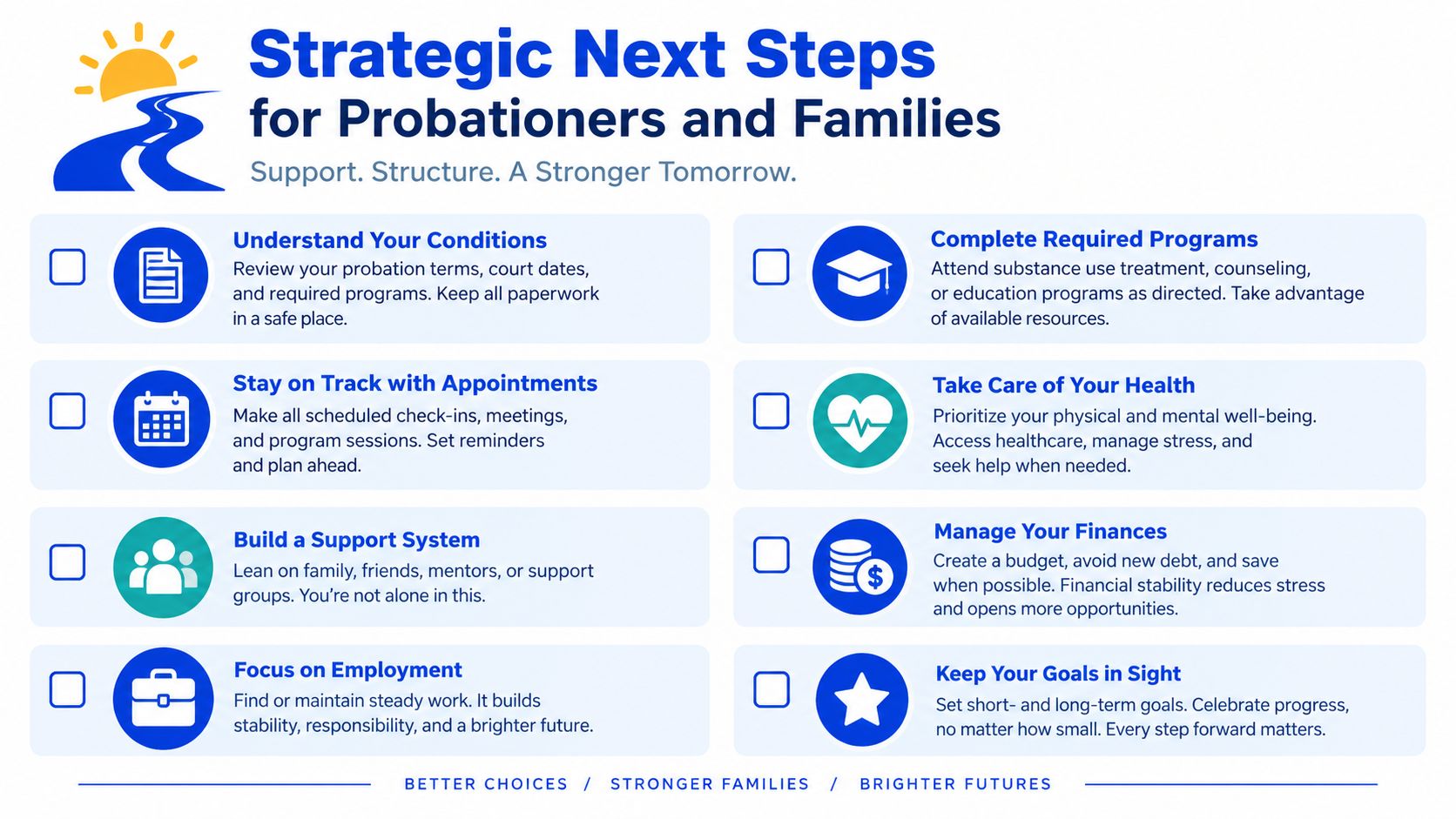
If you suspect an out-of-state Florida probation warrant, act before an arrest forces the timing. The first objective isn't to guess whether Florida will spend resources on transport. It's to identify the exact status of the case and create options while you're still available to communicate with counsel.
Use a focused decision framework
Confirm the warrant: Ask counsel to verify whether a warrant exists, when it was issued, whether it remains active, and whether it is entered for interstate pickup.
Check the extradition request: Determine whether the warrant seeks extradition or whether the requesting agency has placed limits on where and how it will be enforced.
Identify the allegation: Obtain the violation affidavit, supervision records, notices, testing information, and any report describing the claimed breach.
Review the sentence: The underlying conviction, sentence, supervision conditions, and available sentencing exposure shape the defense strategy.
Assess surrender options: Counsel may explore voluntary surrender, a bond request, a modification, or a prompt Florida hearing before an out-of-state arrest.
Protect communications: Don't explain the facts to investigators, probation personnel, or other people without legal advice. Preserve messages, travel records, employment records, medical documentation, and proof of compliance.
Florida probation law permits arrest without a warrant wherever the probationer is found, and an arrest can happen before the Florida court rules on the alleged violation. That makes early intervention more useful than waiting to see whether a patrol officer discovers the warrant.
A lawyer should coordinate the extradition issue with the underlying violation. A proposed voluntary surrender may reduce uncertainty, but it must account for custody, transportation, bond, the hearing location, and the possibility of additional charges. A family member can help by collecting sentencing paperwork, identifying the probation officer and court, recording where the person is located, and arranging a confidential attorney consultation.
For people in Broward County, Fort Lauderdale, Miami-Dade, Palm Beach, and surrounding South Florida communities, a Florida probation violation lawyer near you can review the warrant and coordinate with the relevant court. Ticket Shield, PLLC offers defense counsel for Florida probation violations and can evaluate whether the matter calls for a warrant challenge, surrender negotiation, or preparation for the violation hearing.
Ticket Shield, PLLC helps clients address Florida probation warrants, out-of-state holds, extradition paperwork, and the underlying violation case with a coordinated defense strategy. Visit Ticket Shield, PLLC to request a consultation and discuss the warrant, alleged breach, waiver, and next practical step before an avoidable arrest makes the situation harder.
Wondering if Florida will extradite you for a probation violation? Learn when it happens, what affects the decision, and your options.