What Is a Felony Charge? Your Future & Florida Law Explained
Jason Goldsmith, Esq
A felony charge is a formal accusation for an offense punishable by more than one year in prison, and it is not a conviction. You're still presumed innocent, and you still have real options to fight the case before it becomes a permanent record.
If you were just arrested in Fort Lauderdale, Broward County, Miami-Dade, or Palm Beach, the stress is probably coming from not knowing what happens next. That fear is normal. What matters now is understanding the charge, protecting your rights, and acting before the State locks in its version of the facts.
Table of Contents
Understanding the Difference Between a Felony Charge and a Conviction
You can be sitting in a jail cell, staring at paperwork, and still not be convicted of anything. That distinction matters because the criminal system moves fast after an arrest, and panic makes people say or do things that hurt their case.
Charge first, conviction later
A felony charge is a formal accusation filed by a prosecutor after an investigation, and the legal system still presumes innocence until the government proves guilt beyond a reasonable doubt (Legal Clarity). In plain English, the State is alleging a serious crime, but it still has to prove its case.
That's the point many people miss. A charge can lead to arrest, bond conditions, and a record entry while the case is pending, but it does not make you a convicted felon. If the evidence is weak, unlawfully obtained, or inconsistent, a defense lawyer can attack it before a conviction ever happens.
Practical rule: Do not talk your way out of a felony charge. You usually talk yourself deeper into it.
Why the distinction changes strategy
The charge-versus-conviction difference is where real defense work starts. A lawyer can push for dismissal, reduction, or a better plea position while the case is still alive, which is exactly why the first days matter so much.
That's also why a pending charge can feel heavier than a simple definition suggests. Even before trial, the case can affect your job, your family, your ability to travel, and your day-to-day freedom. If you're trying to understand whether a pending case has already ruined your life, the answer is no, but you do need to move fast and carefully. If you're also trying to understand how a court may handle post-plea relief, review this guide on adjudication withheld because that distinction can matter later.
Felony vs Misdemeanor Charges in Florida
Florida treats felonies and misdemeanors very differently because the stakes are different. A felony is generally tied to punishment of more than one year, while a misdemeanor is the lesser category and usually carries shorter jail exposure and lighter court treatment.
What changes in the real world
The Department of Justice notes that felony cases are handled through a more resource-intensive procedural track than misdemeanors because the sentencing exposure is higher and the litigation stakes are higher too (U.S. Department of Justice). That means more investigation, more discovery, and more time spent fighting over evidence.
In practice, that affects everything from plea negotiations to how aggressively the State prepares. A misdemeanor may move quicker. A felony case often invites deeper scrutiny, especially in South Florida courts where the State knows a conviction can carry lasting collateral damage.
Felony vs Misdemeanor Comparison
Feature | Felony | Misdemeanor |
|---|---|---|
Core seriousness | Serious criminal accusation | Lesser criminal accusation |
Punishment exposure | More than one year | Typically up to one year |
Court treatment | More intensive litigation track | Less intensive litigation track |
Discovery and motions | Often broader and more contested | Usually narrower |
Long-term impact | Greater collateral consequences | Still serious, but generally less severe |
If you're comparing charge levels, don't assume the label tells the whole story. A so-called lower-level case can still create license problems, record problems, and employment problems. For a plain-English overview of the lesser category, see this explanation of misdemeanor meaning.
Bottom line: A felony charge is not just a harsher sentence possibility. It changes how the case is built, defended, and negotiated.
Florida Felony Degrees and Sentencing Ranges
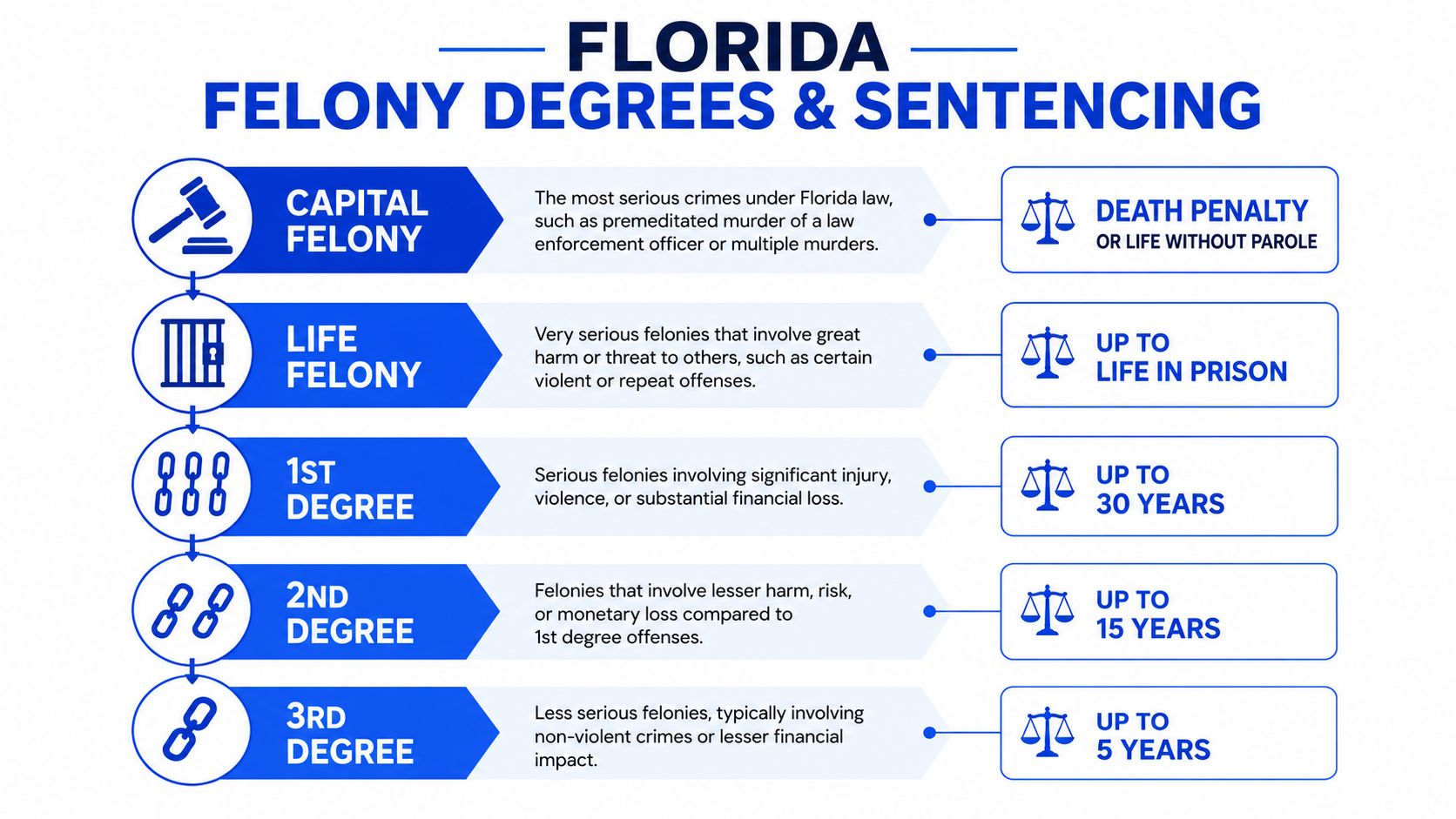
A felony charge in Florida is not one bucket. The State sorts felony cases by degree, and that label tells you what punishment it is seeking and how hard it will push the case. The main categories are capital felony, life felony, first-degree felony, second-degree felony, and third-degree felony (Citrus County Clerk FAQ).
Reading the degree on your charge
Read the charging document carefully. The degree sets the upper limit on punishment, and that limit affects plea talks, bond conditions, and the risk you face if the case goes to trial.
Florida uses five felony grades, with maximum penalties stated as death or life, life imprisonment, up to 30 years, up to 15 years, and up to 5 years, respectively, as noted by the Citrus County Clerk FAQ and the felony sentencing chart (Citrus County Clerk FAQ, An infographic showing Florida felony degrees and their corresponding maximum sentencing guidelines from capital to third degree.). If you are looking at a first- or second-degree felony in Broward or Miami-Dade, you are facing serious prison exposure, not a clerical issue.
In plain English, the State is alleging a serious crime, but it must still prove its case.
Why grading matters to your defense
The same conduct can lead to very different results depending on the degree charged, prior record, and aggravating facts. That is why defense lawyers read the exact wording of the information or indictment instead of reacting to the headline charge alone.
A careful defense also checks whether the State charged the right degree in the first place. If the facts support a lower level, that can change the plea posture, the bond position, and the pressure on the prosecutor before the case hardens into a permanent record. For a closer look at the middle range, review this guide to second-degree felony charges in Florida.
A charge degree is leverage. If the degree is wrong, overstated, or unsupported, the defense has a target.
The Criminal Process After a Felony Arrest
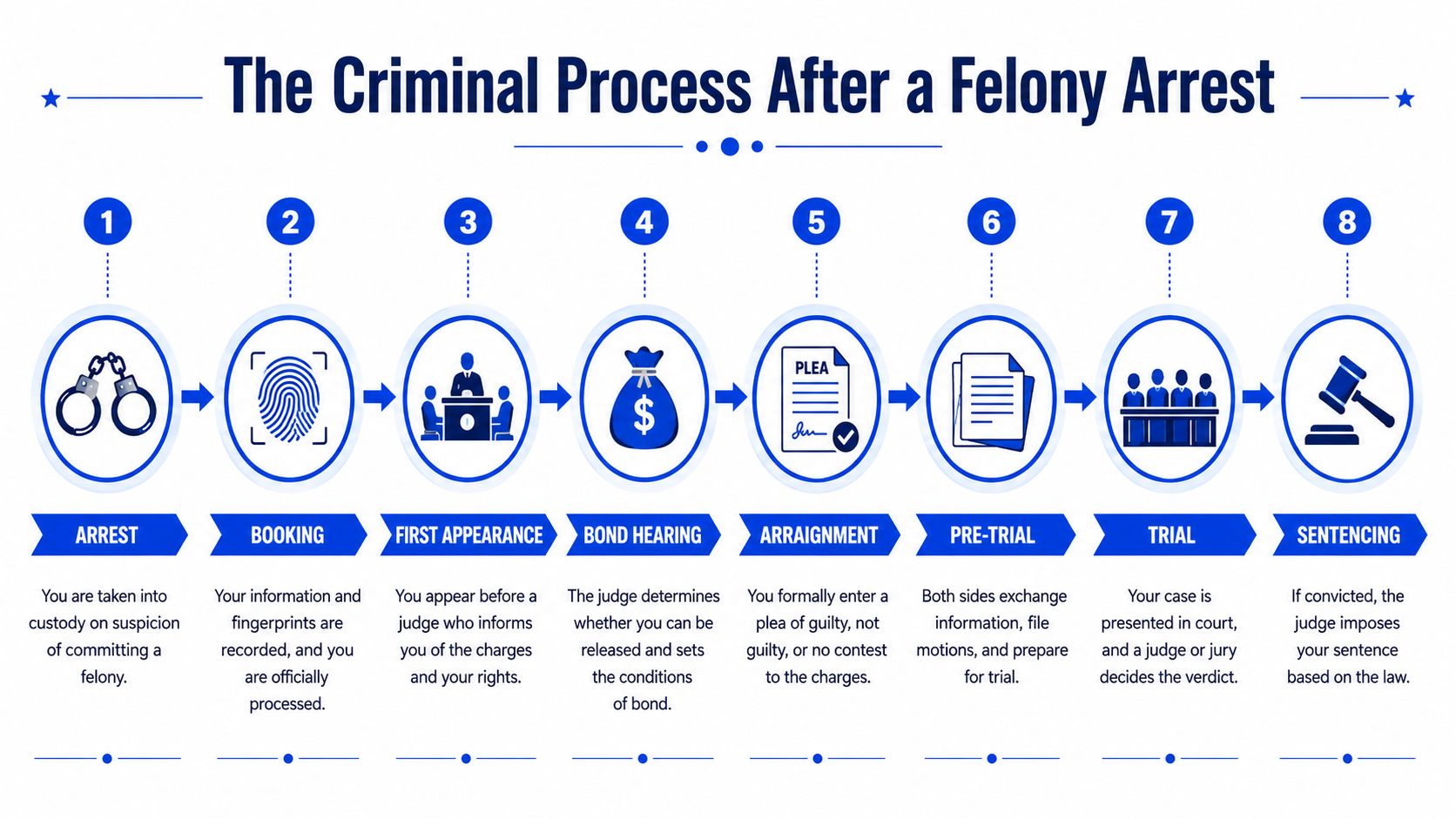
The process after a felony arrest is not one event. It is a chain of hearings, decisions, and deadlines, and each stage gives the defense a different opening to change the outcome.
The early stages
It starts with arrest and booking, where law enforcement creates the first official version of events. Then comes first appearance, where the court addresses the basic status of the case, followed by bond or bond hearing issues if release is contested.
That's where a lawyer starts looking for pressure points. Was there probable cause? Was the stop lawful? Was the search valid? Were statements taken in a way that can be challenged? Those issues matter early because they can shape the rest of the case.
What happens after the first court dates
After that comes arraignment, then pre-trial, plea negotiations, and potentially trial and sentencing. In many cases, the fight is really about what gets lost by the State before trial, not just what happens in front of a jury.
The law dictionary summary of felony charges notes a gap that matters to stressed clients, because people often focus only on the punishment threshold and miss the pending-case consequences such as arrest, pretrial detention, and record entry while the case is still open (The Law Dictionary). That's the part people feel immediately, and it's the part a defense lawyer has to manage from day one.
Here's the video overview for a more visual walkthrough of the process.
If you want to understand where counsel can intervene, the arraignment stage is a major checkpoint, and this arraignment guide explains why timing matters.
Long-Term Consequences Beyond Prison and Fines
A felony case does not end when the court date ends. The charge can affect your life long after the criminal case closes, especially if it becomes a conviction.
The record follows you
A University of Georgia-led study estimated that by 2010, about 19 million people in the United States had a felony record, including people who had been to prison, jail, or felony probation (University of Georgia news release). That number shows how common felony records are, but it also shows how many people live with the fallout every day.
For clients, the practical consequences usually show up in the places that matter most. Employers look at background checks. Landlords ask questions. Professional boards take notice. Some jurisdictions also tie felony convictions to voting rights or firearm possession, and those consequences can outlast the sentence itself.
Why fighting early matters
This is why a lawyer should push hard before a felony becomes a permanent record. A reduction can change the future. A dismissal can change everything. Even when a conviction can't be avoided, limiting the degree or protecting record options can reduce the damage.
The scale of felony records matters for another reason too. It proves this is not some rare legal corner case. Felony charges are a major criminal-law category with long-term effects on employment, housing, voting rights in some jurisdictions, and future sentencing exposure.
My rule for clients: Don't think only about jail. Think about the next job, the next apartment, and the next background check.
Immediate Steps to Protect Your Rights and Freedom
If you were just charged, do not try to outtalk the State. Start protecting the defense immediately.
What to do right now
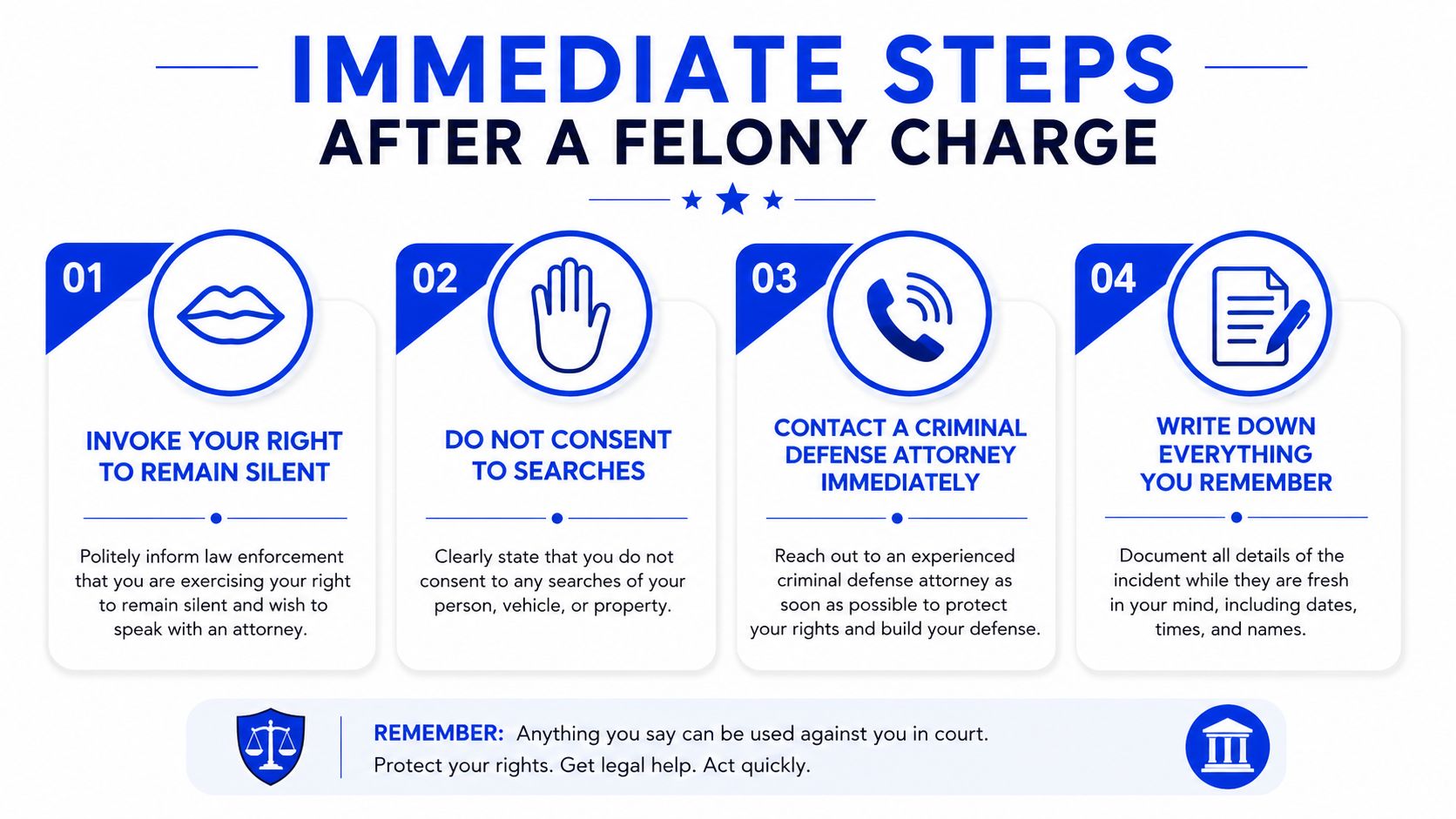
Invoke your right to remain silent. Don't explain, justify, or “clear things up” with police, detectives, or anyone calling from the jail.
Do not consent to searches. If officers want your phone, car, or home, make them get it the lawful way.
Contact a criminal defense attorney immediately. Early intervention can shape bond, evidence preservation, and the State's charging decision.
Write down everything you remember. Do it while the details are fresh, including names, times, locations, and what was said.
The first calls matter
The smartest move is to get a defense lawyer who knows how prosecutors build these cases, because that experience changes the conversation early. Ticket Shield, PLLC handles felony and misdemeanor defenses across South Florida, including DUI, drug charges, violent crimes, theft, weapons cases, and probation violations, and the firm's former-prosecutor perspective can be useful when the State is still deciding how hard to push.
Do not post about the arrest, do not argue with officers, and do not assume silence makes you look guilty. It makes you look disciplined, which is exactly what your defense needs right now.
If you're facing a felony charge in Broward County, Fort Lauderdale, Miami-Dade, Palm Beach, or anywhere in South Florida, get help before the case hardens against you. Ticket Shield, PLLC offers confidential criminal defense consultations, early case review, and strategic representation focused on protecting your rights, limiting damage, and fighting for the best possible outcome.