
Misdemeanor Battery in Florida: A Clear Guide to the Law
Jason Goldsmith, Esq
Florida misdemeanor battery is generally a first-degree misdemeanor under Florida Statutes § 784.03, and an intentional, unwanted touch can be enough even without a serious injury. The maximum penalty is up to one year in county jail and a $1,000 fine under Florida's general misdemeanor penalty law.
You may be reading this after a late-night arrest, a bond hearing, or a call from someone who says the other person “doesn't want to press charges.” Take the accusation seriously, but don't assume the charge proves what happened. The case turns on the evidence, the legal theory the State is pursuing, and whether your record triggers a felony enhancement.
Table of Contents
A Typical Night That Ends in a Battery Charge
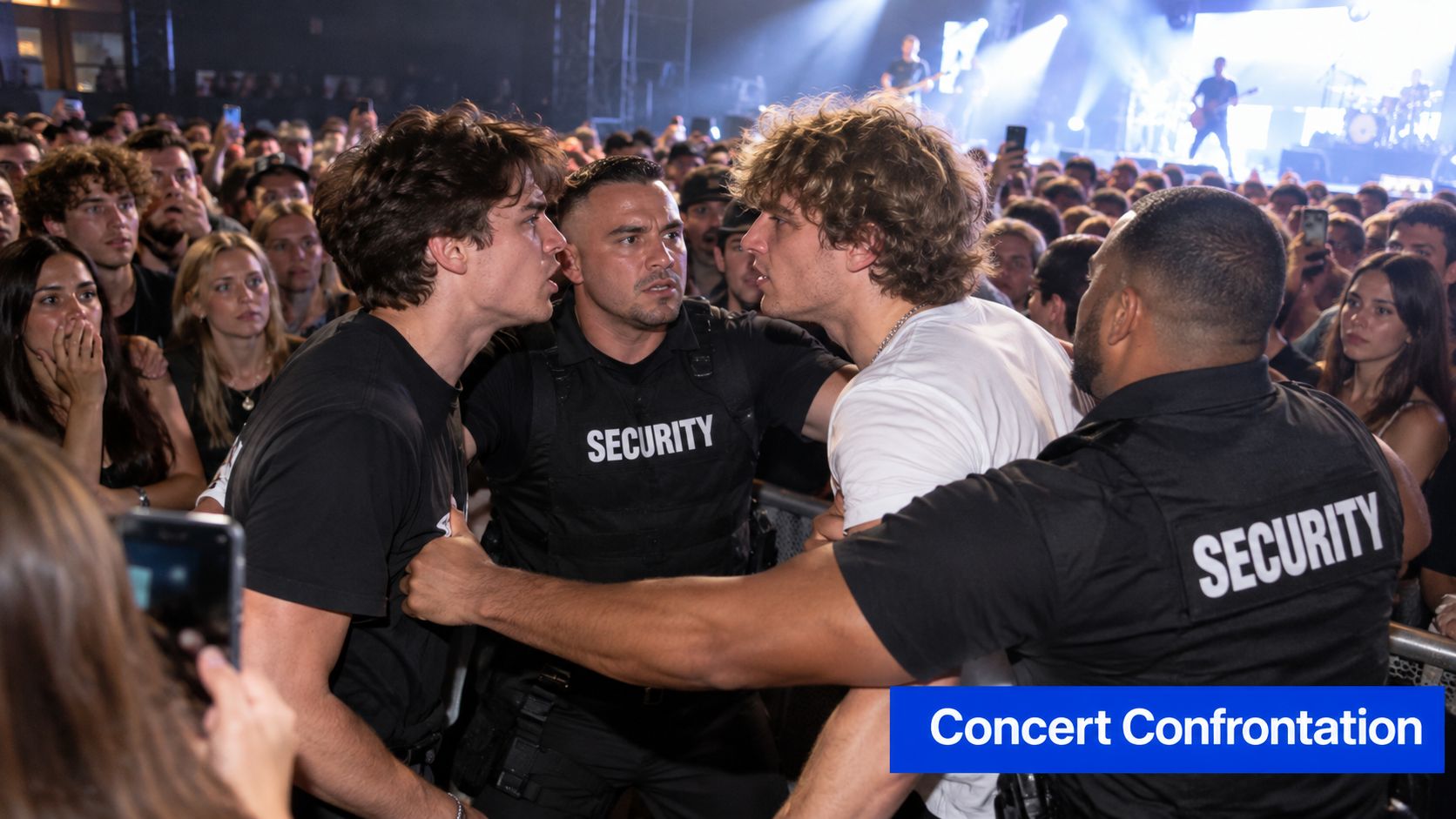
A disagreement outside a Fort Lauderdale bar gets loud. Someone steps between two people, there's a shove, and a bystander calls police. Officers arrive after the contact, hear competing accounts, and arrest one person. In the back of the patrol car, the question comes quickly: “Is this a felony?”
The starting point is Florida Statutes § 784.03. It covers an intentional touch or strike against another person's will, or intentionally causing bodily harm. The first theory doesn't require a serious injury, or even a visible one. That's why an argument involving a push can lead to a battery charge even when nobody goes to the hospital. Florida's battery statute lays out those alternatives.
Two questions shape the case: What happened, and what does the accused person's record show? A video might show who initiated contact, while witness accounts can confirm or contradict the police narrative. A prior qualifying battery disposition can also change the charge from a misdemeanor to a felony, so the record needs to be checked rather than guessed at.
Practical rule: Don't try to “clear things up” with police, the alleged victim, or witnesses on your own. Statements and messages can become evidence, and an attempt to contact someone may create a separate problem if a court has imposed restrictions.
A charge is an allegation, not a finding of guilt. Before discussing the incident with anyone beyond your lawyer, get clear on the statute, the precise accusation, and any conditions of release. Early legal advice can help preserve evidence and identify whether the case is an ordinary misdemeanor or carries felony exposure.
How Florida Law Defines Misdemeanor Battery
Florida's basic battery statute gives prosecutors two alternative theories. They don't have to prove both, but they do have to prove the charged theory beyond a reasonable doubt.

The two statutory paths
The first path is and intentionally touching or striking someone against that person's will. A shove, grab, or push can qualify if the contact was deliberate and unwanted. The second path is intentionally causing bodily harm. The wording matters: a person need not intend a serious injury for the first theory to apply, because that theory focuses on intentional, unwanted contact.
That distinction is often where a defense must focus. If the State alleges unwanted touching, arguing that the alleged victim had no bruise may not answer the charge. The relevant questions include whether contact happened, whether it was intentional, and whether it was against the other person's will. If the State alleges intentional bodily harm, the evidence of harm and how it occurred become central.
Where misdemeanor battery ends
Ordinary battery is generally a first-degree misdemeanor unless a statutory enhancement applies. Aggravated battery under § 784.021 is a separate offense with additional statutory elements. Felony battery can also arise under the repeat-offender rule discussed below. The charge name alone doesn't tell you which path the prosecutor is relying on, so read the charging document and compare it with the evidence.
For a defense review, I'd start with four questions: Who touched whom? Was the contact intentional? Was it against the other person's will? Was it legally justified? Then I'd test the answers against witness consistency, video, recordings, physical evidence, and statements made before and after the incident. The statute is the baseline; the facts determine whether the State can prove the case.
Penalties the Court Can Actually Impose
The maximum sentence for ordinary first-degree misdemeanor battery is severe enough to take seriously: up to one year in jail and a $1,000 fine under Florida's misdemeanor penalty law. Those are ceilings, not a prediction of what a judge will impose. The outcome depends on the charge, the evidence, the defendant's record, and the sentence the court orders.
Scenario | Classification | Maximum Jail | Maximum Fine |
|---|---|---|---|
Ordinary battery, without an enhancement | First-degree misdemeanor | Up to 1 year | Up to $1,000 |
Battery with one prior qualifying conviction | Third-degree felony | Not specified here | Not specified here |
The misdemeanor ceiling and the repeat-offender rule come from Florida's battery statute and Florida's general misdemeanor penalty statute. A judge may impose a jail sentence, probation, community control, or other lawful conditions, depending on the case. Court costs, restitution for proven out-of-pocket loss, or required programming may also matter, but the actual terms come from the sentence and applicable law.
The repeat-offender trap
The most consequential detail isn't always the conduct alleged in the new case. Under § 784.03, a person with one prior conviction for battery, aggravated battery, or felony battery who commits another battery can face a third-degree felony. The statute includes a determination of guilt after a plea or trial even if adjudication was withheld, and it also covers a nolo contendere plea.
That means an old case a person remembers as “not a conviction” may still matter for this enhancement. Get the certified disposition and review the exact statute before making decisions about a new charge. For a broader overview of Florida misdemeanor charges and classifications, check the specific law that applies rather than relying on labels used informally at the time.
Probation isn't automatic. If imposed, conditions may include reporting, restrictions, and batterers' intervention programming where ordered. Florida's probation and community supervision statutes authorize courts to set supervision terms, so read any proposed agreement and final order closely.
What These Charges Actually Look Like in Practice
The same statute can describe very different encounters. A serious-looking bruise doesn't automatically prove battery, and a lack of visible injury doesn't automatically defeat it. The case is built from the alleged conduct and the evidence supporting each element.
Four fact patterns, four evidence questions
At a bar, one person says the other shoved first. A phone video may show the lead-up, not just the moment of contact. I'd look for the original recording, nearby surveillance, and witnesses who saw the exchange from the beginning. The central dispute may be identity, intent, or self-defense.
In a domestic argument, both people admit to grabbing each other. That doesn't settle whether either person committed battery. The State may focus on whether a particular contact was intentional and unwanted; the defense should examine the order of events, the full statements, and any physical evidence. Don't assume that an alleged victim's later reluctance to participate automatically ends the case.
A driver taps another person's window during a road-rage dispute. The prosecutor may argue that the contact was a deliberate strike against the driver's will. The defense should ask whether the person touched the window or the driver, whether the video captures the event clearly, and whether witnesses can reliably identify who made contact.
At a sports event, a person says they were bumped in a crowd, while another claims a deliberate shove. The key issue may be whether contact was intentional at all. Security footage, seat locations, and accounts from people who weren't involved can help sort out a brief, confusing exchange.
In each scenario, the defense should preserve original recordings rather than relying only on clips or screenshots. The prosecution must prove its theory beyond a reasonable doubt, and the evidence can differ sharply from one case to another. If the alleged conduct may involve a felony-level charge, Florida's felony battery law should be distinguished from the misdemeanor allegation instead of treating all battery charges as interchangeable.
Defense Strategies That Actually Hold Up
A defense isn't a list of labels. It's a fact-based explanation that challenges what the State must prove or shows why the contact was justified. The right theory depends on the evidence, and different defenses can reinforce or undermine one another.
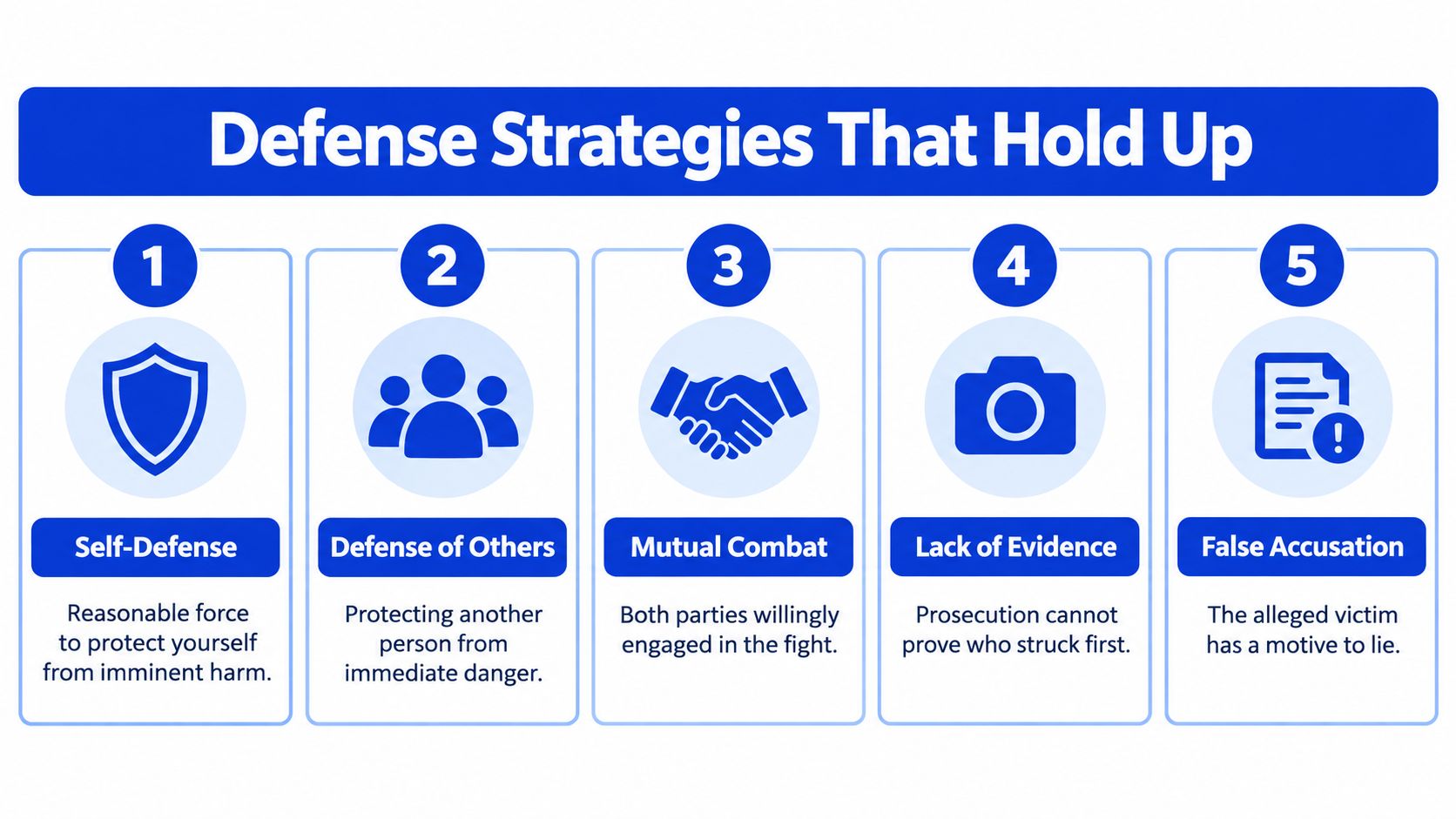
Match the defense to the facts
Self-defense or defense of another person may apply when the accused reasonably believed force was needed to address an imminent threat. The amount and timing of force matter. Video, injuries on both sides, witness accounts, and what the accused knew at the time can support or weaken this theory.
Lack of intent fits an accidental collision, a reflexive movement, or contact made while trying to leave a crowded space. The defense needs more than the word “accident.” It should compare the physical setting, the parties' movements, and any recording that shows how contact occurred.
Consent may matter in a sport or activity where physical contact is part of participation. It isn't a blanket answer to every confrontation. The question is whether the particular contact fell within what the other person accepted, not whether the parties had interacted before.
Identity becomes important when witnesses had a limited view, the area was crowded, or accounts changed. A clear identification isn't guaranteed just because someone made an accusation. The defense should check vantage point, lighting, timing, and whether independent evidence places the accused at the scene.
No contact against the person's will may be relevant when the conduct was welcomed or part of ordinary interaction. Mutual participation can affect how a factfinder views the encounter, but it doesn't automatically resolve the charge. The exact sequence and context still matter.
A strong defense puts the State's evidence under a microscope before deciding whether to negotiate, file motions, or take the case to trial.
Challenge the evidence and the procedure
A lawyer should examine statements, recordings, photographs, and witness accounts for gaps and contradictions. If police obtained evidence through an unlawful stop or search, or if an identification procedure was unreliable, a pretrial motion may ask the court to exclude that evidence. Whether a motion succeeds depends on the facts and applicable law.
For a fuller discussion of assault and battery defense issues, look at how each proposed defense connects to the evidence rather than assuming a particular argument will work in every case.
Hidden Consequences Beyond the Courtroom
A sentence doesn't tell the whole story. A misdemeanor battery disposition can affect licensing and future legal decisions, even when the court doesn't impose jail. Before accepting a resolution, ask what the final disposition means beyond the immediate case.

Firearm licensing and record outcomes
Florida's Department of Agriculture and Consumer Services says a misdemeanor crime of violence, including battery, can disqualify a person from a concealed-weapon or firearm license until three years after probation or other court conditions are completed, unless the record is sealed or expunged. The agency's rule concerns the final disposition and supporting documentation, not merely the arrest charge. Review Florida's battery statute and licensing-related information with the actual court record before assuming when eligibility resumes.
The words dismissal, withheld adjudication, conviction, sealing, and expungement don't mean the same thing. A dismissal is not the same court outcome as a finding of guilt, and sealing or expungement involves a separate legal process. The effect depends on the record and the rule being applied. Florida record-sealing information can help frame the issue, but get case-specific advice before deciding a disposition is harmless.
Supervision, work, and other effects
Probation or community supervision can include a no-contact order or a program requirement. Violating a court order can create new exposure, so don't contact a protected person or skip a required condition without first getting legal guidance.
Battery allegations may also raise immigration or professional-licensing questions. The effect depends on the person's status, the licensing rules, and the exact case outcome. Don't rely on a general assurance that a misdemeanor “won't matter.” Have the final disposition reviewed for the consequences relevant to your work, license, immigration situation, and firearm eligibility.
What to Do in the First 72 Hours After an Arrest
The first days after an arrest are for protecting your position, not explaining yourself to everyone who asks. Take these steps in order, and avoid discussing the facts publicly or over messages that others may see.
Use your right to remain silent. You can decline to give law enforcement a recorded statement without counsel present. Don't try to negotiate your way out of the charge in an interview.
Write down what you remember. Record the sequence of events, who was present, when things happened, and what injuries you saw on either side. Keep the notes private and give them to your lawyer.
Preserve evidence. Save phone videos, doorbell footage, surveillance recordings, and relevant social media posts before they disappear. Don't edit or circulate the original files.
Check prior case records. Gather disposition paperwork for any prior battery, aggravated battery, or felony battery case. A prior outcome can affect the new charge, even if you remember it differently.
Get legal advice before first appearance. Bond, release conditions, and no-contact orders need careful attention. These steps after an arrest can help you organize, but a lawyer should review the facts and court paperwork directly.
Questions to Bring to a Free Case Review
A useful consultation should answer concrete questions, not rely on promises. Bring the charging document, release paperwork, any recordings you have, and records from prior cases.
Ask: What conduct is the State alleging, and which statutory theory appears in the charge? What evidence supports identity, intent, and lack of consent? Does any prior disposition create felony exposure?
Then ask what outcomes are realistically available and what each would require, including fines, supervision, classes, and collateral consequences. If a resolution involves a withheld adjudication or another disposition, ask how it affects record sealing and concealed-carry eligibility. The point is to understand the tradeoffs before you make a decision that may shape both the case and your future record.
Ticket Shield, PLLC handles misdemeanor and felony battery matters in Florida, including early intervention in Broward County and nearby South Florida jurisdictions. Visit Ticket Shield, PLLC to request a free case review and discuss a defense plan based on the evidence and your record.