
DUI vs Reckless Driving in Florida: Key Legal Differences
Jason Goldsmith, Esq
You got stopped on I-95, the officer said you looked impaired, and now you're staring at paperwork that mentions either DUI or reckless driving. That distinction is not a technicality. In Florida, it can change your criminal record, your driver's license, your insurance, and the way a prosecutor treats your case from the first hearing forward.
If you're in Broward County, Fort Lauderdale, Miami-Dade, Palm Beach, or anywhere in South Florida, treat the charge seriously right now. A DUI accusation is tied to impairment. A reckless driving case is tied to dangerous conduct. The State has to prove different things, and your defense needs to match the charge you face.
Issue | DUI | Reckless Driving |
|---|---|---|
Core allegation | Impairment by alcohol or drugs | Willful or wanton disregard for safety |
Proof the State needs | BAC evidence or impairment evidence | Driving conduct and surrounding facts |
Main defense focus | Stop, tests, chemical evidence, chain of custody | Witness credibility, video, context, intent |
License impact | Immediate and serious | Still serious, but different |
Collateral consequences | Can reach immigration, licensing, and insurance | Can also trigger collateral fallout, depending on who you are |
Table of Contents
Understanding the Stakes of Your Charge
A lot of people hear “reckless driving” and assume they caught a break. That can be true in some cases, but it can also be a trap. A reckless driving conviction is still a criminal case in many states, and for some people the practical fallout can be just as damaging as a DUI reduction, especially when immigration, licensing, or job screening are on the line.
Your charge shapes your defense from day one
If police say you were impaired, the State will build the case around alcohol or drugs, chemical testing, and field observations. If the allegation is reckless driving, the fight shifts to whether your driving showed willful or wanton disregard for safety. That difference changes what evidence matters most and what your lawyer should attack first.
A client in South Florida may care most about the immediate arrest, but the bigger issue is the record that follows. DUI cases often carry harsher criminal and administrative consequences, while reckless driving can still leave a mark that employers, insurers, and licensing boards care about. The wrong plea can close doors later.
Practical rule: do not assume a reduction is automatically better. The right outcome depends on what you do for a living, your immigration status, and whether any board, agency, or insurer will review the conviction.
That is why early legal advice matters. If you wait, you lose your advantage. If you act quickly, a defense lawyer can evaluate whether the State's proof is weak enough to fight outright, or whether negotiation makes sense for your future.
Why stressed clients should care immediately
The first mistake people make is treating these as routine traffic problems. They're not. One charge is about impairment, the other is about dangerous conduct, and each one creates different risks for your record and your daily life. If you drive for work, hold a professional license, or live in a household where a suspension creates chaos, the difference is immediate and personal.
A DUI vs reckless driving decision should never be made casually in a conference room after one hurried conversation. It needs a real review of the facts, the stop, the officer's report, and the collateral consequences that apply to you.
Legal Definitions and What Prosecutors Must Prove
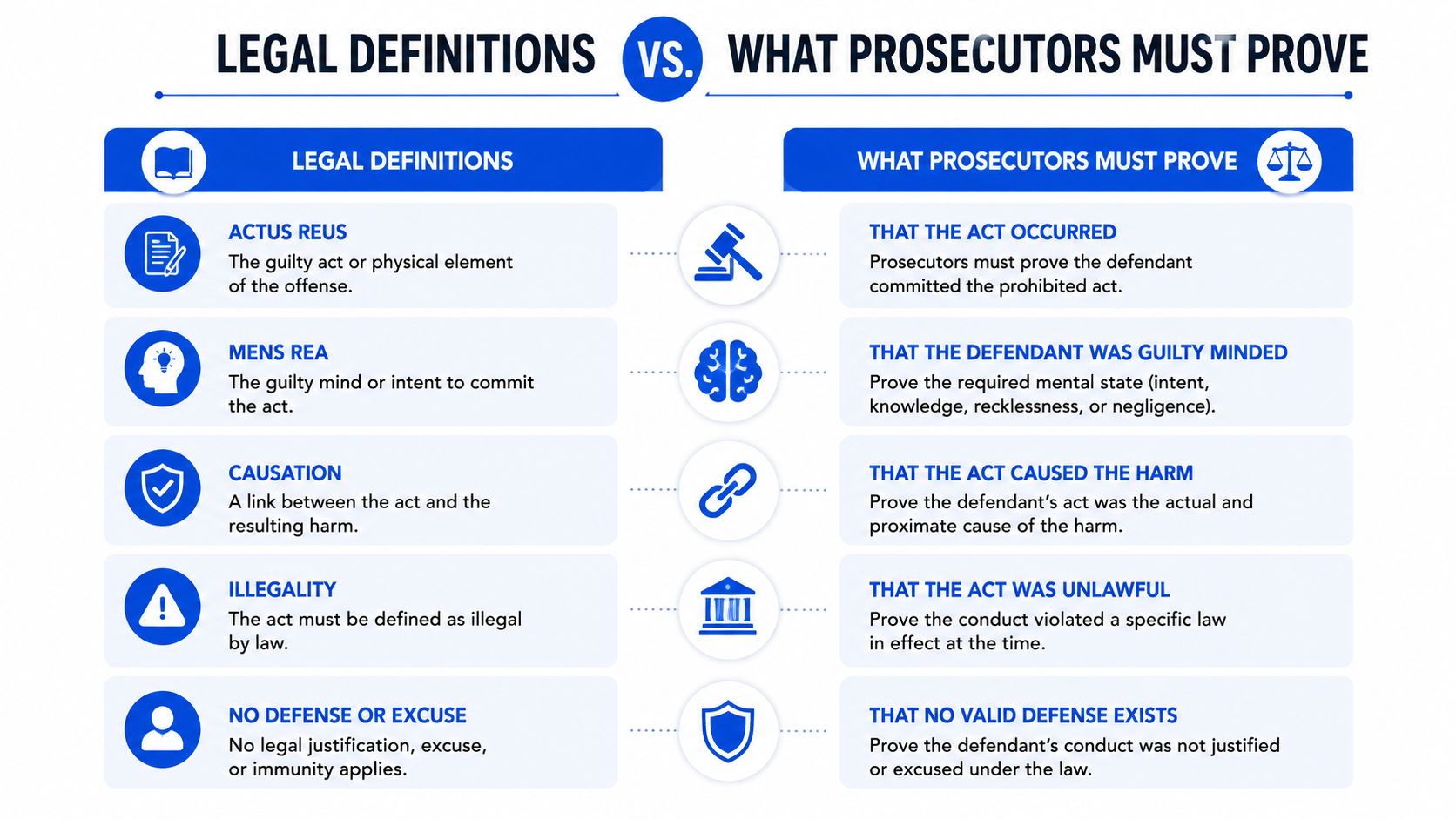
DUI is impairment-based, reckless driving is conduct-based
In California terms, the distinction is clean and useful for understanding the legal mechanics. A DUI under Vehicle Code 23152 requires proof of impairment or a blood alcohol concentration at or above 0.08%. Reckless driving under Vehicle Code 23103 requires proof of willful or wanton disregard for safety, with no intoxication element. The Florida defense bar often uses the same practical distinction when analyzing how prosecutors think about proof.
That matters because the State has to build a different case depending on the label. A DUI prosecution leans on BAC, chemical tests, officer observations, and impairment cues. A reckless driving case leans on what the driver did, how the car moved, what witnesses saw, and whether the conduct really rose to the level of reckless disregard.
What that means in court
If the State claims DUI, your lawyer looks hard at the stop, the test procedure, and whether the evidence shows impairment. If the State claims reckless driving, the key questions are different. Was the driving bad, or was it criminally reckless? Did the officer exaggerate? Does the video match the report?
The internal legal split also matters for search and seizure arguments, because the strongest defense often starts before any test result ever exists. A lawyer who understands the charge can focus the attack where the case is weakest.
Read the statutory framework in more detail at Florida reckless driving statute guidance.
The charge is not just a label. It controls the evidence, the strategy, and the pressure points in plea negotiations.
When a client comes in saying, “I was offered reckless driving, should I take it?” the answer is, “What are they trying to avoid, and what are you trying to protect?” That is the right question every time.
Criminal Penalties and License Consequences in Florida
Florida does not treat DUI and reckless driving the same way, and you should not either. The criminal exposure, the license consequences, and the extra penalties all move differently. For a first DUI conviction in Florida, the case can bring up to 6 months in jail, a $500 to $1,000 fine, and a license revocation of at least 180 days but no more than 1 year. If the breath alcohol level is 0.15 or higher or a minor was in the vehicle, the maximum jail exposure increases to 9 months and the fine range rises to $1,000 to $2,000. Those numbers come from Florida consequence summaries and are the kind of facts that matter fast when you're deciding whether to fight or negotiate. Florida DUI and reckless driving consequences
Side-by-side comparison
Penalty Type | DUI (First Offense) | Reckless Driving |
|---|---|---|
Jail | Up to 6 months. Up to 9 months with 0.15 BAC or a minor in the vehicle. | Generally less severe, but still criminal exposure |
Fine | $500 to $1,000. $1,000 to $2,000 with aggravating factors | Lower than DUI in most cases, depending on facts |
License | Revocation of at least 180 days, up to 1 year | Can still affect driving privileges, depending on the resolution |
Core focus | Impairment, testing, administrative action | Driving behavior and circumstances |
Practical risk | Criminal record plus administrative fallout | Reduced DUI-specific penalties, but not a clean slate |
Why the license issue is often the real fight
Drivers often focus on jail and fines, then panic later when they realize the license problem is the one that disrupts work, childcare, and daily life. That's why the administrative side matters as much as the courtroom side. If your case includes a suspension issue, use the hearing process strategically and fast. See the timing and process details in Florida administrative license suspension hearing guidance.
Reckless driving can still carry serious consequences, even when it avoids DUI-specific penalties. A careless plea that looks “lighter” on paper can still leave you with a criminal conviction, a suspended license issue, or later insurance fallout. For some drivers, that trade is acceptable. For others, it's a mistake.
The Florida takeaway
The smart move is not chasing the label that sounds better. It's measuring the whole package, criminal record, license impact, and future screening consequences. If the State's proof is weak, fight for dismissal or a better reduction. If the evidence is strong, negotiate from a position that protects your license and your future as much as possible.
Hidden Collateral Consequences Most Articles Miss
The usual DUI vs reckless driving article stops at jail, fines, and points. That's not enough. For many clients, damage shows up later in immigration screening, licensing review, employment checks, and insurance costs.
A reduction is not automatically a win for everyone
Noncitizens need to be especially careful. A reckless driving plea can still create immigration risk, depending on the charge language and the facts behind it. The same is true for licensed professionals, nurses, CDL holders, rideshare drivers, and anyone whose job depends on a clean driving or discipline record. Even when a reckless driving result avoids DUI-specific penalties, it can still be a conviction that matters to a board or employer.
Florida clients also need to think about professional fallout in the world outside the courtroom, not just how plea forms appear in court. A nurse may face board review. A commercial driver may face employment consequences. A rideshare driver may lose access to work if the company reviews criminal history or driving conduct. Insurance carriers often do not care whether the case ended as DUI or reckless driving, they care that the incident signals risky behavior.
Bottom line: if you are a noncitizen, licensed professional, or commercial driver, do not let anyone tell you reckless driving is automatically better.
Why the right answer depends on who you are
Many defense discussions oversimplify the problem. A reduction can help one person and hurt another. That's why collateral consequences need a person-by-person review, not a one-size-fits-all plea strategy.
Immigration status: A plea that looks better on a criminal docket can still create immigration problems.
Professional license: Boards often care about conduct, honesty, and safety, not just the label of the offense.
Employment screening: Employers may see a reckless driving conviction as a red flag even when it is not DUI.
Insurance fallout: Insurers can reprice risk based on the incident itself, not only the final charge.
A Florida defense lawyer should know how to compare those risks before you accept a plea. If your situation touches immigration, licensing, or commercial driving, the decision has to be specific to your case. That is where generic online advice fails and real defense work starts.
Defense Strategies and Evidentiary Challenges

How DUI cases get attacked
A DUI case rises or falls on proof. If the traffic stop was shaky, the whole case starts weaker. If the field sobriety tests were sloppily given, the observations lose force. If the breath machine was not maintained or the blood evidence was handled badly, the State's confidence should drop.
That is why a defense lawyer looks at the stop first, then the tests, then the lab trail. The order matters. A bad stop can suppress the evidence. A bad test can undercut the State's story. A bad chain of custody can make the result less reliable.
For a deeper look at the roadside testing issues that often matter in these cases, review Florida field sobriety test defense guidance.
How reckless driving cases get attacked
Reckless driving is not a catch-all for bad driving. The State still has to prove the conduct crossed the line into willful or wanton disregard. That opens several attack points. Witnesses may overstate what they saw. Dashcam footage may tell a different story. Traffic density, weather, roadway conditions, and panic can all change how a judge or prosecutor views the facts.
A strong defense often focuses on context. Was the driver aggressive, or just mistaken? Was there a single bad maneuver, or a real pattern of dangerous behavior? Did the officer jump to conclusions because the driving looked dramatic in the moment?
Practical defense priorities
Challenge the stop early: If police had no lawful basis, the case can weaken fast.
Demand the records: Maintenance logs, video, reports, and chain-of-custody documents matter.
Test the officer's narrative: Bodycam and dashcam often matter more than a polished report.
Push back on exaggeration: Reckless driving requires more than ordinary negligence or a single mistake.
One more point. Ticket Shield, PLLC is a Florida criminal defense firm that handles DUI and reckless driving matters, and that kind of focused representation matters when your record and license are at stake. A former prosecutor knows where the State's proof is thin and where plea opportunities usually exist.
The best defense is usually built early, before the evidence hardens and the court calendar starts moving. If you wait until the last minute, you give the State more room to control the story.
Plea Negotiations and Likely Outcomes
Plea talks in Florida are not about which charge sounds nicer. They're about bargaining power. Prosecutors look at the strength of the evidence, the facts of the stop, the driver's history, and whether the case has trial problems. If the State's proof is weak, the odds of a reduction improve.
When a reduction is more realistic
Borderline BAC cases often create room to negotiate. So do cases involving cannabis, prescription medication, or mixed impairment where the evidence does not fit neatly into a classic alcohol DUI. Weak field test performance by law enforcement, inconsistent reports, and unclear video can also push a prosecutor toward a lesser result.
The legal environment is also moving in a way that makes these cases less simple than they used to be. Some jurisdictions now use alternative impairment theories or hybrid offenses when alcohol and drugs are involved. That means the old “DUI or reckless driving, nothing else” mindset does not always reflect how prosecutors evaluate the file.
If you want a useful comparison point for plea language and reduction strategy, read wet reckless charge overview.
What actually drives the outcome
A serious defense lawyer does not chase a plea reduction blindly. The goal is to use the State's weaknesses to improve the deal, or to force a dismissal if the evidence is too thin.
Good plea negotiations are evidence-driven, not fear-driven.
That means the lawyer should know when to press, when to hold, and when a reduction still creates collateral harm that makes it a bad trade. If you are a nurse, a noncitizen, a CDL holder, or someone whose job depends on a clean record, the “best” plea may not be the one that merely lowers the charge. It's the one that protects the biggest risk.
Protect Your Rights with Experienced Legal Counsel
If you're facing DUI or reckless driving charges in Florida, do not wait and hope the case fixes itself. You need counsel who understands how prosecutors build these cases and how to spot the weak points early. In Broward County, Fort Lauderdale, Miami-Dade, Palm Beach, and across South Florida, fast legal action can make a real difference in the outcome.
Ticket Shield, PLLC, led by former prosecutor Attorney Jason S. Goldsmith, handles these cases with direct attorney access, 24/7 availability, and a defense plan built around your record, license, and collateral risks. If you want a clear read on your options before deadlines and court dates limit your choices, get a confidential consultation now.
Ticket Shield, PLLC helps Florida drivers fight DUI and reckless driving charges with focused criminal defense, license protection, and negotiation strategy. If you need straight answers about your case, visit Ticket Shield, PLLC to talk through your options and protect your next move.