
Florida's 10 Common Felony Charges: Penalties and Defenses
Jason Goldsmith, Esq
You're pulled over after a routine traffic stop, arguing with a neighbor in a Broward County parking lot, or watching officers search a shared home. Then someone says the word felony, and the situation suddenly feels impossible to understand.
Under Florida law, a felony is a more serious category of offense than a misdemeanor. The classification can affect potential imprisonment, probation, firearm rights, employment, licensing, immigration, and your long-term record. But an arrest or filed charge is an accusation, not proof of guilt. The State still has to prove every required element beyond a reasonable doubt.
This guide explains 10 common felony charges in Florida through three practical questions: What must the State prove? How does Florida classify the offense and its potential penalties? What defense issue may matter most? The answer depends on the exact statute, evidence, prior record, alleged conduct, and procedural history. No lawyer can promise a particular result.
If officers want to question you, you can remain silent and ask for counsel. Don't explain the incident to police, the alleged victim, friends, or online contacts before receiving legal advice. Early decisions can affect searches, witness accounts, digital evidence, and negotiations.
Table of Contents
4. Possession of a Firearm by a Convicted Felon Under Florida Statute 790.23
5. Discharging a Firearm in Public Under Florida Statute 790.15
7. Possession of a Controlled Substance Under Florida Statute 893.13(6)(a)
8. Possession With Intent to Sell, Manufacture, or Deliver Under Florida Statute 893.13(1)(a)
9. Trafficking in Cocaine Under Florida Statute 893.135(1)(b)
1. Aggravated Assault Under Florida Statute 784.021
Aggravated assault is generally a third-degree felony involving an assault plus an aggravating circumstance, such as a deadly weapon or an intent to commit a felony. Florida defines assault as an intentional and unlawful threat by word or act, combined with an apparent ability to carry it out, that creates a well-founded fear that violence is imminent.
Physical contact isn't required. During a heated argument in a Broward County parking lot, for example, a person who raises a folding knife and threatens to cut another driver may face aggravated assault if the State can prove the knife qualified as a deadly weapon and the fear was reasonable. A person who swings a bat but misses may also be charged if the alleged victim felt genuine fear of being struck.
A simple assault without the aggravating facts is generally a second-degree misdemeanor under § 784.011. That distinction can become important during negotiations.
What the defense should examine
The central issue may be whether the conduct was an intentional threat, rather than angry speech, an ambiguous movement, or a reaction to an immediate danger. Self-defense can also be decisive. Florida's Chapter 776, including the stand-your-ground provision in § 776.013, may protect a person who reasonably believed force was necessary, depending on the facts.
Preserve text messages, social media posts, video, and witness contact information before they disappear. Don't contact the alleged victim or post about the incident. Statements can become evidence of intent or consciousness of guilt.
Practical rule: Ask whether the evidence supports aggravated assault at all, or whether the facts point toward simple assault, dismissal, or a lawful self-defense argument.
2. Aggravated Battery Under Florida Statute 784.045
Aggravated battery involves intentional harmful or offensive contact, or intentional bodily harm, combined with a serious aggravating factor. The State may allege that the accused intentionally or knowingly caused great bodily harm, permanent disability, or permanent disfigurement, or that the accused used a deadly weapon.
It's a second-degree felony. In a Fort Lauderdale bar fight, the State might argue that a broken orbital bone proves great bodily harm. The defense would examine whether the injury came from a deliberate strike, a fall, or another intervening event. In a Miami-Dade dispute involving a glass bottle, the way the bottle was used may determine whether it qualifies as a deadly weapon.
The medical evidence often matters as much as the witness account. A serious injury alone doesn't automatically prove who caused it or what the accused intended.
Evidence that can change the analysis
Request complete medical records, imaging, treatment notes, and any independent medical review that may clarify the nature and cause of the injury. Body-camera and surveillance footage should be located promptly because businesses and residences may overwrite recordings.
A defense investigation may focus on:
Causation: Did the accused's conduct cause the claimed injury?
Intent: Was the contact intentional, or did the injury occur during an accident or defensive movement?
Weapon classification: Was the object used in a way capable of causing the alleged harm?
Video context: Does footage show what happened before the confrontation?
Learn more about aggravated battery with a deadly weapon and the issues that can affect the charge. Ticket Shield, PLLC, a Broward County firm led by former prosecutor Attorney Jason S. Goldsmith, offers free consultations and 24/7 access for people who need early guidance.
3. Armed Robbery Under Florida Statute 812.13(2)(a)
Robbery requires more than a person taking property. The State generally must prove that the accused took property from another person, or from that person's presence, against the person's will, through force, violence, assault, or fear. Armed robbery adds the allegation that the offender carried a firearm or other deadly weapon.
Armed robbery is a first-degree felony punishable by up to life imprisonment. Florida's weapon enhancement statute, § 775.087, may also create mandatory minimum prison exposure in qualifying firearm cases, including a 10-year minimum in covered circumstances. The exact enhancement depends on the alleged offense and conduct.
A Palm Beach County robbery accusation may rest on a stressful eyewitness identification made under poor lighting. The defense can examine the photo lineup, the witness's initial description, the time available to observe the offender, and whether police procedures influenced the identification.
Identity, force, and weapon proof
Surveillance footage can be central. In a store incident, video may show that the accused was not the person who took property, or that the alleged weapon was never displayed. Phone location records, alibi witnesses, and business footage may also contradict the accusation.
A defense review should ask:
Identity: Was the identification reliable and properly conducted?
Force or fear: Did the evidence establish the required coercion?
Weapon: Can the State prove that the object was a firearm or deadly weapon?
Intent: Was there a taking, or was the event misunderstood?
Do not answer detectives' questions without counsel. You have the right to remain silent and request an attorney.
The following video provides general context about the charge and defense issues:
4. Possession of a Firearm by a Convicted Felon Under Florida Statute 790.23
Florida generally prohibits a person convicted of a felony from owning, possessing, controlling, or having custody of a firearm or ammunition unless civil rights and firearm privileges have been restored. A violation is generally a second-degree felony.
The State must prove both the qualifying prior felony status and knowing possession or control of the firearm or ammunition. That can be difficult when the item is found in a shared home, shared vehicle, or location accessible to several people.
Officers executing a warrant at a Broward County residence might find a handgun in a closet. The defense would examine whether the accused knew it was there, whether the accused exercised control over it, and whether another resident had equal access. During a Miami-Dade traffic stop, a firearm under the passenger seat may create the same dispute.
Search legality and constructive possession
Possession can't be assumed solely from proximity. A prosecutor may rely on fingerprints, statements, location, access, ownership documents, or other circumstances. The defense can challenge whether those facts establish knowing control beyond a reasonable doubt.
Counsel should also verify whether the prior conviction was a felony under Florida law, whether it was reclassified, whether it was sealed, and whether firearm privileges were restored. The details matter.
A search or stop may be challenged under the Fourth Amendment and Article I, Section 12 of the Florida Constitution. Florida Rule of Criminal Procedure 3.190(g) provides a procedure for certain suppression motions. Don't make statements about who owned or touched the firearm, and don't retrieve, move, or hide items at a residence.
For a focused review of the stop, search, firearm location, prior conviction, and alleged enhancements, visit the Florida weapons and firearm offenses resource.
5. Discharging a Firearm in Public Under Florida Statute 790.15
Florida Statute § 790.15 generally makes it a third-degree felony to intentionally discharge a firearm in a public place or on, across, or over a public road or highway, except in lawful defense of oneself or another person or in other lawful circumstances. The statute also addresses discharges that create risks to people or property.
The State must prove an intentional discharge and facts bringing the conduct within the statute. That makes the location, purpose, firearm condition, and surrounding circumstances important.
Suppose a Palm Beach County homeowner fires a warning shot after believing an intruder is present. The defense may focus on whether the person reasonably believed force was necessary and whether the discharge fell within a lawful defense exception. In another case, fireworks or a malfunctioning firearm may have been mistaken for gunfire. Witness accounts, physical evidence, and forensic testing can clarify what occurred.
The facts surrounding the discharge
Document the location, time, weather, lighting, threats, and events that led to the alleged discharge. Don't discuss the matter with neighbors or post about it online. A casual statement can become evidence about intent or justification.
A firearms examination may address the identity of the weapon, whether it functioned properly, the number of shots, and the direction of discharge. Counsel should also check whether prosecutors filed related allegations, such as aggravated assault or reckless conduct, because those charges require separate analysis.
The defense lever is often lawfulness and intent, not merely whether a firearm was present. A discharge may be accidental, justified, misidentified, or outside the statute's location requirements.
6. Grand Theft Under Florida Statute 812.014
Florida theft generally requires proof that the accused knowingly obtained or used another person's property with the intent to deprive the owner of the property or the benefit of it, either permanently or temporarily. Grand theft depends on value, property type, or specified circumstances.
Under § 812.014, property valued at $750 or more generally qualifies as grand theft in the second degree, while property valued at $20,000 or more can qualify as grand theft in the first degree. A theft involving property valued from $750 to under $20,000 is generally a third-degree felony, property valued from $20,000 to under $100,000 is generally a second-degree felony, and property valued at $100,000 or more is generally a first-degree felony. Theft of a firearm is specifically classified as grand theft in the second degree even without relying solely on market value. These thresholds and classifications come from Florida's theft statute.
A retail employee accused of taking merchandise just above the $750 threshold may challenge the store's valuation method. A contractor who keeps tools borrowed from a client may argue a good-faith belief that the tools were owed, which can undermine criminal intent.
Valuation and intent
The defense should obtain receipts, invoices, inventory records, pricing information, payment histories, and written agreements. Retail price, replacement cost, used condition, ownership, and permission may all affect the analysis.
A civil dispute doesn't automatically defeat a theft charge, but evidence of permission, a claim of right, repayment discussions, or an honest contract dispute may be important. Eligible defendants may also ask about diversion, restitution-based resolutions, or other outcomes that avoid a conviction.
This guide to grand theft versus petty theft explains why the property's value and circumstances can change the charge.

7. Possession of a Controlled Substance Under Florida Statute 893.13(6)(a)
Florida Statute § 893.13(6)(a) generally makes possession of most controlled substances a third-degree felony unless the substance was obtained through a valid prescription or another lawful means. The State must prove that the substance was controlled, that the accused possessed it, and that the possession was knowing and unlawful.
A Broward County traffic stop may lead to pills being found in a glove box. The defense would examine the reason for the stop, the legality of the search, who had access to the vehicle, and whether the accused knew the pills were there. A field test may return a positive result, while later laboratory testing identifies a different substance or produces an inconclusive result.
The laboratory file matters
Request the complete laboratory report, analyst notes, testing method, quality-control information, and chain-of-custody records. The State must connect the substance collected at the scene to the evidence tested and presented in court.
The defense may also investigate:
Search authority: Did officers have consent, a warrant, probable cause, or another legal basis?
Knowledge: Can the State prove the accused knew about the substance?
Possession: Was the substance physically or constructively possessed?
Prescription status: Does a valid prescription provide a lawful explanation?
Program eligibility: Could drug court or pretrial intervention be available?
Don't consent to a vehicle or home search without legal advice. You can politely state that you don't consent and want to speak with an attorney.
For a broader discussion of Florida drug charges and defense issues, review the Florida drug crimes resource.
8. Possession With Intent to Sell, Manufacture, or Deliver Under Florida Statute 893.13(1)(a)
Simple possession and possession with intent to distribute are different allegations. Under § 893.13(1)(a), possession with intent to sell, manufacture, or deliver most controlled substances is generally a second-degree felony. The State must prove possession plus the separate intent to distribute.
Intent is often inferred from circumstances rather than admitted directly. Separate packaging, scales, communications, cash, surveillance, and the quantity of a substance may be used to support the allegation. But none of those facts automatically proves distribution intent.
In a Palm Beach County residence, officers may find a small amount divided into bags beside a digital scale. The defense might argue personal use and offer an innocent explanation for the scale. In another case, police may find cash and messages discussing a transaction but no drugs. Counsel can examine whether the messages refer to controlled substances and whether the State can connect the accused to the alleged transaction.
Separate possession from distribution intent
The defense should request the full discovery file, including phone extractions, surveillance, informant information, officer notes, and laboratory results. A constitutional challenge may seek suppression of evidence obtained through an unlawful stop, search, seizure, or warrant.
The key question is often whether the State can prove intent beyond personal possession. The defense may also challenge constructive possession when several people had access to the location where drugs or related items were found.
Don't discuss communications or alleged transactions with others. Messages can be misunderstood, taken out of context, or used to argue intent. They can also create additional evidence that requires careful forensic review.
9. Trafficking in Cocaine Under Florida Statute 893.135(1)(b)
Florida trafficking law focuses heavily on the amount of cocaine alleged. For an amount between 28 and 200 grams, trafficking in cocaine is a first-degree felony carrying a three-year mandatory minimum prison sentence and a $50,000 fine, according to the statutory framework described in § 893.135(1)(b). The precise charge depends on the substance, conduct, weight, and other statutory facts.
The State must prove the required knowing conduct, such as selling, purchasing, manufacturing, delivering, or possessing cocaine, and must establish the applicable quantity. A package's total weight isn't necessarily the same as the net weight of the controlled substance.
For example, a substance weighed at 30 grams with packaging may require independent testing to determine whether the cocaine itself meets the trafficking threshold. A large quantity discovered during a Broward County vehicle search may also raise questions about the stop, search, ownership, knowledge, and chain of custody.
Weight and testing can control the case
Request the complete laboratory file, scale calibration records, weighing procedures, analyst notes, and chain-of-custody logs. An independent laboratory review may identify problems with substance identification, contamination, measurement, or packaging.
Counsel should evaluate suppression issues early. If the evidence came from an unlawful stop or search, a motion to suppress may affect the entire prosecution. The mandatory prison allegation also makes early strategic representation important.
Ticket Shield, PLLC offers 24/7 access for clients and families responding to serious Florida drug allegations. Any defense must still be based on the actual evidence, statutory elements, and applicable sentencing rules.
10. Violation of Probation Under Florida Statute 948.06
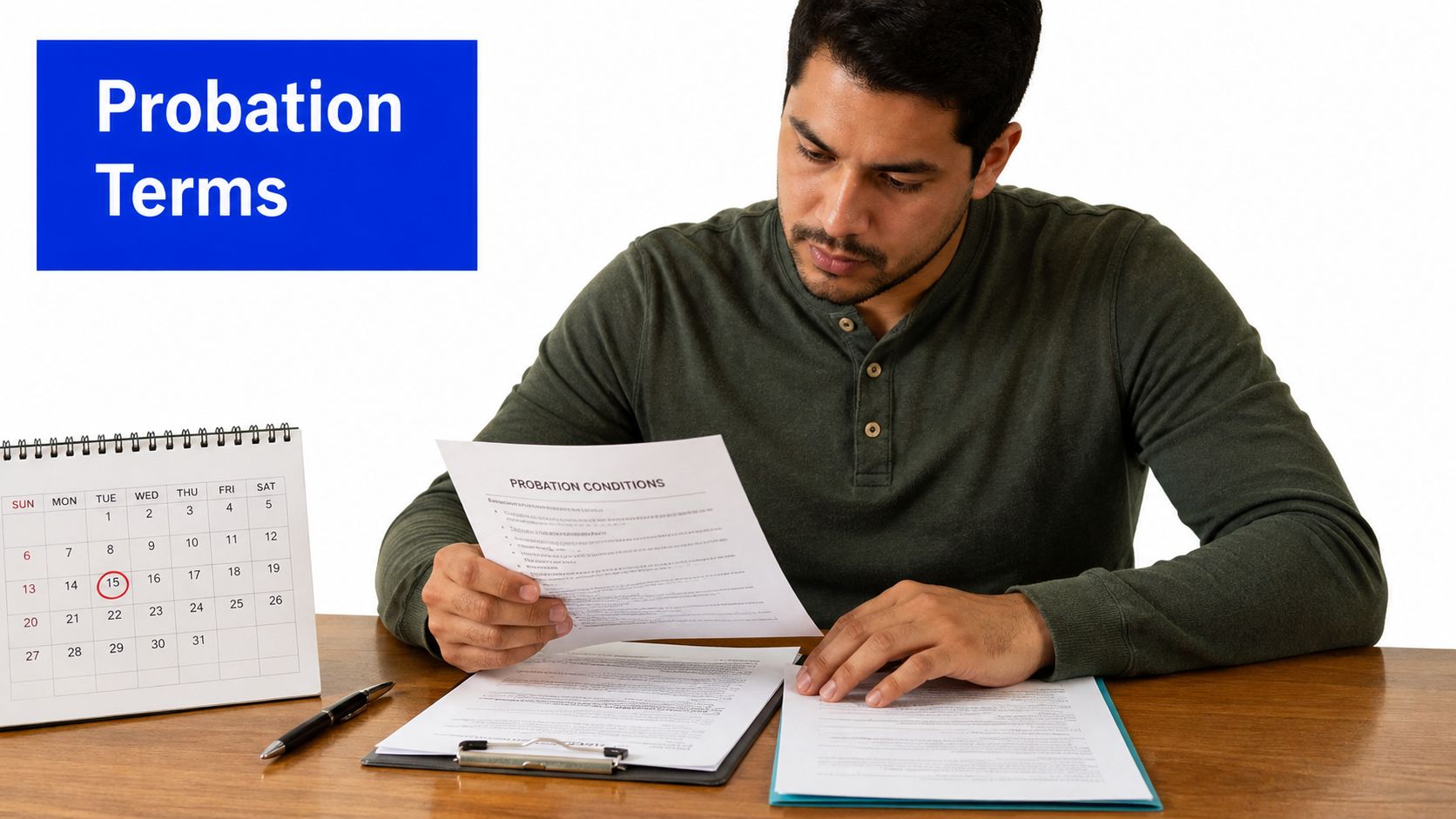
A probation violation, commonly called a VOP, begins when the court must decide whether a person broke a supervision condition. It is not a separate criminal offense. Under § 948.06, the court may revoke, modify, or continue probation after a hearing.
The State must connect the alleged conduct to a written condition and prove the violation under the applicable evidentiary standard. A technical violation may involve a missed appointment, failed drug test, or broken reporting or curfew condition. A substantive violation may involve alleged new criminal conduct. The probation order functions like the rulebook, so its exact wording matters.
For example, a Palm Beach County probationer who misses a drug test because the site closed for a holiday may have rescheduling records showing the failure was not willful. If a later arrest is dismissed, the defense can argue that an arrest alone is not a conviction. The State may still present other evidence, depending on the allegation and governing legal standard.
For a fuller discussion of how a violation is proven and what defenses apply, see the violation of probation guide.
Treat supervision conditions as ongoing legal obligations
Read every condition in the probation order and follow it closely while counsel reviews the allegation. Keep employment records, treatment documents, appointment confirmations, communications with the probation officer, and test results. These records can explain what happened, show efforts to comply, or support mitigation.
Do not ignore a violation affidavit or warrant. Attend each hearing and ask counsel to examine notice, admissible evidence, the required proof, detention risk, and whether the alleged conduct violates the written terms.
The U.S. Sentencing Commission's 2025 annual report states that 119,532 people were under federal post-conviction supervision on September 30, 2025. Federal and Florida supervision systems differ, so that figure does not predict a Florida result. It does show why supervision conditions continue to matter after sentencing.
Comparison of 10 Common Florida Felony Charges
Charge | Complexity 🔄 | Evidence / Resources ⚡ | Expected Outcomes 📊 | Defense focus / Ideal use cases 💡 | Prosecution strength ⭐ |
|---|---|---|---|---|---|
Aggravated Assault (Fla. Stat. § 784.021) | Moderate, intent & victim fear are central; credibility disputes common | Witness testimony, video, messages, weapon presence, scene evidence | Third‑degree felony; up to 5 yrs, fine, probation; possible plea to simple assault | Contest intent/reasonableness of fear, assert self‑defense, preserve digital/witness evidence | Can be charged without injury; conduct/fear evidence often persuasive |
Aggravated Battery (Fla. Stat. § 784.045) | High, medical causation and severity drive case and sentencing | Medical records, forensic/ballistic evidence, surveillance, weapon | Second‑degree felony; up to 15 yrs, fines, restitution; enhanced for firearms | Obtain independent medical reviews, challenge causation and weapon classification | Visible injuries and medical proof strongly support prosecution |
Armed Robbery (Fla. Stat. § 812.13(2)(a)) | Very high, identity, force/fear, and weapon element litigated intensely | Eyewitness IDs, surveillance, physical evidence, co‑defendant statements | First‑degree felony; up to life, possible 10‑20‑Life mandatory minimums | Challenge IDs/suppress procedures, develop alibi, avoid pretrial statements | Mandatory minimums and weapon allegation create strong leverage |
Possession of a Firearm by a Convicted Felon (Fla. Stat. § 790.23) | Moderate, constructive possession and prior‑conviction analysis key | Location of firearm, fingerprints, control evidence, prior conviction records | Second‑degree felony; up to 15 yrs, fines; mandatory minima may apply | Dispute knowledge/control, verify restoration of rights, pursue suppression | Clear prior felony + firearm found yields straightforward case |
Discharging a Firearm in Public (Fla. Stat. § 790.15) | Moderate, intent, location, and lawful exceptions matter | Ballistics, shell casings, 911 calls, witness statements, surveillance | Typically third‑degree felony; up to 5 yrs, fines, firearm restrictions | Focus on lawful defense, forensics, witness reliability, context of discharge | Physical traces and multiple witness reports often bolster prosecution |
Grand Theft (Fla. Stat. § 812.014) | Moderate, valuation and intent determine degree and exposure | Receipts, inventory records, surveillance, ownership documents | Felony degree by value: 3rd ($750–<$20k), 2nd ($20k–<$100k), 1st ($100k+); fines, restitution | Dispute valuation/intent, present receipts, contract evidence, seek diversion/restoration | Statutory value thresholds and documentation can make charge clear |
Possession of a Controlled Substance (Fla. Stat. § 893.13(6)(a)) | Moderate, search legality, knowledge, and lab ID are focal points | Lab analysis, chain of custody, search warrants, witness testimony | Third‑degree felony; up to 5 yrs, fines; probation/diversion may be available | Challenge lab/chain of custody, suppress unlawful searches, verify prescriptions | Lab confirmation and actual possession evidence are persuasive |
Possession with Intent to Sell/Manufacture/Deliver (Fla. Stat. § 893.13(1)(a)) | High, intent inferred from circumstantial indicators | Quantity, packaging, scales, large cash, phone data, surveillance | Second‑degree felony; up to 15 yrs, fines; enhancements for protected zones | Attack intent inference, seek suppression of communications, offer personal‑use explanations | Packaging/scale/cash/communications often support intent inference |
Trafficking in Cocaine (Fla. Stat. § 893.135) | Very high, weight thresholds, lab precision, and mandatory minima are decisive | Lab weight reports, scale calibration, chain of custody, searches | First‑degree felony for certain weights; mandatory minimums (e.g., 3 yrs for 28–200g), heavy fines | Demand complete lab/scale records, independent testing, challenge search legality | Statutory weight thresholds and mandatory sentences provide strong prosecutorial leverage |
Violation of Probation (Fla. Stat. § 948.06) | Variable, procedural rules and lower evidentiary standards apply | Probation records, drug tests, attendance/treatment records, new arrest reports | Possible modification/revocation; up to original sentence; sanctions or continuation | Meticulously document compliance, address notices promptly, contest sufficiency of proof | Lower burden and hearsay allowances can make revocation easier for State |
Your Next Steps After a Florida Felony Arrest
The first priority after a Florida felony arrest is protecting your rights. Don't answer investigative questions without counsel, even if you believe you can quickly clear up a misunderstanding. Ask whether you're free to leave, remain calm, and clearly request an attorney. Don't consent to a search of your vehicle, phone, home, or belongings. Don't physically interfere with officers, but don't help investigators build a case through unnecessary statements or voluntary access to evidence.
Preserve information immediately. Save text messages, emails, photographs, location records, medical records, receipts, contracts, social media content, and names of witnesses. Don't delete or alter anything. If a business, apartment complex, school, or residence may have surveillance video, tell counsel quickly so preservation requests can be considered before the system overwrites the recording.
Ask for the complete discovery file. That may include body-camera footage, dispatch records, search warrants, photographs, lineup materials, laboratory reports, chain-of-custody documents, phone extractions, medical evidence, and witness statements. The defense can't responsibly evaluate suppression, identification, intent, valuation, possession, weight, injury, or probation compliance without reviewing the evidence behind the allegation.
Florida felony classifications also require careful sentencing analysis. The general statutory maximums are 30 years for a first-degree felony, 15 years for a second-degree felony, and 5 years for a third-degree felony, while a life felony may carry life imprisonment under Florida's general sentencing framework. Those maximums aren't automatically imposed in every case. The exact offense, prior record, enhancements, plea negotiations, and Criminal Punishment Code calculation matter. Florida's Code uses offense-severity levels from Level 1 through Level 10, and additional points may arise from factors such as injury, prior record, or legal status. Review the Florida felony classification statute and Criminal Punishment Code statute with counsel rather than relying on a charge label alone.
No result can be promised. A case may involve dismissal, suppression, a reduction, diversion, a negotiated sentence, probation, trial, or incarceration. The path depends on the specific statute, facts, evidence, constitutional issues, prior convictions, and decisions made throughout the case.
If you're facing charges in Broward County, Fort Lauderdale, Miami-Dade, Palm Beach, or elsewhere in Florida, contact Ticket Shield, PLLC for a free consultation. The firm is led by former prosecutor Attorney Jason S. Goldsmith, offers 24/7 availability and direct attorney access, and develops a defense plan focused on protecting your rights, exposing weaknesses in the State's case, and addressing the consequences that matter to you.
Ticket Shield, PLLC reviews Florida felony cases involving violent allegations, weapons, theft, controlled substances, trafficking, and probation violations. Visit Ticket Shield, PLLC to request a free consultation and discuss the evidence, possible defenses, and next steps with a Florida criminal defense team available 24/7.