
Suspended License Penalty in Florida: What You Need to Know
Jason Goldsmith, Esq
You get stopped for something small, a broken tag light, a rolling stop, maybe a missed turn signal. Then the officer runs your information and tells you your license is suspended. That moment changes fast, because a suspended license penalty in Florida can move from a traffic stop to a criminal case before you've even made it home.
If you're in Broward County, Fort Lauderdale, Miami-Dade, Palm Beach, or anywhere in South Florida, don't treat this like a paperwork problem. The reason for the suspension, whether you knew about it, and what you do next all matter. A suspended license can bring arrest exposure, court dates, reinstatement hurdles, and, in some cases, jail.
Table of Contents
What Happens When You Are Pulled Over on a Suspended License
Criminal Suspensions Versus Civil and Administrative Suspensions
Hidden Fees and Administrative Barriers That Keep You Off the Road
Your Action Plan If You Are Facing a Suspended License Penalty
What Happens When You Are Pulled Over on a Suspended License
A lot of clients tell me the same story. They were driving to work, to school, or to pick up groceries, and the stop started as a routine traffic issue. Then the officer checked the license status and the tone changed immediately. That's because once law enforcement sees a suspended status, the stop is no longer just about the original traffic violation.
Florida treats driving while suspended as a criminal matter under section 322.34 when the driver knowingly drives on a canceled, suspended, or revoked license. The statute is not written like a simple ticket. It creates real criminal exposure, and the state can charge it that way if the facts support knowledge.
Practical rule: Do not volunteer that you “knew” about the suspension. That kind of statement can become the state's best evidence.
If you are pulled over, the officer may issue a criminal citation, make an arrest, or both, depending on the situation and the driver's record. The stop can also lead to towing or impound issues if no licensed driver is available to take the car. Once that happens, the problem is bigger than a fine.
The right move is simple. Stay calm, don't argue roadside, and say as little as possible. Then get counsel involved quickly. If you have a court date coming up for a traffic matter, this related guide on what to expect at a traffic ticket court appearance is worth reading before you step into the courthouse.
Florida Knowledge Requirement Under Section 322.34
If you never received notice of the suspension, section 322.34 gives you a real defense. Florida does not convict on a suspended-license charge just because an officer ran your tag or your license status came back suspended. The state has to prove you knew about the suspension before it can turn the stop into a criminal case.
What prosecutors use to prove knowledge
Prosecutors usually prove notice with a DMV mailing record, a court warning, or an admission the driver made on the roadside or in court. Florida's notice process often starts with a mailing to the address on file, so an old address can matter. If the notice went to the wrong place, or the court record never clearly shows you were told, the state's case gets weaker.
That is not a technicality. It is often the difference between a charge that sticks and a charge that falls apart.
If the state cannot prove notice, it cannot treat the stop alone as proof of guilt.
A driver who was told in open court is in a very different position from a driver who only got a letter, and both are different from someone whose record changed with no clear warning. Those facts matter because they go straight to the knowledge element under section 322.34.
A first offense and a repeat offense also do not carry the same risk. A repeat case usually gives the state more to work with, especially if there are prior notices, prior court dates, or past driving-related problems in the record. That can make the charge harder to beat and can increase the pressure to plead.
Do not plead out quickly because the officer said your license was suspended. First, make the state prove you knew. Then check whether the suspension was active on the date of the stop and whether the notice paperwork is clean. That knowledge issue is often the best defense point in a Florida suspended-license case.
Criminal Suspensions Versus Civil and Administrative Suspensions
A DUI-related suspension, a repeat driving offense, and a financial-obligation suspension can look similar on paper. They do not lead to the same penalty track. Some start as criminal cases. Others come from unpaid fines, court costs, insurance problems, or an administrative hold. The reason for the suspension controls how the state treats the stop, and that is what you need to focus on first.
Florida drivers often read the notice and assume the label tells the whole story. It does not. The first question your lawyer should ask is the reason for the suspension, not the label on the notice. That answer decides whether you are dealing with a civil clean-up, an administrative block, or criminal exposure.
Florida Suspension Types and Penalty Ranges
Suspension Type | Common Triggers | First Offense Penalty | Repeat Offense Penalty |
|---|---|---|---|
Criminal suspension | DUI-related conduct, repeat unlawful driving behavior | Criminal exposure, possible jail, and court-ordered sanctions | Tougher treatment and broader sentencing exposure |
Civil or administrative suspension | Unpaid fines, missed deadlines, court costs, insurance-related issues | Suspension remains in place until the problem is cleared | Reinstatement barriers can continue to stack |
Financial-obligation suspension | Court debt, fees, and related payment failures | Suspension stays active until court and agency steps are completed | Separate suspension issues can require separate clearance |
The practical risk is simple. A civil or administrative suspension becomes a criminal problem when the driver keeps driving. That can lead to a new arrest, not just another fee or another trip to the clerk. It also creates a hidden cascade of barriers, because each unpaid issue can keep the license blocked even after you try to fix the original one.
If you are facing a hearing or trying to get an administrative hold lifted, administrative license suspension hearings are where the record, the notice, and the reinstatement fight usually meet.
How to Reinstate Your Florida Driver License
Reinstatement is not automatic, and that's where people get trapped. Paying attention to the court issue first is the safest way to handle it. Florida says you usually have to contact the traffic court in the county where the citation was issued, satisfy the citation requirements, and then pay the reinstatement fee after the court electronically clears the suspension.
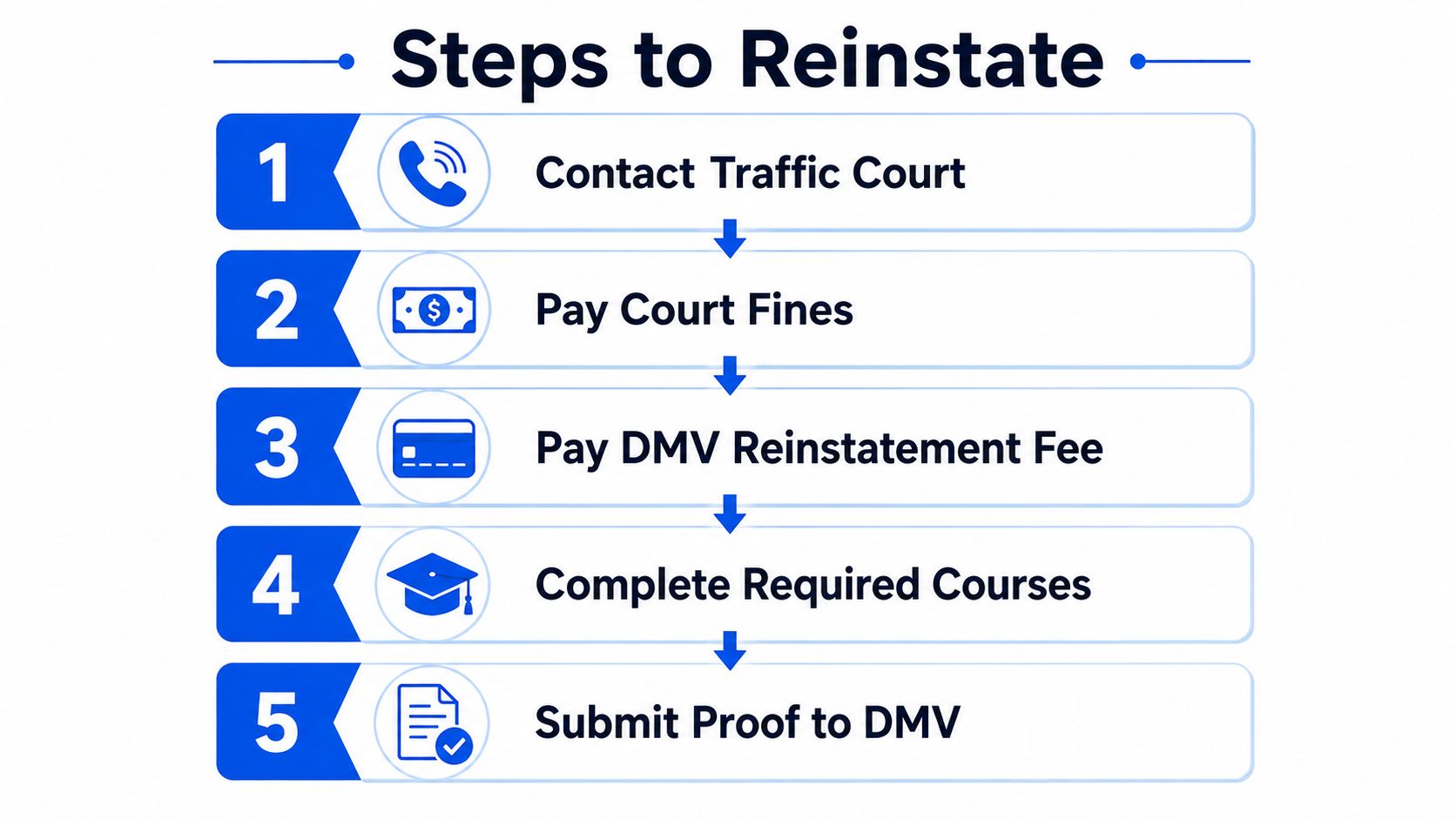
The reinstatement steps that actually matter
Contact the traffic court. Find the county that issued the citation and deal with the underlying case first.
Clear the citation requirements. If the court issue is still open, the license usually stays blocked.
Pay the reinstatement fee. Florida's licensing agency requires payment after the court has cleared the suspension.
Use the service center or phone process. The state allows reinstatement fee payment through those channels once the record is updated.
Keep proof. If the agency asks for documentation later, you want it ready.
For certain financial-obligation suspensions, Florida says the reinstatement fee is $60 for each suspension, and if there are multiple financial-obligation suspensions, the fee is charged separately for each one. That detail matters because one unresolved issue can turn into several separate payments.
The agency's process can feel simple on paper, but it still depends on court timing and electronic clearance. If you want a step-by-step breakdown, this article on how to reinstate a suspended license walks through the process in more detail.
There's also a practical reason to move fast. The longer the suspension sits, the more chances there are for a traffic stop to turn into a criminal case. If you need a Florida lawyer to help with the suspension side and the criminal side together, the video below is a useful overview.
Why Early Legal Intervention Prevents Escalation
Waiting is a mistake. A suspended-license case can start as a simple first charge and turn into something much worse if you keep driving, miss court, or ignore the paperwork. The law gets harsher fast when there's a repeat stop, a failure to appear, or a probation issue layered on top.
Florida drivers facing any license suspension problem should also think about the ripple effect on other criminal cases. If you already have probation, a new arrest can become a violation problem. If you already have a pending case, the suspension charge can make the prosecutor less flexible. If you miss court, the warrant issue can complicate everything else.
Direct advice: Fix the status problem first, then fight the charge with your lawyer. Doing both at the same time gives you more leverage.
Early intervention helps because it lets a defense lawyer attack the weak points before the state hardens its position. That can mean challenging notice, reviewing the stop, checking the record, or pushing for a better resolution before the next court date. In some cases, a suspended-license issue is the thing that keeps a larger case from spiraling.
If a failure-to-appear issue is part of your problem, this guide on failure to appear warrants is a smart read. A missed court date can turn a license issue into a much broader court problem.
Hidden Fees and Administrative Barriers That Keep You Off the Road
Many drivers assume paying the fine clears the suspension. In Florida, that assumption often leaves them stuck at the DMV with an unresolved hold.
A suspension can stay active until the court, the agency, and the fee side all line up. One payment rarely solves every part of the problem. You may still need court clearance, a record update, and proof that every required step was completed.
What usually slows people down
Separate suspension issues: One payment may not clear every hold.
Court clearance delays: The record has to update before reinstatement can finish.
Fee stacking: Some suspensions carry reinstatement costs on top of the underlying case.
Online system hurdles: Status tools and payment portals still assume you can move through the process quickly.
The financial hit also falls harder on low-income drivers because a suspension is never just the fine. It can mean missed work, missed appointments, and more time without legal driving. That is the part many people overlook when they first get the notice.
If you are trying to fix a suspension while keeping your life together, plan for both the legal problem and the reinstatement process. Treat the paperwork with the same urgency as the stop itself. The penalty includes everything that keeps you off the road afterward.
Your Action Plan If You Are Facing a Suspended License Penalty
Start with the license status, not the hope that the problem will go away. Figure out whether the suspension is criminal, civil, or administrative, then find out whether the state can prove you knew about it. After that, deal with the court issue, calculate every fee owed, and move on reinstatement as soon as the record allows.
If you're facing this in South Florida, don't handle it alone. A suspended license can affect your job, your ability to drive to court, and your criminal record all at once. If you want a clear next step, this guide to a Florida criminal defense lawyer can help you understand how defense counsel fits into the process.
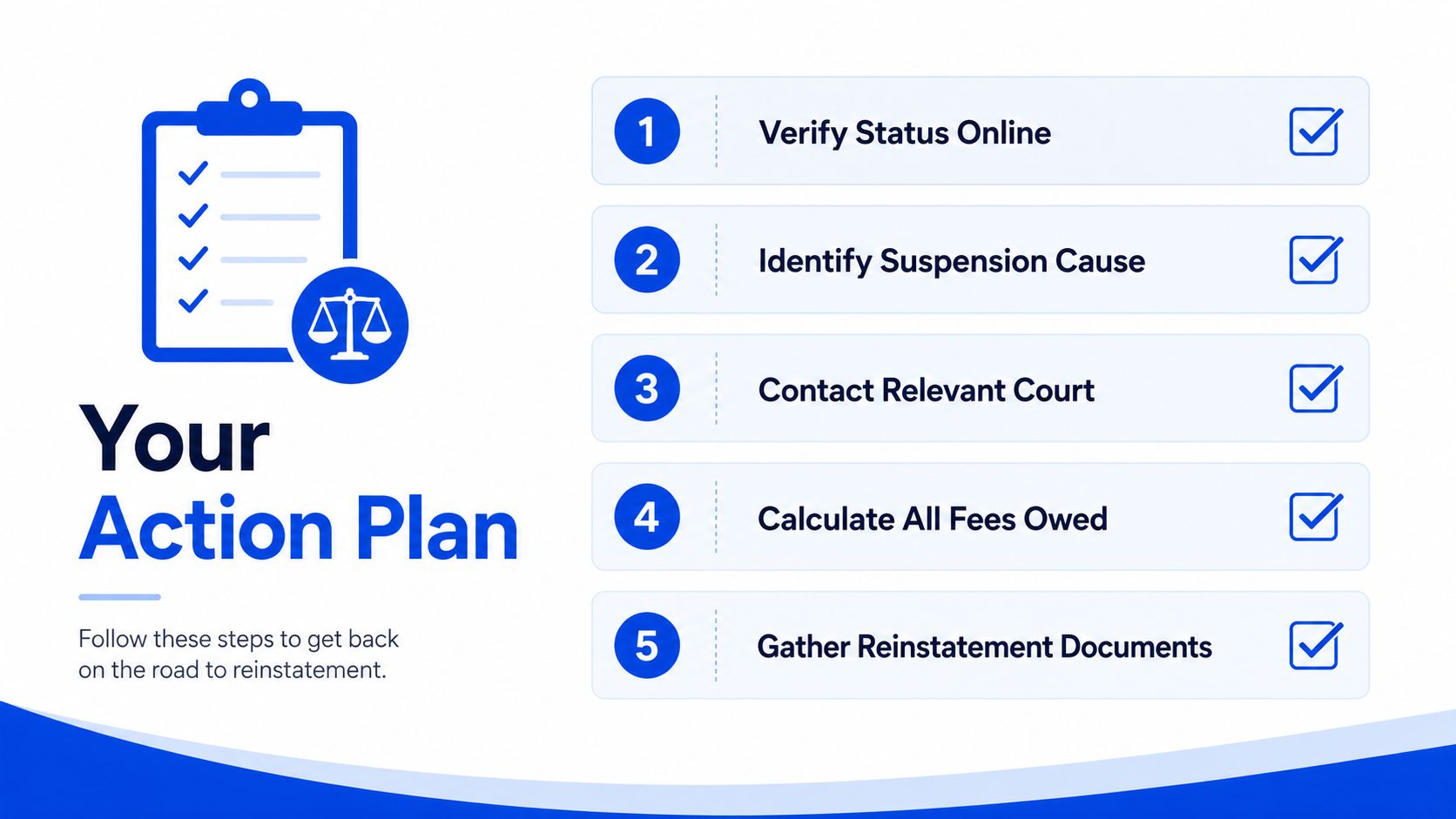
Your checklist
Verify status online
Identify the suspension cause
Contact the relevant court
Calculate all fees owed
Gather reinstatement documents
If you're searching for representation, Ticket Shield, PLLC handles Florida suspended-license defense, including reviewing the knowledge issue, the stop, reinstatement steps, and the court strategy around the charge. Visit Ticket Shield, PLLC to schedule a confidential consultation and get a clear plan before your next court date.