PTI Program Florida: Avoid a Conviction in 2026
Jason Goldsmith, Esq
You may be reading this right after an arrest, a bond hearing, or your first court notice. Individuals in that position often share a common fear. One bad night, one accusation, or one lapse in judgment could leave a permanent mark on a job search, a professional license, immigration status, or family life.
For many first-time defendants in Broward County, Fort Lauderdale, Miami-Dade, Palm Beach, and across South Florida, the most important question isn't just how to fight the case. It's whether there's a lawful way to avoid a conviction altogether. In the right case, the Florida PTI program can create that opportunity. But it doesn't work automatically, and many eligible people lose it because of procedure, timing, or a quiet roadblock nobody explained early enough.
Table of Contents
Your First Criminal Charge and a Path to Dismissal
A first criminal case often feels surreal. You may have never been in trouble before, and now you're trying to understand arraignment dates, bond conditions, police reports, and whether this charge will follow you for years. That anxiety is real, especially in theft, drug, DUI-related, traffic, domestic violence, juvenile, white collar, or weapons-related investigations handled in South Florida courts.
Florida law does provide an off-ramp in some cases. For the right person and the right charge, Pre-Trial Intervention, often called PTI, can lead to dismissal instead of a conviction. That makes it one of the most important options to evaluate early in a criminal defense case.

The key word is early. PTI isn't something you assume will still be available later after a few continuances. In many felony cases, delay is exactly what destroys the opportunity.
What people usually want to know first
Most clients ask some version of the same questions:
Can this be dismissed: In the right PTI case, successful completion results in dismissal rather than a conviction.
Do I qualify if this is my first arrest: Sometimes yes, but eligibility is narrow and fact-specific.
Can I do PTI for a felony: Sometimes, especially with qualifying non-violent allegations.
Will this erase the arrest: Dismissal and record clearing are related but not identical issues.
Practical rule: If you're wondering whether PTI is available, don't wait for the next court date to find out.
A dismissal through diversion is different from the State deciding to abandon the case. If you want to understand that separate concept, see how a nolle prosequi in Florida works. In PTI, the dismissal comes after you complete an approved program and satisfy its conditions.
What Is the Florida PTI Program
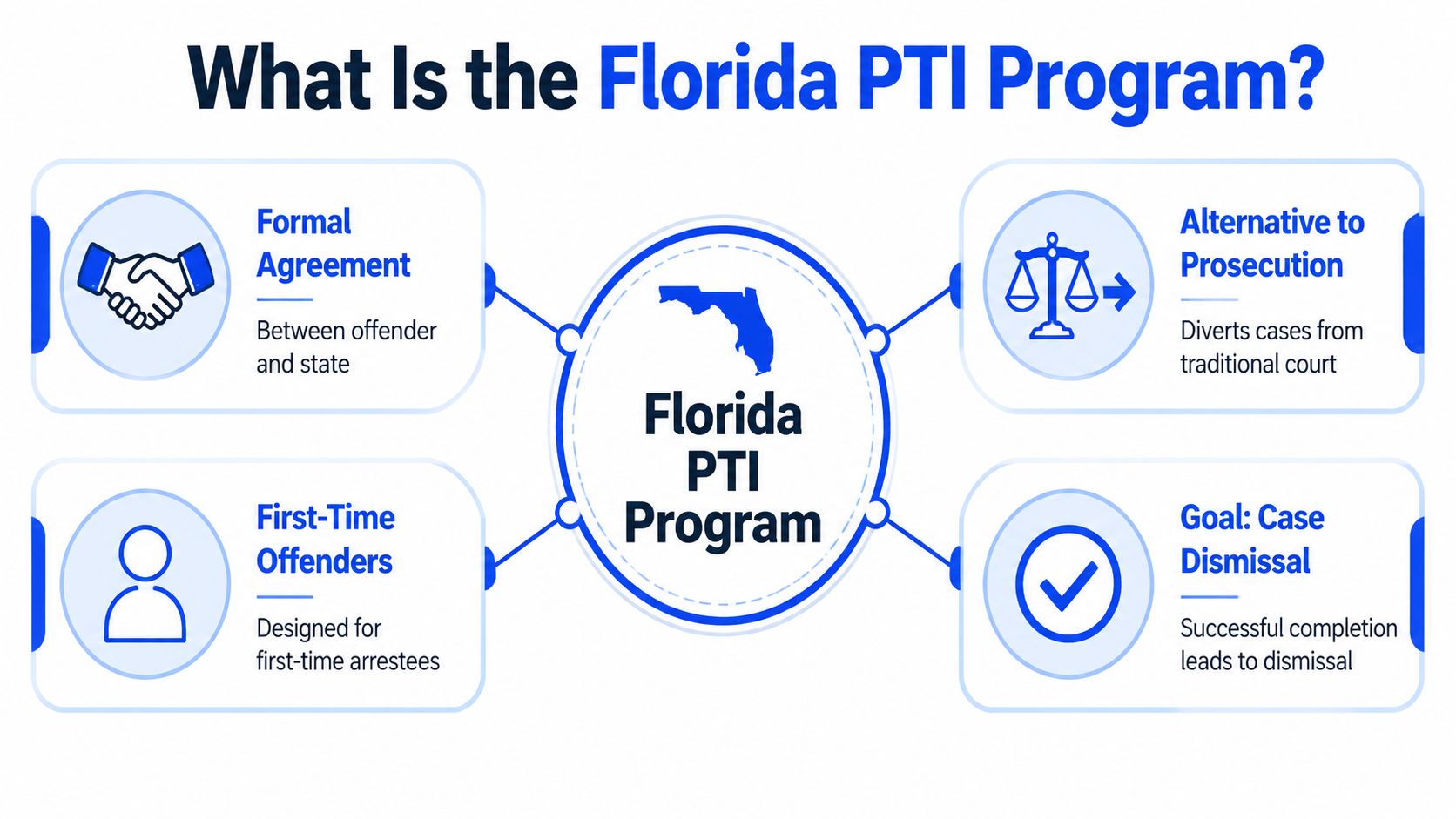
The Florida PTI program is a formal diversion process. It allows certain defendants to step out of the normal prosecution track and complete supervised conditions instead. If they finish successfully, the charges are dismissed.
The legal foundation matters here. The Florida Pre-Trial Intervention (PTI) program is a statutory diversion mechanism authorized under Florida Statute § 948.08, designed specifically to allow eligible first-time offenders and individuals with no more than one prior nonviolent misdemeanor conviction to avoid a formal criminal conviction, as described in this Florida PTI overview.
Why PTI matters more than a standard plea
A lot of people confuse PTI with probation. They aren't the same.
With probation, there is usually a plea and a criminal case outcome already in place. With PTI, the case is diverted before you end up with a formal conviction for that offense, assuming you're accepted and complete the program. That distinction can matter for employment, licensing, reputation, and future record-sealing analysis.
A withheld adjudication can help in some cases, but it still isn't the same thing as a dismissal. If you're comparing outcomes, it's useful to understand what adjudication withheld means in Florida.
How PTI works in real life
Think of PTI as a negotiated chance to prove that this case doesn't need to end in a conviction. The State pauses the ordinary prosecution path and gives you a list of obligations. You complete them under supervision. If you do what the agreement requires, the charge is dismissed.
That doesn't mean PTI is casual or easy. It is still structured, supervised, and controlled by the prosecutor's office and the local program.
PTI is best understood as accountability without a conviction, not as a free pass.
In South Florida practice, PTI often becomes part of the larger defense strategy in cases involving theft allegations, certain drug charges, some white collar accusations, and other non-violent offenses. For many first-time defendants, it's the cleanest path toward protecting a record while still satisfying the court and the State that the conduct has been addressed.
Determining Your Eligibility for PTI
A common call starts like this. You have no record, the charge is your first felony, and someone has already told you PTI should be available. Then the file gets reviewed and a detail you did not know mattered knocks you out. That is how many good PTI candidates get denied.
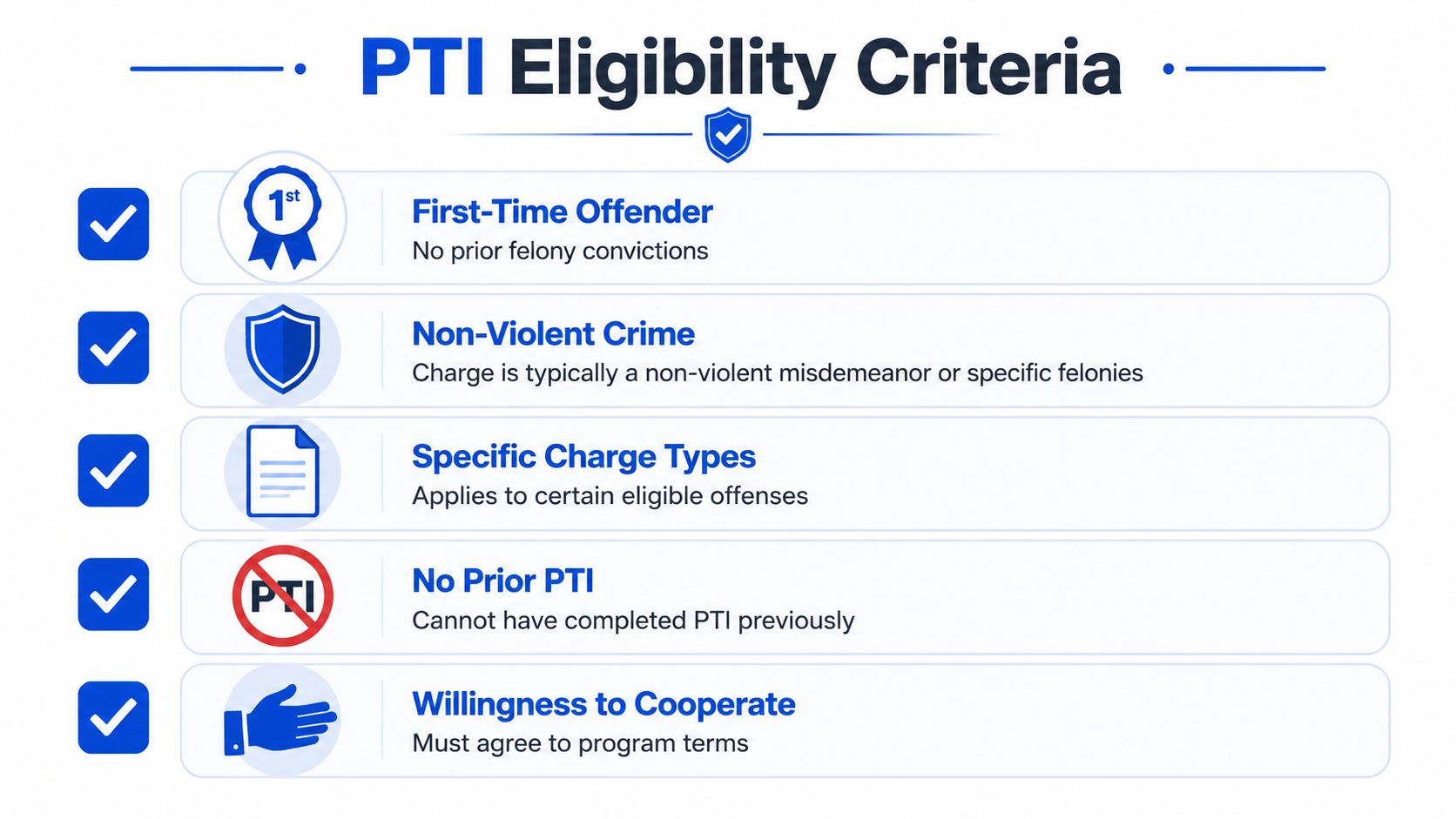
Eligibility turns on more than whether you are a first-time offender. The charge itself matters. The facts matter. The prior record matters. The victim's position can matter more than people expect. Local State Attorney rules also matter, and they are not always forgiving.
The practical screening questions that decide PTI
For felony PTI, prosecutors usually start with a narrow set of gatekeeping issues. The offense generally needs to be a non-violent third-degree felony. Prior adult felony history can create a serious problem. Prior use of diversion can also hurt. Cases involving separate factual incidents, drug sale allegations, or substantial claimed losses often face immediate resistance or outright exclusion.
I tell clients to screen the case in layers, not with one broad question.
Charge level and offense type: Some charges are considered from the start. Others are screened out before the application gets traction.
Prior record and prior diversion history: A clean record helps, but the State will look closely at any prior adult case, prior supervision, and prior diversion use.
How the case is charged: Multiple counts tied to different events can create a problem even if each count looks minor by itself.
Loss amount and restitution issues: In theft, fraud, and white collar cases, the amount claimed and whether repayment is realistic can shape the decision.
Residency and supervision logistics: If you live outside the county or outside Florida, supervision approval can become harder.
Timing also affects eligibility analysis earlier than many people realize. The arraignment date often starts the clock on decisions that need to be made quickly, so it helps to understand what happens at arraignment in Florida before assuming PTI can be pursued later.
A short video from a practicing attorney can help frame the core eligibility factors before you speak with counsel.
The silent disqualifier of victim consent
Victim consent is one of the least understood PTI barriers. People often focus on the formal checklist and miss the practical gatekeeper sitting behind it. A defendant may meet the visible requirements and still be denied because the victim objects, refuses to participate, or never gives a clear answer.
That problem shows up often in theft and fraud cases. Retail stores, employers, and larger companies may have internal policies that make PTI approval harder. Some victims want full restitution first. Some do not want diversion at all. Some do not respond, which can stall the application long enough to damage the opportunity.
From the defendant's side, that feels unfair. From the prosecutor's side, it is often treated as a real obstacle, not a technicality.
This is why self-diagnosing PTI eligibility is risky. A person can look eligible on paper and still have a weak PTI case because of a victim issue, a charging detail, or a procedural deadline that has not been addressed yet.
The PTI Application Process and Critical Deadlines
A client calls after arraignment, relieved that nothing major happened in court and assuming there is still plenty of time to ask for PTI. That is one of the most common and most expensive mistakes I see.
The deadline that ends good cases
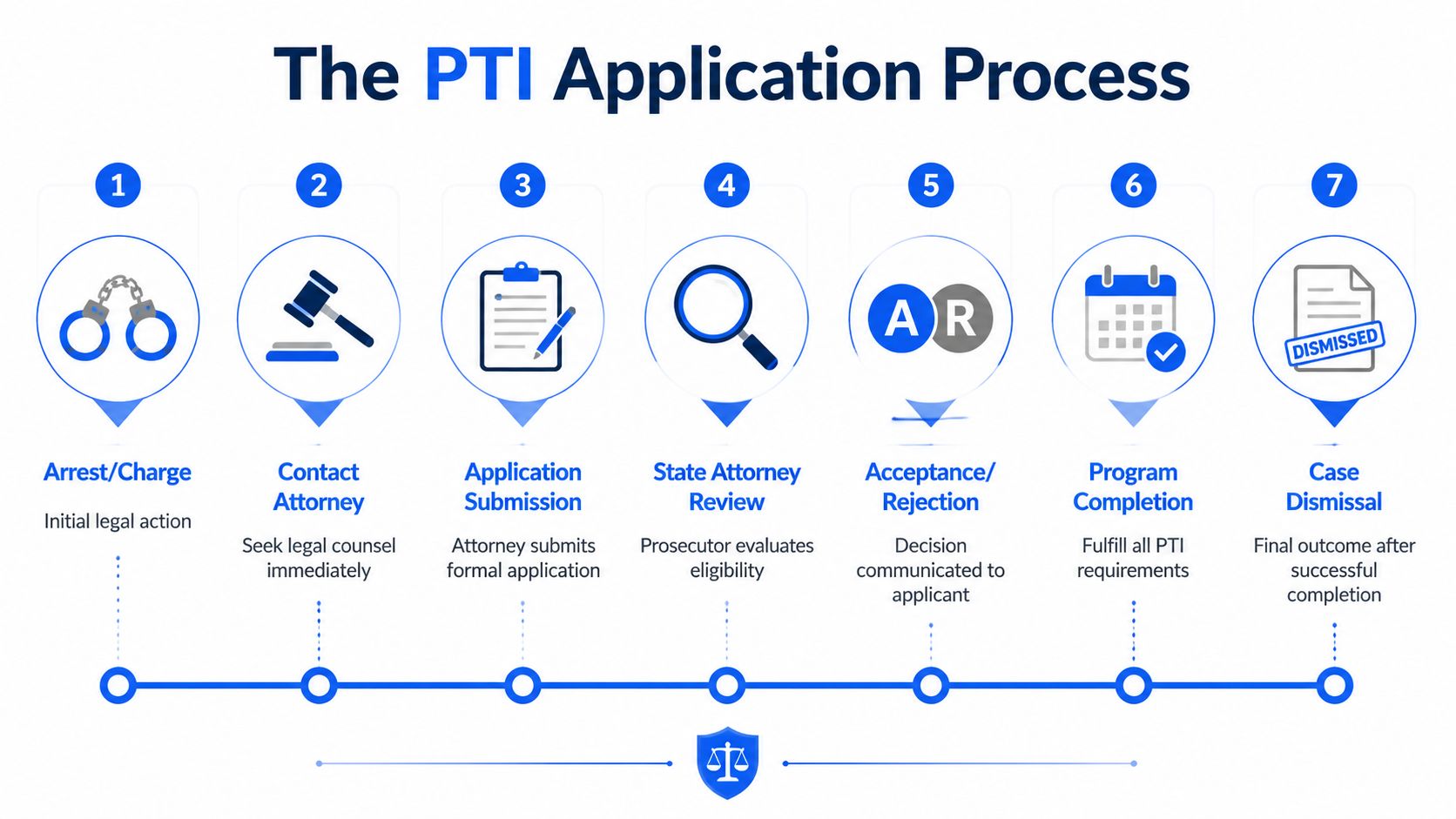
For felony PTI, delay is dangerous. In Broward, the State Attorney's Office requires a completed PTI packet within 45 days of arraignment, and missing that filing deadline can end the opportunity before the prosecutor ever evaluates the person behind the case, as explained on the Broward State Attorney's felony PTI page.
That deadline catches people off guard because arraignment feels early. For PTI purposes, it is often the date that matters most. If you are unsure how that hearing fits into the case timeline, review what happens at arraignment in Florida.
The trap is not just filing late. Filing something half-finished can create the same problem. Prosecutors usually want the packet done correctly the first time, with the required forms, signatures, and supporting paperwork in place.
What usually has to be filed
A PTI request is an application process, not an informal ask for mercy. The State typically expects a packet that allows screening for eligibility, charge details, and administrative intake.
Typical components include:
Signed waiver of rights: This document has legal consequences and must be completed correctly.
Probable cause affidavit: The facts in the affidavit often shape whether the case is even suitable for PTI review.
Information or charging document: The exact charge matters. Small differences in wording can affect eligibility.
PTI intake or data sheet: Program staff use this to open and process the file.
One missing item can stall the entire application. That matters because the court case keeps moving while the packet is being assembled and reviewed.
The hidden problems that sink applications
The deadline is only the first hurdle. Victim consent issues often surface after a defendant has already assumed PTI is available. In theft, fraud, and property cases, a victim's objection, silence, or demand for restitution first can stop the process cold. By the time that problem is discovered, the filing window may be nearly gone.
I also watch cases get hurt by smaller procedural errors that do not look serious to a person new to the system. The wrong arraignment date gets calendared. A notarization is missed. The lawyer's office is still waiting on paperwork from the clerk while the client assumes the application is already pending. None of that sounds dramatic. Any of it can cost the diversion option.
Practical point: PTI is often won or lost in the first few weeks, not at the end of the case.
After submission, there is still a waiting period while the State and program staff review the application. During that time, defendants still need to appear in court when required, stay in contact with counsel, and avoid any new arrest or violation that gives the prosecutor a reason to say no.
Good PTI work starts early. It means confirming the arraignment date, building the packet promptly, addressing victim issues before they become a veto point, and treating the deadline as a hard stop rather than a target.
What to Expect During the PTI Program
Being accepted into PTI is a win, but it isn't the end of the case. It's the start of a supervised period where consistency matters. Most participants live under conditions that are stricter than they expected, and the people who struggle are usually the ones who treated the program casually.
What supervision usually feels like
For many clients, PTI feels like a controlled routine. You report as directed, complete assigned tasks, and stay out of trouble while the case remains diverted. Verified program descriptions state that participants may have regular check-ins with a probation officer, random drug testing, restitution obligations, community service, and counseling, education, or medical treatment where appropriate, as outlined in the Florida PTI guide from Meltzer and Bell.
The total duration often runs 12 to 18 months under the verified materials, although some local versions can be shorter. That's long enough for clients to underestimate the discipline required.
A typical PTI experience may involve:
Regular reporting: Missing an appointment creates immediate problems.
Testing requirements: Random screenings can happen with little notice.
Financial conditions: Restitution and program-related payments have to be handled on schedule.
Service and classes: Community service and counseling are common, especially where the charge suggests a behavioral issue that needs to be addressed.
What gets people removed
Most PTI removals aren't dramatic. They usually happen because someone stopped taking the rules seriously.
Common failure points include missed reporting, unpaid obligations, positive drug tests, failure to complete classes, or a new arrest while still in the program. Once that happens, the defendant can be removed and the original prosecution can resume.
The hardest part of PTI isn't getting in. It's staying reliable for the full term.
That is why the best PTI candidates aren't just legally eligible. They're also realistic about work schedules, transportation, treatment needs, and whether they can follow rules for the entire supervision period.
PTI for DUI Charges and South Florida County Variations
DUI cases create confusion because people hear the word "diversion" and assume every county treats DUI like a standard PTI case. They don't. DUI resolutions often involve separate local programs or negotiated alternatives, and those vary by jurisdiction.
DUI cases don't fit PTI the same way
A first-time DUI conviction carries serious consequences even before you look at license issues, insurance problems, or employment fallout. For a first-time Florida DUI with a BAC of 0.15 or higher, the court must impose a fine of not less than $1,000 and not more than $2,000, with a maximum imprisonment term of 9 months, as explained in this discussion of first-time DUI diversion and penalties in Broward County.
If you're trying to compare diversion with a conviction-based outcome, it's helpful to review the broader penalties for DUI in Florida.
In practice, some DUI-adjacent charges may be more diversion-friendly than the DUI count itself. Each case needs to be evaluated individually. The presence of aggravating facts can also narrow options quickly.
Why local practice matters in South Florida
Broward County, Miami-Dade, Palm Beach, and neighboring jurisdictions all operate under Florida law, but the day-to-day handling of PTI and related diversion opportunities can differ. Local prosecutors may structure screening, paperwork, conditions, and approval practices differently.
That matters in a lot of criminal categories, not just DUI. A theft charge in Fort Lauderdale, a drug case in Broward County, a weapons allegation in Palm Beach, or a probation issue tied to a South Florida arrest may all require a county-specific approach. The same is true for related issues like search and seizure challenges, injunctions, domestic violence accusations, juvenile matters, and record sealing strategy after dismissal.
For defendants, the takeaway is simple. Never assume that something available in one courthouse will be available the same way in another.
How an Attorney Can Make or Break Your PTI Opportunity
A PTI case can be lost before the prosecutor ever reviews the merits. I see that happen when someone assumes eligibility is enough, waits too long to apply, or learns too late that the victim objects and the file is effectively dead on arrival.
That is why counsel matters here. A lawyer is not just filling out paperwork. A lawyer is protecting timing, framing the facts, spotting disqualifiers early, and deciding whether PTI is even the right move.
What a lawyer does in a PTI case
Good PTI work starts with a hard question. Should you pursue diversion at all?
Some cases should be pushed toward dismissal instead. If the stop was bad, the search was unlawful, the witness is unreliable, or the State cannot prove an element cleanly, asking for PTI too quickly can weaken one's advantage. In other cases, PTI is the safer path because the proof is strong and the long-term goal is avoiding a conviction and preserving a record-sealing option.
When PTI makes sense, counsel should handle several pressure points at once:
Eligibility review: checking prior history, the exact charge filed, police report facts, and any office-specific screening rules that do not appear in the statute
Deadline protection: tracking the felony filing window closely, including the 45-day deadline that catches many first-time defendants off guard
Application accuracy: preparing the packet correctly, with the right signatures, supporting documents, and local requirements
Victim-consent issues: identifying early whether the victim's position will block entry and addressing that problem before the application stalls
Case presentation: giving the prosecutor a reason to approve the case, not just a form to reject
Victim consent is one of the least understood obstacles. Clients often focus on whether they qualify on paper. The prosecutor may be focused on whether the complaining witness supports diversion. In theft, battery, criminal mischief, and other person-centered cases, that issue can decide the outcome.
Ticket Shield, PLLC handles Florida criminal defense matters involving DUI, theft, drug, weapons, violent crime, and probation-related allegations where PTI or another diversion option may be part of the defense strategy.
Why self-filing is risky
The common self-filed PTI problem is not effort. It is misreading the process.
A person may believe arraignment is the final deadline and miss the earlier felony PTI window. A person may submit forms without addressing a damaging fact in the arrest report. A person may not realize the prosecutor wants treatment records, proof of employment, school enrollment, restitution planning, or a mitigation package that explains why this case belongs in diversion. By the time the denial arrives, there may be little room to fix it.
PTI is also a strategic choice, not just an application.
Entering PTI can be smart. It can also be the wrong answer if the State's case has serious weaknesses or if the proposed conditions are more burdensome than a negotiated reduction would be. That assessment usually requires someone who handles these cases regularly in the local courthouse and knows how a given division screens them.
In Broward, Miami-Dade, Palm Beach, and other South Florida courts, the written rules only tell part of the story. Day-to-day practice matters. So do timing, prosecutor preferences, and whether someone raised the right issue before the file was labeled unsuitable for diversion.
If you want the best chance at PTI, act early. Early review protects the 45-day filing problem, addresses victim-consent trouble before it hardens into a denial, and keeps stronger defense options on the table.
Pretrial Intervention offers a path to full dismissal for first-time offenders. Learn how Florida's PTI program works and who qualifies.