
Aggravated Assault Florida: A Guide to Charges & Defenses
Jason Goldsmith, Esq
You may be reading this after an arrest, after a call from a detective, or after a family argument turned into something far more serious than you expected. Individuals charged with aggravated assault in Florida are not trying to decode legal theory. They want to know three things fast. What am I facing, what should I do next, and is there any real way to beat this?
There often is. An aggravated assault case rises or falls on details that police reports usually flatten. Who said what first. How close the people were standing. Whether the alleged victim was in fear. Whether the object involved was a deadly weapon under Florida law. As a former prosecutor, I can tell you the State usually builds these cases around a few pressure points. As a defense lawyer, I focus on those same pressure points to challenge them.
Table of Contents
Understanding an Aggravated Assault Charge in Florida
An aggravated assault charge can come out of a road rage stop, a domestic argument, a parking lot confrontation, or a dispute outside a bar in Fort Lauderdale, Miami-Dade, or Palm Beach County. The fear people feel after arrest is real because the charge sounds violent, and in Florida it is treated that way.
Under Florida Statute section 784.021, aggravated assault is assault either with a deadly weapon without intent to kill or with an intent to commit a felony. In plain English, the State is alleging more than a rude comment or an angry outburst. It is alleging a threat of violence serious enough to make the case a felony.
What prosecutors look for first
To build this charge, the State typically tries to prove that:
A threat was intentional. The prosecution will argue your words or actions were meant to threaten someone.
The threat seemed immediate. They don't just need angry language. They need facts suggesting violence looked close at hand.
The other person's fear was real and well-founded. This is not supposed to be guesswork.
A deadly weapon or felonious intent was involved. That is what usually turns a lower-level allegation into aggravated assault.
A lot of people think this charge requires a gun. It doesn't. Florida law does not require a firearm for an assault to be aggravated. Everyday objects can qualify if they were allegedly used in a way that could cause great bodily harm. Practitioner materials explicitly note that objects like vehicles and broken bottles may qualify, and the statute itself uses broad language. That matters because many aggravated assault Florida cases turn on whether an ordinary object should really be treated as a deadly weapon under the facts.
Practical rule: If the case involves a car, bottle, tool, or other everyday object, the defense should not assume the weapon element is automatic. That issue is often worth fighting hard.
The charging label is only the starting point. The evidence decides the actual exposure, the actual defenses, and the actual options. If you're trying to understand where your case fits within broader Florida violent crime defense matters, aggravated assault sits at a point where witness credibility and context often matter as much as physical evidence.
Aggravated Assault vs Other Florida Violent Crimes
People often hear "assault" and think it means someone got hit. In Florida, that isn't how the law works. The line between assault, battery, aggravated assault, and aggravated battery can change the whole case strategy.
The core difference is threat versus contact
Aggravated assault is based on a threat that creates a well-founded fear of imminent violence, so physical contact is not required, as explained in this discussion of whether you can be charged in Florida without causing injury. That single distinction causes a lot of confusion.
If there was actual contact, the case may move into battery territory. If there was injury, prosecutors may look harder at aggravated battery depending on the facts. That is not just a labeling issue. It changes exposure, defenses, plea discussions, and trial themes.
Florida Assault and Battery Charges Compared
Charge | Core Element | Physical Contact Required? | Weapon/Serious Injury Required? |
|---|---|---|---|
Simple Assault | Intentional threat creating fear of imminent violence | No | No |
Aggravated Assault | Assault plus deadly weapon or intent to commit a felony | No | Deadly weapon or felonious intent |
Simple Battery | Unwanted touching or striking | Yes | No |
Aggravated Battery | Battery with more serious facts, often involving major injury or a weapon | Yes | Serious injury or qualifying weapon facts usually drive the charge |
That table doesn't replace legal analysis, but it gives you the framework prosecutors use when reviewing reports.
Why charging decisions change quickly
Here is where a former prosecutor's perspective matters. Police may arrest on aggravated assault because the complaint sounds dramatic. Later, the State reviews body camera footage, witness statements, 911 audio, text messages, and medical records. Sometimes that strengthens the felony filing. Sometimes it exposes a mismatch between the arrest charge and what can be proven.
A few examples:
Threat but no touch. The State may stay with assault-based charges.
Touch during a fight. Prosecutors may decide battery is the cleaner theory.
Injury appears minor or unclear. The defense can challenge whether the facts justify an enhanced charge.
Object involved but its use is ambiguous. A felony assault theory may be vulnerable.
In many aggravated assault Florida cases, the first useful question isn't "What did the officer charge?" It's "What facts can the prosecutor actually prove beyond a reasonable doubt?"
If you want a broader overview of how these allegations fit into common examples of violent crime charges in Florida, it helps to see aggravated assault as one branch of a larger charging tree. Prosecutors don't just ask whether someone was scared. They ask how they can package the facts into the most provable charge. A defense lawyer should be doing the opposite. Strip away labels, isolate weak elements, and force the State to prove each one.
Penalties for Aggravated Assault Felony Charges
Aggravated assault is serious because it is usually charged as a felony. That means the risk is not limited to a short county jail sentence or a fine. A conviction can put prison, probation, firearm restrictions, and a permanent record on the table.
The baseline penalty matters
In many Florida cases, aggravated assault is charged as a third-degree felony. That generally means exposure of up to 5 years in prison and a $5,000 fine under the common penalty framework described in practitioner materials. In certain enhanced situations, the charge can be treated more severely.
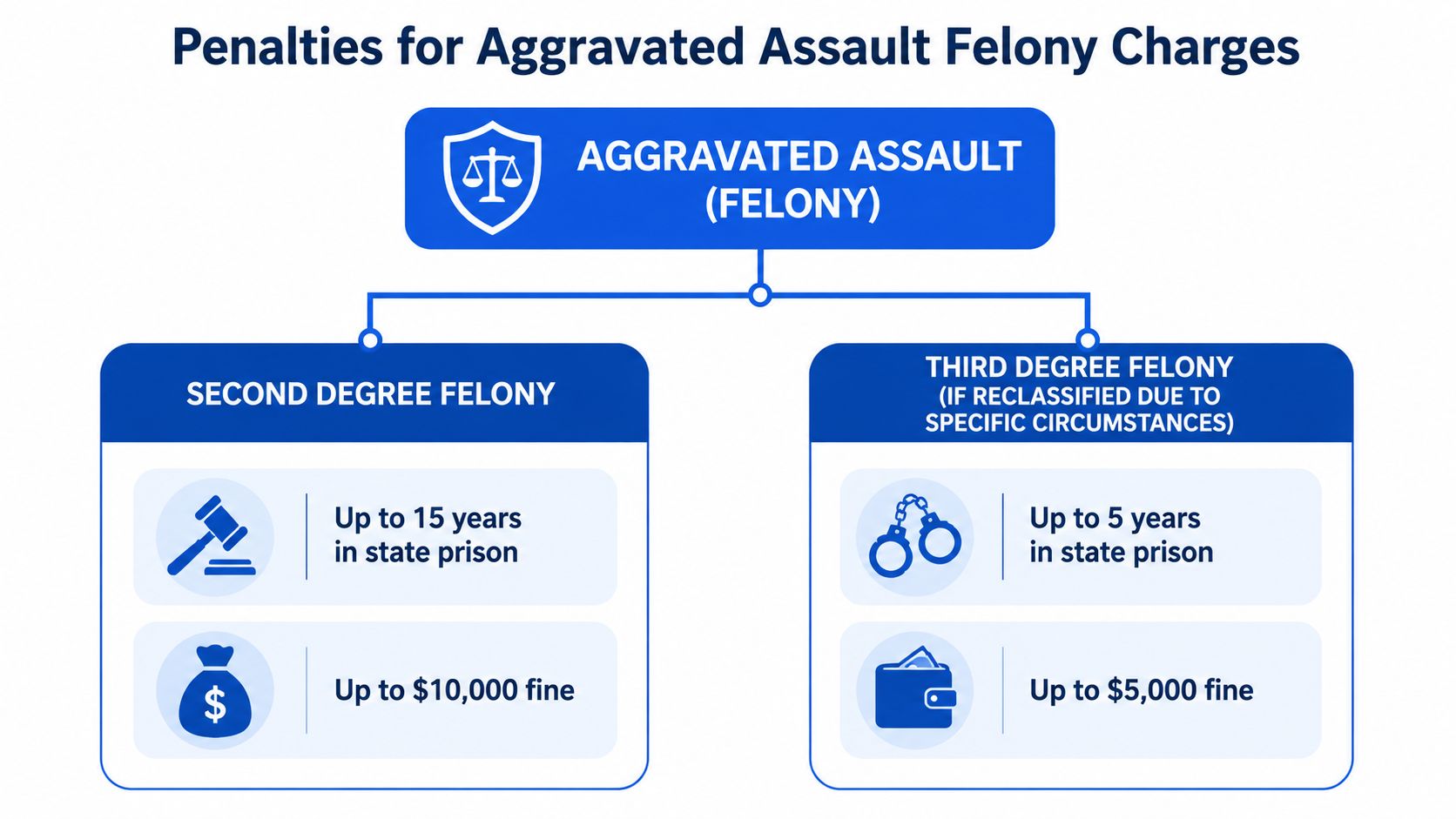
The practical problem is that sentencing exposure affects everything early. Bond arguments, plea offers, diversion eligibility, and how aggressively the State negotiates all change when prosecutors believe they have a provable felony with aggravating facts.
Firearm allegations change the risk
Florida law enforcement tracks aggravated assault data separately by weapon type, and FDLE maintains firearm-related aggravated assault series from 1971 to 2020 in its state offense data archive. That kind of tracking reflects a hard reality. Florida's criminal system pays close attention to firearm allegations.
If the accusation involves a firearm, prosecutors usually evaluate the case differently from day one. They often treat witness statements, recovery of the weapon, and any recorded admissions as priority evidence. They also consider whether a firearm allegation could trigger severe mandatory minimum consequences under laws commonly referred to as 10-20-Life.
A few strategic points matter here:
Weapon proof comes first. If the State can't firmly tie the firearm to the incident, the entire penalty picture may change.
Possession allegations need scrutiny. Prosecutors still have to prove who had the weapon and when.
Video and 911 timing matter. The exact sequence often decides whether the charge holds up.
Charge reduction can change everything. Moving a case away from the aggravated framework may dramatically affect sentencing exposure.
If your case also involves alleged contact or injury, there may be overlap with issues that appear in Florida felony battery cases. That overlap is where smart defense work matters most. The State often charges broadly first. The defense has to narrow the case to what the evidence supports.
Building Your Defense Against an Aggravated Assault Charge
The State doesn't win these cases just because an arrest happened. It wins when it can prove specific facts through witnesses, video, physical evidence, and a story that sounds clean to a jury. A defense works by breaking that story apart.
Where the State usually tries to prove the case
In aggravated assault Florida prosecutions, the government usually leans on a short list of evidence categories:
The alleged victim's account. This is often the backbone of the case.
Independent witnesses. Helpful when they exist, but they often disagree on distance, tone, and sequence.
Body camera or surveillance footage. Good video can help either side.
The object involved. If police recovered it, the State uses that to support the deadly weapon theory.
Defendant statements. People often talk too much before they understand the charge.
From a defense perspective, each category has pressure points. Witnesses may have bias. Video may start too late. Police may not have recovered the alleged weapon. Statements may be partial, emotional, or taken in violation of rights.
A lot of people make the mistake of focusing only on whether they are "guilty" in a general sense. Courts do not decide cases on general impressions. They decide whether the State proved legal elements with admissible evidence.
Defense angles that can change the outcome
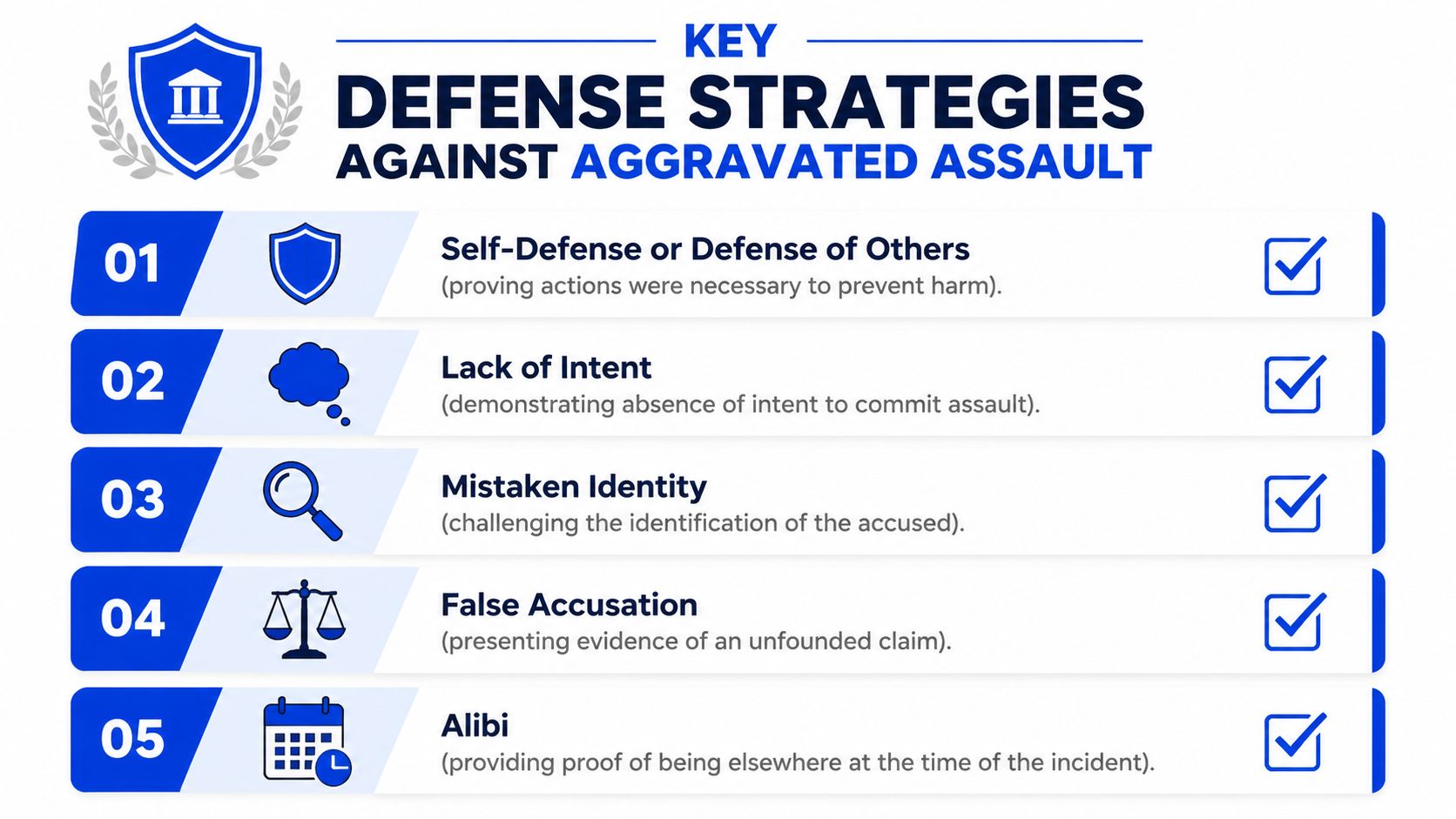
A strong defense is usually built around one or more of these issues:
Self-defense or defense of others. If you threatened force because you reasonably believed it was necessary to prevent harm, that can be a powerful defense.
No intent to threaten. Angry words are not always criminal threats.
No well-founded fear. If the alleged victim's own behavior shows they were not in fear of imminent violence, the case weakens.
Object was not a deadly weapon as used. This is critical in cases involving tools, bottles, vehicles, or other ordinary objects.
Mistaken identity or false accusation. These issues show up often in chaotic scenes and personal disputes.
Here's a helpful overview of how defense lawyers think about diversion and early resolution in Florida pre-trial intervention cases. Not every aggravated assault case qualifies, but early case development can open options that don't exist later.
This video gives a practical look at defense thinking in violent charge cases:
A prosecutor looks for a story that feels complete. A defense lawyer looks for the missing facts, the exaggerated facts, and the facts that never made it into the report.
One more strategic point. Don't assume the police narrative is fixed. Early witness contact, preservation of texts, retrieval of surveillance footage, and careful review of dispatch records can all influence the legal position. That is one reason some people hire private counsel quickly, including firms such as Ticket Shield, PLLC, which handles Florida criminal defense matters and reviews charging evidence early.
Navigating the Florida Court Process From Arrest to Trial
The court process scares people because it feels like losing control. Dates appear fast. Judges speak in shorthand. Prosecutors talk as if the police report is already proven. The process gets less intimidating once you understand what each stage is for.
What happens first in court
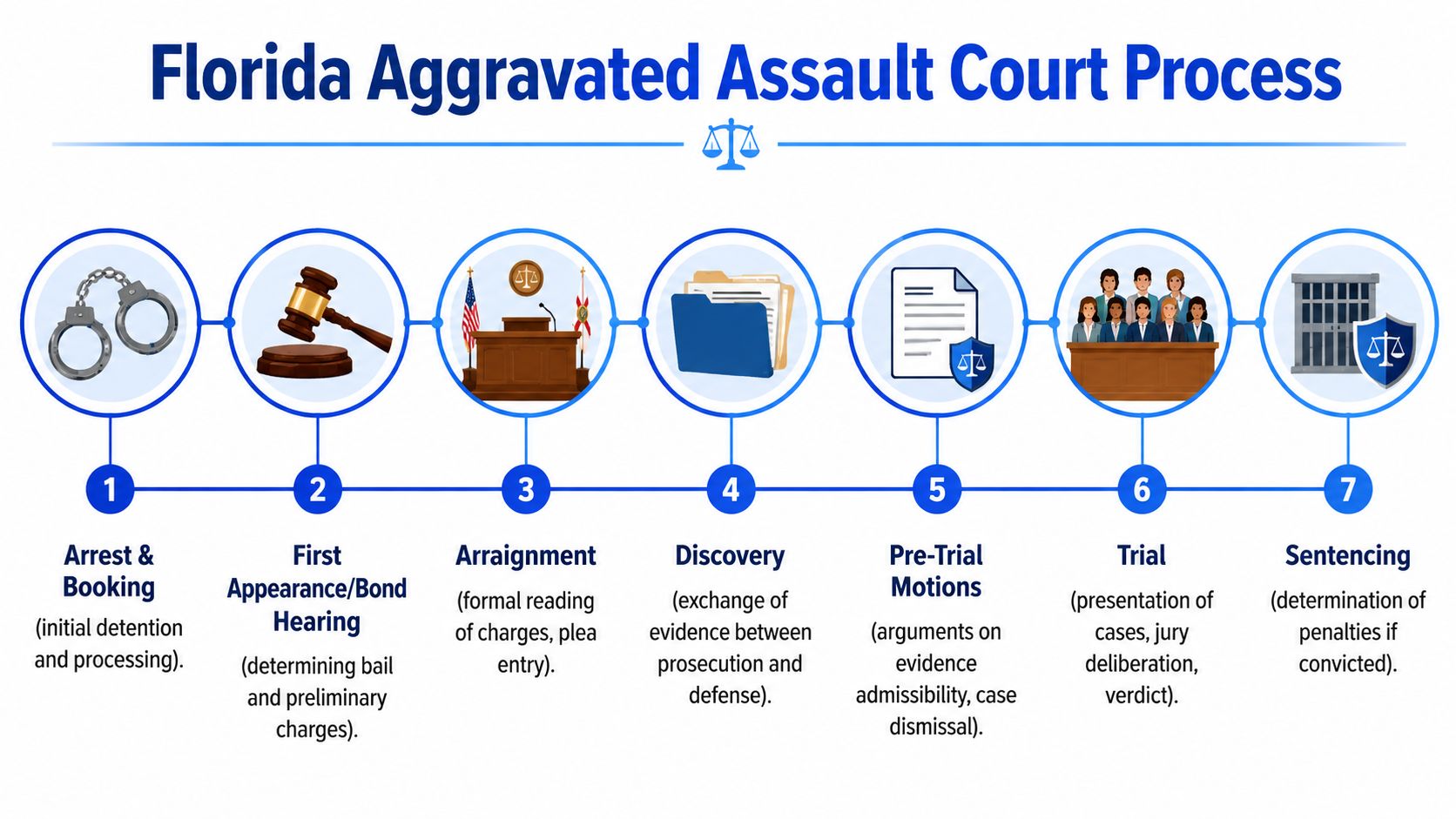
After arrest and booking, the first major event is usually first appearance, where bond and release conditions are addressed. In South Florida courts, judges often focus on public safety concerns, any prior record, and the allegations in the arrest paperwork.
After that comes arraignment, where the formal charge is announced and a plea is entered. This is not the trial. It is an early procedural step, and in many cases the main work is happening outside the courtroom through evidence review and negotiation.
A typical sequence looks like this:
Arrest and booking. Police process the charge and collect basic information.
First appearance or bond hearing. The court addresses release conditions.
Arraignment. Charges are formally read.
Discovery. The defense gets the State's evidence.
Pre-trial hearings. Lawyers address legal issues and case status.
Negotiation or trial setting. The case moves toward resolution or jury trial.
Trial or plea. The case is decided.
Where cases are won before trial
Most important defense work happens before a jury is ever picked. Discovery may reveal weak witness statements, missing video, contradictory timelines, or a weapon allegation that doesn't hold up. Pre-trial motions may target statements, searches, identifications, or other evidence.
Florida's broader violent crime picture also matters here. In 2022, 82% of violent crimes in Florida were not solved, which was 20 percentage points worse than the national average, according to the Florida criminal justice data snapshot. For a defendant, that does not mean your case is weak by default. It does mean the State's proof is not automatically airtight, and every piece of evidence deserves close scrutiny.
That is especially true in aggravated assault cases because they often depend on interpretation. Did the witness hear the exact words claimed? Could the defendant actually carry out the threat immediately? Was the fear genuine, or was this a heated argument later reframed as a felony?
The court calendar moves on routine. Your defense should not. Good strategy means using each court date to test the State's proof, not just show up and reset the case.
If trial becomes necessary, the themes are usually clear by then. Credibility. Perception. Distance. Intent. Weapon classification. Those aren't abstract legal terms. They're the places where jurors decide whether the State proved too much, too little, or the wrong charge altogether.
Beyond the Courtroom The Lasting Consequences of a Conviction
A felony case doesn't end when the judge imposes sentence. For many people, the more durable damage starts afterward.
A conviction follows you into everyday life
An aggravated assault conviction can affect:
Employment opportunities. Background checks can put you out of the running before an interview happens.
Professional licensing. Nurses, contractors, real estate professionals, and other license holders can face disciplinary issues.
Housing applications. Landlords often screen for violent felony records.
Firearm rights. A felony conviction can create long-term or permanent possession issues.
Immigration status. Non-citizens need individualized advice immediately because criminal convictions can trigger serious consequences.
These are not side issues. In many cases, they are the reason people fight so hard for a reduction, dismissal, diversion outcome, or acquittal.
The hidden cost is lost leverage later
A conviction also shrinks your options in future cases. If you are ever charged again, prosecutors may treat your record as proof that you are not a candidate for leniency. Judges may view bond, sentencing, and supervision issues differently. Even when a later case has nothing to do with violence, a prior felony can shape how the system reacts to you.
That is why strategy matters early. The goal is not just to avoid the worst immediate sentence. It is to protect your future bargaining power, your reputation, and your ability to move forward without a felony defining every background check.
Take Control of Your Case How Ticket Shield Can Help
If you're facing aggravated assault in Broward County, Fort Lauderdale, Miami-Dade, Palm Beach, or elsewhere in South Florida, you need a defense plan built around evidence, not panic. The charge is serious, but the charge is not the verdict.
Why former prosecutor experience matters
A former prosecutor knows how these cases are screened, where police reports tend to overreach, and what facts move a filing attorney. That perspective matters in aggravated assault Florida cases because so much turns on judgment calls. Was the object deadly as used? Was the fear immediate and believable? Does the evidence support a felony, or just an argument that got out of hand?

What to do right now
If you have been arrested, contacted by police, or given a court date:
Stay silent with law enforcement. Don't try to talk your way out of a felony case.
Preserve evidence. Save texts, call logs, location data, and names of witnesses.
Avoid contact with the alleged victim. Even well-meant contact can create new problems.
Get legal advice quickly. Early intervention can affect filing decisions, bond conditions, and defense strategy.
The first few days matter. Evidence disappears fast. Witnesses coordinate stories. Surveillance gets overwritten. A confidential consultation can help you understand what the State may be able to prove and what can still be challenged.
Frequently Asked Questions About Florida Aggravated Assault
Can I be charged if nobody was hurt
Yes. Aggravated assault in Florida is based on a threat that creates a well-founded fear of imminent violence. Physical injury is not required. In fact, when there is actual injury, the State may instead consider battery-related charges depending on the facts.
Can the alleged victim drop the charge
Not by themselves. In Florida, the State Attorney decides whether to continue or dismiss a criminal case. An alleged victim can change their story, refuse cooperation, or ask the prosecutor not to proceed, but the prosecutor still makes the final call.
That said, a change in cooperation can still matter. It may affect proof, negotiation, and trial strategy.
Can a car or bottle count as a deadly weapon
Yes, potentially. Florida law does not limit aggravated assault to firearms. An everyday object may be treated as a deadly weapon if it was allegedly used in a way that could cause great bodily harm.
That does not mean the issue is automatic. In many cases, whether the object qualifies is one of the best defense issues available.
Does Florida crime data always mean the same thing by aggravated assault
No. Some Florida crime reporting is broader than people realize. One Florida study notes that the FDLE Uniform Crime Report for 2017 included aggravated stalking within the aggravated assault category, which can affect trend interpretation, as discussed in this Florida justice research analysis.
That matters if you are reading statewide numbers online and trying to draw conclusions from them. Not every dataset is counting the exact same kinds of conduct.
What should I do before my first court date
Keep the case off social media. Do not text the alleged victim about what happened. Gather documents, screenshots, and witness names for your lawyer. If there is surveillance video from a store, apartment complex, bar, or neighbor's camera, move quickly to preserve it before it disappears.
Can aggravated assault charges be reduced
Sometimes, yes. That depends on the proof problems in the case, your background, the county, the prosecutor, and the facts surrounding the allegation. Cases may resolve through reduction, negotiated plea, diversion in limited situations, dismissal, or trial. No honest lawyer should promise one result at the start.
If you're facing an aggravated assault charge, Ticket Shield, PLLC can review the evidence, explain your options, and help you build a strategy aimed at protecting your record, freedom, and future. Consultations are confidential, and early action often creates the most room to fight the case effectively.
Aggravated assault is a serious Florida felony. This guide explains the elements of the charge, the penalties, and the strongest defenses.