
Qué es una moción para excluir pruebas: Guía 2026
Jason Goldsmith, Abg.
Usted conduce de regreso a casa en Fort Lauderdale. Luces parpadean detrás de usted. El oficial le hace algunas preguntas y luego le pide que salga del vehículo. Una inspección rápida se convierte en un registro. Proceden a abrir su automóvil. Una bolsa, un arma de fuego, píldoras, dinero en efectivo o un teléfono celular se convierten repentinamente en el elemento central del caso en su contra.
Ese momento parece definitivo. No lo es.
Como exfiscal, puedo decírselo claramente: los informes policiales suelen sonar más impecables de lo que realmente fue la detención. Los oficiales se saltan pasos. Exceden los límites del consentimiento legal. Alegan causa probable después de los hechos. Primero interrogan y luego se preocupan por las restricciones constitucionales. Es precisamente por eso que una de las herramientas más cruciales en un caso penal en Florida es una moción para la exclusión de pruebas (motion to suppress).
Si la policía cruzó la línea, la defensa puede solicitar al juez que excluya dicha prueba del juicio. En numerosos casos, esa impugnación lo cambia todo.
Índice de Contenidos
Sus derechos después de un arresto: Una poderosa herramienta de defensa
Fundamentos legales comunes para la exclusión de pruebas en Florida
El proceso de presentación y los plazos límite en los tribunales de Florida
Sus derechos después de un arresto: Una poderosa herramienta de defensa
Muchas personas acusadas en los condados de Broward, Miami-Dade o Palm Beach creen que el caso está cerrado en el momento en que el oficial halla algo y realiza el arresto. Así es como se percibe el sistema desde el asiento trasero de una patrulla policial; da la impresión de que el oficial ostenta todo el poder y usted carece de él.
Esa percepción es errónea.

En el sur de Florida, numerosos casos penales comienzan con un suceso ordinario. Un cambio de carril. Un problema con la matrícula del auto. Una detención cerca de un club nocturno. Una investigación por conducir bajo los efectos del alcohol (DUI) a altas horas de la noche. Si usted ya ha tenido que someterse a pruebas de sobriedad en la carretera, es fundamental que comprenda cómo los oficiales de policía construyen sus casos mediante las tácticas de pruebas de sobriedad sobre el terreno en Florida.
La detención es solo el comienzo
Un arresto por sí solo no demuestra que el registro fuera lícito. Tampoco demuestra que el interrogatorio fuera conforme a derecho. No acredita que el oficial tuviera un fundamento legal válido para abrir la puerta de su auto, registrar sus bolsillos, inspeccionar su maletero, incautar su teléfono o continuar presionándolo después de que usted se negara a otorgar su consentimiento.
Una moción de exclusión de pruebas es el instrumento procesal de defensa utilizado para impugnar directamente dichas actuaciones policiales. Mediante este recurso, se expone ante el tribunal que el Estado no debe beneficiarse de pruebas obtenidas en violación de sus derechos constitucionales.
Regla práctica: Si la policía obtuvo la prueba fundamental ignorando las garantías constitucionales, la defensa debe obligar a que se resuelva ese asunto de manera anticipada.
Esto es de crucial importancia en casos de DUI, arrestos por posesión de estupefacientes, cargos por armas de fuego, investigaciones de robo, denuncias de violencia doméstica y casos de violación de la libertad condicional vinculados a un nuevo arresto. Los hechos varían. La presión cambia. Pero la cuestión fundamental sigue siendo la misma: ¿Cumplieron las fuerzas del orden con las normas establecidas?
Por qué esta herramienta es tan fundamental
Desde la perspectiva de la fiscalía, puedo asegurarle qué es lo que genera una ventaja real en el proceso: no se trata simplemente de argumentar que su versión de los hechos es mejor, sino de impugnar si la fiscalía está legalmente autorizada a presentar esa prueba o no.
En ello radica el poder de la exclusión de pruebas. No se apela a la compasión, sino que se exige el estricto cumplimiento de la ley.
Qué es una moción de exclusión de pruebas (Explicado)
A las 2:00 a.m., un oficial ordena a un conductor que se detenga en un retén policial, realiza un interrogatorio adicional, abre la puerta del vehículo y, de repente, el caso adquiere dimensiones graves. El informe de arresto lo describe como un procedimiento de rutina. Sin embargo, la moción de exclusión es el mecanismo donde la defensa evalúa críticamente la legalidad de tales actuaciones.
¿Qué es una moción de exclusión de pruebas (motion to suppress)? Es una solicitud previa al juicio mediante la cual se insta al juez a prohibir que la fiscalía utilice pruebas obtenidas en contravención de los derechos constitucionales o legales, de conformidad con la descripción general de la moción de exclusión de pruebas de la Escuela de Derecho de Cornell. En términos llanos, la defensa le expone al juzgador que el gobierno obtuvo la prueba infringiendo las normas legales, por lo que el jurado nunca debe tener conocimiento de ella.
Desde la perspectiva de un fiscal, esta es la moción que puede desmoronar un caso con rapidez. Si las drogas, el arma, las declaraciones incriminatorias, los datos del teléfono o la identificación son declarados excluidos por el tribunal, el Estado pierde su mejor medio de prueba en una sola audiencia. En ocasiones, los cargos se desestiman. En otras, el fiscal se ve obligado a presentar una oferta de acuerdo de culpabilidad mucho más favorable debido a que la base de su acusación ha sido severamente debilitada.
Por este motivo, los abogados de defensa penal con experiencia no tratan la exclusión de pruebas como un ejercicio meramente conceptual. La emplean como un factor crucial de presión legal.
La verdadera disputa radica en la conducta policial
Una moción de exclusión no aborda si usted es una persona de bien o si la acusación resulta sumamente grave. Consiste en un ataque técnico al procedimiento empleado. ¿Contaba el oficial con un fundamento legal válido para detenerlo, retenerlo, registrarlo, interrogarlo o incautar sus bienes? Si la respuesta es negativa, la admisibilidad de la prueba se torna sumamente vulnerable.
Los tribunales reconocen la procedencia de la exclusión debido a que los derechos constitucionales carecerían de eficacia práctica sin una medida de reparación adecuada. Los tribunales federales adoptaron la regla de exclusión en el caso histórico Weeks v. United States, y posteriormente los tribunales estatales debieron acatarla tras el fallo de Mapp v. Ohio. Los fiscales saben que estos precedentes no son historia olvidada; son la razón por la cual una labor policial deficiente puede arruinar un caso que de otro modo sería sólido.
Los tribunales no excluyen pruebas con el fin de beneficiar a los imputados, sino para obligar a que el gobierno actúe dentro de los límites de la Constitución.
En la práctica forense del estado de Florida, este principio se manifiesta continuamente en casos habituales: paradas de tráfico que se dilatan de forma indebida más allá de su propósito inicial; registros por aparente consentimiento que se presentan como voluntarios cuando en realidad el contexto fue coercitivo; u órdenes de cateo que parecen precisas en papel pero que fueron ejecutadas excediendo gravemente sus límites establecidos. Los litigios relativos a retenenes de control constituyen un claro ejemplo, puesto que suelen prosperar o desestimarse basándose en el rigor del procedimiento técnico y no en la mera retórica. Si su arresto tuvo origen en un control vial, resulta indispensable analizar la jurisprudencia sobre la legalidad de los retenes de DUI en Florida.
Qué pruebas pueden ser excluidas
Una moción de exclusión puede plantearse contra los siguientes elementos:
Evidencia física, tales como drogas, armas de fuego, dinero en efectivo, dispositivos móviles u objetos confiscados del interior de un vehículo, residencia o pertenencias personales.
Declaraciones, incluyendo el producto de interrogatorios bajo custodia o manifestaciones obtenidas ignorando la lectura de los derechos constitucionales.
Pruebas derivadas de órdenes de registro, en aquellos casos donde el mandamiento judicial resultaba defectuoso, engañoso, extemporáneo o ejecutado al margen de los límites legalmente dictados.
Prueba derivada indirestamente (fruto del árbol ponzoñoso), lo cual se refiere a toda evidencia localizada por las fuerzas policiales como consecuencia directa de la ilegalidad inicial.
Esta última categoría tiene una trascendencia mucho mayor de la que sugieren diversas guías informativas. Si la actuación procesal primigenia adolece de nulidad, las pruebas subsiguientes quedan igualmente contaminadas de ilegalidad. Una parada vial injustificada vicia el registro subsiguiente; un arresto ilegal anula la declaración confesional; y la incautación ilícita de un teléfono celular invalida los datos que de este se extraigan.
La exclusión parcial aún puede transformar el caso
Este representa el aspecto técnico sutil que con frecuencia se pasa por alto: no se requiere que una moción de exclusión desestime por completo la totalidad de las pruebas para ser considerada un éxito estratégico de la defensa.
Si el juzgador determina la exclusión de sus declaraciones incriminatorias pero admite la evidencia material, el fiscal pierde el contexto lógico, las admisiones de culpabilidad y la posibilidad de fundamentar una teoría de acusación sólida. Si el juzgador anula selectivamente una parte del registro, el Estado retiene ciertos elementos mas se ve privado del objeto de mayor fuerza incriminatoria. Cuando el tribunal reduce el alcance fáctico del caso en lugar de desestimarlo en su totalidad, la defensa de igual modo gana terreno, puesto que los fiscales formulan cargos y entablan negociaciones basándose en sus elementos probatorios de mayor solidez y no en aquellos que han sido severamente debilitados.
En ello radica su valor estratégico. La exclusión de prueba no tiene como único fin la desestimación absoluta del proceso, sino privar a la fiscalía de aquellos pilares probatorios en los cuales depositaba su mayor confianza.
En la práctica general, corresponde a la defensa demostrar al tribunal la ilegalidad del actuar policial y vincular dicha violación con los elementos probatorios objeto de impugnación. Una vez acreditado este extremo, la audiencia preliminar se centra en un examen minucioso del testimonio del oficial, las grabaciones de las cámaras corporales, las bitácoras de despacho policial, la redacción técnica del mandamiento escrito y aquellas inconsistencias que la fiscalía desearía obviar.
Fundamentos legales comunes para la exclusión de pruebas en Florida
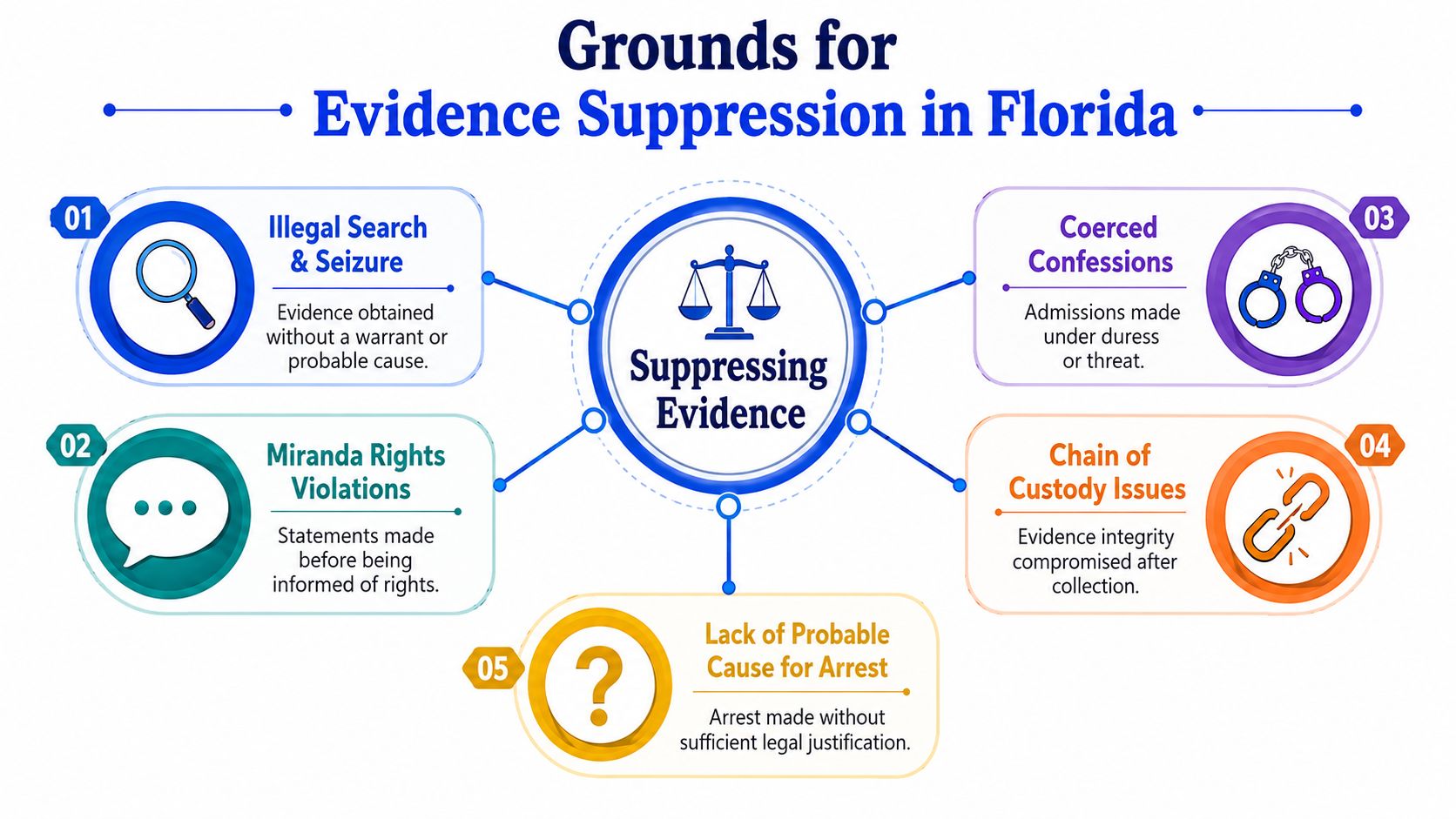
Los pleitos sobre exclusión de pruebas en Florida se ganan mediante el análisis riguroso de detalles específicos. No con generalizaciones de indignación ni con alegatos vagos de que la policía actuó de forma injusta. Se requiere precisar hechos concretos, violaciones constitucionales delimitadas y contradicciones fácticas insalvables.
Si el origen de su caso penal deviene de un control vial o de una investigación en la carretera, es preciso entender los criterios mediante los cuales los juzgadores valoran la legalidad de los retenes de DUI en Florida. Dichos procedimientos se resuelven habitualmente en función del estricto rigor procesal y no únicamente de las sospechas subjetivas del oficial interviniente.
Los registros ilegales suelen comenzar con detenciones de rutina
Los vicios procesales con mayor fuerza para lograr la exclusión suelen tener su origen en intervenciones policiales aparentemente ordinarias.
Ausencia de fundamento legal para la detención. Si el oficial carecía de un motivo jurídicamente válido para ordenar que se detuviera o para retenerlo, toda actuación subsiguiente queda viciada de nulidad.
Registro practicado sin consentimiento real. Los oficiales tienden a reportar que el consentimiento fue otorgado de manera libre y voluntaria aun en contextos donde la situación resultó intimidatoria, confusa o coercitiva.
Registro que excede los límites de la detención vial. Una detención de tráfico motivada por una infracción específica no faculta de manera automática a la policía para realizar un registro general en busca de elementos ajenos que no guardan relación con el hecho.
Falta de causa probable para proceder al arresto. Si la detención física original careció de soporte legal suficiente, toda prueba incautada tras dicha privación de la libertad puede ser legalmente impugnada.
Existe un patrón policial recurrente: el oficial declara en su informe que percibió un olor particular, que detectó movimientos sospechosos o que las declaraciones del conductor le resultaron evasivas. Se trata de fórmulas estereotipadas comunes en los informes de arresto. Sin embargo, los jueces no ordenan la exclusión de pruebas debido a que a la defensa le desagraden dichos términos; las excluyen cuando la realidad de los hechos contradice y desvirtúa la veracidad de tales aseveraciones policiales.
Las declaraciones también pueden ser impugnadas
El recurso de exclusión de prueba no se asocia únicamente a los objetos materiales localizados en el interior de un automóvil o domicilio, sino que resulta igualmente aplicable a las manifestaciones verbales del imputado.
Infracciones a las advertencias de Miranda. Tienen plena relevancia si la policía interroga a una persona privada de su libertad sin informarle adecuadamente de sus derechos bajo custodia.
Confesiones coaccionadas. Pueden impugnarse judicialmente si los oficiales utilizaron amenazas, presión psicológica, intimidación física o promesas indebidas de beneficio procesal.
Declaraciones obtenidas sin lectura previa de derechos. Se erigen en un aspecto procesal crítico en acusaciones por drogas, posesión de armas de fuego, robos y delitos con violencia en los cuales la fiscalía fundamenta su caso en la presunta admisión de los hechos por parte del acusado.
Con frecuencia, cuando los oficiales de policía presumen tener el escenario resuelto, incurren en descuidos graves durante los interrogatorios de custodia.
Las irregularidades en la documentación son importantes
Las órdenes de cateo resultan imponentes en los expedientes judiciales; no obstante, pueden ser desvirtuadas cuando la documentación de soporte técnico adolece de insuficiencia o su ejecución procesal se apartó de las normas legales.
He aquí los puntos de vulnerabilidad procesal más recurrentes:
Incidencia procesal | Trascendencia legal |
|---|---|
Orden de cateo defectuosa | El juzgador puede cuestionar la legalidad y suficiencia del mandamiento escrito desde su origen |
Registro de amplitud excesiva | Los agentes del orden no pueden utilizar una autorización de registro como un permiso generalizado para incautar todo objeto que se encuentre a su alcance |
Evidencia fuera de los límites autorizados | Si los oficiales registraron zonas o se apoderaron de bienes que no se encontraban expresamente determinados en el mandamiento judicial, la defensa debe cuestionar en el acto dicha actuación |
Vicios en la cadena de custodia | Si se acredita falta de rigor, seguridad y constancia en el manejo y preservación de los elementos de convicción, se compromete la integridad formal de la prueba |
Las controversias relativas a la cadena de custodia poseen una importancia sustantiva en causas penales por narcotráfico y en litigios probatorios por delitos de DUI. Si el Estado no puede demostrar rigurosamente qué muestras u objetos se recolectaron, quiénes intervinieron en su manejo y si se preservaron inalterados, dicha vulnerabilidad formal debe ventilarse en el tribunal.
Los tribunales de Florida recompensan un trabajo de defensa disciplinado
Los argumentos de exclusión más eficaces no descansan en la elocuencia dramática, sino en el análisis riguroso de registros oficiales: grabaciones de cámaras corporales y de patrullas; bitácoras de radio y registros de despacho (CAD); actas de ejecución de órdenes de registro; filmaciones del área de procesamiento de detenidos; y contradicciones de los testimonios de los agentes frente a sus informes iniciales.
Es en tales precisiones donde los juicios penales se deciden. No en la solvencia o seguridad del oficial de policía al declarar, sino en aquellos detalles que le resulta imposible justificar consistentemente.
El Proceso de Presentación y los Plazos Límite en los Tribunales de Florida
Incluso un argumento sólido de exclusión de prueba puede perder idoneidad si la defensa lo plantea con retraso o negligencia procesal. En materia procesal penal, la observancia de la técnica formal no es un asunto secundario; constituye una parte esencial de la estrategia de defensa.
El cumplimiento de los procedimientos decide las disputas de exclusión de prueba
Las mociones de exclusión de prueba deben formularse obligatoriamente de manera previa a la celebración del juicio preliminar (trial), y el tribunal está facultado para hacer cumplir rigurosamente los plazos de presentación establecidos. Ciertas jurisdicciones disponen que el escrito procesal sea radicado en un término perentorio de 10 días laborables tras la notificación formal del Estado sobre su pretensión de incorporar determinada prueba en el juicio, de conformidad con lo señalado por la Escuela de Gobierno de la Universidad de Carolina del Norte referente a plazos y notificaciones de exclusión de pruebas.
Aun cuando dicho término específico provenga de una normativa de otra jurisdicción, la regla procesal resulta enteramente aplicable a la práctica judicial en Florida. La inacción procesal comporta graves peligros. Si la defensa posterga injustificadamente el planteamiento de la moción de exclusión, el juzgador puede rehusarse a admitir su trámite o declarar precluido el derecho.
Es por ello que cualquier persona sometida a proceso penal en las ciudades de Fort Lauderdale, Broward County, o en cualquier demarcación judicial de South Florida, debe designar representación legal que proceda a realizar un examen temprano de las circunstancias de la detención, el arresto, el registro y las manifestaciones vertidas. No resulta conveniente que su abogado defensor identifique la existencia de vicios procesales cuando el caso ya se encuentra en las etapas inmediatas al juicio de fondo.
Lo que un juez de Florida espera analizar
En el foro penal de Florida, corresponde a la defensa presentar por escrito la moción formal, precisando con toda claridad tanto los elementos probatorios objeto de impugnación como los fundamentos de derecho idóneos para ordenar su desestimación. Los jueces no admiten señalamientos genéricos o vagos. La moción tiene que ser concreta y fundamentada.
Ello implica que el escrito judicial debe cumplir rigurosamente con los siguientes requisitos:
Identificación precisa de la prueba a excluir: Especificar si se trata de estupefacientes, armamento, manifestaciones, información almacenada en dispositivos telefónicos, registros de aire espirado (breathalyzer) u otros objetos específicos.
Fundamento jurídico de la infracción: Invocar de manera precisa una detención ilícita, registro practicado al margen de la ley, vicios de la orden escrita, omisión de la lectura de derechos constitucionales, ausencia de causa probable u otro motivo idóneo.
Acreditación clara de la secuencia de hechos: La cronología de eventos resulta crucial. Precisar qué oficial intervino, las expresiones emitidas, el momento exacto de la requisa y si existió consentimiento válido.
Acreditación de legitimidad procesal (standing): La defensa penal tiene el deber de fundamentar la existencia del agravio o la violación constitucional en la persona del defendido ante la autoridad judicial competente.
Criterio de defensa técnica: La vía más expedita para perder un recurso fundado consiste en radicar un escrito de redacción genérica que no precise pruebas fácticas bastantes.
El órgano jurisdiccional tiene la facultad de denegar la moción si esta no se presenta dentro del término procesal establecido o si carece de adecuado soporte fáctico. Este revés no deriva de un formalismo intransigente, sino de un error técnico plenamente evitable.
La investigación temprana impulsa el fundamento de la moción
Las mociones de exclusión eficaces requieren una construcción rigurosa y no improvisada. El abogado defensor debe recopilar diligentemente todo el material fáctico disponible sin dilación alguna:
Registros de video de cámaras corporales (bodycam) y de patrullas policiacas
Informes policiacos de arresto y reportes de investigación ampliados
Bitácoras del sistema de despacho policial y reportes de comunicaciones
Copias certificadas de mandamientos de registro y sus anexos de ejecución
Filmaciones de seguridad del área de reseña de detenidos o dependencias policiales
Declaraciones testimoniales que controviertan la versión sostenida por la autoridad
La Regla de Procedimiento Penal de Florida 3.190(h) suele regir esta clase de actuaciones procesales en el foro estatal; sin embargo, la máxima fundamental es sencilla: la defensa debe actuar con antelación al inicio del juicio, aportar los elementos fácticos necesarios y obligar al Estado a justificar la estricta legalidad del proceder policial bajo análisis.
Qué esperar durante su audiencia de exclusión de pruebas
La audiencia de exclusión representa uno de los pocos momentos en el proceso penal donde la versión de las fuerzas policiales se examina de manera técnica, rigurosa y exhaustiva. En este acto no hay jurados ni teatralidad: únicamente un juez de derecho resolviendo si el Estado está legalmente facultado para incorporar la prueba en su contra en el juicio de fondo.
En fases preliminares a esta audiencia, los procesados demandan comprender la valoración judicial de pruebas químicas o científicas de alcoholemia, especialmente en delitos de DUI y conducción bajo efectos de estupefacientes que involucren disputas técnicas sobre alcoholímetros y evidencia de THC.
La experiencia es similar a la de un minijuicio

La diligencia se inicia con la comparecencia de la defensa y la fiscalía ante el juez de la causa. El fiscal buscará acreditar la legalidad del actuar policial, mientras que la defensa cuestionará formalmente el fundamento legal de la detención inicial, el registro corporal, el arresto, la incautación de bienes o el interrogatorio practicado oponente.
Es habitual el comparendo y testimonio de los oficiales y detectives intervinientes, quienes declararán los pormenores recogidos en el lugar de los hechos y las razones de su actuar procesal.
Es en ese momento cuando se inicia la parte crítica del proceso: el contrainterrogatorio o careo técnico por parte de la defensa.
El defensor contrastará con rigurosidad tales declaraciones con los informes de arresto escritos, registros videográficos, manifestaciones previas, marcas de tiempo, datos de despacho de radio y realidades físicas del lugar. Con frecuencia, oficiales que redactaron reportes impecables reducen significativamente su consistencia técnica ante preguntas de seguimiento precisas expuestas por la defensa en sala de audiencias.
A continuación se detalla una síntesis informativa de la organización y decurso procesal que caracteriza esta clase de audiencias técnicas.
Lo que el juez realmente observa con atención
Por regla general, los jueces penales centran su análisis en un marco estricto de valoración:
Credibilidad testimonial: ¿Mantiene el oficial consistencia técnica y veracidad al ser sometido a un riguroso contrainterrogatorio?
Secuencia lógica de tiempo: ¿Acontecieron los eventos fácticos en la cronología exacta que se consignó en el reporte oficial?
Fundamento de derecho: ¿Cuáles circunstancias fácticas concretas fundaron la detención de la persona, el registro corporal o la privación de la libertad?
Límites y alcance: ¿Incurrieron los oficiales en excesos procesales que la norma legal prohíbe taxativamente?
Certeza probatoria: ¿Coinciden de manera objetiva los registros de video o materiales con la narrativa expuesta por la policía?
La diligencia de exclusión de prueba suele desarrollarse bajo parámetros de alta tensión jurídica debido a que descarta presunciones informales que usualmente motivan la imputación inicial de la fiscalía. Mientras los fiscales formulan acusaciones preliminares ateniéndose únicamente a los informes redactados, los juzgadores en una audiencia de esta clase ejercen un escrutinio de derecho riguroso.
Un contrainterrogatorio fructífero no depende de elocuencia retórica, sino de evidenciar vacíos técnicos procesales insalvables para el órgano acusador estatal de manera inmediata.
La resolución puede dictarse de inmediato o posteriormente
El juez de la causa cuenta con la prerrogativa de emitir su resolución oralmente en sala de audiencias, o bien diferir el pronunciamiento para analizar en detalle las alegaciones de derecho y dirimir la resolución por escrito con posterioridad. En cualesquiera de los supuestos, la audiencia formal produce un registro procesal con carácter vinculante idóneo para modular las negociaciones previas, rediseñar la estrategia técnica del debate de fondo o, en su defecto, sustentar futuras apelaciones de derecho.
Como imputado o procesado, es imperativo que asimile lo siguiente: la audiencia preliminar de exclusión de prueba no representa un formalismo procesal ordinario. Constituye el foro de derecho óptimo donde las disputas constitucionales se traducen en determinaciones judiciales capaces de redefinir su libertad y el futuro del caso penal.
Posibles resultados y consideraciones estratégicas
La resolución sobre una moción de exclusión de prueba delimita técnicamente cuánta de la evidencia de cargo presentada por la fiscalía puede superar exitosamente el tamiz de la regularidad constitucional. Esa es la cuestión jurídica fundamental.

Una victoria total puede desmoronar la acusación de la fiscalía
Cuando el juez resuelve excluir del proceso judicial las pruebas de cargo fundamentales de la fiscalía, el destino de la causa penal suele modificarse de forma drástica de inmediato. Una imputación penal por posesión de estupefacientes que se quede privada de la evidencia física de la droga es, por definición, un caso sin sustancia. Un procesamiento por tenencia ilícita de arma de fuego desprovisto del arma resulta infundado de probar en sala penal. Igualmente, un procesamiento por conducir bajo los efectos del alcohol o DUI se encamina al sobreseimiento si se decretan nulas la detención inicial o las declaraciones autoinculpatorias esenciales.
En mi calidad de exfiscal del estado de Florida, puedo anticiparle la consecuencia obligada para la parte acusadora: el expediente provisional de la investigación policial deja de ser idóneo para su debate ante el tribunal. La fiscalía se ve constreñida a determinar si el remanente de las pruebas admisibles que restan cuenta con la solvencia requerida para persistir en la acusación y lograr una condena.
Dicha variación procesal posee una enorme trascendencia jurídica.
Una victoria parcial aún tiene el poder de cambiarlo todo
La determinación de una exclusión que prospere de forma parcial representa el escenario procesal idóneo para el reajuste estratégico de la defensa. Los juzgadores no están constreñidos a desechar el sumario de cargo en su totalidad; tienen facultad plena para sancionar con exclusión únicamente una manifestación aislada del procesado, un procedimiento de requisa específico, una identificación procesal defectuosa o un tramo de la parada de tráfico, preservando la validez del resto del material probatorio.
Considere este supuesto práctico real: en una acusación por narcotráfico o posesión de estupefacientes, el juez penal determina la exclusión de toda sustancia incautada con motivo de una inspección de vehículo contraria a la ley; empero, declara admisibles las declaraciones vertidas en la vía pública por el imputado. El fiscal retiene las manifestaciones de este, mas carece por completo de la evidencia física de la droga que exhibir ante el jurado durante el juicio. Esta circunstancia debilita la imputación formal y fuerza al Estado a replantearse si resulta procedente y viable continuar con la vía del juicio de fondo.
También puede verificarse el escenario opuesto: el tribunal puede validar formalmente la evidencia material incautada por la policía, pero de manera simultánea excluir testimonios incriminatorios recabados con violación a las advertencias de Miranda o tras haber ignorado la solicitud de asistencia letrada por parte del imputado. Ello priva al Estado de la posibilidad de justificar el dolo, el conocimiento previo o la titularidad del objeto, elementos que constituyen con frecuencia la mayor complejidad de la carga de la prueba para la fiscalía.
En supuestos procesales relacionados a la conducción bajo el influjo de sustancias, idéntica consideración estratégica resulta aplicable a cómo combatir acusaciones de DUI en Florida.
Lo que hace una defensa sólida tras dictarse la resolución judicial
Una vez que la autoridad judicial ha resuelto el recurso de exclusión, la defensa técnica está obligada a reformular minuciosamente la totalidad de las variables procesales del sumario:
Viabilidad defensiva en juicio de fondo: ¿Cuáles elementos probatorios conservan admisibilidad y qué elementos de la acusación le resultará prioritariamente complejos acreditar de manera inobjetable a la fiscalía?
Reajuste de la tipicidad penal: ¿La resolución dictada propicia un sobreseimiento definitivo de la causa, una reconsideración a tipos penales menores o una reformulación fáctica restringida por el órgano acusador estatal?
Debilitamiento de órganos de prueba: ¿La anulación de la evidencia desvirtúa la idoneidad procesal de oficiales de policía, expertos forense o peritos de cargo cuyos informes dependían de los elementos de convicción que han sido excluidos?
Posición en negociaciones previas: ¿Queda expuesto el Estado a un margen de riesgo sustantivo en juicio oral madurando de una vez las condiciones objetivas de una negociación de acuerdo de culpabilidad favorable para el imputado?
Soporte para recurso de apelación posterior: ¿Se cumplieron a cabalidad en la audiencia los rigores procesales idóneos para resguardar la nulidad de las actuaciones judiciales en caso de posterior veredicto de culpabilidad en juicio de fondo?
La declaración de una exclusión de prueba con carácter meramente parcial no constituye un paliativo procesal infructuoso; suele representar el hito donde la fiscalía pierde el control de su teoría del caso.
Los defensores penales diligentes no interponen mociones de exclusión de prueba con fines de dilación o elocuencia formal. Lo hacen con el objetivo estratégico de cercenar el acervo probatorio de cargo ilegal, evidenciar descuidos procedimentales policiales irreparables y constreñir al órgano acusador del Estado a litigar una causa con hechos reducidos, testigos desacreditados y un estrecho margen de maniobra judicial.
Preguntas frecuentes sobre la exclusión de pruebas
¿Presentar una moción de exclusión me hace parecer culpable?
No. Al contrario, proyecta que su defensa legal ejerce una representación con absoluta seriedad y rigor técnico de sus garantías constitucionales.
El planteamiento de este escrito procesal sostiene que el aparato gubernamental tiene la obligación irrestricta de ceñirse a las exigencias que impone el ordenamiento constitucional antes de pretender justificar la culpabilidad de un procesado con elementos probatorios obtenidos ilegalmente. Los jueces de derecho examinan y resuelven estas causas de exclusión debido a que el examen de los límites que constriñen la actuación de la fuerza pública constituye parte consustancial de la substanciación del proceso penal ordinario, no una cuestión marginal. Cuestionar el actuar policial no representa en ningún momento indicio o presunción de responsabilidad penal del imputado.
Si se excluye una prueba, ¿está obligado el departamento de policía a destruirla?
No necesariamente.
La declaración técnica de exclusión apareja como consecuencia procesal inmediata la inhabilitación formal para que el órgano acusador del Estado pueda incorporar o ventilar tales elementos probatorios durante el desahogo del juicio penal ante el juzgador o el jurado. No comporta de forma automática el mandato judicial de destrucción del objeto material, la remoción física total de este o la imposibilidad permanente de discutirlo en cualesquiera otros contextos de derecho. El alcance jurídico material de la exclusión queda condicionado en todo supuesto por el fundamento técnico específico bajo el cual se determinó el vicio procesal.
¿Puede una moción de exclusión ayudar en un caso de DUI si el alcoholímetro funcionaba correctamente?
Sí, plenamente aplicable en esos supuestos penales.
El resultado o la desestimación de un procesamiento judicial por DUI no descansa exclusivamente en determinar si el equipo tecnológico de medición de aire espirado se encontraba operativo y debidamente verificado de conformidad con la normativa del fabricante. La defensa técnica se encuentra facultada para escrutar concienzudamente la existencia de fundamentos legales reales que justificaran la parada de tráfico inicial, la subsiguiente retención física del procesado, la realización formal del arresto, la legalidad de los indicios y manifestaciones fácticas reportadas por los oficiales intervinientes y el estricto cumplimiento de los protocolos procesales de obligatorio acatamiento. En una multiplicidad de juicios penales por infracciones de DUI en el estado de Florida, la vulneración del estándar constitucional por parte del personal policiaco se origina mucho antes de que se proceda a recabar cualesquiera lecturas o resultados químicos.
Si desea disipar dudas respecto de qué es una moción de exclusión de pruebas porque se ha visto involucrado en un arresto en Fort Lauderdale, el condado de Broward, Miami-Dade, Palm Beach o cualquier otra demarcación de South Florida, resulta indispensable solicitar la revisión oportuna de las circunstancias procesales penales de su detención de manera expedita. Cualquier dilación injustificada favorece la pretensión punitiva del Estado, nunca a sus intereses de defensa.
Si usted enfrenta cargos criminales y estima que las actuaciones de requisa corporal voluntaria u obligada, la detención, el arresto policial o los interrogatorios de las fuerzas del orden vulneraron las fronteras que prescribe la Constitución o la jurisprudencia aplicable, comuníquese con el despacho jurídico Ticket Shield, PLLC a fin de concertar una entrevista confidencial de examen de su causa. La perspectiva forense técnica de nuestro bufete puede evidenciar los vicios que el Estado desearía obviar, y la actuación preliminar oportuna puede significar la diferencia entre encarar una causa debilitante o lograr la exclusión formal de pruebas ante el juzgador competente.
Cuando la policía vulnera sus derechos, una moción de exclusión de pruebas puede desmantelar el caso de la Fiscalía. A continuación, se explica el funcionamiento de la supresión de pruebas en los tribunales de Florida.