
Hurto mayor en Florida: Sanciones y estrategias de defensa para 2026
Abogado Jason Goldsmith
Muchas personas llegan a este tema con el mismo estado de ánimo. Su teléfono fue confiscado como evidencia. Una tienda afirma que se perdió mercancía. Un exempleador los acusa de haberse llevado equipos. Un miembro de la familia tomó prestado un automóvil y ahora la policía lo califica de robo. Es posible que esté tratando de resolver una pregunta urgente: ¿es esto realmente un delito grave?
Si se enfrenta a una acusación de hurto mayor (grand theft) en Fort Lauderdale, el condado de Broward, Miami-Dade, Palm Beach o cualquier otro lugar del sur de Florida, lo más importante que debe comprender es que la tipificación del cargo no siempre coincide con lo que usted considera que sucedió. Como le diría un exfiscal, el Estado comienza construyendo una historia limpia y sencilla. El trabajo de un abogado defensor es poner a prueba cada elemento de esa versión, especialmente el valor, la intención, la propiedad de los bienes y la forma en que la policía recopiló las pruebas.
Índice de Contenidos
Cuando el hurto se convierte automáticamente en delito grave
Sus primeros pasos tras un arresto por hurto en el sur de Florida
Comprensión del hurto mayor bajo la ley de Florida
Usted sale de una tienda o se aparta de una discusión sobre una herramienta de trabajo, un teléfono o incluso un automóvil que alguien afirma que usted no tenía derecho a retener. Unos días después, se entera de que la policía lo está tratando como un caso de hurto mayor. Eso toma a muchas personas de bien por sorpresa, porque esperaban la resolución de un malentendido, no una acusación de delito grave.
Una de las primeras preguntas que me hacen los clientes es si el hurto mayor en Florida es un delito menor o un delito grave. En la gran mayoría de los casos, constituye un delito grave (felony). Esto altera de inmediato la presión sobre el caso, afectando las condiciones de la fianza, las negociaciones de culpabilidad y el riesgo de un antecedente penal permanente.
Por qué las personas se ven sorprendidas por este cargo
La legislación de Florida puede convertir una acusación de hurto en un delito grave mucho antes de lo que se anticipa. El umbral es más bajo de lo que comúnmente se asume, y el cargo no siempre se fundamenta en un simple recibo o precio de etiqueta. Como exfiscal, puedo explicarle cómo el Estado suele comenzar a estructurar este tipo de casos. Busca una cifra, una categoría de propiedad y un relato que pueda presentar de forma expedita para que la acusación parezca clara e indiscutible.
Es precisamente por esto que la defensa debe ralentizar el proceso del caso.
Un fiscal puede agrupar varios artículos para alcanzar el umbral del delito grave. El investigador de una tienda puede basarse en el precio de venta al público en lugar del valor justo de mercado. Un denunciante puede describir un bien prestado como robado tras la ruptura de una relación personal. Estos detalles pueden parecer menores, pero en los casos de hurto a menudo determinan si la acusación se mantiene como delito grave, se reduce a delito menor o comienza a desestimarse.
Regla práctica: Si la policía, el personal de prevención de pérdidas o un empleador insisten en hablar de "valor", no asuma que todos se refieren a lo mismo. En un caso de hurto, el método utilizado para calcular el valor puede definir la totalidad de la acusación.
Qué distingue al hurto menor del hurto mayor
El hurto menor (petit theft) constituye la infracción de menor gravedad, mientras que el hurto mayor (grand theft) representa la tipificación de delito grave. La línea divisoria suele depender del valor imputado a la propiedad, aunque la ley de Florida también otorga un tratamiento diferenciado a ciertos tipos de bienes y contextos fácticos.
Ahí es donde se suscita la confusión para muchos. Escuchan la palabra "hurto" y asumen que la única cuestión relevante es si se tomó algo. Un abogado defensor analiza un espectro de factores mucho más amplio, dado que la fiscalía también lo hace. Los interrogantes recurrentes incluyen:
¿Cuál era el valor de la propiedad en ese momento preciso?
¿Quién ostentaba el derecho legal de posesión?
¿Existía una intención real de privar de forma permanente al propietario de su bien?
¿Influyó el tipo de propiedad o el lugar de los hechos en la gravedad del cargo?
En mi experiencia previa en la fiscalía, observaba cómo se fundamentaban los casos de hurto presentando estos puntos como hechos consumados desde el primer día. Un abogado defensor con experiencia refuta cada uno de ellos. Si el valor está inflado, la propiedad está en disputa o la intención penal es débil, la versión estructurada por el Estado comienza a mostrar fisuras.
Para obtener una perspectiva más amplia sobre los delitos relacionados, los lectores de Florida también suelen examinar esta página sobre delitos de hurto en Florida.
Grados y penas del hurto mayor en Florida
Un cargo de hurto mayor puede parecer engañosamente simple sobre el papel. Se observa una cantidad monetaria, un grado de delito grave y una posible sentencia de prisión. Desde la perspectiva de la fiscalía, ese esquema suele ser la hoja de ruta inicial para todo el caso. Desde la perspectiva de la defensa, constituye una alegación que debe ser sometida a un riguroso análisis.
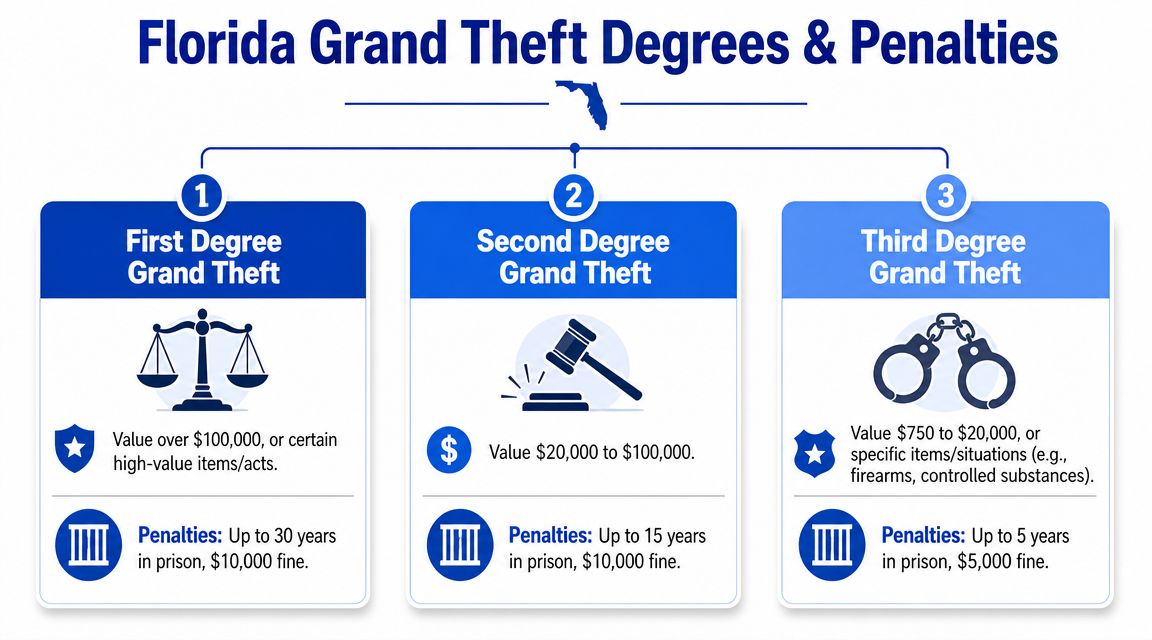
Un vistazo a los tres niveles de delitos graves
Bajo las leyes de Florida, el hurto mayor se configura, por lo general, cuando el Estado alega que el valor de la propiedad asciende a $750 o más. A partir de ese umbral, el cargo suele incrementarse en grado a medida que aumenta el valor atribuido.
Grado | Rango de valor alegado | Nivel general de la pena |
|---|---|---|
Hurto mayor de tercer grado | De $750 a menos de $20,000 | Cargo por delito grave |
Hurto mayor de segundo grado | De $20,000 a menos de $100,000 | Cargo por delito grave de mayor gravedad |
Hurto mayor de primer grado | $100,000 o más | Nivel máximo de delito grave por hurto, con la mayor exposición a sentencias severas |
Ese marco legal parece automático, pero en la práctica procesal penal rara vez lo es.
Como exfiscal, puedo explicarle el proceder habitual del Estado en esta materia. Los fiscales suelen comenzar seleccionando el grado más alto que consideren respaldado por el informe policial, los registros comerciales, la documentación mercantil o la declaración de la víctima. Posteriormente, se dedican a recopilar facturas, estimaciones de reemplazo, capturas de pantalla o declaraciones de testigos para conferir solidez y fiabilidad a dicha cifra.
Un abogado defensor aborda el mismo expediente de una manera sustancialmente distinta. Nos cuestionamos si el Estado está aplicando el valor justo de mercado o una cifra inflada; verificamos si el monto refleja el estado de uso del bien en lugar del costo de reemplazo minorista de un artículo nuevo; indagamos si existen bienes acumulados de forma indebida, registros duplicados o propiedades que no debieron computarse. Un caso de hurto puede resolverse a favor o en contra con base en esta índole de detalles.
Lo que el grado del delito implica para usted
El grado del delito grave incide en aspectos fundamentales que van más allá de la mera denominación del cargo. Determina los argumentos de la fianza, las negociaciones de acuerdos de culpabilidad, el riesgo de la sentencia aplicable y el nivel de presión que el Estado intentará ejercer desde las etapas preliminares.
El hurto mayor de tercer grado sigue constituyendo un delito grave. Y eso es de suma trascendencia.
Incluso en el nivel más bajo de delito grave, una condena penal puede afectar el empleo, la obtención de licencias profesionales, el acceso a la vivienda, el estatus migratorio y la exposición a futuras sentencias de mayor gravedad. Los cargos de grados superiores elevan aún más las consecuencias en juego, pero cualquier acusación de hurto felony amerita una respuesta legal diligente e inmediata.
Los clientes suelen preguntar si el cargo imputado al momento del arresto es definitivo. No lo es; constituye únicamente la postura inicial del Estado. Si el valor alegado carece de sustento probatorio, está sobredimensionado o se calculó mediante un criterio erróneo, el grado de la infracción puede ser objeto de reducción. En determinados escenarios, la propia teoría del delito grave puede ser impugnada.
Si desea establecer una comparación entre las acusaciones de hurto mayor y los cargos de menor gravedad, esta guía sobre hurto menor (petit theft) en Florida le proporcionará un contexto de gran utilidad.
Cuando el hurto se convierte automáticamente en delito grave
Una de las concepciones erróneas más habituales en el derecho penal sobre hurtos es la idea de que la tipificación de un delito grave depende exclusivamente de un monto económico. En Florida, esto no siempre se cumple. En ocasiones, la categoría específica de la propiedad o las circunstancias en que acontecieron los hechos imponen directamente el cargo de delito grave.
Ejemplos donde el valor no es el problema principal
Considérese el caso de un vehículo motorizado. Una persona podría argumentar: "Era un automóvil viejo" o "Solo lo utilicé por un período breve". Ese razonamiento no agota el análisis jurídico. Los vehículos de motor pueden dar lugar a cargos de hurto mayor, aun cuando el acusado asuma que la cuestión del valor material le eximirá de la imputación grave.
Idéntica situación se presenta en los casos que involucran armas de fuego. Un arma corta no precisa ser un artículo de lujo para que la fiscalía catalogue la acusación como hurto mayor. Asimismo, el estatuto tutela ciertas categorías de bienes vinculados a servicios de emergencia o construcción, lo que implica que la naturaleza del propio artículo puede determinar la gravedad del asunto procesal.
He aquí ejemplos de escenarios que suelen sorprender a los implicados:
Disputa por un automóvil prestado: Una de las partes sostiene que el consentimiento fue revocado y la otra alega que nunca existió dolo o intención criminal.
Retiro de un artículo del lugar de trabajo: El empleado argumenta que se trataba de un bien de la empresa asignado para sus funciones laborales, mientras el empleador sostiene que fue sustraído de manera ilícita.
Acusación relacionada con armas de fuego: El imputado puede alegar confusión de propiedad, acceso compartido en el ámbito familiar o ausencia de posesión a sabiendas.
Imputaciones por equipos de construcción o de emergencia: El Estado puede restar prioridad al valor de reventa y enfocarse rigurosamente en la categoría prevista en el estatuto legal.
Por qué la fiscalía se enfoca en la categoría y el contexto
La fiscalía no se limita a indagar el precio por el cual un artículo podría venderse en internet. Busca la vía procesal idónea y más sólida para configurar un delito grave. Si la propiedad pertenece a una categoría protegida por la ley, pueden prescindir de entablar la controversia de valoración que suele caracterizar a los casos comunes en el ámbito comercial minorista.
Esto resulta de gran importancia, ya que la estrategia de defensa penal debe formularse en correspondencia directa con la teoría del caso empleada por el Estado. En ciertos asuntos, la controversia se centrará en la valoración de los bienes; en otros, la disputa jurídica versará sobre la autorización de uso, la posesión legítima o la procedencia de incluir el artículo dentro de la categoría estatutaria protegida.
Un ciudadano acusado en el condado de Broward o en Miami-Dade incurriría en un grave error si pretendiera abordar este tipo de procesos como si se tratase de un hurto simple en una tienda. Diversas acusaciones de hurto pueden aparentar menor gravedad en primer término, pero conllevan consecuencias de delito grave desde su origen.
Defensas estratégicas ante cargos de hurto mayor
Una acusación por hurto mayor puede generar un profundo sentimiento de vulnerabilidad, pero estos casos suelen ser mucho más cuestionables en el plano legal de lo que generalmente se percibe. Por parte de la fiscalía, el expediente inicial se muestra aparentemente sólido al incluir recibos, grabaciones de videovigilancia, testimonios, el informe de arresto y un valor estimado. Por parte de la defensa, cada uno de dichos elementos probatorios debe someterse a contradicción.
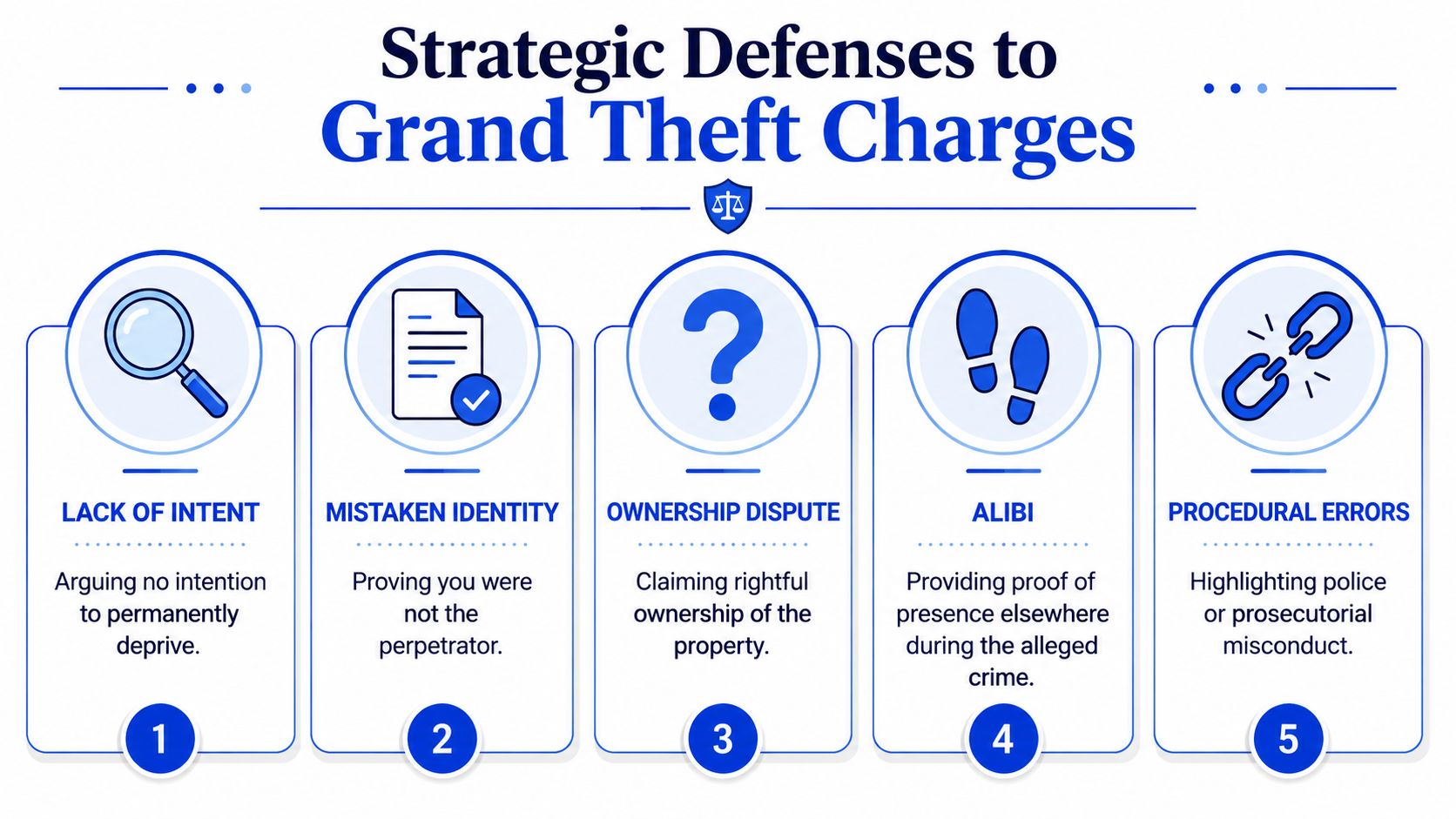
Cómo intenta el Estado generalmente probar el caso
En la generalidad de los juicios por hurto mayor, la fiscalía encamina su hipótesis para probar cuatro extremos fácticos fundamentales:
Que la propiedad pertenecía de manera legítima a un tercero.
Que el acusado la sustrajo, utilizó o retuvo de manera ilícita.
Que el procesado actuó con el dolo o la intención criminal requerida por la ley.
Que los hechos se encuadran en el rango de valor o en la categoría específica requerida para constituir un delito grave.
De conformidad con el Estatuto de Florida 812.014, los fiscales pueden fundamentar su caso en el valor justo de mercado de los bienes, y no meramente en una tasación comercial rápida. Asimismo, el estatuto tipifica ciertas conductas como hurto mayor cuando el presunto infractor ocasiona daños a la propiedad superiores a $1,000 durante la comisión de un hurto relacionado con un vehículo. Esto significa que el cargo felony puede fundamentarse en los daños colaterales ocasionados, y no exclusivamente en el valor del objeto sustraído.
Dónde ataca el cargo un abogado defensor con experiencia
La perspectiva y experiencia de un exfiscal resultan de inestimable valor en esta etapa. El expediente del Estado suele presentarse con una apariencia de mayor claridad y consistencia de la que los hechos reales fundamentan. Un abogado litigante que domine la metodología con la que los fiscales estructuran los casos de hurto sabrá identificar con precisión las deficiencias y debilidades de la imputación.
Las líneas de ataque procesal más recurrentes comprenden:
Ausencia de dolo (intención criminal): Un malentendido de buena fe, una controversia de índole familiar, un conflicto societario o mercantil, o la creencia razonable de contar con autorización de uso pueden desvirtuar el elemento subjetivo del delito.
Cuestiones de titularidad y propiedad: Si la presunta víctima no ejercía la propiedad exclusiva del bien, o si existía un régimen de acceso compartido, la teoría del caso del Estado pierde sustento jurídico.
Deficiencias en la identificación del autor: Las filmaciones de seguridad pueden resultar de baja calidad o borrosas, y los testigos pueden haber complementado sus apreciaciones con meras suposiciones.
Controversia sobre la valoración de los bienes: Si el valor de mercado real es inferior al consignado en la denuncia, la tipificación del cargo delictivo puede resultar insostenible.
Disputa sobre la categorización del bien: Corresponde a la fiscalía la carga de probar fehacientemente que el objeto encuadra en el grupo estatutario protegido en el cual sustenta su imputación.
Un proceso por delito de hurto puede experimentar un giro sustancial en el momento en que la defensa aporta recibos, registros fotográficos, comunicaciones escritas, títulos de propiedad, presupuestos de reparación o constancias de acceso debidamente autorizado.
La tasación de los bienes reviste una importancia crítica. La fiscalía suele iniciar el proceso valiéndose del precio comercial de tienda, costos de reposición estándar o cálculos aproximados. La defensa técnica puede rebatir dichos montos mediante la acreditación de factores de depreciación, estado de conservación, componentes faltantes, análisis comparativos de mercado o la demostración técnica de que el valor real dista del asentado en el informe policial. En no pocas ocasiones, esta labor determina la diferencia entre afrontar una condena por delito grave o una calificación penal significativamente menor.
Adicionalmente, en aquellos escenarios donde el acervo probatorio del Estado resulta insuficiente, el proceso puede concluir sin condena alguna. Si desea profundizar sobre los mecanismos procesales de los que dispone la fiscalía para decretar el desistimiento de los cargos, esta explicación del término nolle prosequi en Florida le resultará de gran utilidad.
Sus primeros pasos tras un arresto por hurto en el sur de Florida
Si ha sido objeto de una detención o si las autoridades policiales se han puesto en contacto con usted en relación con un presunto delito de hurto en Fort Lauderdale, el condado de Broward, Miami-Dade o el condado de Palm Beach, las decisiones que adopte de manera inmediata tendrán un impacto definitivo en su situación jurídica. La mayor parte de los perjuicios procesales ocurren en las fases iniciales, habitualmente cuando las personas intentan ofrecer explicaciones sin comprender que los investigadores emplearán tales declaraciones en su contra.
Una guía de verificación visual puede ser de gran ayuda para abordar la situación con la debida templanza.
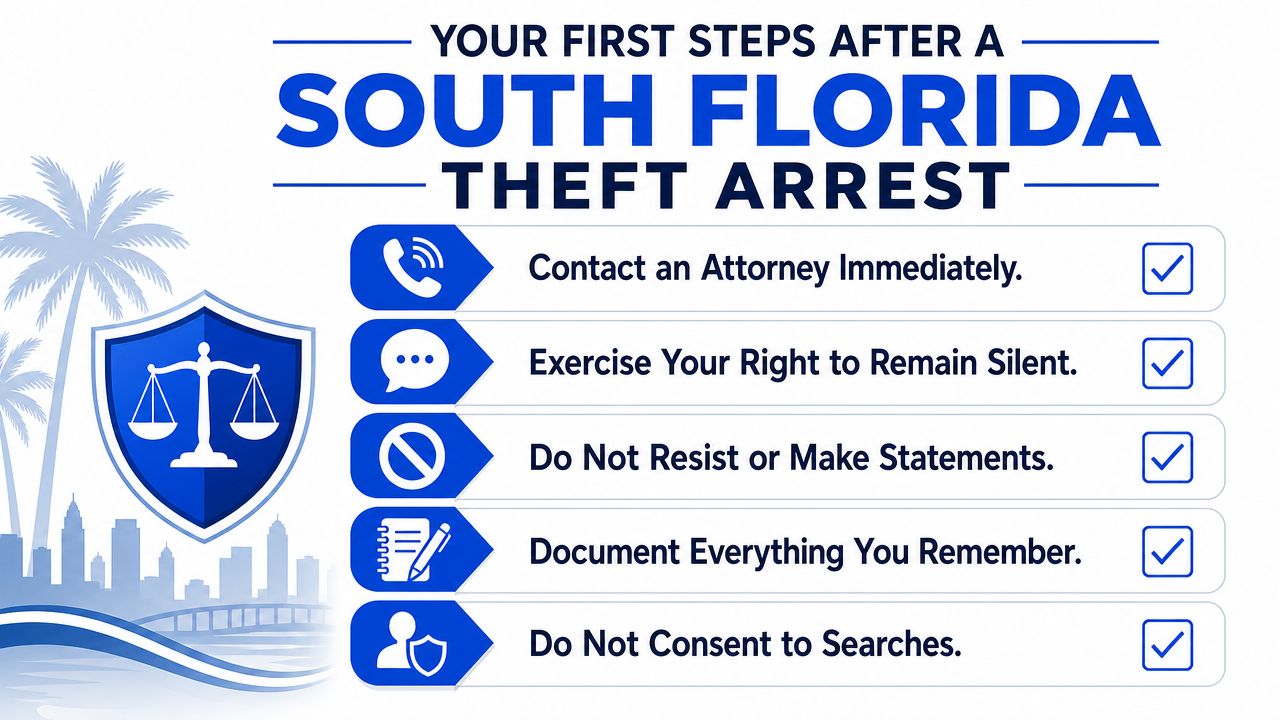
Qué hacer de inmediato
Proceda con serenidad y observe una rigurosa autodisciplina en el cumplimiento de las recomendaciones básicas.
Solicite asistencia legal: Manifieste expresamente y sin ambigüedades su deseo de contar con la presencia de un abogado defensor antes de responder a cualquier interrogatorio.
Ejerza su derecho constitucional a guardar silencio: Absténgase de intentar resolver la situación mediante explicaciones informales ante los agentes captores.
Preserve todo elemento de prueba: Resguarde de forma segura mensajes de texto, correos electrónicos, facturas, registros fotográficos, datos de geolocalización GPS y cualquier documentación que acredite propiedad, consentimiento o su ubicación física.
Asiente sus recuerdos por escrito: Realice una relación detallada de los hechos mientras conserve la frescura de los acontecimientos, precisando manifestaciones, lugares, horas e identidad de posibles testigos presenciales.
Observe rigurosamente las condiciones de su libertad: Comparecer de forma tardía a las citaciones judiciales o infringir los términos de la fianza impuesta generará serias complicaciones procesales de forma inmediata.
A continuación se presenta el video de referencia técnica citado en esta guía:
Qué no hacer mientras el caso está en trámite
Muchas personas menoscaban gravemente su estrategia de defensa al incurrir en conductas habituales bajo situaciones de apremio emocional.
No otorgue el consentimiento para registros si la policía solicita autorización para inspeccionar sus bienes o domicilio.
No entable comunicación con la parte denunciante bajo el pretexto de aclarar los hechos.
No realice publicaciones ni comentarios relacionados con el proceso en redes sociales.
No asuma erróneamente que la restitución de la propiedad extingue de forma automática la acción penal del Estado.
No comente los pormenores fácticos del caso con terceras personas, compañeros de labores o co-detenidos.
Cuando los agentes policiales albergan sospechas de la comisión de un hurto, sus comunicaciones no tienen como propósito escuchar su versión exculpatoria; se orientan a recabar admisiones de hechos que puedan ser incorporadas en su contra en el plenario.
Si requiere de una vía de comunicación segura para solicitar asesoría jurídica tras haber sufrido una detención por hurto, puede enviar los detalles de su caso de forma estrictamente confidencial.
Cómo defiende su caso un exfiscal
Un abogado defensor de sólida trayectoria, con experiencia previa en el Ministerio Público, no fundamenta la estrategia procesal de un caso de hurto a partir de conjeturas sobre el proceder de la fiscalía. Conoce de primera mano la secuencia interna: el proceso de filtrado de expedientes, los estándares de prueba requeridos por un fiscal para formalizar o agravar un cargo penal, y las zonas de vulnerabilidad técnica que suelen presentar las carpetas de investigación.

Dicha trayectoria profesional transforma radicalmente la formulación de la defensa penal. En lugar de adoptar una postura meramente reactiva, el abogado está facultado para realizar un juicio de valoración del caso con el mismo rigor y criterio que empleará la representación del Estado. Ello le permite cuestionarse de forma anticipada: ¿goza el testigo de credibilidad jurídica?; ¿es el valor de los bienes desmesurado?; ¿incurrieron las agencias del orden en vicios procesales?; ¿estamos verdaderamente ante un injusto penal o se trata de una controversia mercantil, familiar o de dominio que nunca debió ventilarse en la jurisdicción represiva?
En los procesos por hurto mayor en el estado de Florida, la representación estatal suele articular una narrativa que destaca por su aparente solidez en el expediente físico. Un exfiscal sabe que tales afirmaciones descansan con frecuencia sobre meras presunciones. Si los registros de cámaras son fragmentarios, si el tracto sucesivo de la propiedad es confuso o si la valoración del mercado es excesiva, la defensa técnica dirigirá sus ataques precisamente a esos puntos débiles de la acusación.
Este conocimiento técnico confiere una notable ventaja en la fase de negociación procesal. Un abogado que comprende el modo en que la fiscalía pondera los riesgos de acudir a un juicio oral se encuentra en condiciones de evidenciar las falencias del caso de manera contundente y persuasiva. Dependiendo del escenario estratégico del cliente, la actuación idónea se orientará a procurar una reducción de los cargos, la desestimación definitiva de la acción penal o la preparación minuciosa del caso para un debate riguroso en el juicio.
Preguntas frecuentes sobre hurto mayor en Florida
¿Se puede sellar o eliminar un caso de hurto mayor?
La viabilidad de este trámite procesal depende estrictamente del resultado judicial del caso. En términos generales, la procedencia del sellado o la eliminación del historial delictivo está supeditada a la resolución judicial definitiva, a la inexistencia de sentencia condenatoria y a que el solicitante reúna los requisitos legales previstos por la normativa de Florida. Un expediente penal que ha sido objeto de sobreseimiento o desestimación difiere de manera sustancial de una condena firme por hurto al momento de instar el beneficio penal de la cancelación de antecedentes.
Si esta es una de sus principales inquietudes, es indispensable plantearla en las consultas iniciales con su abogado, con anterioridad a la adopción de cualquier decisión formal de aceptación de cargos. La presión inmediata por resolver el proceso puede originar consecuencias perjudiciales de carácter permanente en sus antecedentes.
¿Puede un caso de hurto mayor afectar la situación migratoria o una licencia profesional?
En efecto, las acusaciones vinculadas a delitos de hurto conllevan el riesgo de generar graves repercusiones de carácter migratorio, así como de incidir negativamente en procesos de selección laboral, colegios de profesionales y verificaciones de antecedentes de seguridad. La gravedad del perjuicio dependerá de su estatus legal en el país, de la naturaleza de su actividad profesional y de la tipicidad de la resolución del proceso penal.
Si usted no ostenta la ciudadanía de los Estados Unidos o es titular de alguna licencia o acreditación profesional, es imperativo comunicarlo sin demora a su defensor. Esta circunstancia no debe ser tratada como un asunto menor en la estrategia jurídica.
¿Cuál es la diferencia entre hurto (theft) y robo (robbery)?
El hurto hace referencia, de forma genérica, al apoderamiento de bienes ajenos sin que medie consentimiento de su legítimo poseedor. El robo, por el contrario, exige de manera típica que la sustracción de la propiedad se consume empleando fuerza física, violencia, agresión física o amenazas inminentes contra las personas. Por consiguiente, el robo no constituye un mero hurto de mayor gravedad, sino una tipicidad delictiva autónoma, que consta de elementos constitutivos diferenciados y acarrea sanciones penales considerablemente más severas.
Es frecuente que la ciudadanía emplee ambos términos de manera indistinta en el lenguaje cotidiano, pero la fiscalía los distingue con absoluto rigor técnico. Si su caso comprende acusaciones relativas a la existencia de confrontación física, violencia o intimidación, el análisis jurídico de su imputación variará sustancialmente de manera inmediata.
¿Devolver la propiedad puede hacer que el caso se desestime?
No de manera automática. La restitución de la propiedad o la reparación del daño patrimonial pueden constituir factores de consideración en la fase de negociación y en la ponderación de las circunstancias atenuantes del caso; sin embargo, no extinguen de forma oficiosa la acción penal iniciada. En el momento en que intervienen las agencias de la ley y el Ministerio Público, el denunciante pierde la facultad de decidir unilateralmente el cese de las actuaciones procesales.
¿Qué pasa si esto fue realmente un malentendido?
De ser ese el escenario real, la estrategia de defensa penal de su representación jurídica debe estructurarse y sustentarse de inmediato en torno a esa tesis. Los equívocos fácticos ocurren con frecuencia en desavenencias relativas a propiedad compartida, conflictos en el entorno familiar, falsas acusaciones en el ámbito laboral y supuestos de uso no autorizado de vehículos. La clave del éxito procesal estriba en probar de manera fehaciente dicho contexto con elementos de convicción objetivos, y no meramente en ofrecer explicaciones verbales a posteriori.
¿Debo hablar con la policía si sé que soy inocente?
No. Existe la tendencia natural entre las personas inocentes de estimar que una declaración voluntaria despejará cualquier sospecha de forma expedita. En el plano de la realidad forense, estas declaraciones suelen ser empleadas para subsanar omisiones del caso del Estado, vincular al declarante a cronologías inexactas o asentar en los informes policiales manifestaciones que adquieren un cariz de culpabilidad muy distante de la intención original de quien las pronunció. Solicite siempre la asistencia previa de su abogado.
Si se enfrenta a una acusación por hurto en cualquier demarcación judicial del sur de Florida, Ticket Shield, PLLC se encuentra a su disposición para analizar jurídicamente el cargo que le imputan, salvaguardar sus garantías procesales y diseñar una estrategia de defensa sólida con base en el proceder característico de la fiscalía en esta materia. Una consulta profesional y estrictamente confidencial le permitirá obtener absoluta claridad respecto de la acusación, los riesgos procesales y la vía legal más conveniente para sus intereses.
Los cargos por robo mayor en Florida dependen del valor de la propiedad. Conozca los grados de delitos graves, las sanciones y cómo construir una defensa legal sólida.