
Comparecencia ante el tribunal por infracción de tránsito: Proteja su licencia de conducir
Jason Goldsmith, Abg.
Una parada de tráfico en Florida puede dejarle sentado en su automóvil, mirando la citación y preguntándose qué es lo más importante en este momento. ¿Está en riesgo su licencia? ¿Tiene que presentarse ante el tribunal? Si simplemente la paga, ¿se habrá acabado el problema, o habrá empeorado las cosas sin darse cuenta?
Esa confusión es normal. El tribunal de tráfico parece un asunto menor hasta que comienza a afectar su historial de conducción, su seguro o su capacidad para seguir conduciendo para cumplir con sus obligaciones laborales y familiares. Muchas personas en el condado de Broward, Fort Lauderdale, Miami-Dade, Palm Beach y en todo el sur de la Florida toman una decisión rápida solo para dejar el asunto atrás. A veces eso funciona; otras veces, crea un problema mucho mayor que la propia multa.
Los casos de tráfico son comunes, pero no son inofensivos. En 2023, se procesaron aproximadamente 31.07 millones de casos de tráfico en los tribunales estatales de todo el país, según los datos de 45 estados recopilados en el resumen de estadísticas sobre multas de tráfico de MarketWatch. Esa escala es una de las razones por las que los tribunales dependen de procedimientos estandarizados. También es el motivo por el cual usted debe detenerse y examinar detenidamente lo que exige su propia citación.
Índice de contenidos
¿Es obligatoria su comparecencia ante el tribunal en Florida?
Comprensión de las declaraciones de culpabilidad y los resultados potenciales
Cuándo contratar a un abogado de multas de tráfico en el sur de la Florida
Preguntas frecuentes sobre el tribunal de tráfico de Florida
Recibió una multa de tráfico en Florida: ¿Y ahora qué?
Lo primero que debe hacer es simple. Lea la citación detenidamente antes de realizar cualquier pago, de que expire el plazo legal o de asumir que la multa es un mero trámite.
Algunas multas pueden resolverse sin necesidad de ingresar a una sala de tribunal. Otras conllevan una comparecencia obligatoria ante el tribunal de tráfico, e ignorar dicho requerimiento puede generar problemas mucho más difíciles de solucionar posteriormente. Muchos conductores no cometen errores por descuido; los cometen por prisa, vergüenza o por el afán de superar el incidente de la detención lo antes posible.

En el sur de la Florida, asisto regularmente a personas que pensaron que estaban resolviendo un problema menor. Luego descubren que la multa afecta mucho más que un día de comparecencia ante el tribunal. Puede comprometer el estado de su licencia, su historial de manejo, futuras detenciones de tráfico y la forma en que los fiscales o jueces valoren casos posteriores, incluidos cargos por conducción temeraria, conducir bajo la influencia (DUI) o conducir con licencia suspendida.
Qué verificar primero
Antes de formular una estrategia de defensa, examine los detalles fácticos básicos:
Términos del requerimiento judicial: Su citación debe indicar claramente si su comparecencia personal es obligatoria o si la multa admite pago directo.
Plazo legal: No asuma que puede resolver el asunto en el momento que le resulte conveniente.
Naturaleza de la infracción: Una infracción civil y un delito de tráfico penal no se procesan de la misma manera bajo la legislación de Florida.
Jurisdicción del condado: Los tribunales de Broward, Miami-Dade, Palm Beach y otros condados de Florida pueden diferir en sus procedimientos y normativas locales, aun cuando la ley estatal subyacente sea la misma.
Regla práctica: La forma más rápida de agravar un caso de tráfico es tratar cada infracción como si pudiera resolverse mediante el mismo procedimiento estándar.
Por qué son importantes las decisiones tempranas
Un caso de tráfico a menudo depende de una determinación que parece menor en el momento. El pago de una multa puede archivar el expediente inmediato, pero procesalmente equivale a una admisión de culpabilidad respecto a la infracción. Solicitar una audiencia preserva sus derechos de defensa, pero solo si se realiza bajo las formalidades requeridas y dentro del término legal. No comparecer cuando es obligatorio puede colocarle en una situación procesal sumamente desfavorable.
Por ello, la primera pregunta procesal adecuada no es "¿Cuánto cuesta esta multa?", sino "¿Qué obligaciones impone esta citación y qué consecuencias tendrá en mi historial de conducción si elijo la opción más sencilla?".
Para los conductores en Fort Lauderdale, el condado de Broward, Miami-Dade, Palm Beach y los tribunales de las zonas aledañas del sur de la Florida, la determinación jurídica comienza con un punto: si su comparecencia ante el tribunal es obligatoria.
¿Es obligatoria su comparecencia ante el tribunal en Florida?
No todas las multas en Florida requieren que se presente ante un juez. Sin embargo, en aquellos casos donde la ley lo exige, debe tratar esa fecha de audiencia como obligatoria, a menos que el tribunal apruebe formalmente una vía alternativa de comparecencia.
Los tribunales de Florida exigen la comparecencia obligatoria para categorías específicas de infracciones de tráfico. De conformidad con las directrices de comparecencia ante el tribunal de tráfico de Florida publicadas por FightYourTicket.com, se exige la comparecencia personal cuando se le imputa **exceso de velocidad de 30 millas por hora o más sobre el límite permitido**, **conducir con carga descubierta** o cuando un **accidente de tráfico resulta en lesiones corporales graves o fatalidades**.
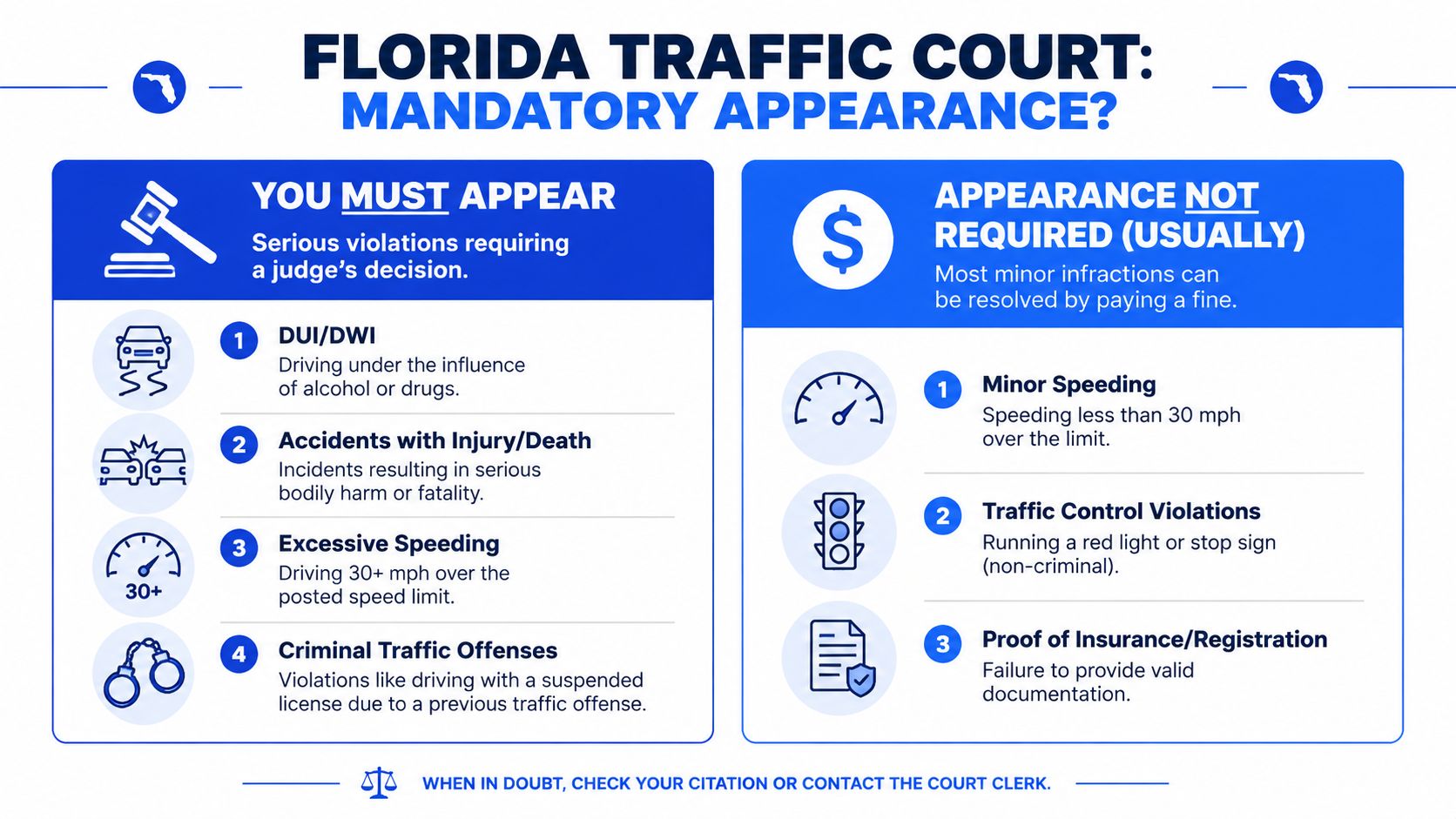
Por lo general, debe comparecer en estos casos
Utilice su citación como una guía de control. Si su caso encuadra en alguna de las siguientes categorías, asuma que la comparencia ante el tribunal es un requerimiento ineludible hasta que un abogado o el secretario del tribunal confirmen lo contrario:
Exceso de velocidad severo: Conducir a 30 mph o más sobre el límite de velocidad señalizado.
Infracciones por carga descubierta: Estas conductas se procesan con mayor severidad de lo que la mayoría de los conductores prevé.
Accidentes de tráfico con resultado de lesiones graves o muerte: Casos de esta gravedad jurídica exigen obligatoriamente la intervención judicial.
Asimismo, existen delitos penales de tráfico que requieren un riguroso examen judicial debido a que conllevan sanciones de carácter penal y no meramente pecuniario. Si su citación o escrito de cargos indica problemas de suspensión de licencia, conducción temeraria o cualquier cargo que exceda una infracción civil común, no actúe con dudas. Obtenga asesoría legal inmediata.
Casos en los que a menudo no se requiere la comparecencia
Muchas infracciones de tráfico de carácter civil general pueden resolverse habitualmente sin que sea necesaria una audiencia presencial. Los ejemplos de ley comunes pueden incluir:
Tipo de citación | Procedimiento habitual |
|---|---|
Exceso de velocidad menor | Frecuentemente liquidable mediante pago |
Infracciones civiles de luz roja o señales de alto | Frecuentemente liquidable mediante pago |
Faltas menores de documentación | Puede subsanarse o liquidarse mediante pago, según los hechos del caso |
Esto no significa que el pago sea la opción legal más estratégica para su caso; solo indica que el tribunal le permite resolver el cargo sin necesidad de personarse físicamente en la sede judicial.
Algunos de los perjuicios económicos e historiales de conducción más perjudiciales se originan a partir de multas que parecían benignas y liquidables mediante simple pago.
Cómo tomar la decisión
Si debe verificar si su citación impone una comparecencia obligatoria ante el tribunal de tráfico, aplique el siguiente análisis formal:
Examine detenidamente el texto original de la citación. Identifique cualquier término que refiera a una comparecencia obligatoria.
Clasifique legalmente la infracción imputada. Excesos de velocidad severos, accidentes y cargos penales de tráfico requieren atención legal prioritaria.
Valore los reglamentos procesales específicos del condado. Los tribunales del sur de la Florida pueden autorizar, bajo ciertas condiciones, comparecencias por medios digitales o tramitación documental.
No se base en declaraciones informales. Las manifestaciones verbales hechas por el oficial durante la detención en carretera no sustituyen los requerimientos legales dictados por el tribunal.
Ante cualquier duda sobre el requerimiento, actúe asumiendo que el asunto reviste el carácter más serio posible. Esta postura de prevención procesal protege su licencia de manera mucho más eficaz que dar por sentado que basta enviar un pago para dar por cerrado el asunto.
Sus tres opciones ante una multa de tráfico pagable
Incluso si su multa es liquidable mediante pago y no exige comparecencia obligatoria, su decisión procesal debe tomarse con prudencia. Bajo la legislación de Florida, dispone de tres vías legales de acción: pago directo, acogerse a un curso de conducción autorizado en los casos aplicables, o impugnar formalmente el cargo.
Según las directrices de la Asociación de Secretarios de Tribunales de Florida sobre citaciones de tráfico, debe comparecer o tomar una acción procesal ante el tribunal dentro de los 30 días siguientes a la fecha de emisión de la multa; alternativamente, puede presentar ante la secretaría una Declaración Jurada de Defensa o un formulario de Admisión y Renuncia a la Comparecencia en lugar de asistir personalmente. Dicha norma es estricta, pues incluso los casos de pago directo están sujetos a términos de caducidad inapelables.
La primera opción se paga rápido pero conlleva consecuencias
El pago de la multa extingue inmediatamente la acción procesal por la vía rápida. No obstante, por disposición legal, el pago equivale habitualmente a una declaración de culpabilidad respecto a los cargos imputados.
Esta vía suele perjudicar a los conductores que priorizan la mera conclusión del trámite administrativo en detrimento del perjuicio a largo plazo que causará en su historial ante el Departamento de Motores y Vehículos (DMV).
Ventajas procesales:
Resolución inmediata de la disputa
Evita el costo en tiempo de preparar una audiencia
Menor afectación a su rutina diaria actual
Desventajas procesales:
Opera jurídicamente como una admisión de culpabilidad
Incurre en anotación de puntos en su historial de conducción de manera definitiva
Genera aumentos subsiguientes en las primas de su seguro de automóvil
Renuncia irrevocablemente a oportunidades de negociación con la fiscalía previas al pago
La segunda opción puede ayudar a proteger su historial
Para determinados conductores, optar por una escuela de tráfico autorizada o un programa de supervisión del tribunal aplicable constituye la alternativa más estratégica. Aunque requiere un mayor esfuerzo administrativo que el mero pago, resulta preferible si su objetivo es la protección integral de su historial vial.
Los detalles son capitales: los antecedentes del conductor, la elegibilidad legal para que se le apruebe el beneficio y las normas procesales del condado correspondiente determinarán la viabilidad técnica de esta vía.
Usted no está meramente resolviendo una multa; está decidiendo qué información quedará expuesta ante futuros empleadores, aseguradoras y tribunales en su historial de conducción.
La tercera opción es declararse no culpable y apelar la multa
La impugnación formal del cargo le permite controvertir las pruebas presentadas por el Estado, negociar una reducción de la gravedad del cargo o solicitar la desestimación del caso cuando los fundamentos de hecho y de derecho lo respalden. Este procedimiento exige un despliegue técnico riguroso, pero salvaguarda plenamente sus garantías de defensa.
Considere la siguiente tabla comparativa de opciones procesales:
Vía procesal | Efecto a corto plazo | Consecuencia a largo plazo |
|---|---|---|
Pago directo de la multa | Cierre inmediato de la causa | Afectación adversa y permanente del historial vial |
Escuela de tráfico o dispensa condicional | Requiere gestiones complementarias | Disminuye o evita la acumulación de puntos en el historial |
Declaración de No Culpabilidad | Requiere preparación técnica y defensa legal en juicio | Preserva la totalidad de sus defensas de derecho |
Si de su licencia de conducción dependen sus medios de vida profesionales, si cuenta con infracciones previas o si sospecha que la detención inicial de tráfico adoleció de vicios legales, la opción formalmente más expedita casi nunca constituye la vía más segura. En los condados de Broward, Miami-Dade, Palm Beach y en todo el sur de la Florida, la estrategia procesal debe determinarse en función de lo que busca proteger: su tiempo hoy o la integridad de su historial legal mañana.
Cómo Prepare para su Audiencia en el Tribunal de Tráfico
Si se aproxima la fecha de su comparecencia ante el tribunal de tráfico, la preparación metódica del caso revestirá una importancia que la mayoría de los conducidos subestiman de manera grave. Los magistrados y oficiales de audiencia se enfrentan diariamente a personas sin asesoría legal que se presentan sin documentos pertinentes, desconocen el alcance de sus derechos y exponen alegatos fácticos que autoinculpan sus casos.
Comparecer de manera organizada e informada le dota de una mejor posición procesal. Esto es imperativo sin importar si su causa se sustancia en Fort Lauderdale, el condado de Broward, Miami-Dade, Palm Beach u otra jurisdicción de Florida.
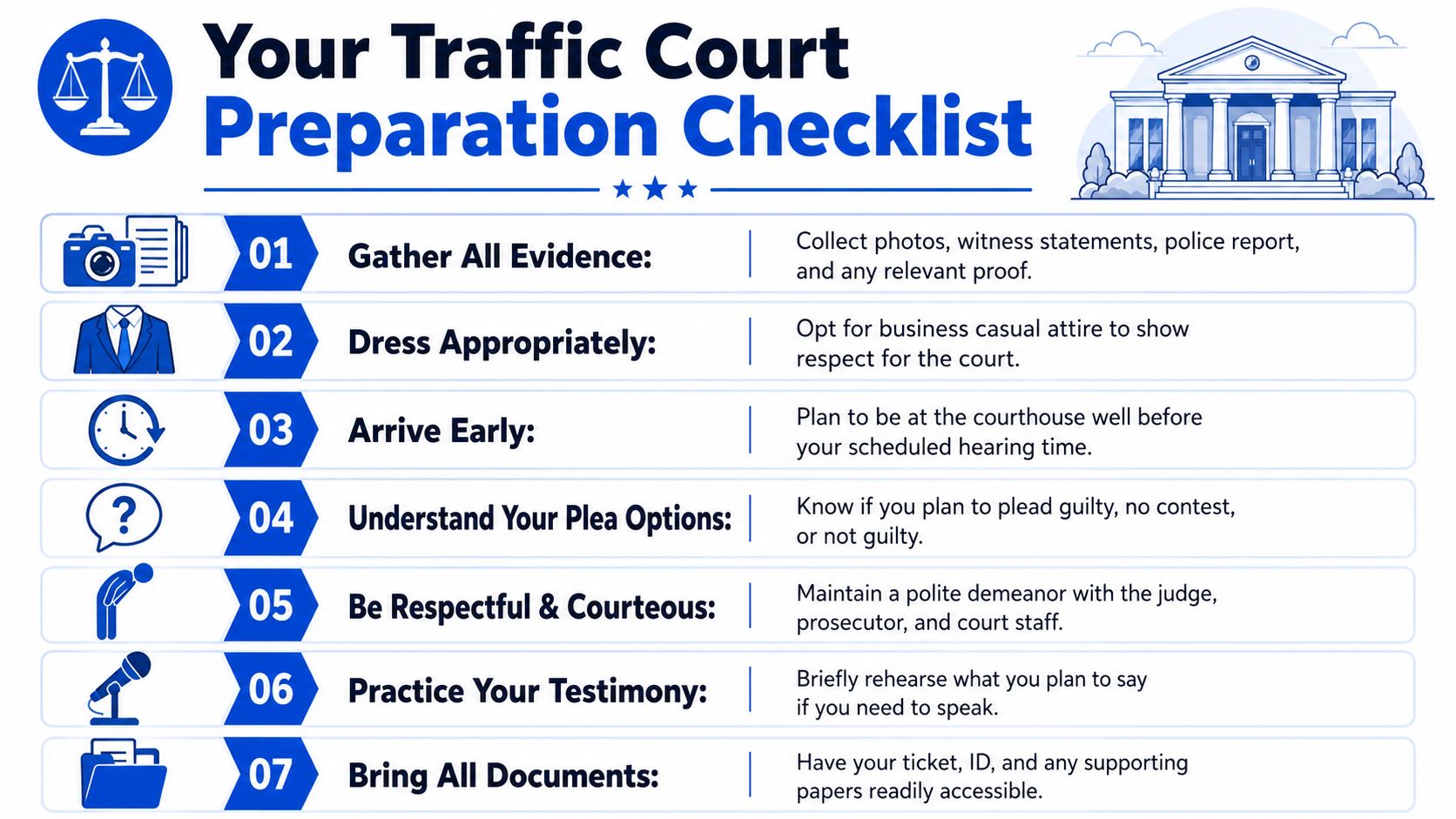
Comience con la documentación
Deberá presentarse munido de cada elemento de prueba y documento vinculado con la detención y el estado actual de su derecho de conducir:
Citación original: Presente la multa original y toda notificación de comparecencia judicial subsiguiente.
Documentación de identidad: Su licencia de conducción estatal vigente, con independencia de si los cargos versan sobre problemas de la misma.
Seguro y registro del vehículo: Si los cargos implican fallas documentales, aporte constancias fehacientes de cumplimiento actual.
Órdenes o citatorios judiciales: Conserve y adjunte todas las notificaciones recibidas por correo del tribunal.
Cabe destacar que si su causa radica en el condado de Palm Beach y usted opta por declararse no culpable, las directrices del Secretario del Tribunal del Condado de Palm Beach para multas impugnadas prescriben que es obligatorio comparecer a una audiencia preparatoria obligatoria (pretrial hearing) ya sea en formato presencial o por videoconferencia, precisando además que aquellos casos con resultado de accidente y lesiones físicas no son aptos para programación electrónica en línea.
Reúna sus pruebas antes de acudir al tribunal
No asuma que el juez eximirá su caso con fundamentos puramente orales o descargos emocionales. Integre un expediente formal de pruebas:
Fijación fotográfica: Tome registros nítidos de las señales viales aplicables, demarcación de calzadas, condiciones climatológicas o factores de visibilidad.
Declaraciones de testigos: Individualice y asegure los datos de contacto de quienes presenciaron la detención o el estado de la vía.
Relato circunstanciado: Documente cronológicamente los hechos del caso mientras los recuerdos se mantengan frescos.
Evidencia de subsanación de fallos: Si el cargo obedece a un desperfecto mecánico, acredite de forma documental la debida corrección.
La prueba pertinente puede ser simple. Un registro fotográfico con metadatos específicos o un historial limpio de infracciones tiene mayor valor legal que un justificativo oral extenso.
Los tribunales otorgan mérito jurídico a los elementos de prueba estructurados, no a las justificaciones de índole personal o subjetivas.
Prepárese para la sala del tribunal en sí
Su decoro y conducta procesal ante el estrado son de suma relevancia. Es asimismo crucial comprender la dinámica de la sala previo a que se dicte la llamada de su caso:
Puntualidad rigurosa: Prevea el tiempo requerido para el estacionamiento, los controles de seguridad del palacio de justicia y la localización exacta de la sala.
Vestimenta adecuada: Se recomienda presentarse con vestimenta formal-formal business en señal de respeto al tribunal.
Declaración jurídica predefinida: Su decisión de declararse culpable, no culpable o nolo contendere debe encontrarse definida de antemano de la mano de su defensa.
Exposiciones concisas: Responda de manera estricta y limitativa a lo cuestionado por el juez. Evite aportar datos no solicitados que puedan comprometer su defensa.
En el supuesto de que sea la primera ocasión que enfrenta un pleito civil o criminal, puede consultar la información referente a qué sucede en la lectura de cargos en un tribunal penal de Florida para familiarizarse con la estructura formal de un acto judicial ordinario, teniendo presente que las audiencias de tráfico se tramitan bajo un esquema de mayor celeridad procesal.
Una parte litigante que comparece con la debida preparación proyecta veracidad ante el tribunal. Una persona apresurada y desorganizada suele debilitar su propia causa, inclusive si le asiste la razón jurídica.
Comprensión de las Declaraciones de Culpabilidad y los Resultados Potenciales
La mayoría de los conductores utilizan indistintamente los términos de declaración de culpabilidad, no contestar (nolo contendere) y no culpable de manera imprecisa. Ante un tribunal de justicia, la formulación de cada declaración conlleva importantes repercusiones de fondo sobre su derecho de conducción, sus obligaciones financieras y los recursos legales de los que dispondrá.
El error procesal más recurrente consiste en tratar la formulación de la declaración como un mero formalismo técnico de transmisión de información. No lo es. Se trata, por lo general, del acto jurídico específico mediante el cual usted preserva de manera definitiva sus derechos de defensa o los declina a perpetuidad.
Qué significa habitualmente cada declaración
A continuación se define la dimensión jurídica y práctica de cada declaración disponible de conformidad con las leyes vigentes:
La declaración de Culpable (Guilty) implica la aceptación llana, expresa y directa de la comisión de la conducta ilícita imputada. Pone fin al debate de los hechos pero surte plenos efectos sancionatorios civiles y administrativos adversos en su contra.
La declaración de No Contestar (No Contest / Nolo Contendere) presupone que el acusado libremente declina entablar un litigio o debate fáctico sobre los cargos, sin que de manera expresa se declare culpable. Es utilizada de forma estratégica para facilitar resoluciones donde se solicita indulgencia judicial o mitigación de penas sin admitir el hecho formalmente.
La declaración de No Culpable (Not Guilty) conlleva que el acusado mantiene incólume su presunción de inocencia y requiere al órgano persecutor estatal que acredite la tipicidad del hecho mediante pruebas idóneas en un juicio oral. Abre la vía procesal de la exclusión probatoria, la negociación del cargo y el juicio contradictorio.
Analice la comparativa sistemática de sus efectos:
Declaración Procesal | Efecto Jurídico Directo | Propósito de su Elección |
|---|---|---|
Culpable | Concesión del cargo imputado | Terminación rápida de la causa |
No Contestar | Fin de la causa sin debate de hechos | Vía para reducción y mitigación discrecional de sanciones |
No Culpable | Obliga al Estado a producir prueba plena en juicio | Preservación total de defensas de fondo e historial vial |
Si la citación recibida describe una conducta con potencialidad de derivar en cargos penales de tráfico, resulta indispensable un análisis jurídico exhaustivo del caso. Ello adquiere especial relevancia ante cargos que presentan concurrencia con la ley de conducción temeraria de Florida, donde hechos que en carretera parecen de baja entidad pueden ser calificados de forma grave ante el tribunal.
El costo oculto de no hacer nada
La inacción o la omisión frente a un cargo judicial suele revestir mayor gravedad que formular una defensa deficiente. Mientras que una mala declaración al menos concluye el procedimiento judicial, el desuso del proceso desencadena una serie de medidas de apremio automatizadas por parte del tribunal.
Un efecto jurídico de extrema gravedad es la declaración de rebeldía con resultado de sentencia en rebeldía (default judgment). A modo de ejemplo explicativo de esta rigidez formal, el Tribunal del Distrito 36 de Michigan señala que la falta de contestación dentro del término de 14 días activa de forma inmediata el juicio por rebeldía, pudiendo iniciarse de forma automática la suspensión del derecho a conducir después de 45 días, cuya restitución impone el pago forzoso de una tasa de restauración de $45, según se expone en la sección de preguntas frecuentes sobre infracciones de tráfico de dicho tribunal. Aunque esto corresponde a una jurisdicción ajena a Florida, ilustra de manera contundente un principio procesal universal: los términos de caducidad y las omisiones formales generan perjuicios irreparables sobre su licencia previos a que un juez conozca el fondo del asunto.
La misma consecuencia rige para la práctica y el derecho procesal en Florida. Si un tribunal le conmina a comparecer o responder, el silencio procesal nunca constituirá una estrategia de defensa idónea.
Si enfrenta un impedimento absoluto para asistir o carece de comprensión sobre el sentido de una notificación del juzgado, peticione por escrito previo a la expiración de la fecha. Los tribunales procesan de forma razonable las solicitudes fundamentadas que se presentan previo al incumplimiento, no con posterioridad a este.
Para el conductor en el sur de la Florida, la única vía jurídicamente viable para preservar sus derechos exige la evaluación de la declaración adecuada según el impacto que esta proyectará sobre su registro de conductor, y nunca en función de la conveniencia de no faltar a su jornada laboral inmediata.
Cuándo contratar a un abogado de multas de tráfico en el sur de la Florida
Usted recibe una citación, estima la multa económica como asequible y concluye que la vía correcta es el pago inmediato del cargo para dar por terminado el percance. Legalmente, en el sur de la Florida, tal curso de acción suele traducirse en pérdidas de derechos mucho más onerosas de lo previsto: la acumulación de puntos, aumentos severos de seguros, consecuencias en su licencia comercial (CDL) y un historial de conductor desmejorado que debilita significativamente las posibilidades de defensa para contingencias futuras.
Ciertas infracciones leves admiten autogestión. No obstante, las causas de tráfico complejas justifican la asesoría de un profesional del derecho de manera inmediata, puesto que el riesgo procesal directo excede con creces a la multa formal de la audiencia. El daño material radica en la merma irreversible ejercida en sus prerrogativas viales, puestos de trabajo e historial de conductor ante el DMV de Florida. Este análisis es mandatorio si ejerce actividades viales comerciales, cuenta con antecedentes acumulados de tráfico, posee licencias CDL, si se le atribuyen velocidades agravadas o en caso fortuito en que se alegue participación en accidentes viales.

La función procesal de un experto litigante en tráfico no se limita a su mera representación formal ante el juzgado para peticionar benevolencia judicial. La estructura de una buena defensa técnica se inicia antes. Requiere de un estudio formal de la tipicidad del cargo, la constatación de vicios formales en el escrito de acusación elaborado por el agente de policía, la verificación de que el control policial guarde estricto apego a las disposiciones constitucionales de detención y el diseño de la mejor vía dirigida a blindar la integridad del récord legal antes de resolver el expediente inmediato.
Lo que un abogado busca y que la mayoría de los conductores pasan por alto
En una porción significativa de los juicios orales por infracción de tráfico, el elemento probatorio medular descansa de forma exclusiva en la declaración del oficial de policía aprehensor. De conformidad con la reseña jurídica de Nolo sobre las defensas en juicios de exceso de velocidad, la defensa técnica del conductor está facultada para objetar el valor probatorio de un medio instrumental por carecer de fundamentación suficiente si la fiscalía no logra acreditar de forma científica que el dispositivo de medición de velocidad empleado contaba con su debida calibración legal. Tal circunstancia procesal debilita de lleno la imputación y justifica la desestimación definitiva de los cargos.
Por ello, los detalles formales son determinantes. Un abogado experto en derecho de tráfico examinará minuciosamente el expediente de los hechos:
Si el redactado de la citación y los escritos del oficial de policía sustentan formalmente el cargo imputado
Si el oficial de tráfico reúne las condiciones técnico-legales para fundar idóneamente su testimonio en el juicio
Si se observan los protocolos legales de calibración e idoneidad de cinemómetros radar, lidar, pacing u otros elementos instrumentales
Si los hechos del caso permiten una desestimación negociada a un cargo menor que excluya la asignación de puntos viales
Si la detención policial posee potencial para dar lugar a acusaciones adicionales de mayor gravedad, como conducción bajo licencia suspendida o cargos penales
Esta última precisión es de suma trascendencia. Si a su caso se le atribuyen excesos de velocidad críticos, es mandatoria la consulta de la información relativa a las infracciones de super speeder en Florida y el agravamiento de sanciones que conllevan previo a consentir cualquier declaración que cause ejecutoria automática sobre el cargo.
El bufete Ticket Shield, PLLC lidera la representación jurídica en litigios de tráfico civil y defensas penales complejas de la misma naturaleza. Para gran parte de los clientes, esta doble competencia profesional resulta determinante dado que un único evento de detención vial puede desencadenar consecuencias en múltiples áreas procesales paralelas.
Por qué es importante contar con la experiencia de un exfiscal
La óptica profesional de un litigante con experiencia en la fiscalía estatal otorga un valor diferencial al escrutinio del expediente procesal. Un exfiscal conoce de antemano qué falencias probatorias valorará el juez de la causa, qué omisiones fácticas suelen cometer los agentes de policía en sus deposiciones testimoniales y bajo qué circunstancias un caso presenta debilidades insalvables para el Estado a pesar de lucir sólido en el informe inicial.
A menudo he sido testigo de personas que centran su atención únicamente en el pago de la multa y obvian las derivaciones de mediano y largo plazo. Una resolución concertada con premura el día de hoy puede dejar una mácula insalvable en su historial de conductor que condicione futuras negociaciones de cargos, eleve de manera desproporcionada los costos de su póliza de seguro de automóvil o restrinja cualquier defensa ante eventuales suspensiones de licencia. En muchas ocasiones, la victoria legal no requiere acudir a un juicio de resultado incierto, sino asegurar un acuerdo de enmienda de los cargos, la supresión de la acumulación de puntos sobre su licencia o una salida procesal que neutralice de raíz contingencias legales futuras.
Esto reviste un carácter de extrema sensibilidad dentro de la práctica jurídica del sur de la Florida. A menudo, una contravención aparentemente simple guarda conexión o concurrencia con causas de conducción sin licencia válida, imputaciones criminales de tráfico o registros de vehículos que escalan a investigaciones conexas de índole penal. En esos escenarios, la observancia formal del procedimiento adquiere el mismo valor de fondo que la veracidad de los hechos del caso.
Considere el siguiente análisis estratégico de la defensa penal corporativa en litigios de tráfico:
Si el cargo de tráfico en cuestión compromete su derecho de conducción, su continuidad laboral, sus primas de aseguramiento o su posición legal frente a una imputación penal posterior, consulte a un profesional del derecho previo a decantarse por la vía rápida del autogestor. La meta sustancial del litigio no es meramente concluir el trámite presente; el objetivo de fondo es enervar de forma preventiva los riesgos jurídicos futuros que tal afectación pueda originar.
Preguntas frecuentes sobre el tribunal de tráfico de Florida
¿Puedo resolver una multa de tráfico de Florida sin comparecer en persona?
Bajo determinados supuestos de hecho, sí es posible. Las normativas y directrices de cada condado son de estricta observancia. A modo de ejemplo, para la jurisdicción del condado de Miami-Dade, en aquellos supuestos en que un conductor se encuentre materialmente imposibilitado para asistir de forma física al juzgado, la ley procesal autoriza la presentación voluntaria de una declaración de no culpabilidad en ausencia mediante la consignación de una fianza procesal y la remisión por correo de una Declaración Jurada de Defensa (Affidavit of Defense) debidamente notarizada ante la secretaría judicial, en plena conformidad con lo descrito en las reglas de tramitación de infracciones de tráfico de la Secretaría del Tribunal de Miami-Dade.
¿Qué sucede si falto a mi fecha de comparecencia?
Debe actuar con la máxima diligencia y celeridad procesal. Establezca contacto inmediato con la secretaría del tribunal o procure representación legal de confianza de manera urgente. Demorar la respuesta procesal suele aparejar medidas de apremio graves sobre su licencia y complicar sustancialmente la interposición de recursos correctivos posteriores.
¿Puedo solicitar una prórroga?
En la mayoría de las causas es legalmente viable peticionar un aplazamiento (continuance); no obstante, dicha solicitud debe interponerse por vía formal con la debida antelación al día fijado para la audiencia y con estricta sujeción a las reglas locales del foro de la causa. Nunca presuma que el incumplimiento de una fecha dada puede subsanarse voluntariamente con posterioridad al vencimiento del acto procesal.
¿Qué debo hacer después del fallo del juez?
Obtenga testimonio escrito e indubitado del fallo dictado por el tribunal, verifique minuciosamente los plazos de cumplimiento para pagos o la realización de los programas de conducción obligatorios asignados, y cerciórese de la existencia de obligaciones conjuntas frente a la secretaría del tribunal o el DMV de Florida (DHSMV). En caso de que la resolución dictada afecte sustancialmente sus privilegios de conducción, estudie pormenorizadamente los requisitos obligatorios para reincorporar una licencia de conducir suspendida en Florida sin dilación.
¿Cuándo debo llamar a un abogado?
Se aconseja de manera categórica requerir asistencia profesional temprana ante multas que exijan concurrencia del interesado en el juzgado, imputaciones por velocidades extraordinarias, sucesos posteriores a choques viales, circunstancias donde peligre la licencia de conducir o causas que puedan presentar concurrencia con imputaciones por conducción bajo los efectos del alcohol (DUI), conducción temeraria, conducción suspendida u otras infracciones penales viales de Florida. La defensa oportuna provee de un marco más completo para formular estrategias frente a un control de daños tardío con posterioridad a la consumación de un término legal.
Si está citado para una comparecencia obligatoria ante el tribunal de tráfico en el condado de Broward, Fort Lauderdale, Miami-Dade, Palm Beach o cualquier otra demarcación judicial del sur de la Florida, comuníquese hoy mismo con Ticket Shield, PLLC a fin de agendar una sesión inicial de consulta jurídica de carácter reservado. Un examen estructurado y temprano de los hechos le permitirá salvaguardar formalmente su licencia de conducción, su récord frente al DMV y los medios legales a su disposición previo a que una simple contravención de tráfico derive en un pleito judicial grave y de difícil resolución.
Ciertas multas de tránsito en Florida requieren una comparecencia obligatoria ante el tribunal. A continuación, se detalla lo que debe esperar y cómo proceder para proteger su licencia y su historial de conducción.