
Terminación anticipada de la libertad condicional: Una guía práctica de Florida
Jason Goldsmith, Esq.
Es probable que esté leyendo esto porque la libertad condicional está controlando su vida de formas que los demás no ven. Los viajes deben ser autorizados. Las oportunidades de empleo parecen riesgosas. Cada llamada perdida de un número desconocido le hace preguntarse si se trata de su oficial de libertad condicional, del secretario del tribunal o de un problema que no sabía que existía. Incluso si ha cumplido con todo de manera correcta, la libertad condicional puede hacerle sentir como si estuviera viviendo con un pie en el tribunal.
En el sur de Florida, la gente suele asumir que simplemente debe esperar a que termine el plazo. Eso no siempre es cierto. La terminación anticipada de la libertad condicional puede ser una opción real en Broward County, Fort Lauderdale, Miami-Dade, Palm Beach y los tribunales circundantes. La diferencia radica en que obtenerla usualmente requiere más que decir: “He cumplido”. Los jueces exigen un motivo para dar por terminada la supervisión ahora, y no después.
Como exprocurador que ahora ejerce la defensa penal en Broward County, puedo asegurarle que las reglas no escritas importan casi tanto como las escritas. Un expediente limpio en la libertad condicional es solo el punto de partida. La persuasión es lo que impulsa el caso. Si le preocupa hacer esto de manera correcta y evitar un paso en falso que pueda desencadenar problemas mayores, también es útil comprender cómo surgen los problemas de libertad condicional en primer lugar. Este análisis sobre un abogado de violación de libertad condicional cerca de mí explica el factor de riesgo de la supervisión.
Índice de contenidos
Su camino hacia la libertad de la supervisión de libertad condicional
¿Es usted elegible para la terminación anticipada en Florida?
Preguntas frecuentes sobre la terminación anticipada de la libertad condicional en el sur de Florida
Su camino hacia la libertad de la supervisión de libertad condicional
La libertad condicional hace más que limitar sus movimientos. Modifica la manera en que planifica su semana, cómo solicita empleo y la forma en que explica su situación a empleadores y familiares. Las personas en Broward County y en todo el sur de Florida a menudo llegan a un punto en el que no buscan un atajo, sino que se preguntan si la supervisión continua sigue cumpliendo algún propósito real.
Esa es la pregunta correcta.
La terminación anticipada de la libertad condicional solicita al tribunal determinar que los objetivos de la supervisión ya han sido alcanzados. En términos prácticos, esto significa que usted ha demostrado al tribunal que puede acatar las normas, cumplir con las condiciones, mantenerse alejado de problemas y avanzar sin necesidad de ser monitoreado. No es una eliminación de antecedentes. No es un indulto. Es una solicitud para poner fin a la presentación de informes, las restricciones y la supervisión antes de la fecha programada.
Cómo se ve la libertad en la vida real
Para la mayoría de los clientes, el beneficio no es abstracto, sino muy concreto e incluye:
Flexibilidad laboral: la obligación de presentarse y las limitaciones de viaje pueden interferir con contrataciones, turnos o ascensos.
Estabilidad familiar: el cuidado de los hijos, el transporte y las obligaciones del hogar se facilitan al concluir la supervisión.
Menor nivel de riesgo: cuanto más tiempo permanezca en libertad condicional, más tiempo estará expuesto a incurrir en violaciones técnicas.
Tranquilidad emocional: muchas personas desean dejar de vivir bajo el control del tribunal.
Regla práctica: Los jueces responden mejor cuando se explica cómo la libertad condicional obstaculiza su progreso, y no simplemente que está cansado de ella.
Qué hace que estas peticiones realmente prosperen
Una petición sólida combina dos elementos. En primer lugar, la elegibilidad legal. En segundo lugar, un argumento persuasivo para otorgar el beneficio en este momento.
Muchos se enfocan únicamente en la lista de requisitos. Reúnen recibos, certificados de finalización y el historial de pagos, asumiendo que el tribunal dará su aprobación de forma automática. En ocasiones eso funciona, especialmente cuando el caso se ajusta perfectamente a la ley. Sin embargo, muchas peticiones se deciden en función del tono, la oportunidad procesal y las pruebas de rehabilitación.
En los tribunales de Fort Lauderdale y zonas aledañas, los jueces a menudo requieren constatar que la libertad condicional ha dejado de ser una herramienta útil para convertirse en una carga innecesaria. Esto puede traducirse en restricciones de viaje por motivos de trabajo, dificultades para la obtención de licencias, limitaciones en oportunidades de estudio o responsabilidades familiares que se ven frenadas por la supervisión. La ley es fundamental, pero también lo es la manera en que presenta los hechos de su caso.
¿Es usted elegible para la terminación anticipada en Florida?
El estado de Florida ofrece a ciertos probacionistas una vía legal sólida, pero la elegibilidad no se reduce a un simple "he tenido un buen comportamiento". La primera cuestión real es determinar si su caso se encuadra dentro del marco legal estructurado para que una solicitud de terminación anticipada sea viable.

La lista de verificación de Florida que realmente importa
Para los procesados sentenciados a libertad condicional a partir del 1 de octubre de 2019, la ley de Florida estableció una norma de gran relevancia bajo la sección §948.04(4). El tribunal debe dar por terminada la supervisión de manera anticipada o convertirla en libertad condicional administrativa si la persona ha cumplido al menos la mitad del término, ha satisfecho todas las condiciones financieras y no financieras, no cuenta con fallos de violación en actas escritas, no fue excluida por los términos de una sentencia negociada, no es un ofensor de delitos graves violentos de especial preocupación bajo la sección §948.06(8)(b), y no fue sentenciada a control comunitario, tal como se detalla en este análisis sobre el marco de terminación anticipada obligatoria de Florida.
Este precepto legal abre una oportunidad real para muchas personas en Broward County, pero únicamente si la documentación y el expediente judicial lo respaldan de manera inequívoca.
Utilice esta lista de verificación práctica:
Cumplimiento de la mitad del período: si aún no ha alcanzado este punto, su argumento deberá fundamentarse en la discrecionalidad judicial del magistrado y no en la norma de carácter obligatorio.
Obligaciones financieras totalmente saldadas: los costos procesales, las multas y la restitución económica deben estar pagados en su totalidad si forman parte de la orden.
Condiciones especiales cumplidas: las clases obligatorias, tratamientos, servicios comunitarios y cualquier otra exigencia impuesta deben estar concluidos.
Sin fallos por violaciones de las condiciones: incluso un incidente que parezca menor puede generar serios obstáculos si queda reflejado en el expediente judicial.
Inexistencia de causales de exclusión: los casos bajo control comunitario y ciertas categorías de delitos pueden quedar excluidos de esta vía favorable.
Ausencia de cláusula de exclusión expresa en el acuerdo de culpabilidad: algunos acuerdos de resolución negociada restringen las opciones de terminación anticipada.
Asimismo, muchas personas confunden la libertad condicional administrativa con la terminación total de la supervisión. No representan el mismo resultado. Si requiere aclarar esta distinción debido a que su caso original involucró una suspensión de la adjudicación de culpabilidad ("withheld adjudication") o una resolución negociada, la información sobre qué significa la suspensión de la adjudicación en Florida puede ayudarle a encuadrar debidamente el asunto.
Quiénes deberían esperar usualmente antes de presentar la solicitud
No todos los que cumplen con los requisitos de elegibilidad deberían presentar la solicitud de inmediato.
Si sus pagos se realizaron recientemente, si concluyó un curso la semana pasada o si su historial de cumplimiento es intachable pero de corta duración, esperar un tiempo prudencial puede fortalecer la solicitud. Los jueces valoran un historial de conducta sostenido en el tiempo, no un mero cumplimiento de carácter técnico. Una petición apresurada a menudo da la impresión de que el interesado descubrió la existencia del estatuto legal y corrió de inmediato a la oficina del secretario.
La elegibilidad le permite acceder al proceso. La oportunidad procesal y la calidad de la presentación suelen determinar si el juez decidirá conceder la petición.
Muchos subestiman también la importancia de la estabilidad. Un empleo estable, la asistencia a la escuela, la permanencia en un mismo domicilio y un historial de reportes constante asisten al tribunal a confiar en que la supervisión ya no es necesaria. Ninguno de estos hechos reemplaza lo estipulado por la ley, pero facilitan que el tribunal aplique la norma en su beneficio.
El proceso paso a paso para la presentación de la petición
Una vez determinado el momento oportuno, el procedimiento pasa a fundamentarse estrictamente en la documentación. Los tribunales de Florida exigen solicitudes formales, claras y precisas. Las peticiones defectuosas generan demoras evitables y dan margen para que la Fiscalía presente objeciones.
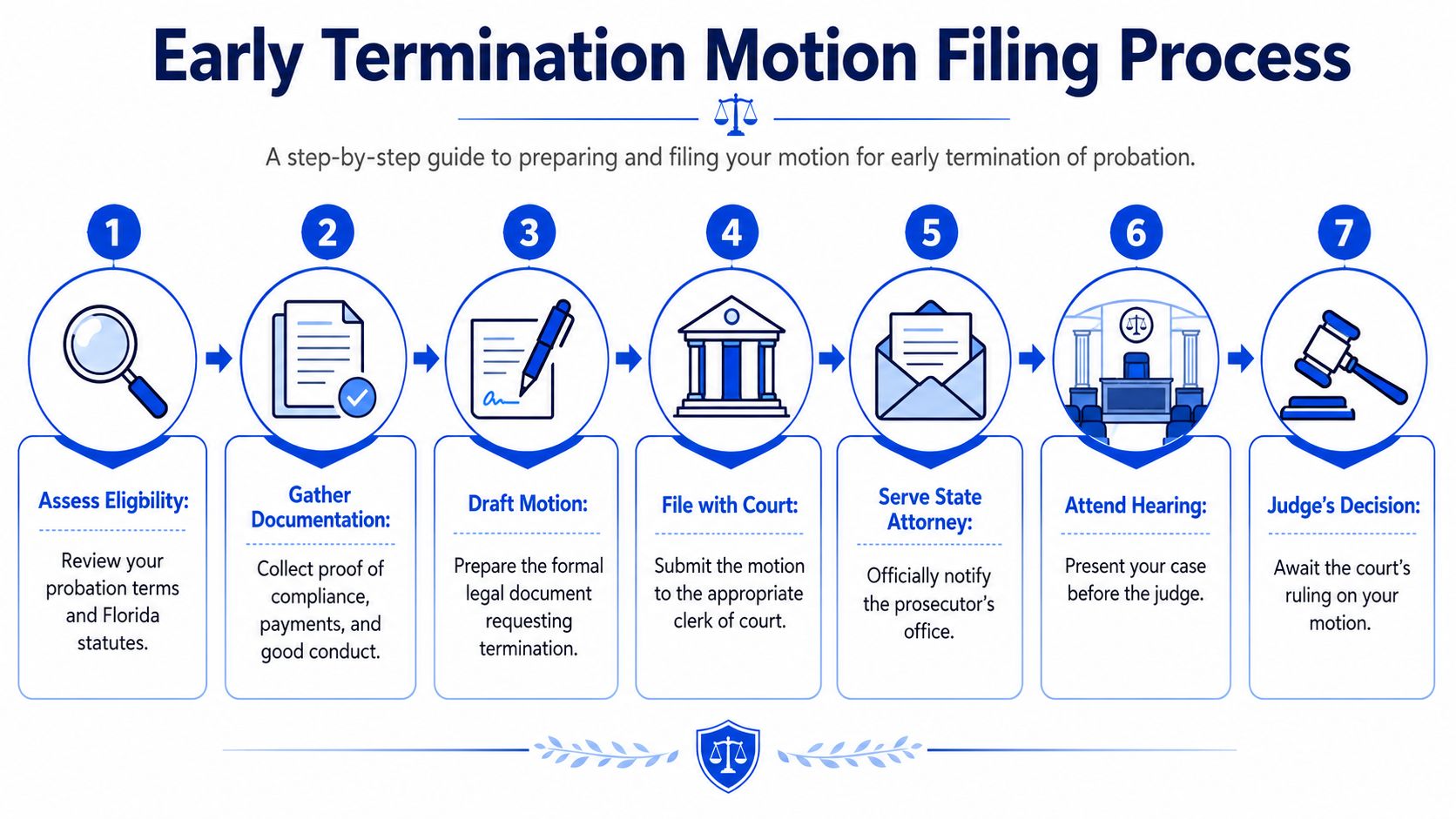
Qué debe incluirse en la petición
Para solicitar la terminación anticipada en Florida, el acusado debe presentar una Petición Formal de Terminación de Libertad Condicional ante el secretario del tribunal del condado, notificar con copia de la misma a la Fiscalía del Estado y al oficial de libertad condicional, e incluir una Propuesta de Orden para la firma del juez. La petición debe detallar el nombre del acusado, el número de caso, la tipología del delito, las condiciones especiales ya acreditadas, los comprobantes de pago de multas o restitución y constancia de no haber tenido nuevos contactos con las fuerzas del orden, conforme se describe en esta guía sobre el proceso de petición para terminar la libertad condicional en Florida.
Una carpeta de presentación debidamente integrada usualmente incluye:
La petición escrita
Debe identificar el caso de manera inequívoca e indicar formalmente la pretensión jurídica que se busca. Si solicita la terminación absoluta, especifíquelo con claridad.Pruebas del cumplimiento de las condiciones
Adjunte recibos de pago, certificados de cursos concluidos, constancias de alta de programas de tratamiento, comprobantes de horas de servicio comunitario y cualquier otra prueba directa.Una propuesta de orden judicial
Los jueces aprecian que se les facilite un borrador de orden jurídicamente viable que puedan suscribir en caso de estimar favorablemente la petición.Documentación probatoria complementaria de apoyo
Cartas de empleo, expedientes académicos, licencias profesionales vigentes y justificaciones de requerimientos de viajes laborales pueden robustecer significativamente la petición.
Cómo se tramita habitualmente la solicitud ante el tribunal
Las cuestiones de forma y procedimiento son de suma importancia. En los tribunales de Broward, Miami-Dade, Palm Beach y otras jurisdicciones del sur de Florida, generalmente se requiere efectuar adecuadamente la presentación ante el secretario judicial y concretar la debida notificación formal tanto al fiscal como al oficial de libertad condicional. Si se omite la notificación o no se acompaña la propuesta de orden, el trámite de la petición puede paralizarse antes de que se evalúe el fondo del asunto.
Este es el procedimiento formal recomendado:
Examine la orden de sentencia original: cerciórese de que se ha cumplido rigurosamente cada una de las condiciones impuestas.
Obtenga el historial oficial de pagos: los tribunales suelen exigir constancia documental directa en lugar de meras declaraciones sobre los montos liquidados.
Confirme el estado de su libertad condicional: verifique que no existan declaraciones pendientes de violación, retrasos con los reportes o condiciones inconclusas.
Redacte el documento pensando en el juez, no en usted: la petición debe ser redactada en un tono formal, técnico y estrictamente jurídico, evitando argumentos de carácter meramente personal.
Notifique formalmente a todas las partes requeridas: tanto el Estado como el departamento de libertad condicional deben recibir la notificación formal correspondientes.
Fije la fecha o aguarde la programación de la audiencia: ciertos asuntos se programan de manera expedita, mientras que otros requieren de traslados previos para contestación.
Una petición sólida en cuanto a los hechos pero deficiente en sus formas procesales puede ser denegada frente a una acción técnicamente impecable.
Los deudores o procesados que atraviesan dificultades con la supervisión confunden en ocasiones una solicitud de terminación con una estrategia de defensa ante una presunta violación. Se trata de procesos jurídicos de naturaleza distinta. Si ya existen indicios de un incumplimiento, la estrategia legal debe reestructurarse con prontitud.
Cómo prepararse para su audiencia de terminación anticipada
La presentación formal de los escritos constituye solo la etapa documental del proceso. La audiencia judicial es el acto procesal donde el juzgador determinará si es oportuno eximirle del régimen de supervisión estatal.

Las mejores defensas en audiencias no se centran en justificaciones evasivas. Se proyectan con una estructura organizada, madurez y credibilidad sustantiva. En el ámbito judicial, los tribunales no demandan intervenciones histriónicas o emotivas; requieren evidencias de que el régimen cumplió su función y que la finalización del mismo no representará un riesgo futuro.
Qué está decidiendo realmente el juez
El juez de la causa ya dispone de los elementos que acreditan que cumplimento las condiciones formales. Lo que en el fondo pondera el juzgador es determinar si mantener la supervisión sigue revestido de alguna utilidad social o jurídica.
Es por ello que la sola manifestación del acatamiento suele resultar insuficiente. Argumentar únicamente "hice lo que se me ordenó" es aceptable. No obstante, plantear: "aproveché este período para reestructurar mis hábitos, conservar el empleo, terminar los programas de rehabilitación y subsanar las circunstancias que originaron este proceso" resulta sustancialmente superior, ya que evidencia una rehabilitación integral y no una mera conducta forzada.
Uno de los elementos probatorios de mayor solidez es contar con el visto bueno del propio oficial supervisor. De conformidad con diversos criterios doctrinales en la materia, contar con un informe favorable de su oficial de libertad condicional eleva sus posibilidades de éxito considerablemente, toda vez que los magistrados otorgan un peso significativo a la valoración técnica del oficial sobre la reforma conductual y rectitud de la persona sujeta a supervisión, aspecto detallado en este análisis acerca de el apoyo del oficial de libertad condicional en peticiones de terminación anticipada.
No se trata de una fórmula mágica de resolución automática, pero incide positivamente en la dinámica del debate judicial.
Cómo demostrar la rehabilitación en lugar del mero cumplimiento
Aporte al expediente elementos que tengan validez e impacto fuera del ámbito judicial:
Constancias de empleo: documentos que validen su puntualidad, aptitudes para obtener ascensos o las limitaciones de desarrollo laboral resultantes del actual régimen de libertad condicional.
Certificados y registros de instituciones educativas: demuestre cursos vigentes, avances en planes de estudio o requisitos académicos pendientes.
Altas terapéuticas o médicas: certifique el trabajo real de superación personal efectuado, no el mero registro de asistencia a las sesiones.
Acercamiento a responsabilidades de índole familiar: acredite que provee sustento de forma constante a descendientes, ascendientes o integrantes del núcleo familiar bajo un marco de estabilidad doméstica.
Cartas de recomendación de personas con solvencia moral: opte por testimonios de personas que atestigüen su comportamiento cotidiano, evitando aquellas que solo busquen favorecerle por mera afinidad personal.
Es habitual experimentar inquietud por no saber expresarse ante el tribunal. La pauta es clara: condúzcase con el debido respeto, brevedad y absoluta precisión. Evite confrontaciones con el representante de la Fiscalía, no incurra en exageraciones y no pretenda afirmar que la supervisión fue sencilla si no lo fue. Limítese a explicar sus logros, los cambios positivos correspondientes y de qué manera la vigencia del régimen limita actualmente su pleno desarrollo personal y productivo.
Para un análisis exhaustivo sobre los incidentes que pueden surgir cuando se presentan complicaciones serias en la supervisión, examine este apartado relativo a la pena de prisión por violación de libertad condicional, que pone de manifiesto la relevancia de preparar minuciosamente la comparecencia.
Adicionalmente, comprender la estructura de las comparecencias judiciales le facilitará desenvolverse con naturalidad el día de la cita:
El postulado fundamental a sostener en sala debe ser este: el proceso me brindó una estructura conductual necesaria, misma que aproveché de forma óptima; por lo tanto, prolongar la medida no añade valor a la seguridad pública ni a mi readaptación.
Cómo superar las objeciones comunes de la Fiscalía
Incluso planteamientos procesales impecables suelen enfrentar la oposición del Ministerio Público. Ello no denota forzosamente que el fiscal califique de forma negativa su conducta, sino que con frecuencia el Estado asume posturas conservadoras, en especial ante ilícitos graves o cuando estiman que la petición se interpone con demasiada antelación.
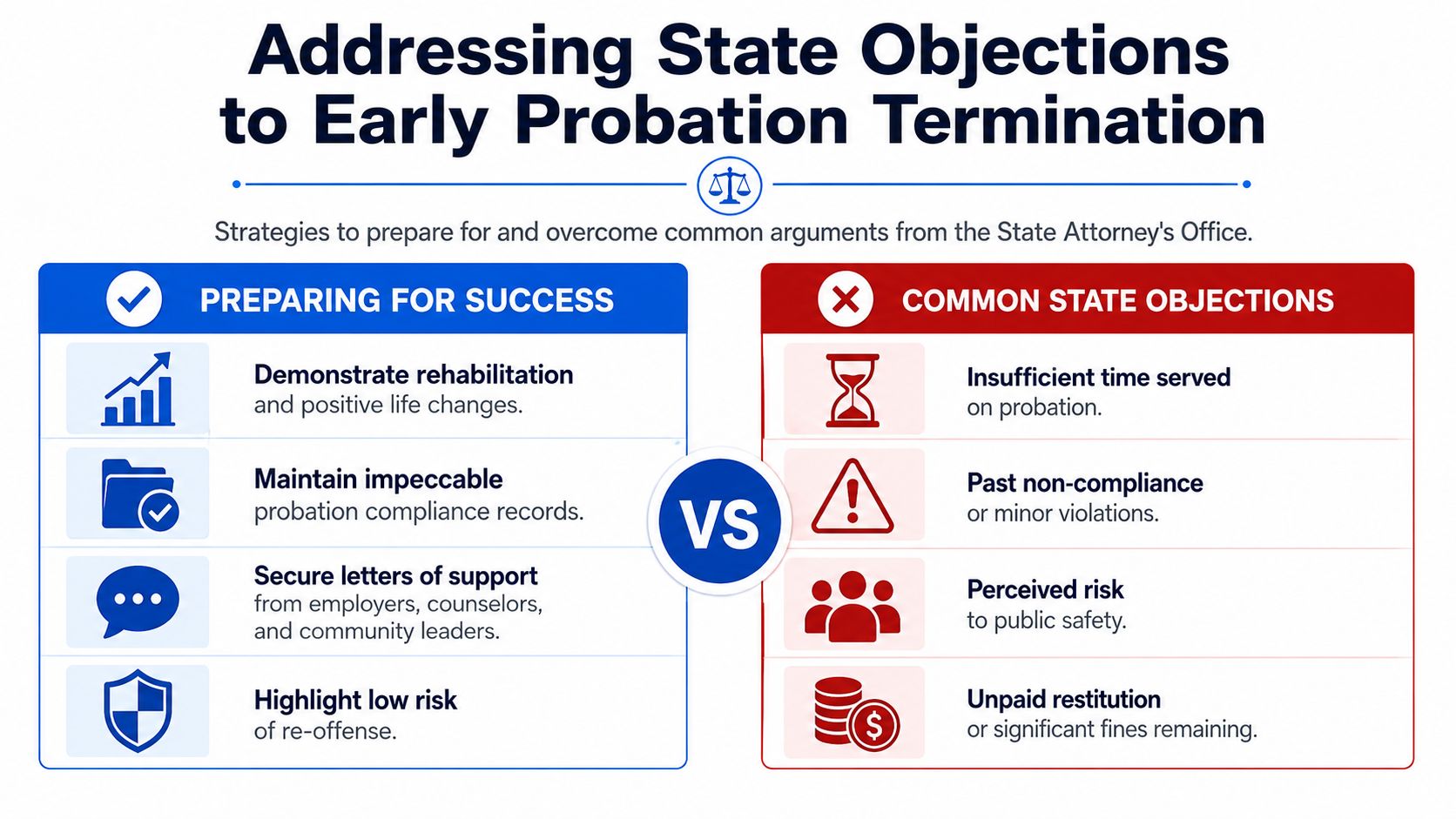
"Demasiado pronto" es la objeción más común
Esta es la objeción previsible con la que nos topamos prioritariamente, sobre todo en peticiones promovidas con anterioridad al cumplimiento de la mitad del término establecido. Si bien la legislación de Florida faculta el cese del régimen de supervisión en cualquier momento si los fines de la justicia lo ameritan, los tribunales se muestran frecuentemente reticentes ante peticiones tempranas basadas en argumentos genéricos de buen comportamiento. Estudios doctrinales sobre este particular indican que se desestiman recurrentemente las peticiones de cese interpuestas antes de la mitad del lapso estipulado, salvo que se aporte prueba idónea de perjuicios desproporcionados, tal como se analiza en la sección sobre el interés de la justicia y la terminación de la libertad condicional antes de la mitad del plazo.
Por lo tanto, la fundamentación de su postura debe ser de mayor rigor técnico e ir más allá de la afirmación de que conserva una conducta intachable.
Otras argumentaciones procesales efectivas comprenden:
Perjuicios reales y objetivos: acreditar de qué manera el régimen obstaculiza oportunidades reales de contratación, procesos de obtención de licencias, matriculación académica o requerimientos indispensables de movilidad geográfica.
Acreditación de readaptación con sustento probatorio: acreditar cómo la terapia, el desempeño laboral, los estudios y la armonía familiar evidencian que el régimen alcanzó plenamente su cometido.
Urgencia nula de monitoreo estatal: evidenciar que resulta innecesario para el erario público mantener bajo tutela a quien muestra una inserción social consolidada e íntegra.
Si se encuentra dirimiendo de forma paralela un señalamiento de violación de las condiciones del régimen, el panorama varía. Para estos casos específicos, refiérase a la sección sobre violaciones a la libertad condicional en Florida.
Un delito grave no siempre significa una negativa
Los agentes fiscales esgrimen frecuentemente que los hechos que motivaron la sentencia revisten tal gravedad que impiden la liberación de obligaciones con antelación. Esta alegación puede cobrar un matiz de peso ante los juzgadores, pero no determina la resolución del caso. El punto central de debate no es la gravedad del delito original, sino determinar si la continuación del régimen sigue resultando indispensable después de haberse cumplimentado los requisitos y habiéndose corroborado el apego a la legalidad por el procesado.
Las causas complejas exigen invariablemente defensas de gran rigor técnico:
Objeción fiscal | Réplica estratégica |
|---|---|
Es demasiado prematuro | Evidencie afectaciones y demuestre la inoperancia de dilatar la resolución del cese de la supervisión |
El delito primigenio reviste extrema gravedad | Oriente al juzgador sobre la conducta del solicitante, compromisos solventados y nula justificación del control |
Se requiere de mayores plazos de observación | Acredite estabilidad en empleo, educación, salud emocional y estricta observancia del régimen de supervisión |
Inconsistencias formales en constancias | Subsubane cualquier imperfección del expediente con antelación y evite corregir durante el desarrollo de la vista |
Los fiscales suelen basar su postura en un criterio de cautela pública; por el contrario, los magistrados dictaminan de conformidad con los méritos del expediente. Consolide su expediente.
La actitud menos conveniente ante la réplica estatal es la confrontación visceral; el camino oportuno radica en la contundencia probatoria. Los recibos, cartas, minutas del tribunal, certificaciones médicas y valoraciones del supervisor de libertad condicional reencauzan un debate pasional al terreno de lo estrictamente jurídico.
Preguntas frecuentes sobre la terminación anticipada de la libertad condicional en el sur de Florida
¿Can a Florida judge terminate probation before I reach halfway?
Sí. De conformidad con lo establecido en el Estatuto de Florida §948.04(4), el juzgador de la causa conserva la facultad discrecional de dar por concluido el régimen de supervisión judicial en el momento que juzgue oportuno si ello favorece los fines de la justicia y se ha dado cumplimiento a la totalidad de los requerimientos fijados; sin embargo, los tribunales exigen regularmente que se haya agotado por lo menos la mitad del plazo de libertad condicional impuesto previo a conceder un cese del mismo, según se indica en esta reseña sobre la terminación anticipada en Florida de acuerdo con el estatuto §948.04(4). Si se promueve con anterioridad a dicho plazo, la petición exigirá un planteamiento centrado en acreditar un perjuicio excepcional y objetivo.
¿Is paying restitution more important than paying fines and costs?
Cada uno de los compromisos pecuniarios de la sentencia es de igual relevancia. En la práctica procesal penal, registrar un saldo pendiente constituye una de las vías expeditas para que la solicitud sea desestimada. De existir algún adeudo económico, considere que tanto el fiscal como el juez dirigirán su atención a ello en primer término.
¿Will the court set a hearing every time?
La tramitación puede variar. Ciertos magistrados examinan la documentación de inicio, analizan la posición procesal que adopta la representación del Estado y, con base en ello, determinan si amerita convocar a audiencia presencial o señalan la modalidad de resolución aplicable. Una formulación de petición clara y debidamente acompañada de anexos le posiciona de manera ventajosa desde el comienzo del trámite.
¿Does a supportive probation officer really matter?
Sí. Desempeña una función de máxima relevancia. Los magistrados otorgan un peso considerable a la valoración subjetiva y técnica que brinde el oficial a cargo del régimen de supervisión sobre su persona y sobre la pertinencia de mantener la vigilancia del Estado.
¿Should I file the motion myself?
Es jurídicamente viable que actúe en representación propia; sin embargo, no siempre es la decisión más aconsejable. Aunque el criterio legal parezca simple, argumentarlo suele implicar cierta complejidad técnica. Ello resulta especialmente crítico en causas radicadas en juzgados de Broward County, Fort Lauderdale, Miami-Dade y Palm Beach, donde los criterios específicos de cada juzgador y las condiciones del acuerdo negociado pueden incidir en el criterio del tribunal.
¿Does early termination erase my criminal record?
No. La resolución que decreta la terminación anticipada no comparte la naturaleza jurídica del sellado o supresión de antecedentes penales. Si revertir o limpiar sus registros judiciales es parte de su plan de vida, deberá promover las acciones pertinentes por cuerda separada de acuerdo con las leyes de Florida.
¿What kinds of cases can still seek early termination?
Un amplio espectro de delitos tipificados como menores y graves cuya sanción contemple libertad condicional pueden resultar aptos para esta vía; esto incluye infracciones relativas a conducción bajo los efectos de sustancias (DUI), ilícitos contra la salud, delitos de carácter patrimonial, violencia doméstica, portación ilícita de armas de fuego y delitos financieros o de cuello blanco. Los factores indispensables a considerar son los términos expresos de la sentencia judicial, los supuestos de exclusión por ministerio de ley, su trayectoria de cumplimiento y el sustento procesal que revista su escrito de petición.
Si desea diseñar un plan de defensa personalizado para obtener la terminación anticipada de su libertad condicional en Broward County, Fort Lauderdale, Miami-Dade, Palm Beach o cualquier otra jurisdicción del sur de Florida, agende una consulta jurídica confidencial con Ticket Shield, PLLC. El abogado Jason S. Goldsmith cuenta con amplia experiencia como exfiscal y comprende a detalle los criterios con los que fiscales y juzgadores ponderan estas peticiones, qué defensas opondrá el Estado y de qué manera formular el planteamiento más sólido ante los tribunales, siempre bajo una estricta ética profesional y sin prometer resultados imposibles de comprometer de forma anticipada. Si la vigilancia judicial menoscaba sus oportunidades laborales, su dinámica familiar, sus necesidades de traslado u otros aspectos esenciales de su vida profesional, es el momento oportuno de recibir una asesoría idónea.
Finalizar la libertad condicional de manera anticipada requiere de los plazos y la documentación adecuados. Esta guía detalla, paso a paso, el proceso de terminación anticipada en el estado de Florida.