Lo que debe saber sobre las violaciones de los derechos Miranda en Florida (Guía 2026)
Abogado Jason Goldsmith
Es uno de los mitos más grandes que verá en las series policiacas de televisión: un oficial de policía olvida leerle los derechos a alguien, y el juez de manera dramática desestima todo el caso. En el mundo real, una violación de los derechos Miranda no funciona de esa manera.
Si bien esto no hará que sus cargos desaparezcan automáticamente, las consecuencias siguen siendo increíblemente significativas. El verdadero poder radica en hacer que cualquier declaración que haya proporcionado durante ese interrogatorio indebido sea inadmisible en el tribunal. En pocas palabras, si se violaron sus derechos, la fiscalía tiene prohibido legalmente usar sus propias palabras en su contra.
Esta guía explica lo que realmente significa una violación de Miranda para su caso penal en Florida y cómo un abogado defensor penal calificado puede utilizar esto para proteger sus derechos.
Índice de contenido
Lo que realmente significa una violación de Miranda para su caso
Cómo combate un abogado defensor una violación de Miranda en Florida
Preguntas frecuentes sobre violaciones de los derechos Miranda
Lo que realmente significa una violación de Miranda para su caso
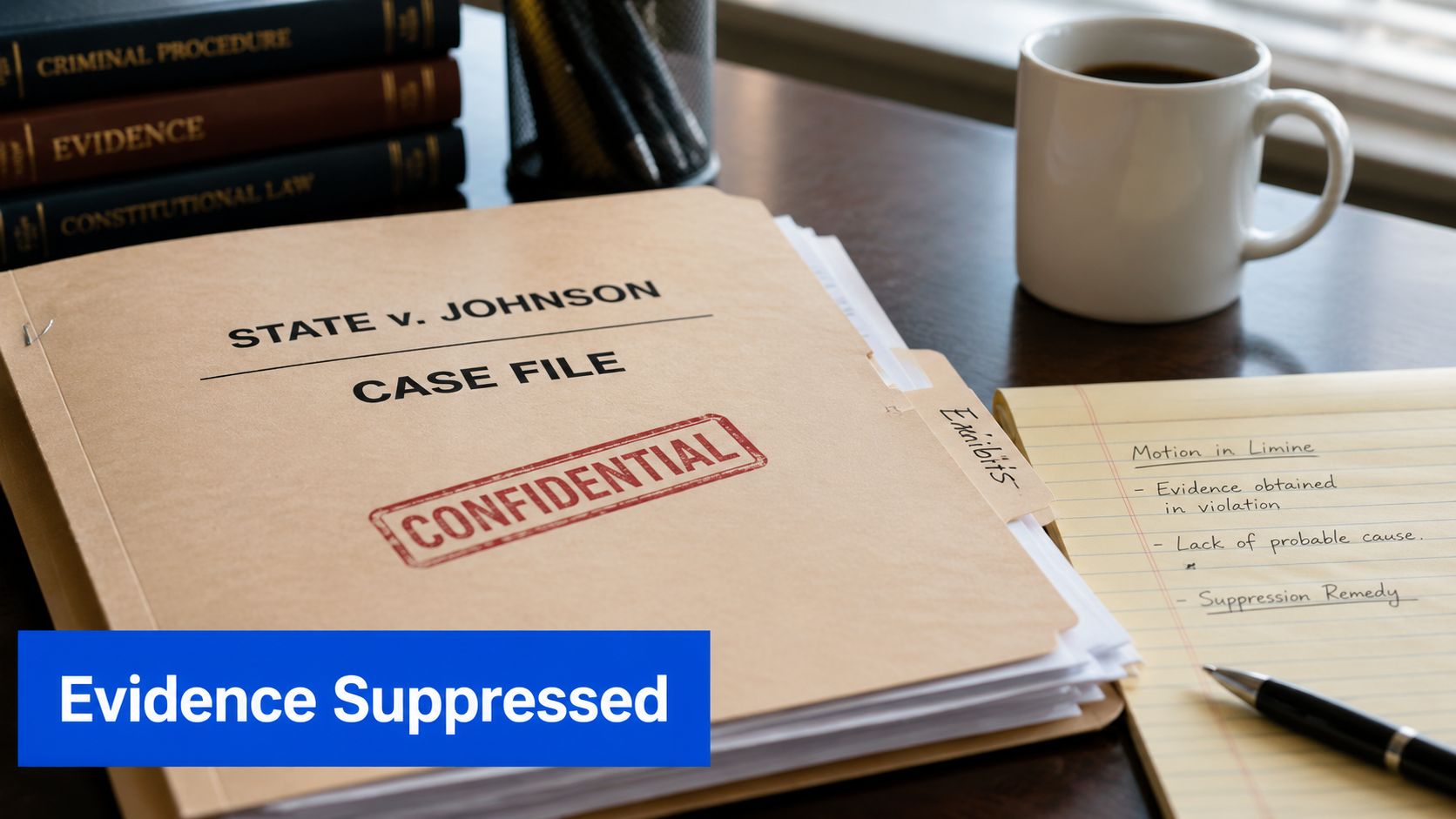
Si fue arrestado en cualquier lugar del sur de Florida, desde Fort Lauderdale hasta Miami, y cree que la policía violó sus derechos, es fundamental comprender qué significa eso realmente para su defensa. Este tipo de error procesal grave le otorga a su abogado una herramienta poderosa y estratégica para impugnar las pruebas del Estado.
El recurso principal para una violación de Miranda se denomina exclusión de pruebas. Piense en esto como si un árbitro marcara una falta y anulara un punto. Cualquier confesión o declaración incriminatoria que haya proporcionado después de que la policía debió haberle leído sus derechos (y no lo hizo) puede ser excluida.
El poder de una Moción para excluir pruebas
Para lograr esto, un abogado defensor penal calificado presenta una Moción para excluir pruebas (Motion to Suppress). Esta moción legal es una impugnación formal que solicita al juez que revise las circunstancias específicas de su arresto e interrogatorio.
Para ganar esta moción, su abogado debe demostrar que se cumplieron dos condiciones específicas, las cuales requerían legalmente que la policía le diera una advertencia Miranda:
Usted se encontraba bajo custodia policial. Esto no solo significa que estaba esposado. Significa que una persona razonable en su situación no se habría sentido libre de levantarse e irse. Esto ocurre a menudo, por ejemplo, en una sala de interrogatorios de una estación de policía del condado de Broward.
Usted fue sujeto a un interrogatorio. Esto incluye preguntas directas sobre el delito o cualquier otra acción o declaración de la policía diseñada para inducirlo a dar una respuesta incriminatoria.
Si el juez determina que usted estuvo bajo interrogatorio bajo custodia sin recibir la advertencia adecuada, sus declaraciones se consideran legalmente "contaminadas". El fiscal no podrá utilizarlas para demostrar su culpabilidad. Esto puede debilitar por completo el caso del Estado, especialmente si su principal elemento probatorio era su confesión.
Consecuencias de la violación de Miranda de un vistazo
Es fácil confundirse con los dramas legales televisivos, por lo que esta tabla desglosa los conceptos erróneos comunes frente a la realidad legal aquí en Florida.
Concepto erróneo común | Realidad legal en Florida |
|---|---|
Todo el caso se desestimará automáticamente. | Solo se excluyen las declaraciones obtenidas ilegalmente. El caso puede proceder si existen otras pruebas independientes (por ejemplo, testimonios de testigos, pruebas físicas). |
Cualquier prueba física encontrada debido a mi declaración también se descarta. | No siempre. Bajo la excepción de "seguridad pública" y otras doctrinas legales, las pruebas físicas aún podrían ser admisibles. Esta es un área compleja del derecho. |
Puedo demandar a los oficiales de policía por daños y perjuicios debido a la violación. | La Corte Suprema ha aclarado que el recurso principal es la exclusión de la declaración en el juicio, no una demanda civil contra los oficiales por cometer este tipo de error. |
Comprender estas distinciones es clave para establecer expectativas realistas para su estrategia de defensa.
El objetivo final es proteger sus derechos constitucionales. Incluso si un caso no se desestima por completo, la exclusión de pruebas clave puede proporcionar una ventaja significativa para negociar la reducción de cargos o un resultado más favorable.
Después de este paso crucial, su enfoque se desplazará hacia las siguientes etapas del proceso. Saber qué esperar en su audiencia de lectura de cargos será su prioridad inmediata.
Sus derechos Miranda explicados en un lenguaje sencillo
Ha escuchado estas líneas mil veces en la televisión, pero la advertencia Miranda es mucho más que una famosa frase de película. Es su escudo constitucional, un conjunto de protecciones cruciales para el que podría ser uno de los momentos más estresantes de su vida: un interrogatorio policial.
Cuando se encuentra bajo custodia en Florida y la policía desea interrogarlo, estos derechos se interponen entre usted y la presión de incriminarse a sí mismo. Comprender lo que realmente significan es su primera línea de defensa. Estos no son solo consejos útiles; son sus derechos absolutos conforme a la ley.
El derecho a permanecer en silencio
Este es el derecho principal, el fundamento absoluto de sus garantías constitucionales, proveniente directamente de la Quinta Enmienda. Significa exactamente lo que parece: no tiene que responder a una sola pregunta de la policía sobre el incidente. Los oficiales son expertos en desarrollar una relación amistosa para que usted se sincere, pero usted tiene cero obligación de ayudarlos a construir un caso en su contra.
Elegir guardar silencio no es una señal de culpabilidad. Es una decisión inteligente y estratégica. Todo lo que necesita decir es: "Estoy ejerciendo mi derecho a permanecer en silencio". Eso es todo.
Este es el consejo más crítico que un abogado defensor penal le puede dar: una vez que declare que va a permanecer en silencio, debe mantenerse en silencio. No se involucre en conversaciones casuales, no intente dar su versión de los hechos y, definitivamente, no responda "solo una pregunta rápida". Cualquier charla puede interpretarse como una renuncia al derecho que acaba de invocar.
Cualquier cosa que diga puede y será usada en su contra
Preste mucha atención a esta parte porque no se trata de una mera formalidad; es una advertencia real. Es un recordatorio contundente de que un interrogatorio policial no es una charla amistosa. El trabajo del oficial es recopilar pruebas, y cualquier declaración que salga de su boca es una prueba potencial.
Incluso los comentarios inocentes o los intentos titubeantes de explicarse pueden ser fácilmente tergiversados, sacados de contexto o utilizados para atacar su credibilidad en el futuro. En una sala de interrogatorios en el condado de Broward o en cualquier otro lugar, simplemente no existe tal cosa como un comentario "fuera de registro".
El derecho a un abogado
Este derecho es su gran igualador. Tiene derecho a contar con la presencia de un abogado antes y durante cualquier interrogatorio. Un abogado con experiencia conoce la ley, comprende los procedimientos policiales y puede brindarle el asesoramiento crítico que necesita, el cual generalmente consiste en no decir absolutamente nada.
En el momento en que declare claramente: "Quiero un abogado", el interrogatorio debe detenerse inmediatamente. Es una interrupción obligatoria. Los oficiales en Fort Lauderdale, Miami-Dade y Palm Beach deben respetar esto, y no pueden hacerle más preguntas hasta que llegue su abogado.
Y esta protección no es solo para quienes pueden pagarla. La parte final de la advertencia garantiza que todos tengan acceso a asistencia legal:
Si no puede pagar un abogado, se le nombrará uno de oficio. Su situación financiera nunca debe ser una barrera para la justicia. Si no puede contratar a un abogado privado, la corte le proporcionará un defensor público para garantizar la protección de sus derechos.
Cuándo la policía debe leerle sus derechos
Es uno de los mitos más grandes en el derecho penal, reforzado por innumerables programas de televisión y películas: la idea de que la policía tiene que leerle sus derechos en el segundo en que le colocan las esposas. La verdad, sin embargo, es un poco más compleja.
El requisito de una advertencia Miranda solo se activa cuando ocurren dos situaciones específicas al mismo tiempo: usted debe estar bajo custodia y debe estar sujeto a un interrogatorio.
Comprender esta prueba de dos partes es absolutamente crucial para cualquier persona que enfrente cargos en Florida. Ya sea por un cargo de DUI en el condado de Broward o por un cargo de delito de robo en Palm Beach, la admisibilidad de sus declaraciones a menudo depende de si se cumplieron ambas condiciones.
¿Qué es la custodia policial?
"Custodia" no significa simplemente que se le haya comunicado formalmente que está bajo arresto. El criterio legal real es si una persona razonable en su situación se habría sentido libre de levantarse e irse. Si se encuentra en una sala de interrogatorios en una estación de policía de Fort Lauderdale, es evidente que está bajo custodia.
Por otro lado, una parada de tráfico de rutina donde un oficial hace algunas preguntas sencillas al lado de su automóvil generalmente no califica como custodia. Está siendo retenido temporalmente, por supuesto, pero no está bajo el tipo de restricción que activa la advertencia Miranda. Los tribunales de Florida evaluarán la "totalidad de las circunstancias" para determinar esto.
Esta infografía detalla los derechos fundamentales que los oficiales deben explicarle una vez que usted está bajo custodia y planean interrogarlo.

Estos derechos están diseñados para servir como un escudo contra la intensa presión de un interrogatorio policial.
¿Qué se considera un interrogatorio?
El interrogatorio es la otra mitad de la ecuación, y abarca más que una simple pregunta directa como: "¿Usted lo hizo?". Legalmente, un interrogatorio incluye cualquier palabra o acción por parte de la policía que deban saber que es razonablemente probable que induzca una respuesta incriminatoria de su parte.
Esto podría ser un oficial que hace un comentario estratégico o incluso que le presenta pruebas falsas, todo diseñado para obtener una reacción. La Corte Suprema ha reconocido desde hace mucho tiempo que el interrogatorio bajo custodia es intrínsecamente coercitivo. En el histórico caso Miranda v. Arizona, la Corte señaló que sin estas salvaguardas, el entorno intimidante puede forzar fácilmente a alguien a hablar cuando, de otro modo, habría permanecido en silencio.
La conclusión clave es simple: para que ocurra una violación de Miranda, deben coexistir tanto la custodia como el interrogatorio. Si no está bajo custodia, la policía puede interrogarlo todo el día sin necesidad de advertencia. Del mismo modo, si está bajo custodia pero no le hacen preguntas, no se requiere ninguna advertencia.
Comprender esta distinción es vital. Por ejemplo, durante una investigación de DUI, los oficiales hacen muchas preguntas antes de realizar un arresto. Sus respuestas a esas preguntas previas al arresto, como las que se realizan durante las pruebas de sobriedad en el sitio, suelen ser admisibles en el tribunal porque aún no se encuentra oficialmente bajo custodia. Solo están protegidas las declaraciones realizadas después de estar bajo custodia y siendo interrogado.
Excepciones comunes a la regla de Miranda
Aunque sus derechos Miranda son un escudo poderoso, no son invencibles. Existe la creencia común de que la policía debe leerle sus derechos antes de hacerle cualquier pregunta, pero la ley no funciona exactamente así. El derecho ha establecido varias excepciones importantes, y comprenderlas suele ser la clave para una defensa sólida en los condados de Broward, Miami-Dade y Palm Beach.
Saber dónde se traza la línea le ayuda a comprender los límites reales de sus protecciones constitucionales. Analicemos los escenarios más comunes en los que la policía puede interrogarlo sin una advertencia Miranda.
La excepción de seguridad pública
La excepción más crítica que debe conocer es la excepción de seguridad pública. Esta regla otorga a los oficiales cierto margen para hacer preguntas cuando existe una amenaza inmediata para ellos mismos o para el público. El objetivo aquí no es construir un caso en su contra; es neutralizar un peligro presente antes de que alguien resulte herido.
Imagine que la policía responde a una llamada por violencia doméstica en una vivienda en Fort Lauderdale. Arrestan a un sospechoso que creen que tiene un arma de fuego, pero el arma no está a la vista. Un oficial puede preguntar: "¿Dónde está el arma?" antes de dar la advertencia Miranda. Si el sospechoso responde: "Está en el cajón de la cocina", tanto esa declaración como el arma misma pueden usarse como prueba porque la pregunta era vital para asegurar la escena.
La excepción de seguridad pública tiene un alcance muy limitado. Una vez que se resuelve la amenaza inmediata, cualquier interrogatorio posterior destinado a construir un caso en su contra debe ser precedido por una advertencia Miranda.
Preguntas rutinarias de procesamiento y declaraciones espontáneas
Otras dos excepciones surgen constantemente durante el proceso de arresto y registro administrativo aquí en Florida. Es fácil confundirse sobre qué está protegido y qué no en estos momentos.
Preguntas rutinarias de procesamiento: Mientras se procesa su ingreso en la estación de policía, un oficial puede solicitar detalles administrativos básicos sin necesidad de leerle sus derechos. Esto incluye su nombre, dirección, fecha de nacimiento y otra información de identificación. Estas se consideran preguntas de procesamiento de rutina, no un interrogatorio.
Declaraciones espontáneas: Si usted ofrece información voluntariamente sin que se la soliciten, casi siempre será admisible para la fiscalía. Por ejemplo, si se encuentra en la parte trasera de una patrulla y, sin que nadie le pregunte, declara: "Solo me llevé los objetos porque él me debía dinero". Usted ofreció esa declaración de manera voluntaria. Los derechos Miranda no lo protegen de sus propios comentarios no solicitados.
La policía debe seguir procedimientos específicos para el interrogatorio, y lo mismo se aplica a otras acciones policiales. Por ejemplo, puede obtener más información sobre las reglas que deben cumplir leyendo nuestra guía sobre la legalidad de los retenes de DUI en Florida.
El peligro oculto de renunciar a sus derechos
He aquí un hecho sorprendente que todo abogado defensor conoce muy bien: la gran mayoría de las personas que se enfrentan a un interrogatorio policial renuncian voluntariamente a sus derechos constitucionales más críticos. En el entorno intenso y de alta presión de un interrogatorio, es alarmantemente fácil para los oficiales convencer a alguien de que comience a hablar, una decisión que puede tener consecuencias irreversibles para su caso penal.
Las investigaciones han demostrado cuán común es esto. Un asombroso 80 % de los sospechosos termina renunciando a sus derechos Miranda y acepta ser interrogado sin la presencia de un abogado. Puede leer más sobre las investigaciones sobre renuncias a los derechos Miranda para ver los datos por sí mismo. Esto sucede porque la mayoría de las personas simplemente no comprenden la inmensa gravedad de hablar con las fuerzas del orden bajo estas circunstancias.
No se equivoque, la decisión de hablar suele ser la elección más perjudicial que una persona puede tomar. Una vez que renuncia a sus derechos, cada palabra que diga puede convertirse en munición para que la fiscalía construya su caso en su contra.
What Makes a Waiver Valid?
Para que la renuncia a sus derechos sea válida ante un tribunal de Florida, el Estado debe demostrar que fue legalmente sólida. Esto no se limita a una simple respuesta de "sí" o "no"; la renuncia debe haber sido:
A sabiendas: Debe comprender realmente los derechos que se le informa que posee.
Inteligente: Debe ser capaz de valorar lo que significa renunciar a esos derechos, comprendiendo las posibles consecuencias negativas.
Voluntaria: La renuncia no puede ser el resultado de amenazas, engaños, intimidación o cualquier otra forma de coacción por parte de las fuerzas del orden.
Si no se cumplió cualquiera de estas condiciones, la renuncia puede impugnarse y anularse. Un abogado defensor calificado examinará minuciosamente las circunstancias de su interrogatorio. ¿Fue engañado? ¿Presionado? ¿Alguna barrera lingüística le impidió comprender? ¿Se encontraba bajo los efectos de drogas o alcohol, o enfrentaba algún problema de salud mental? Cualquiera de estos factores podría invalidar su renuncia en un tribunal del sur de Florida.
Ante una investigación penal, sus herramientas más poderosas son las palabras que no pronuncia. Hacer valer sus derechos no constituye una admisión de culpabilidad; es un acto de autopreservación.
La mejor manera de protegerse es ser claro y firme desde el principio. Solo hay dos frases que debe recordar si alguna vez se ve confrontado por las fuerzas del orden:
"Estoy invocando mi derecho a permanecer en silencio."
"Quiero un abogado."
Una vez que haya dicho esto, debe dejar de hablar. Sin excepciones. No intente colaborar, no entable conversaciones casuales y no intente explicar su versión de los hechos. Permita que su abogado hable por usted. Este sencillo acto puede ser el factor más determinante para proteger su libertad y su futuro.
Cómo combate un abogado defensor una violación de Miranda en Florida
Por lo tanto, usted considera que se violaron sus derechos Miranda. Ese descubrimiento es un primer paso fundamental, pero ¿qué ocurre después? Aquí es donde interviene un abogado defensor con experiencia, transformando un error procesal de las fuerzas del orden en una sólida estrategia de defensa. Las acciones que tomemos en esta etapa pueden cambiar por completo el rumbo de su caso en el sistema de justicia de Florida.
La herramienta más importante en nuestro arsenal para esta batalla es un documento legal denominado Moción para excluir pruebas (Motion to Suppress Evidence). Se trata de una solicitud formal presentada ante el tribunal, en la que se sostiene que el juez debe prohibir a la fiscalía utilizar cualquiera de sus declaraciones obtenidas ilegalmente en su contra.
Presentación de la Moción para excluir pruebas
La presentación de esta moción da inicio a un minijuicio dentro de su caso. Como sus abogados, nuestra labor consiste en emprender una investigación exhaustiva de los momentos que rodearon su arresto e interrogatorio. No dejamos ningún cabo suelto.
Este análisis detallado implica examinar rigurosamente cada elemento de prueba, incluyendo:
Informes policiales: Analizaremos minuciosamente la narrativa oficial en busca de contradicciones internas o afirmaciones que no sean lógicas.
Grabaciones de cámaras corporales y de patrulla: Estas pruebas de video suelen ser las más determinantes. Las analizamos cuadro por cuadro para identificar el momento exacto en que estuvo bajo custodia y escuchar con precisión lo que se dijo y lo que no se dijo.
Grabaciones de interrogatorios: Escuchamos atentamente para detectar cualquier indicio de coacción, amenazas o tácticas engañosas. Lo más importante es que verificamos si los oficiales continuaron interrogándole después de que usted solicitó un abogado.
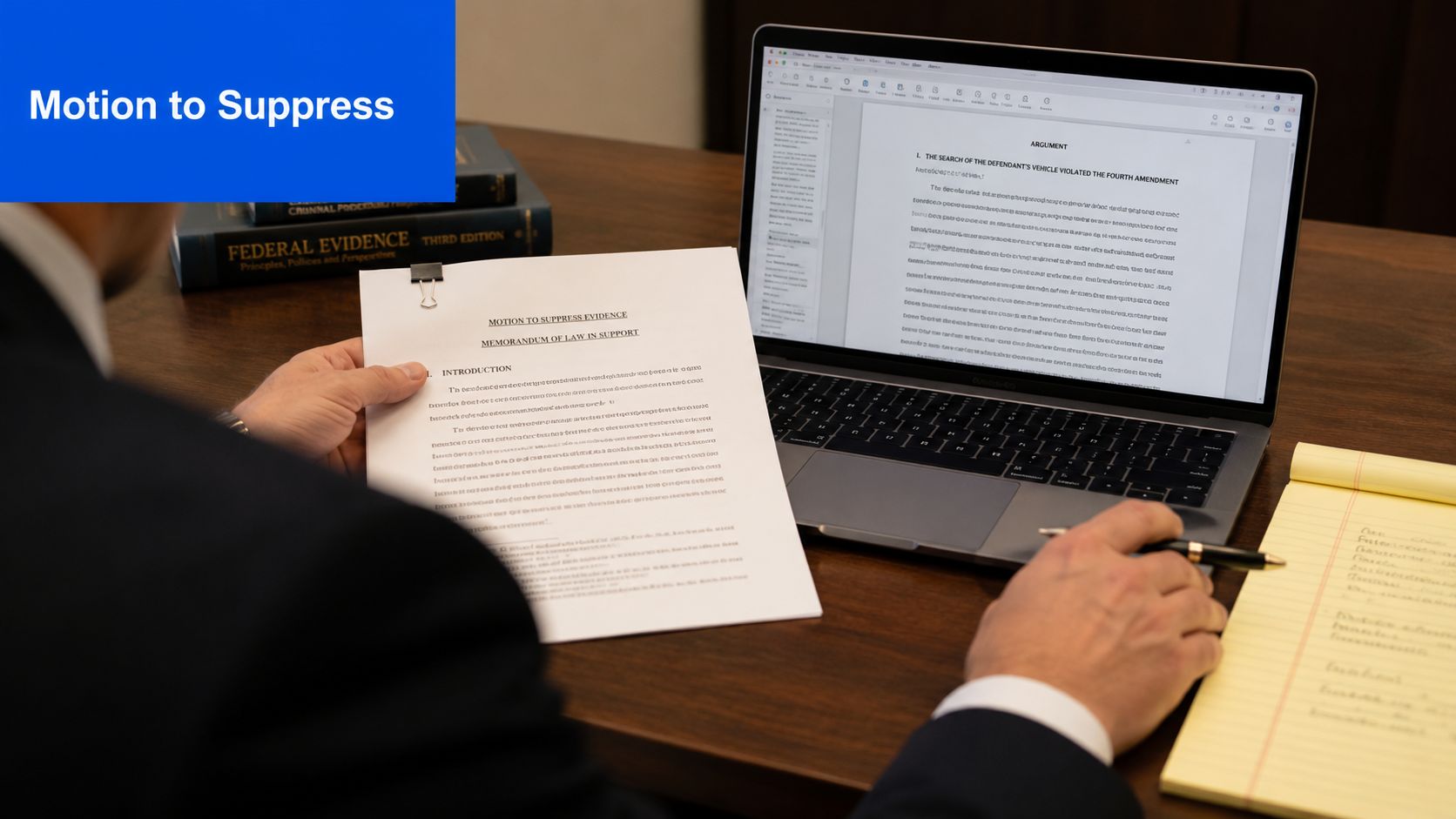
Con estas pruebas, defenderemos su caso ante un juez en una audiencia de exclusión, ya sea en un tribunal de Broward, Palm Beach o Miami-Dade. Si el juez acoge nuestra moción, esas declaraciones quedarán excluidas. Legalmente, nunca existieron. Esta medida puede debilitar gravemente el caso de la fiscalía, otorgándonos una posición de fuerza considerable para negociar cargos reducidos o, en muchos casos, lograr la desestimación total del caso.
Una moción para excluir pruebas exitosa no es simplemente una pequeña victoria jurídica; representa un cambio radical en el rumbo del caso. Puede desarticular por completo la acusación del Estado y abrir el camino para proteger su libertad y su futuro.
La impugnación de pruebas es un proceso complejo con normas y procedimientos estrictos. Puede conocer más sobre el funcionamiento de esta poderosa herramienta legal en nuestra guía detallada sobre qué es una Moción para excluir pruebas en Florida.
Preguntas frecuentes sobre violaciones de los derechos Miranda
Cuando enfrenta cargos penales, es muy probable que tenga múltiples dudas. Es un momento confuso y estresante, y eso es especialmente cierto si sospecha que la policía violó sus derechos Miranda. Recibimos estas mismas consultas de clientes en todo el sur de Florida, y aquí le ofrecemos las respuestas claras que necesita.
¿Qué pasa si la policía encontró pruebas debido a algo que dije antes de que me leyeran mis derechos?
Esta es una excelente pregunta que se adentra en un concepto jurídico que los abogados denominan "el fruto del árbol ponzoñoso". La idea es sencilla: si el árbol está contaminado (la confesión ilegal), el fruto que produce (las pruebas halladas gracias a ella) también está contaminado y no puede ser utilizado.
Supongamos que le interrogan sin la advertencia Miranda previa, confiesa un delito de robo y revela a los oficiales el lugar exacto donde ocultó los bienes robados. Si localizan los objetos basándose únicamente en esa declaración, su abogado puede solicitar que se excluyan dichos objetos como prueba.
No obstante, el éxito no está garantizado. La fiscalía cuenta con argumentos sólidos para rebatir esta postura. El más habitual es el de "descubrimiento inevitable", mediante el cual alegarán que habrían encontrado las pruebas de todos modos, por ejemplo, entrevistando a vecinos o revisando cámaras de seguridad. Se requiere un abogado defensor penal sumamente analítico para investigar a fondo los hechos y demostrar ante el juez que las pruebas estaban efectivamente contaminadas.
¿Puedo demandar a la policía en Florida por una violación de los derechos Miranda?
No. Este es un error de concepto muy común. La Corte Suprema de los Estados Unidos ha determinado con absoluta claridad que una violación de Miranda no es motivo para entablar una demanda civil contra la policía con el fin de obtener una indemnización económica de daños y perjuicios.
El único recurso disponible ante una violación de Miranda es lograr que sus declaraciones obtenidas ilegalmente sean excluidas del proceso. Esto significa que el fiscal no podrá utilizarlas en su contra durante el juicio. Toda la estrategia de su abogado se centrará en utilizar esta violación para debilitar la acusación penal en su contra, no en iniciar una demanda independiente.
¿Cuáles son las palabras clave que debo decir si la policía intenta interrogarme?
Debe expresarse de manera clara, pacífica y firme. Solo necesita pronunciar dos frases, y debe hacerlo de forma inequívoca:
"Estoy ejerciendo mi derecho a permanecer en silencio."
"Quiero un abogado."
Una vez que haya manifestado esto, debe guardar absoluto silencio. No intente colaborar, no entable conversaciones informales ni intente justificar su posición. La policía está obligada por ley a suspender el interrogatorio en el instante en que usted invoca estos derechos. Esta es la medida más importante que puede adoptar para su protección.
¿Se aplican los derechos Miranda a delitos menores como un DUI?
Sí, absolutamente. Sus derechos Miranda no están condicionados por la gravedad del delito. Tienen plena vigencia ante cualquier infracción penal, desde un caso inicial de DUI en el condado de Broward hasta un cargo por un delito grave de tráfico de drogas.
El factor determinante para Miranda no es el tipo de acusación, sino la situación fáctica. Los derechos son exigibles siempre que se cumplan dos condiciones de manera concurrente: custodia (su libertad de movimiento está restringida) e interrogatorio (la policía le formula preguntas orientadas a obtener una respuesta incriminatoria). Cualquier declaración que formule en ese contexto puede ser excluida si no se le leyeron previamente sus derechos.
Si considera que se vulneraron sus derechos durante un arresto en Florida, es fundamental que actúe a la brevedad. Nuestro equipo de defensa penal cuenta con la experiencia para detectar estas infracciones procesales y utilizarlas de manera estratégica en su defensa. Evaluaremos meticulosamente las particularidades de su caso y desarrollaremos una estrategia sólida para salvaguardar su futuro en Fort Lauderdale, el condado de Broward o cualquier localidad del sur de Florida. Para una consulta confidencial y sin costo, contáctenos las 24 horas, los 7 días de la semana.
No cualquier error en la lectura de sus derechos Miranda beneficiará su caso, pero las violaciones reales sí pueden hacerlo. Conozca qué constituye una infracción y cómo afecta sus cargos en el estado de Florida.