Cargos por Agresión en Florida: Defensas y Penalidades para 2026
Abogado Jason Goldsmith
Es posible que haya sido arrestado tras una discusión, una pelea fuera de un bar, una disputa en su hogar o una situación que se tornó física más rápido de lo esperado. En este momento, bajo una gran presión, intenta responder a una pregunta sencilla: ¿qué significa este cargo y qué sucederá a continuación?
Esa preocupación está plenamente justificada. En Florida, los casos de agresión física (battery) se procesan con rapidez, y las consecuencias pueden trascender con creces una fecha de comparecencia y una multa. La redacción exacta del cargo es determinante. La presunta lesión es de suma relevancia. La relación entre las partes involucradas resulta crucial. En los tribunales del sur de Florida, la práctica local puede influir casi tanto como la propia ley escrita.
Para orientarse sobre los cargos de agresión en Florida, el punto de partida más útil no son las tablas de penas genéricas, sino los factores clave que modifican el curso y resultado de un proceso legal.
Índice de Contenidos
Clasificación de los Cargos de Agresión en Florida: De Delito Menor a Delito Grave
Medidas de Acción Inmediata Tras un Arresto por Agresión en Florida
Clasificación de los Cargos de Agresión en Florida: De Delito Menor a Delito Grave
Durante las consultas iniciales tras un arresto en un área de estacionamiento, fuera de un establecimiento nocturno o en el curso de una disputa familiar, suelo recibir la misma interrogante: "¿Se trata de un delito menor o enfrento un delito grave?". En el estado de Florida, la respuesta a esto define las condiciones de la fianza, la estrategia de la fiscalía y las alternativas para resolver el caso de manera rápida y favorable.
Definición legal de la agresión física (battery) en Florida
De conformidad con el Estatuto de Florida 784.03, la agresión física comprende tocar o golpear intencionalmente a otra persona en contra de su voluntad, o causar daño corporal de manera intencionada. Esta definición abarca una gama de conductas más amplia de lo que comúnmente se supone, sin que sea indispensable la existencia de una lesión visible.
Un empujón en el umbral de una puerta es suficiente para configurar el delito, así como sujetar a alguien por la muñeca durante una discusión, o un bofetón que solo resulte en un enrojecimiento leve de la piel.
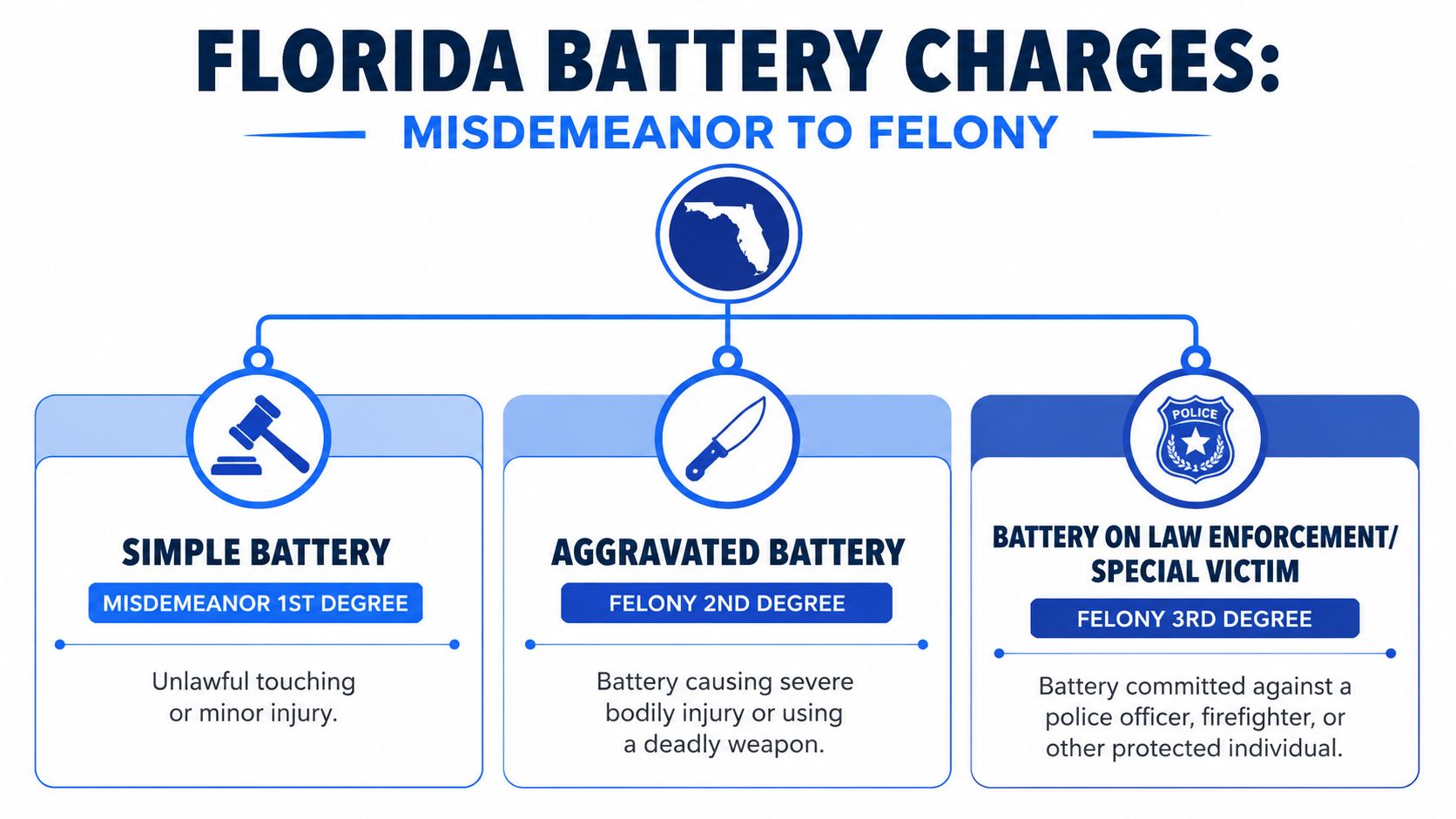
Perspectiva general de los cargos de agresión en Florida
Tipo de Cargo | Estatuto de Florida | Clasificación del Delito | Sanción Máxima de Encarcelamiento |
|---|---|---|---|
Agresión Simple (Simple Battery) | Estatuto de Florida 784.03 | Delito menor de primer grado | Hasta 1 año en la cárcel del condado |
Agresión Reincidente (Second or Subsequent Battery) | Estatuto de Florida 784.03 | Delito grave de tercer grado | Sancionable bajo las pautas de sentencia para delitos graves de Florida |
Agresión Agravada (Aggravated Battery) | Estatuto de Florida 784.045 | Delito grave de segundo grado | Hasta 15 años en prisión estatal |
Una acusación inicial de agresión física se procesa, por lo general, como un delito menor de primer grado. No obstante, una condena previa por agresión puede elevar un nuevo cargo a delito grave de tercer grado. Si los hechos imputados implican lesiones corporales graves, el uso de un arma mortal o si la presunta víctima se encuentra embarazada y este hecho es del conocimiento del acusado, el Estado puede formular cargos por agresión agravada.
Existen casos intermedios donde la controversia radica en si los hechos justifican la imputación de un delito grave o de un delito menor atenuado. Para un análisis detallado sobre esta categoría, examine este análisis sobre delitos graves de agresión en Florida.
Regla práctica: La policía redacta la versión inicial de los hechos. No obstante, los registros médicos, las evidencias fotográficas, la credibilidad de los testigos, los antecedentes de las partes y los criterios locales de la fiscalía determinan qué cargos prosperarán ante el tribunal.
Razones por las cuales la gravedad del cargo incrementa con rapidez
Aunque en términos teóricos los cargos de agresión aparentan ser sencillos, en el ámbito judicial rara vez lo son.
La gravedad de la imputación suele depender del método de documentación de las lesiones, la identidad de la presunta víctima y la jurisdicción correspondiente. Un denunciante sin afectaciones físicas visibles plantea un escenario jurídico determinado; por el contrario, un denunciante que requirió atención en una sala de emergencias, aportó pruebas fotográficas y rindió una declaración registrada genera un caso de naturaleza distinta. Incluso si dos incidentes guardan similitud en el relato verbal, el expediente probatorio puede conducirlos por vías procesales opuestas.
De la misma manera, la condición de la víctima es un factor determinante. Aquellos casos que involucran a oficiales de la ley, personal docente, adultos mayores o donde media una relación de índole doméstica, conllevan por lo general un trato más severo, condiciones de fianza rigurosas y menor acceso a programas de desviación procesal. Ciertas fiscalías de condado en Florida muestran apertura para evaluar atenuantes en etapas tempranas, mientras que otras mantienen posturas inflexibles hasta que las declaraciones formales revelan debilidades en su teoría del caso.
Por ello es indispensable un análisis jurídico preventivo del expediente. Nuestro objetivo es examinar el registro de las llamadas al 911, confrontar las grabaciones de las cámaras corporales policiales con el acta de arresto, verificar la inmediatez con la que la presunta víctima solicitó asistencia médica y determinar si la evidencia fotográfica corrobora la narrativa policial. Estos pormenores deciden a menudo si un cargo permanece como delito menor, se eleva a felony (delito grave) o se posiciona para una resolución favorable de reducción de cargos.
Más Allá de la Cárcel: El Impacto Permanente de una Condena
Es habitual que las personas centren su preocupación únicamente en la posibilidad de cumplir una pena de privación de libertad. Aunque comprensible, esta perspectiva es limitada. En gran parte de los procesos por agresión, los perjuicios más severos y duraderos se manifiestan con posterioridad a la resolución del caso judicial.
Consecuencias que persisten tras la conclusión del proceso judicial
Una condena firme por agresión física puede perjudicar los resultados de las verificaciones de antecedentes penales, las solicitudes de empleo, el acceso a vivienda, la obtención de licencias profesionales y la reputación personal. Incluso ante una sentencia de ejecución benigna, el antecedente penal seguirá obstaculizando su desarrollo.
Muchos empleadores formulan decisiones adversas ante delitos que involucran conductas violentas, al igual que los arrendadores. Cuando las imputaciones derivan de conflictos del entorno familiar, el estigma puede incidir negativamente en disputas de custodia compartida y otros procesos ante los tribunales de familia.

Es frecuente que los representados desconozcan que el resultado óptimo en materia penal consiste en evitar la inscripción del antecedente de condena en su expediente. Esto permite preservar la elegibilidad para la posterior limpieza del registro o perfilar el caso hacia un sobreseimiento o una resolución de nolle prosequi en Florida.
Sanciones adicionales por agresión doméstica (domestic battery)
Los cargos por agresión doméstica reciben un tratamiento riguroso en las salas de justicia de Florida. Según datos provistos por la página de estadísticas sobre violencia doméstica del Departamento de Niños y Familias de Florida, los cuerpos de seguridad del estado efectuaron 63,217 arrestos relacionados con violencia doméstica en el año 2020. Dada su recurrencia, la representación de la fiscalía aborda de forma proactiva y enérgica estos expedientes.
Para la persona imputada, los riesgos a largo plazo suelen exceder las previsiones comunes:
Derechos sobre armas de fuego: Una condena por agresión doméstica puede acarrear una prohibición vitalicia para la posesión de armas de fuego.
Consecuencias registrales: Este tipo de condena priva al sentenciado de la elegibilidad para el sellado de antecedentes penales.
Impacto en el ámbito familiar: Las denuncias referentes al cónyuge, pareja de hecho, progenitor común o cohabitante alteran de forma inmediata las disposiciones de convivencia y la estrategia legal familiar.
Perjuicios sociales: Aun antes de decretarse una resolución judicial, las órdenes restrictivas de no contacto y la existencia del registro de arresto menoscaban la estabilidad laboral, habitacional y del núcleo familiar.
La interrogante fundamental no debe limitarse a "¿puedo ganar este caso?", sino también a "¿de qué manera protejo mis antecedentes, mis derechos y mi porvenir si el proceso no se desestima de forma inmediata?".
Esa es la perspectiva legal idónea. Los cargos por agresión física en Florida demandan una estrategia orientada a la mitigación de daños en cada una de las fases del enjuiciamiento.
Proceso dentro del Sistema de Tribunales Penales de Florida
Los ciudadanos que enfrentan este tipo de imputaciones carecen habitualmente de certeza sobre el desarrollo del proceso a corto y mediano plazo. El sistema puede resultar impersonal en su trámite institucional, a pesar de la alta trascendencia que tiene para usted.
El inicio del caso antes de que el acusado esté preparado
La vía procesal inicia formalmente con la detención, el registro policial y la audiencia de primera comparecencia, en la cual el tribunal determina las medidas cautelares de libertad y suele imponer prohibiciones de comunicación y acercamiento con la presunta víctima.
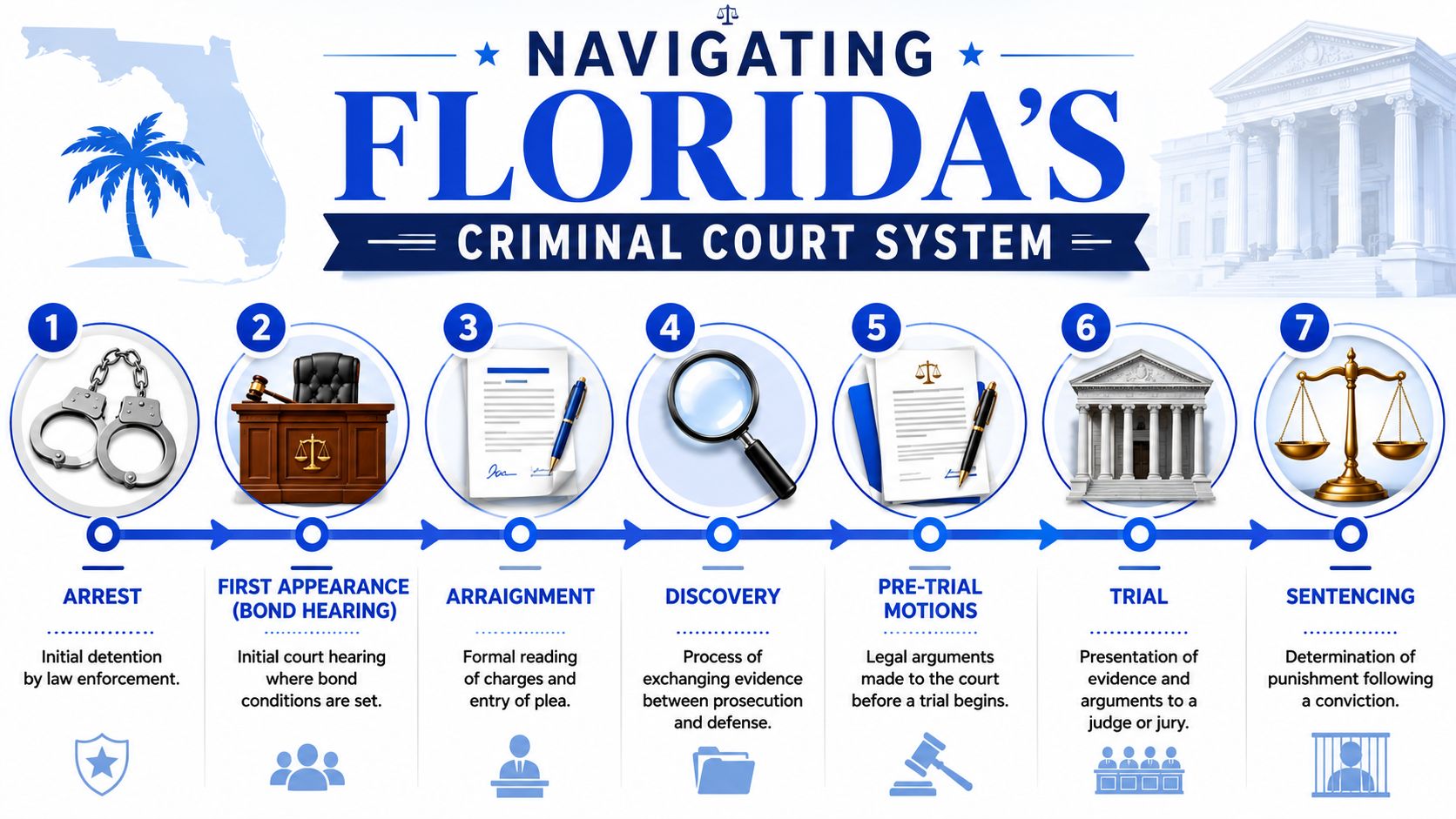
Posteriormente, la causa transita por las etapas de lectura de cargos (arraignment), intercambio de pruebas (discovery), audiencias previas al juicio, interposición de mociones, fases de negociación y, en su caso, la celebración del juicio. Esta secuencia, con apariencia lineal, conlleva riesgos y oportunidades procesales complejas en la práctica.
A continuación se presenta un breve esquema del proceso:
Este es el curso habitual de estos procedimientos ante los órganos jurisdiccionales de los condados de Broward, Fort Lauderdale, Miami-Dade, Palm Beach y zonas colindantes del sur de Florida:
Arresto y registro
La fuerza policial redacta la relación fáctica inicial. Dicha narrativa configura la primera impresión del caso ante la autoridad judicial, aun cuando esta sea incompleta o parcial.Primera comparecencia y fijación de fianza
La autoridad judicial dicta los términos de la libertad bajo fianza. En asuntos de índole doméstica, es mandatorio decretar restricciones de no contacto, afectando temporalmente la residencia de la persona y sus vínculos familiares.Lectura de cargos (Arraignment)
Se formalizan los términos de la acusación pública y se presenta la declaración de inocencia o culpabilidad. Este acto procesal no es el foro adecuado para exponer defensas de manera informal.Intercambio de recursos de prueba (Discovery) La defensa técnica evalúa los informes policiales, las declaraciones de deponentes, registros videográficos, placas fotográficas, historiales clínicos y demás material probatorio. En esta fase suelen evidenciarse las deficiencias del caso planteado por el Estado.
Mociones y negociaciones preliminares
Diversos expedientes logran resolverse mediante gestiones de sobreseimiento, acuerdos para la reducción de cargos o solicitudes de sometimiento a programas alternativos de desviación penal. Otras causas exigen promover mociones objetando la suficiencia jurídica de la imputación o la licitud de las pruebas.
Áreas donde la práctica judicial local modifica el resultado
La tramitación de estas causas varía según la demarcación judicial en que se ventilen. Conforme se desprende del análisis de delitos de agresión y divergencias de resolución a nivel de condado en Florida, ciertas demarcaciones facilitan el ingreso de infractores primarios a programas de intervención orientados al archivo definitivo del caso, prerrogativa de la cual carecen otras jurisdicciones.
Este elemento resulta indispensable. Un imputado por idéntica conducta fáctica puede acceder a soluciones procesales distintas en Broward en comparación con otros territorios del estado, lo cual obedece a las directrices de política criminal aplicables por cada fiscalía local.
La práctica procesal local define si el expediente se encauza como un asunto susceptible de negociación por tratarse de un primer infractor o como una causa que la fiscalía buscará litigar con el máximo rigor.
De ser viable una solución alternativa, el abogado defensor debe tramitarla con celeridad. Conozca las condiciones de la intervención previa al juicio (PTI) en Florida aplicable a ciertos casos sin antecedentes penales.
El rol del abogado defensor en cada etapa procesal
Una defensa penal rigurosa y técnica ante cargos de agresión implica una sucesión de determinaciones jurídicas analizadas minuciosamente.
Fase inicial: salvaguardar las condiciones de libertad bajo fianza, restringir la toma de declaraciones autoincriminatorias y conservar el material probatorio favorable a la defensa.
Fase de descubrimiento probatorio: confrontar los cargos formulados con elementos de juicio objetivos, prestando especial consideración a comunicaciones electrónicas, grabaciones de cámaras corporales, sistemas de videovigilancia y peritajes médicos.
Fase de negociación: determinar la viabilidad de una reducción de los cargos, el acceso a una resolución alternativa o la necesidad de dirimir el asunto en juicio oral.
Fase previa al juicio: exigir al órgano de acusación que demuestre de forma plena cada elemento constitutivo del tipo penal, impidiendo que el caso progrese basándose en meras presunciones policiales.
Ahí radica la importancia de contar con representación técnica experimentada en el sistema de justicia penal del sur de Florida. Los estatutos proveen el marco normativo; la práctica procesal define la estrategia.
Defensas Comunes Frente a Cargos de Agresión en Florida
Un arresto no equivale a una sentencia de condena. En sala de juicio, la representación fiscal mantiene la carga de desvirtuar la presunción de inocencia más allá de toda duda razonable. En múltiples causas por agresión física, la controversia principal no versa sobre la existencia del suceso, sino sobre si el Estado cuenta con el soporte probatorio suficiente para respaldar el grado de culpabilidad que imputa.

La obligación del Estado de probar la intención (dolo)
El delito de agresión (battery) presupone una conducta dolosa, circunstancia que depara viabilidad a diversas defensas legales sólidas dependientes de la plataforma fáctica del caso.
Legítima defensa: Si se aplicó un grado de fuerza proporcional autorizado por la ley con el propósito de repeler un peligro grave e inminente, el hecho puede resultar justificado a nivel jurídico a pesar de haberse producido el contacto físico.
Defensa de terceros: El ordenamiento jurídico exime de responsabilidad al ciudadano que interviene de manera legítima para evitar que un tercero sufra daños a su integridad.
Consentimiento de la víctima: Bajo escenarios acotados, el contacto físico consentido desvirtúa la tipicidad del delito penal, planteamiento que cobra relevancia en confrontaciones mutuas o en actividades deportivas debidamente reglamentadas.
Caso fortuito o ausencia de dolo: No todo contacto físico encuadra dentro de los presupuestos de punibilidad. Si el contacto derivó de un suceso accidental, el ente acusador carecerá de los elementos de prueba necesarios para acreditar el elemento intencional indispensable del tipo.
Error de identidad: En contextos caracterizados por aglomeraciones, confusión o un deficiente registro de los hechos por los cuerpos policiales, suele imputarse de forma errónea a personas ajenas a la autoría de la agresión.
La efectividad de estas defensas no deviene únicamente de la argumentación verbal del letrado defensor, sino del acopio y sistematización oportuna de los elementos probatorios que las sustentan.
Las pruebas de lesiones como eje central de la disputa legal
Dentro de los litigios penales por agresión en Florida, las pretensiones fundamentadas en lesiones corporales elevan el riesgo procesal de ordinario a grave con gran celeridad. Tal como detalla la exposición sobre factores de agravación de la agresión en Florida, el nivel de contingencia legal estriba crucialmente en cómo fueron catalogadas las lesiones, no de forma exclusiva en el contacto inicial. Una defensa ejercida con rigor técnico puede controvertir la relación de causalidad o la gravedad real de las lesiones, lo cual delimita la diferencia entre enfrentar una sanción por delito menor y un delito grave castigado con penas de hasta 15 años de prisión estatal.
Por tales motivos, cobra gran relevancia procesal el análisis de historiales clínicos, reportes fotográficos, intervalos temporales, versiones de testigos de los hechos y estados preexistentes de salud. Mientras la representación fiscal sostendrá que un determinado impacto desencadenó la lesión grave, la defensa puede demostrar que el daño alegado fue dimensionado de manera desproporcionada, resultaba preexistente, carece de sustento en los reportes iniciales o carece de consistencia con el restante acervo de pruebas.
La defensa contra un cargo de agresión estriba, a menudo, en aspectos omitidos en el informe policial. El acta de arresto representa únicamente el acto de imputación inicial, no la prueba plena del delito.
En expedientes que incluyan denuncias por empleo de armas o de afectaciones físicas complejas, la estrategia defensiva correspondiente puede incidir en las consideraciones jurídicas analizadas en la defensa contra cargos de asalto agravado en Florida, predominantemente cuando la teoría del caso de la fiscalía se apoya en estados de zozobra, uso de violencia y testimonios contradictorios.
Medidas de Acción Inmediata Tras un Arresto por Agresión en Florida
Las horas posteriores a la privación de libertad, al igual que los días subsiguientes, revisten una importancia crucial. Una adecuada toma de decisiones en esta etapa temprana permite salvaguardar defensas procesales legítimas; por el contrario, los errores pueden proveer al órgano acusador de materiales probatorios inexistentes con anterioridad.
Acciones que benefician su situación jurídica de inmediato
El primer requerimiento es mantener la templanza y el autocontrol, directriz elemental pero cuya inobservancia compromete la viabilidad de la defensa técnica.
Ejerza su derecho constitucional a guardar silencio: Aporte exclusivamente la información de identificación obligatoria y absténgase de emitir declaraciones de hechos. Los intentos de explicar lo sucedido bajo una actitud de cooperación suelen interpretarse y ser utilizados por la fiscalía como admisiones de culpabilidad.
Aténgase estrictamente a las condiciones de libertad provisional: Cumpla a cabalidad cualquier orden de restricción o de no contacto decretada por la autoridad judicial. Ello es obligatorio con independencia de que sea la otra parte quien inicie la comunicación por cualquier vía o solicite reunirse.
Conserve el acervo probatorio: Resguarde de forma segura registros de mensajería electrónica, reportes de llamadas, material fotográfico o fílmico, comunicaciones en redes sociales e información de identificación de potenciales testigos. En caso de presentar afectaciones físicas, documéntelas de manera fotográfica nítida y oportuna.
Consigne por escrito la cronología del suceso: Realice esta relatoría de uso estrictamente confidencial para su defensa técnica, detallando personas presentes, diálogo sostenido, antecedentes previos al arribo de la fuerza policial y cualquier discrepancia detectada en la actuación de los oficiales captores.
Obtenga asesoría legal calificada con prontitud: La pronta intervención de un abogado defensor incide favorablemente en las condiciones de fianza, salvaguarda de testimonios de descargo, gestiones previas a la formulación formal de cargos y fases de negociación. En la zona sur de Florida, firmas legales como Ticket Shield, PLLC, asumen la representación y defensa urgente en causas de agresión por delitos graves y menores en el Condado de Broward y jurisdicciones limítrofes.
Acciones que suelen perjudicar gravemente el caso
Es recurrente que los imputados afecten desfavorablemente su estatus jurídico al reaccionar bajo impulsos emocionales tras obtener su libertad.
Evite todo contacto de forma indirecta con la presunta víctima: Intentar entablar comunicación mediante intermediación de terceros, tales como amigos, familiares o compañeros de trabajo, constituye de igual forma un incumplimiento de las determinaciones del tribunal.
Se prohíbe realizar publicaciones por Internet: Los escritos redactados en plataformas virtuales con referencias a traición, aflicción personal o "mi versión de los hechos" son incorporables al juicio como prueba de la acusación.
No asuma la extinción de la causa penal por el desistimiento de la contraparte: El ejercicio de la acción penal y la potestad de prosecución residen bajo la exclusiva esfera de decisión del Fiscal del Estado (State Attorney).
Comparezca a la totalidad de las citaciones judiciales: La inasistencia a las audiencias señaladas apareja la emisión de mandamientos de captura (órdenes de aprehensión) y desmejora severamente la viabilidad de lograr acuerdos favorables de defensa.
Al consultar a su abogado defensor, plantee interrogantes de orden eminentemente práctico. Indague si los hechos justifican plantear la legítima defensa, las posibilidades de acceder a programas de desvío en esa circunscripción específica, la viabilidad de recusar declaraciones recabadas y los elementos de prueba urgentes por recolectar. Este proceder le aportará certeza frente a la solicitud de garantías absolutas que ningún abogado ético puede emitir.
Preguntas Frecuentes Sobre Cargos de Agresión en Florida
La resolución de los procesos de agresión se define mediante detalles fácticos específicos e imprevistos. Las tomas fotográficas de la noche del arresto, la existencia de una relación de pareja, la circunscripción en la cual encuadre la causa y la correspondencia entre las lesiones alegadas y la mecánica del hecho, influyen drásticamente en el veredicto. A continuación, se detallan las interrogantes recurrentes formuladas por los representados tras su detención.
¿Puede la presunta víctima desistir de los cargos?
La facultad legal exclusiva de dar continuidad o solicitar el sobreseimiento de la causa corresponde de manera exclusiva a la Fiscalía del Estado. Si bien la petición de la presunta víctima dirigida a cesar el proceso, su retractación o la manifestación de su negativa a colaborar resultan relevantes, tales actos no surten por sí mismos efectos extintivos inmediatos sobre el proceso penal.
No obstante, dicha postura resulta valiosa. El cambio en el testimonio de cargo incide en la credibilidad de la imputación, la solidez probatoria del caso con miras al juicio y en las negociaciones previas. En ciertos supuestos, expone contradicciones aprovechables por la defensa penal. En otros panoramas procesales, la fiscalía optará por reanudar el enjuiciamiento sustentándose prioritariamente en testimonios policiales, fijaciones fotográficas, registros de llamadas de emergencia o peritajes forenses.
¿Qué es una orden de no contacto?
Constituye una medida de restricción de carácter obligatorio dictada por el juez por medio de la cual se veda cualquier modalidad de comunicación con la presunta víctima. Dicho mandamiento legal incluye el envío de correspondencia electrónica, llamadas, contactos por redes sociales, gestiones hechas por medio de allegados o familiares, y la prohibición expresa de retornar a la residencia familiar compartida.
La transgresión a esta ordenanza engendra de forma inmediata la formulación de nuevos cargos. Los jueces evalúan dicha infracción como un desacato deliberado al tribunal, desmejorando las condiciones de libertad bajo fianza, la viabilidad de acuerdos favorables y la apreciación del nivel de riesgo procesal por parte de la fiscalía.
Cualquier adecuación que resulte indispensable por motivos laborales, cambio de domicilio o régimen de visitas con menores de edad, deberá ser gestionada por conducto de su representación técnica ante la autoridad judicial competente.
¿Es posible sellar o borrar del expediente un cargo de agresión?
Bajo determinadas circunstancias jurídicas es viable. La posibilidad legal estriba de forma directa en el mecanismo de conclusión de la causa penal y de los estatutos de imputación penal remanentes en su expediente.
La resolución de suspensión condicional del proceso (withhold of adjudication) en ciertas tipicidades delictivas depara margen para promover el posterior sellado de registros penales. Por el contrario, una condena penal firme descarta de forma definitiva esta prerrogativa procesal. El encuadre fáctico de la agresión doméstica reviste rigurosas limitaciones de elegibilidad, por lo cual los términos de conformidad de cualquier acuerdo judicial (plea) demandan tanta consideración como la propia pena sugerida de inmediato. Es aconsejable evaluar los efectos de la resolución no únicamente a corto plazo, sino de cara a su historial laboral y profesional en los años venideros.
¿Existe riesgo de prisión al tratarse de una primera ofensa?
La circunstancia de carecer de antecedentes penales no garantiza la exclusión automática de una sanción carcelaria, de la misma manera que tampoco asegura el otorgamiento obligatorio de condiciones benignas. Las fiscalías y judicaturas evalúan pormenorizadamente factores tales como la magnitud de la afectación corporal infligida, el vínculo interpersonal entre las partes, la presencia de alcohol o sustancias, los antecedentes de llamadas policiales al sitio de los hechos y la disciplina observada respecto de las medidas cautelares decretadas.
Además, los criterios de política persecutoria penal del condado inciden en esta fase. Diversas circunscripciones se muestran receptivas a tramitar medidas alternativas ante infracciones menores dotadas de un expediente probatorio modesto. Otras jurisdicciones abordan estas causas de una manera estricta, predominantemente si constan en autos reportes fotográficos detallados, actas de declaración autoincriminatoria o si la víctima ostenta condiciones de protección especial.
¿Debo rendir declaración ante la policía si sé que soy inocente?
No. Es recurrente que personas con ausencia de culpabilidad comprometan gravemente su situación procesal al intentar ofrecer explicaciones prolijas con el objeto de esclarecer lo ocurrido de manera informal.
Frecuentemente incurren en imprecisiones de carácter temporal, atenuaciones de conducta interpretables posteriormente como mendacidad, o rinden declaraciones factibles de ser asentadas en el informe preliminar de los captores con carácter autoincriminatorio. En caso de que se le solicite rendir declaración formal por parte de los agentes estatales de investigación, la vía idónea consiste en requerir la presencia de su abogado defensor de confianza y abstenerse de emitir manifestaciones.
¿Es posible lograr la reducción de un cargo de agresión?
Sí, es procesalmente viable en aquellos casos que presenten los presupuestos jurídicos idóneos. La modificación de los cargos suele derivar de debilidades sustantivas y manifiestas detectadas en la teoría acusatoria formulada por el Estado, no como resultado de meras solicitudes formales de consideración.
Los puntos de presión legal esenciales comprenden la existencia de testimonios contradictorios provistos por deponentes, deficiencias o nula justificación facultativa que corrobore el daño alegado, concurrencia de presupuestos de legítima defensa, ausencia acreditada de dolo intencional, mutua agresión física y formulación excesiva de cargos fundada en elementos fácticos limitados. La práctica judicial del foro local resulta sumamente influyente. En determinadas salas de justicia del sur de Florida, la fiscalía puede acceder a modificar el grado de la imputación en una fase previa al litigio si la defensa jurídica aporta registros objetivos, pruebas fotográficas y declaraciones testimoniales antes de que la acusación formalice plenamente su posición. En otras jurisdicciones, el planteamiento debe prorrogarse hasta que el desahogo formal de las deponencias de recíproco descubrimiento evidencie las referidas debilidades.
De enfrentar actualmente cargos penales por agresión física en el estado de Florida, la oportuna asesoría de un profesional del derecho penal resguarda aspectos de gran relevancia que exceden su comparecencia judicial inmediata. Esto le permite salvaguardar su récord penal, sus facultades de negociación procesal y sus opciones legales. El bufete de defensa técnica Ticket Shield, PLLC provee representación legal a clientes en los Condados de Broward, Fort Lauderdale, Miami-Dade, Palm Beach y tribunales en todo el estado de Florida. Una sesión de consulta de carácter confidencial le asistirá en la comprensión cabal del cargo formulado, la detección de los puntos débiles de la imputación y la determinación estratégica de la mejor vía de acción.
Un cargo por agresión física (battery) en Florida puede constituir un delito menor o un delito grave. Conozca las diferencias entre estos cargos y las estrategias de defensa que obtienen resultados.