Drug Paraphernalia Florida
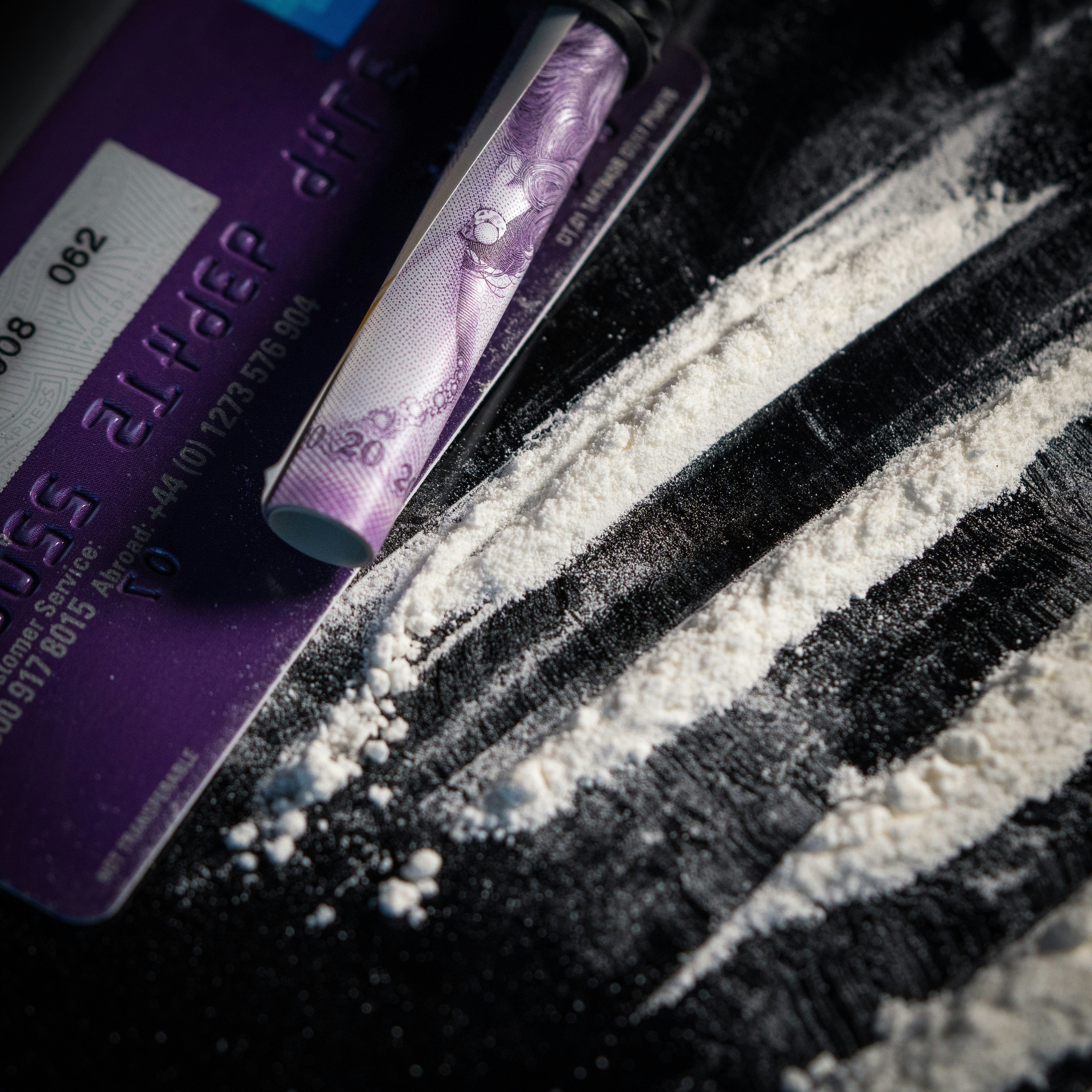
Possession of drug paraphernalia involves items designed for or intended to be used with controlled substances. It is typically a first-degree misdemeanor carrying up to one year in jail.
Drug Paraphernalia in Florida
Drug paraphernalia charges in Florida are prosecuted under Chapter 893 of the Florida Statutes. Although often viewed as less serious than felony drug possession or distribution charges, a paraphernalia conviction can still carry jail exposure, probation, fines, and lasting collateral consequences. In many cases, paraphernalia charges are filed alongside possession allegations, but they may also be prosecuted independently.
Attorney Jason Goldsmith represents individuals charged with drug-related offenses throughout Florida, including drug paraphernalia cases. As a former Broward County prosecutor, Mr. Goldsmith handled misdemeanor and felony narcotics prosecutions and understands how paraphernalia cases are investigated, charged, negotiated, and litigated.
Florida Statutory Definition of Drug Paraphernalia
Under Florida Statute 893.145, drug paraphernalia includes equipment, products, or materials used, intended for use, or designed for use in planting, cultivating, manufacturing, packaging, storing, concealing, injecting, ingesting, or otherwise introducing controlled substances into the human body.
Common examples include pipes, bongs, rolling papers, syringes, scales, grinders, baggies, and other items allegedly associated with drug use or distribution. The statute provides a broad definition, and the classification often depends on how the item was allegedly used.
Elements the State Must Prove
To obtain a conviction for possession of drug paraphernalia, the State must prove beyond a reasonable doubt that: (1) the defendant possessed an item; and (2) the item was drug paraphernalia as defined by statute; and (3) the defendant knew of the presence of the item.
Intent and knowledge are critical components. Many items listed in the statute may have lawful uses. The State must establish that the item was intended for drug-related purposes.
Misdemeanor Classification and Penalties
Possession of drug paraphernalia is typically charged as a first-degree misdemeanor in Florida. A first-degree misdemeanor carries a maximum penalty of up to one year in county jail, twelve months of probation, and a $1,000 fine.
Although jail is legally authorized, many first-time offenders may receive probation or diversion depending on the circumstances.
Constructive Possession Issues in Paraphernalia Cases
Like drug possession cases, paraphernalia charges may involve actual or constructive possession. If paraphernalia is found in a shared vehicle or residence, the State must prove the defendant knew of the item and exercised control over it.
In shared environments, constructive possession cases often hinge on circumstantial evidence and may be contested.
Residue-Based Prosecutions
Some paraphernalia cases involve items that contain drug residue. In such cases, prosecutors may file both paraphernalia and possession charges. Laboratory testing may be used to identify residue. Defense strategy may involve challenging the testing process or the interpretation of results.
Search and Seizure Issues in Paraphernalia Cases
Drug paraphernalia cases frequently originate from traffic stops or searches of vehicles and residences. The Fourth Amendment protects individuals from unreasonable searches and seizures. If law enforcement conducted an unlawful search, the evidence may be suppressed.
Suppression motions may be central to defense strategy where probable cause is questionable.
Collateral Consequences of a Paraphernalia Conviction
Even though paraphernalia is a misdemeanor, a conviction may affect employment, housing applications, professional licensing, and immigration status. Certain drug-related convictions may also result in driver’s license suspension.
Sealing and Expungement Considerations
If adjudication is withheld and eligibility requirements are satisfied, sealing may be possible. If adjudicated guilty, sealing eligibility depends on statutory criteria and prior record.
Diversion Programs and Alternative Resolutions
Some defendants may qualify for diversion programs, particularly if there is no prior criminal history. Successful completion may result in dismissal of charges.
Defense Strategies in Paraphernalia Cases
Defense strategies may include challenging the legality of the search, disputing constructive possession, arguing lawful use of the item, contesting residue analysis, and negotiating alternative resolutions.
As a former prosecutor, Jason Goldsmith understands how paraphernalia cases are evaluated internally and what weaknesses may influence charging or plea decisions.
Frequently Asked Questions About Drug Paraphernalia in Florida
Is possession of drug paraphernalia a felony in Florida?
Generally, possession of drug paraphernalia is charged as a first-degree misdemeanor, not a felony. However, related charges may elevate exposure.
Can common household items be considered paraphernalia?
Yes. The statute’s definition is broad. Prosecutors may argue that otherwise lawful items were intended for drug use based on surrounding circumstances.
Will I go to jail for a paraphernalia charge?
Jail is legally possible, but many first-time offenders receive probation or diversion depending on circumstances.
Can paraphernalia charges be dismissed if the search was illegal?
If constitutional violations occurred, evidence may be suppressed, which may significantly weaken the prosecution’s case.
Does residue matter?
Residue may support additional possession charges if laboratory testing confirms the presence of a controlled substance.
Will this affect my record permanently?
If adjudicated guilty, the conviction becomes part of your record. Withheld adjudications may qualify for sealing.
Can I lose my driver’s license?
Certain drug-related convictions may result in license consequences under Florida law.
How does a former prosecutor help in these cases?
Understanding internal charging standards and evidentiary evaluation processes can inform defense strategy.
Statewide Defense for Drug Paraphernalia Charges
Attorney Jason Goldsmith represents individuals charged with drug paraphernalia offenses throughout Florida. The main office is located in Broward County, Florida.
---
Legal Disclaimer: The information provided on this page is for general informational purposes only and does not constitute legal advice. Reading this page does not create an attorney-client relationship. For advice regarding your specific situation, consult a qualified criminal defense attorney.
" height="165.832px" id="q00oBUF59" transform="translate(1.053 5.724)" width="138.893px"/><path d="M 34.986 0 L 133.812 25.468 L 102.722 146.112 L 73.488 154.702 L 0 135.764 L 34.986 0.001 Z" fill="rgb(240, 240, 240)" height="154.702px" id="fIOc7BTIh" transform="translate(10.35 5.21)" width="133.812px"/><path d="M 73.122 15.676 L 12.392 0.026 C 11.957 -0.086 11.514 0.175 11.402 0.61 L 9.059 9.7 C 9.005 9.909 9.037 10.13 9.146 10.316 C 9.256 10.502 9.435 10.636 9.644 10.69 L 70.374 26.34 C 70.809 26.452 71.252 26.19 71.364 25.756 L 73.706 16.666 C 73.76 16.457 73.729 16.236 73.619 16.05 C 73.51 15.864 73.331 15.73 73.122 15.676 Z M 68.605 33.202 L 7.875 17.552 C 7.44 17.44 6.997 17.701 6.885 18.136 L 4.542 27.226 C 4.43 27.661 4.691 28.104 5.126 28.216 L 65.856 43.865 C 66.065 43.919 66.286 43.888 66.472 43.778 C 66.658 43.669 66.792 43.49 66.846 43.281 L 69.189 34.191 C 69.301 33.756 69.039 33.313 68.605 33.201 Z M 64.089 50.727 L 3.359 35.077 C 2.924 34.965 2.481 35.226 2.369 35.661 L 0.026 44.751 C -0.086 45.186 0.175 45.629 0.61 45.741 L 61.341 61.391 C 61.776 61.503 62.219 61.241 62.331 60.807 L 64.673 51.717 C 64.727 51.508 64.696 51.287 64.586 51.101 C 64.477 50.915 64.298 50.781 64.089 50.727 Z" fill="rgb(176, 176, 176)" height="61.416805225211306px" id="iNo2xZ_Mj" transform="translate(39.128 60.044)" width="73.73183155384721px"/><path d="M 27.31 6.582 L 22.694 24.494 L 9.514 28.684 L 0 18.646 L 4.616 0.734 L 7.482 0 L 2.865 17.912 L 10.275 25.729 L 20.539 22.466 L 25.159 4.54 L 27.313 6.568 L 27.309 6.583 Z M 10.782 23.706 L 10.79 23.704 L 10.796 23.71 Z M 4.819 17.402 L 5.592 14.402 L 8.117 15.052 L 7.738 16.523 L 11.6 20.591 L 16.931 18.892 L 17.238 17.704 L 14.141 15.956 L 13.49 18.481 L 10.98 17.834 L 11.806 14.626 L 6.335 11.521 L 8.095 4.689 L 13.977 6.205 L 14.417 4.497 L 8.535 2.981 L 9.186 0.456 L 23.429 4.126 L 22.779 6.651 L 16.927 5.143 L 16.487 6.851 L 22.338 8.359 L 21.412 11.954 L 18.887 11.303 L 19.163 10.233 L 15.836 9.376 L 14.849 13.208 L 20.295 16.29 L 19.062 21.073 L 10.79 23.704 Z M 13.33 8.715 L 10.092 7.88 L 9.502 10.167 L 12.515 11.878 Z" fill="rgb(13, 32, 102)" height="28.683999999999997px" id="MvcUaZDcw" transform="translate(75.085 28.648)" width="27.313000000000002px"/><path d="M 7.304 9.29 L 6.492 12.44 C 6.274 13.287 5.729 14.013 4.975 14.458 C 4.222 14.902 3.322 15.029 2.476 14.81 C 1.628 14.592 0.902 14.047 0.457 13.293 C 0.012 12.539 -0.114 11.64 0.106 10.793 L 2.249 2.476 C 2.466 1.628 3.011 0.902 3.765 0.457 C 4.518 0.012 5.418 -0.114 6.265 0.106 C 7.112 0.323 7.839 0.868 8.283 1.622 C 8.728 2.375 8.854 3.275 8.635 4.122" fill="transparent" height="14.914863947565863px" id="U6tazw2jO" stroke-dasharray="" stroke-linecap="butt" stroke-linejoin="miter" stroke-miterlimit="10" stroke-width="2.415" stroke="rgb(14, 32, 102)" transform="translate(47.514 4.051)" width="8.740107098850892px"/></svg>)