Prisión por violación de libertad condicional en Florida: Su estrategia de defensa legal
Jason Goldsmith, Abg.
Su teléfono se ilumina con una llamada perdida de su oficial de probatoria. Luego, ve un mensaje de voz, un mensaje de texto o, lo que es peor, se entera de que existe una orden de arresto. En ese momento, las personas no piensan en estándares legales ni en el procedimiento de una audiencia. Piensan en una sola cosa: ¿voy a ir a la cárcel?
Ese temor es real. Y se intensifica cuando nadie le da una respuesta clara. Los familiares entran en pánico. Los empleadores comienzan a hacer preguntas. Es posible que se pregunte si una cita perdida, una prueba fallida o un nuevo arresto significan el fin de su libertad condicional y la pérdida de su libertad.
La buena noticia es que una acusación de violación de la libertad condicional no equivale a una condena, ni conlleva una sentencia automática de prisión. Una respuesta inteligente y oportuna puede cambiar el resultado. Esto es crucial, ya que la supervisión comunitaria afecta a un gran número de personas. La población bajo supervisión comunitaria ha crecido de 1.1 millones en 1980 a más de 3.7 millones hoy en día, y casi 350,000 personas regresan a la cárcel o prisión cada año, predominantemente debido a violaciones de las reglas, según este resumen de datos sobre libertad condicional.
Si se enfrenta a una posible violación en Fort Lauderdale, el condado de Broward, Miami-Dade, Palm Beach o cualquier otra localidad del sur de Florida, necesita asesoramiento práctico, no advertencias ambiguas. Necesita saber qué tipo de violación se le imputa, cómo funciona el proceso de VOP (Violación de Libertad Condicional) en Florida, a qué tiempo de cárcel se expone y qué se puede hacer de inmediato para proteger su libertad.
Índice de Contenidos
Violación técnica vs. Nuevo delito: La diferencia fundamental
El proceso de VOP en Florida: Desde la orden hasta la audiencia
Posible tiempo de cárcel y sanciones por violación de libertad condicional
Cómo defenderse de una acusación de violación de libertad condicional
Negociación de alternativas a la cárcel y reducción de penas
Responder a la llamada que esperaba nunca recibir
Muchos casos de libertad condicional comienzan de la misma manera. Alguien falta a una cita de control porque el trabajo se prolongó. Alguien sufre una recaída y da positivo en una prueba de detección de drogas. Alguien cambia de domicilio y no lo notifica con la rapidez requerida. De repente, llega la llamada o se enteran de que un juez ha firmado una orden por violación de la libertad condicional.
En los tribunales del sur de Florida, ese momento parece más abrumador de lo que realmente es y más peligroso de lo que tiene que ser. El sistema judicial actúa con celeridad una vez que el oficial de probatoria reporta una infracción. Sin embargo, el pánico induce a cometer errores graves. Las personas declaran en exceso, ignoran las notificaciones, no comparecen ante el tribunal o asumen que el juez ya ha dictado sentencia en su contra.
Regla práctica: Aborde cualquier sospecha de violación con carácter de urgencia, pero no asuma que el peor escenario es inevitable.
Algunos clientes se enfrentan a una acusación puramente administrativa. Otros afrontan una violación sustantiva vinculada a un DUI, delitos de drogas, violencia doméstica, delitos de hurto, cargos por armas de fuego u otro proceso pendiente en el condado de Broward o Miami-Dade. La estrategia legal varía según el caso. La primera tarea consiste en determinar la naturaleza exacta de la acusación y las pruebas de que dispone la Fiscalía.
Si está buscando un abogado para violación de libertad condicional, un abogado de defensa penal en Fort Lauderdale o asistencia jurídica por tiempo de cárcel debido a una violación de probatoria en Florida, adopte esta mentalidad: la acusación es grave, pero la estrategia de respuesta es determinante. Los tribunales no evalúan todas las violaciones bajo el mismo criterio, y usted tampoco debería hacerlo.
Violación técnica vs. Nuevo delito: La diferencia fundamental
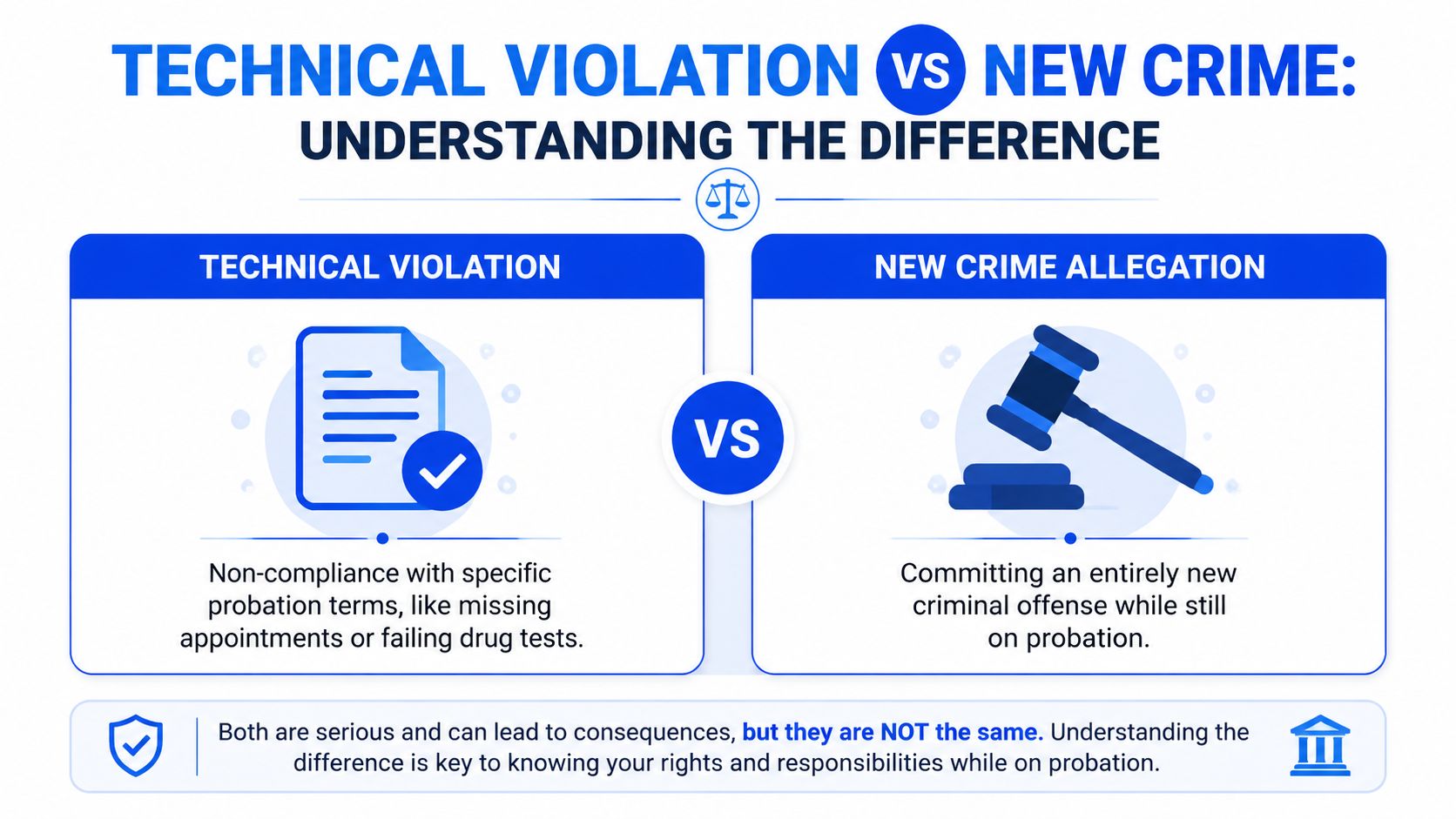
La consideración jurídica más crítica en un caso de VOP en Florida es simple: ¿se le acusa de infringir una norma de la libertad condicional o de cometer un nuevo delito? Dicha distinción suele determinar la concesión de una fianza, la estrategia de defensa y el tiempo de cárcel aplicable por la violación de la libertad condicional.
Violaciones técnicas
Una violación técnica se refiere, por lo general, al presunto incumplimiento de una condición de la supervisión, no a la comisión de un nuevo delito. Los ejemplos comunes incluyen:
Incomparecencia a reportarse: No presentarse ante su oficial de probatoria según lo ordenado.
Incidencias en pruebas de detección: Dar positivo o no presentarse a una prueba obligatoria de detección de drogas o alcohol.
Incumplimiento de programas: No completar las sesiones de asesoramiento, clases, tratamiento o servicio comunitario.
Impago de obligaciones financieras: Atrasarse en las costas procesales ordenadas por el tribunal, la restitución o las tarifas de supervisión.
Infracciones de restricciones de viaje o toque de queda: Incumplir una restricción geográfica, horario de queda o plan residencial aprobado.
Estos casos suelen ser más defendibles de lo que se asume, especialmente cuando se demuestra que la infracción no fue intencionada, la condición impuesta carecía de claridad o el problema puede subsanarse con prontitud. Si su situación se encuadra en esta categoría, consultar información específica sobre la defensa ante violaciones técnicas de libertad condicional en Florida le ayudará a comprender las particularidades correspondientes.
Acusaciones por nuevos delitos
Una violación sustantiva implica que el tribunal afirma que usted ha cometido un nuevo delito penal mientras se encontraba bajo supervisión. Esto puede derivar de un nuevo arresto por DUI, posesión de sustancias controladas, violencia doméstica, hurto, delitos con armas de fuego u otros presuntos delitos en cualquier parte de Florida.
Esta categoría reviste mayor gravedad debido a que el juzgador puede interpretar la conducta como prueba de que la supervisión ya no resulta efectiva. Asimismo, se genera un litigio en dos frentes simultáneos: el nuevo cargo penal y el procedimiento por la violación de la libertad condicional.
Un nuevo arresto y una violación de libertad condicional pueden originarse en el mismo evento, pero constituyen procesos legales independientes con consecuencias jurídicas individuales.
Una de las razones por las que esta distinción es sumamente relevante es que un alto porcentaje de los ingresos carcelarios por libertad condicional obedecen a fallos técnicos, no a conductas delictivas recientes. En un importante estudio de condados, el 71% de los ingresos en prisión por violaciones de probatoria se debieron a cuestiones técnicas sin nuevos cargos penales, de acuerdo con el análisis del Instituto Vera en el condado de Wayne.
Esto no significa que los jueces de Florida desestimen las faltas técnicas; al contrario, las sancionan de manera rigurosa. Significa que su defensa legal debe estructurarse conforme a la naturaleza exacta de la acusación. El incumplimiento administrativo no debe defenderse bajo la misma estrategia que una violación por la comisión de un nuevo delito.
El proceso de VOP en Florida: Desde la orden hasta la audiencia
Una vez que el oficial de probatoria determina que usted ha incurrido en un incumplimiento de la supervisión, el proceso formal se acelera de inmediato. Con frecuencia se asume de manera errónea que recibirá una advertencia previa. En ocasiones se otorga, pero en muchas otras no.
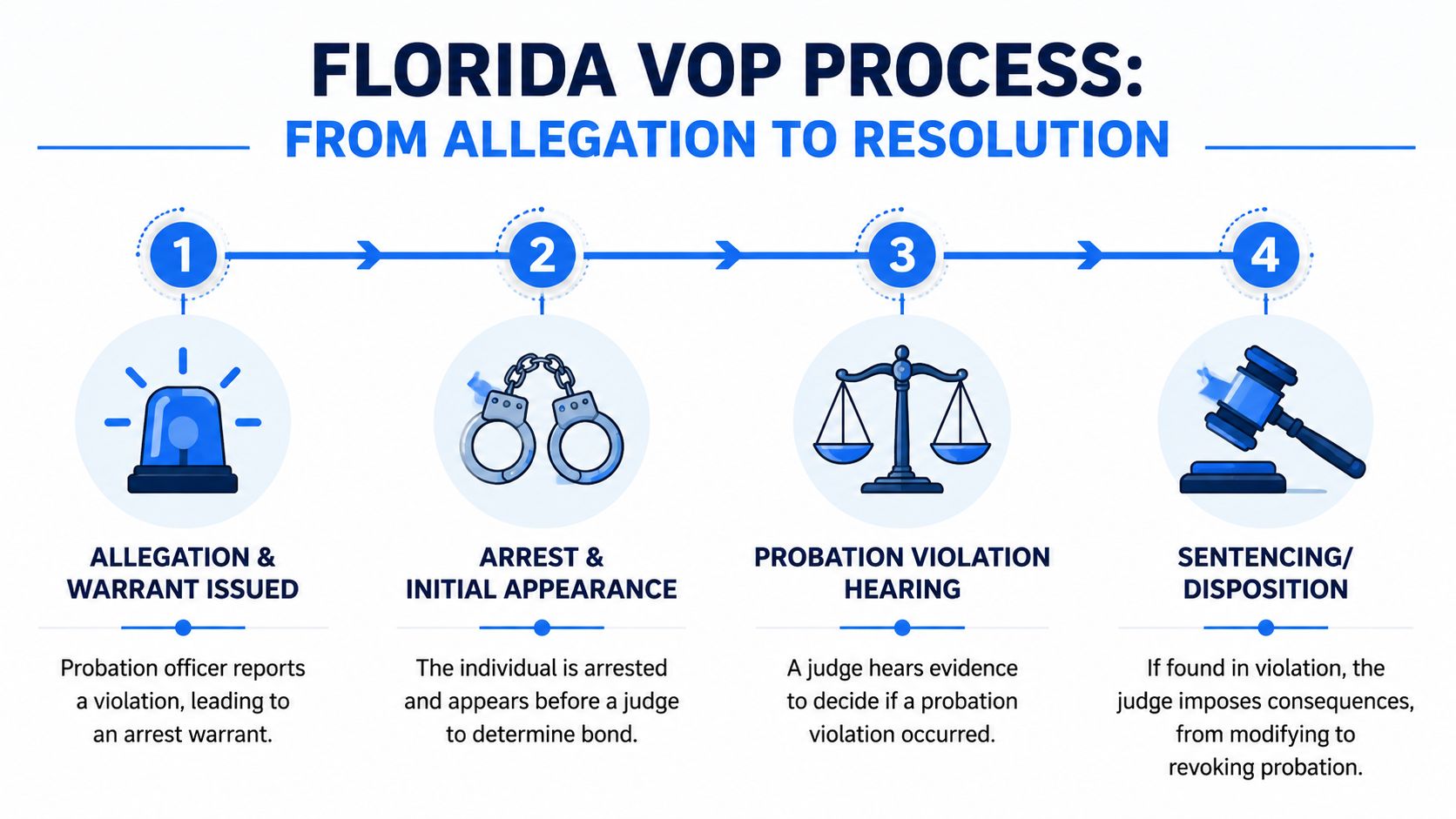
Para obtener una perspectiva más amplia sobre esta materia, esta página sobre violaciones de libertad condicional en Florida proporciona un panorama detallado. El curso procesal ordinario suele desarrollarse de la siguiente manera:
La acusación y la orden de arresto
El oficial de probatoria remite un informe del presunto incumplimiento al tribunal. Dicho informe puede dar lugar a la emisión de una orden de detención o a una orden de comparecencia, según la gravedad de los hechos y el criterio del juez.
Si se expide una orden de arresto, las autoridades pueden proceder a detenerle en su domicilio, lugar de trabajo, durante un control de tráfico o al comparecer en el tribunal por otro asunto. Por esta razón, evadir el contacto con su oficial de probatoria es contraproducente; el proceso judicial podría estar en marcha sin su conocimiento.
Arresto y primera comparecencia
Posteriormente a la detención, será conducido ante un juez de primera instancia. En la mayoría de los casos de VOP, la puesta en libertad no es automática. Una orden de retención por probatoria puede requerir que permanezca en custodia de manera preventiva mientras la defensa legal gestiona la fijación de una audiencia y recaba las pruebas necesarias.
Esta fase inicial es decisiva para consolidar una postura de defensa sólida. Si la representación legal recopila con prontitud registros médicos, testimonios, constancias de tratamiento, comprobantes de pago o comunicaciones cruzadas con el oficial de supervisión, dicho acervo probatorio puede influir de manera favorable en la apreciación del juzgador desde el inicio del proceso.
La audiencia no es un juicio por jurado
Una audiencia de violación de libertad condicional en Florida difiere sustancialmente de un juicio de orden penal ordinario. No interviene ningún jurado para determinar los hechos; es el juez de la causa quien analiza la prueba y determina si existió una violación.
Asimismo, el estándar de prueba es inferior al exigido en un juicio penal. La Fiscalía no tiene el deber de probar la acusación más allá de toda duda razonable. Este estándar probatorio más flexible suele generar una percepción de indefensión en los acusados que presumen que el nuevo hecho debe ser plenamente acreditado en primer término.
La audiencia de VOP representa frecuentemente la comparecencia judicial de mayor riesgo en estos procesos, no por su vistosidad formal, sino por la celeridad procesal y el amplio margen de discrecionalidad que la ley confiere al juez.
Qué sucede después del fallo del juez
En caso de que el juzgador determine la inexistencia de la infracción, se ordenará la continuación de la libertad condicional. Si por el contrario determina que existió un incumplimiento, el tribunal tiene la facultad de mantener la probatoria, modificar sus condiciones con mayores restricciones o revocarla para imponer una pena privativa de libertad.
Tal determinación se fundamentará habitualmente en la tipología del incumplimiento, su historial de observancia previa, la credibilidad que el juez le otorgue a su testimonio y la argumentación fáctica y de mitigación planteada por su abogado. En los tribunales del condado de Broward, Fort Lauderdale, Palm Beach y Miami-Dade, una preparación exhaustiva del caso suele alterar significativamente la resolución judicial.
Posible tiempo de cárcel y sanciones por violación de libertad condicional
Esta es, justificadamente, la principal interrogante de los afectados: ¿A qué tiempo de cárcel me expongo ante esta violación? La resolución a esta duda está sujeta al cargo penal de origen, la imputación concreta formulada, su comportamiento previo bajo supervisión y la apreciación que el juez realice de los hechos del caso.
Lo que un juez puede dictaminar
Bajo la legislación del estado de Florida, un juez cuenta con tres opciones fundamentales tras una audiencia de VOP:
Restablecer la libertad condicional: El juez le reincorpora al régimen de supervisión bajo las mismas cláusulas originales.
Modificar la libertad condicional: El tribunal adopta medidas más rigurosas que pueden incluir internamiento médico, incremento de reportes presenciales, toques de queda rígidos, servicio a la comunidad u otras obligaciones.
Revocar la libertad condicional: El juzgador deja sin efectos el beneficio procesal y dicta una sentencia de prisión efectiva.
El mayor peligro punitivo se presenta cuando la presunta infracción deriva de la comisión de un nuevo hecho delictivo. En Florida, de revocarse la probatoria por la comisión de un nuevo delito, el juez está facultado para imponer de manera retroactiva la totalidad de la pena privativa de libertad que inicialmente quedó en suspenso. Un caso de probatoria puede convertirse en una condena de hasta 5 años de prisión por el delito grave originario, tal como se especifica en este análisis sobre tiempo de cárcel por violación de libertad condicional de un delito grave en Florida.
Por este motivo, las personas imputadas por un nuevo DUI, cargos de violencia doméstica, hurto o delitos de drogas mientras se encuentran bajo supervisión deben abordar el procedimiento de VOP con el mismo rigor que requiere el nuevo cargo penal imputado.
Las violaciones de carácter técnico también pueden dar lugar a la imposición de prisión, aunque la aproximación judicial tiende a ser distinta. Los tribunales valoran si los hechos constituyen una falta leve, aislada, derivada de dificultades en procesos de rehabilitación, o si son susceptibles de ser rectificados. En la práctica jurídica, diversas faltas técnicas concluyen mediante resoluciones de modificación en lugar de revocaciones totales, aunque se mantiene el riesgo de prisión si el juzgador constata desobediencias reiteradas.
Sanciones por VOP en Florida de un vistazo
Tipo de Violación | Sanciones Comunes | Posible Tiempo de Cárcel/Prisión |
|---|---|---|
Violación técnica | Amonestación, incremento de reportes, tratamiento médico, obligaciones accesorias, restablecimiento o modificación | Puede conllevar prisión efectiva en atención al criterio del tribunal y la pena inicial suspendida |
Acusación de un nuevo delito | Petición de revocación de libertad condicional, encarcelamiento preventivo, procesamiento independiente por el nuevo cargo y sentencia sobre el caso original | Expone al procesado a la totalidad de la pena de prisión que fue suspendida en su caso de origen |
Un proceso de probatoria por un delito menor no reviste los mismos riesgos que uno de categoría grave. Si la infracción inicial constituía un delito grave, el riesgo penal aplicable tras una eventual revocación es severo. Si el proceso judicial inicial culminó con una pena de prisión suspendida, ese beneficio procesal previo puede perderse con gran rapidez.
Qué influye realmente en los resultados
Habitualmente, el juez evalúa factores sustanciales más allá del texto de la imputación. Los siguientes criterios procesales resultan determinantes:
El tipo de infracción: Los incumplimientos de orden técnico y de naturaleza sustantiva reciben una consideración penal diferenciada.
Su historial bajo supervisión: Los periodos prolongados de observancia reglamentaria operan en su beneficio, mientras que las reincidencias perjudican el caso.
Su actitud ante el hecho: El sometimiento voluntario a tratamiento médico, los pagos oportunos de obligaciones y los esfuerzos comprobados para corregir la situación se valoran positivamente.
La solvencia técnica de la defensa legal: La existencia de debilidades probatorias, la vigencia de condiciones ambiguas y la falta de dolo en el incumplimiento pueden inclinar favorablemente la decisión del órgano judicial.
Si se encuentra preocupado por la posibilidad de ingresar en prisión por violaciones de probatoria en el condado de Broward o en cualquier demarcación del sur de Florida, recuerde que la imposición de la pena máxima no es un hecho inevitable, pero tampoco debe confiarse a la indulgencia judicial. El tribunal dispone de un amplio arbitrio judicial una vez declarada la existencia de una violación.
Cómo defenderse de una acusación de violación de libertad condicional
Son muchos quienes comparecen ante la sede judicial con la falsa creencia de que su única alternativa es la contención de daños. Esto es un error de apreciación. En una gran cantidad de procedimientos por VOP, se dispone de una opción de defensa real y efectiva.

El Estado aún debe proveer prueba de una violación real
Los tribunales de Florida no sancionan con el mismo rigor metodológico cualquier conducta imperfecta. Una defensa legal efectiva suele estructurarse en dilucidar si el presunto incumplimiento posee carácter doloso (willful) y sustancial.
En términos prácticos, esto significa que si se incumplió la orden de manera deliberada, la defensa presenta un grado mayor de complejidad. No obstante, si el incumplimiento derivó de confusión, enfermedad, falta de notificación formal, errores administrativos o causas de fuerza mayor ajenas a su voluntad, la orientación procesal cambia sustancialmente.
No se declare culpable de una violación meramente por el hecho de que el departamento de probatoria emita un dictamen en ese sentido. Los informes de probatoria suelen ser incompletos y, con frecuencia, contienen errores.
La defensa técnica está facultada para contradecir los fundamentos de hecho de la acusación. Los historiales médicos de pruebas toxicológicas pueden resultar deficientes, los registros de asistencia carecer de exactitud o los estados de cuenta de pagos judiciales evidenciar mayor cumplimiento del que se aduce en la declaración jurada. Del mismo modo, un nuevo arresto puede revelarse carente de fundamentos tras examinar minuciosamente el material de video de cámaras corporales de la policía, las declaraciones de testigos o vicios en los procedimientos de búsqueda y captura.
Defensas prácticas de gran relevancia
Existen defensas destinadas a combatir directamente la existencia de la imputación. Otras consisten en justificaciones fundadas dirigidas a desvirtuar el carácter doloso o intencional del incumplimiento.
Falta de veracidad en los hechos: Usted sí compareció, sí realizó los abonos exigidos o completó debidamente la capacitación ordenada, aun cuando la documentación administrativa no se encuentre actualizada.
Ambigüedad en la condición fijada: La orden dictada resultaba imprecisa, contradictoria o careció de una explicación formal adecuada.
Causa o justificación razonable: Una emergencia de salud comprobada, hospitalización urgente, fallas graves en el transporte, crisis familiar severa u otra circunstancia sobrevenida impidieron la observancia de la norma.
Ausencia de elementos probatorios fiables: La evidencia provista por la Fiscalía resulta feble, incongruente o fundamentada en meras conjeturas jurídicas.
El nuevo cargo penal es defendible: En supuestos donde la violación sustantiva se funde en un nuevo arresto, la defensa puede cuestionar de origen la legalidad de dicha detención.
Análisis jurídicos recientes constatan que aportar una justificación razonable ante el incumplimiento es un argumento medular para evitar el encarcelamiento, tal como se expone en este artículo referente a las defensas en procesos de probatoria y causas justificadas. Este principio tiene vigencia general: los tribunales no están obligados a sancionar cada retraso u omisión administrativa como un acto de desacato deliberado.
Una defensa penal rigurosa requiere de sustento documental, testimonios y precisión temporal: desde informes hospitalarios y registros de mensajería móvil hasta constancias bancarias de pago, datos de localización satelital GPS, capturas de pantalla, registros de programas de desintoxicación o cuadrantes horarios de trabajo. En los procedimientos por VOP, el sustento documental tiene un valor determinante dada la velocidad procesal y el interés del juzgador en pruebas materiales objetivas.
Negociación de alternativas a la cárcel y reducción de penas
Aun en escenarios donde no resulte viable desestimar la imputación en su totalidad, la privación de libertad no constituye la única resolución posible. Diversos resultados óptimos en casos de probatoria se logran mediante una adecuada atenuación o mitigación de los cargos, planteada antes de que el juzgador determine la prisión preventiva o definitiva.
La mitigación transforma los casos
La mitigación penal consiste en acreditar ante la sede judicial que la continuidad del régimen de supervisión comunitaria resulta más aconsejable que la imposición de una pena de prisión. En el marco de un proceso de probatoria en el sur de Florida, esto puede sustentarse en avances comprobados en rehabilitación, estabilidad laboral, cargas familiares ineludibles, análisis toxicológicos negativos posteriores a una recaída o la oportuna regularización de deudas pendientes.
Su abogado puede instar al órgano judicial a contemplar opciones de carácter alternativo tales como:
Programas de rehabilitación alternos a la cárcel: El ingreso voluntario en centros de desintoxicación, hospitalización médica, tratamientos ambulatorios o terapias de salud mental.
Supervisión con modificaciones específicas: Monitoreo presencial más estrecho, citas obligatorias adicionales o rigidez de control en sustitución del encarcelamiento.
Acciones paliativas inmediatas: Pago inmediato de saldos deudores, inscripción expedita en los institutos asignados o cumplimiento intensivo de las horas de servicio pendientes.
Medidas disciplinarias alternas: Arresto bajo sistema domiciliario, servicio comunitario obligatorio u otras restricciones diseñadas para corregir la conducta sin privar totalmente de la libertad al individuo.
Esta clase de argumentación de defensa es de gran utilidad cuando se presenta estructurada y bajo un estricto principio de veracidad. Los jueces tienden a mostrar mayor apertura cuando se comprueba que el investigado ha adoptado las medidas de corrección de forma autónoma, en lugar de dilatar el cumplimiento mediante promesas futuras.
Para un gran número de procesados, la finalidad estratégica comprende no solo superar la acusación por violación de probatoria, sino lograr también la finalización anticipada de la supervisión cuando se reúnan los requisitos previstos en la ley. Si este es su objetivo, infórmese sobre cómo el beneficio de terminación anticipada de la probatoria en Florida puede insertarse en una planeación de defensa y apego normativo integral.
Un juzgador se mostrará sensiblemente más inclinado a otorgar una segunda oportunidad cuando observe conductas correctivas efectivas y no meras justificaciones verbales.
Toda negociación procesal se calibra en relación directa con el delito original de la causa. Una persona sujeta a probatoria por delitos no violentos que presenta dificultades en su rehabilitación proyecta un perfil considerablemente distinto del de un individuo imputado de un nuevo delito violento de gravedad relevante. Las particularidades del hecho y la idoneidad técnica en la defensa penal son igualmente determinantes en la resolución.
Medidas inmediatas a tomar y cuándo contactar a un abogado
Si sospecha de un quebrantamiento de su probatoria o las autoridades correspondientes ya se han comunicado con usted, los plazos procesales están corriendo. La dilación suele agravar la condición de su defensa.
Teniendo en cuenta que el 23 por ciento de los ingresos a la prisión estatal provienen de infracciones relativas a condiciones de supervisión meramente de carácter técnico, el marco procesal se muestra sumamente punitivo ante fallas administrativas, de acuerdo con el informe del Instituto Vera sobre condiciones irracionales en la libertad condicional. He aquí el motivo de la relevancia de estructurar una defensa legal oportuna e integral.
Qué hacer en este preciso momento
Resguarde elementos documentales: Archive comunicaciones escritas, correos electrónicos, capturas de pantalla, tiques de pago, informes médicos de rehabilitación, resultados de exámenes químicos de laboratorio y cualquier documento que acredite la observancia de las reglas o justifique de manera contundente la problemática suscitada.
Mantenga la comparecencia ante la probatoria si resulta factible: Salvo indicación en contrario de su abogado, continúe observando rigurosamente cada regla y condición a las que se encuentre sujeto y sean de posible cumplimiento.
Evite declaraciones informales: No intente dar explicaciones ni justificaciones verbales a los agentes del orden, ni admita responsabilidades que posteriormente puedan emplearse en su contra.
Verifique la vigencia de órdenes de detención: Un abogado penalista cualificado tiene la capacidad de determinar el estatus que guarda su expediente judicial de manera expedita.
Procure representación legal oportuna: Postergar la asesoría jurídica hasta el día de la audiencia limita gravemente el abanico de defensas realizables.
Si requiere una referencia de partida en el estado de Florida, esta guía especializada para encontrar un abogado especializado en violaciones de libertad condicional cerca de usted le proporcionará pautas sobre los requerimientos de idoneidad y preparación técnica que debe poseer el profesional que asuma la defensa en el foro penal local.
El recurso visual puede dar mayor claridad sobre la operatividad práctica de una defensa de orden penal:
La perspectiva de un exfiscal penal resulta de inestimable valor en esta modalidad de procedimientos, toda vez que las audiencias de VOP suelen definirse a partir de la apreciación técnica que los oficiales de probatoria, fiscales y jueces hacen sobre un mismo conjunto de hechos. La intervención oportuna permite revelar inconsistencias probatorias de la contraparte, enmarcar adecuadamente los antecedentes del incumplimiento y poner las consideraciones de mitigación ante el juez antes de que la resolución judicial se incline por la aplicación de prisión.
Si su procedimiento penal radica ante los juzgados de Fort Lauderdale, el condado de Broward, Miami-Dade, Palm Beach o zonas adyacentes del sur de Florida, no demore la toma de decisiones hasta que sea notificado de una fecha de audiencia. Su situación legal ya reviste máxima gravedad en este momento.
Si se expone a cargos de violación de libertad condicional en el sur de Florida, comuníquese hoy mismo con Ticket Shield, PLLC para concertar una consulta jurídica de carácter inicial, confidencial y sin coste. El letrado Jason S. Goldsmith, en su calidad de exfiscal, ejerce la defensa técnica de procesados en el condado de Broward, Fort Lauderdale, Miami-Dade, Palm Beach y en toda la jurisdicción del estado de Florida. Le garantizamos comunicación directa con su abogado defensor, el esclarecimiento de sus alternativas ante la ley y el diseño de la mejor defensa legal orientada a salvaguardar su libertad, su expediente y su futuro.
Las audiencias por violación de probatoria se desarrollan con rapidez y las consecuencias son graves. Conozca cómo el estado de Florida procesa estas infracciones y de qué manera puede evitar la privación de su libertad.