
Terminación Anticipada de la Libertad Condicional en Florida: Su Guía para 2026
Abogado Jason Goldsmith
La libertad condicional puede sentirse como tener la vida en pausa. Es posible que usted esté haciendo todo de manera correcta, reportándose a tiempo, pagando lo ordenado por el tribunal, finalizando las clases obligatorias y manteniéndose fuera de problemas; sin embargo, aún debe lidiar con restricciones de viaje, complicaciones laborales y la constante tensión de saber que un solo error podría llevarlo de regreso ante un juez.
Muchas personas en el Condado de Broward, Fort Lauderdale, Miami-Dade, Palm Beach y en todo el sur de Florida asumen que simplemente deben esperar a que expire el plazo. Con frecuencia, esa premisa es errónea. La legislación de Florida otorga a muchos ciudadanos una vía legal efectiva para culminar su supervisión de manera anticipada, pero el éxito de este proceso suele depender de factores que van más allá de presentar una moción y esperar la firma del juez.
Es fundamental construir un historial de cumplimiento sólido y creíble que demuestre que la supervisión judicial ya ha cumplido con su objetivo de rehabilitación. Para recibir asesoría sobre la terminación anticipada de la libertad condicional en Florida, el enfoque más estratégico consiste en tratar este trámite como un proyecto legal riguroso y no como una mera formalidad. Si requiere asistencia con asuntos relacionados de defensa penal, le invitamos a examinar la gama completa de servicios de defensa penal en Florida de nuestra firma.
Índice de Contenidos
Su camino hacia el fin de la libertad condicional comienza antes de lo que piensa
¿Cumple usted con los requisitos para la terminación anticipada en Florida?
Comparecencia en la audiencia judicial y argumentación de su caso
Resultados potenciales y la importancia real de la terminación anticipada
Preguntas frecuentes sobre la finalización anticipada de la libertad condicional en Florida
Su camino hacia el fin de la libertad condicional comienza antes de lo que piensa
Si se encuentra bajo régimen de libertad condicional y busca avanzar en su vida, la carga restrictiva suele manifestarse en los momentos cotidianos: cuando surge una oportunidad laboral y viajar representa un obstáculo, cuando se planifica un evento familiar y se requiere autorización judicial, o cuando el simple deber de comparecer para reportarse afecta su empleo, el cuidado de sus hijos o su transporte.
Por este motivo, la terminación anticipada es de vital importancia. No se trata únicamente de un asunto de conveniencia personal; se trata de recuperar la plena autonomía sobre su vida tras haber demostrado al tribunal que es capaz de cumplir con las normas, satisfacer sus obligaciones legales y mantenerse apegado a la ley.
Existe la creencia popular de que los jueces solo otorgan esta medida en circunstancias excepcionales. No obstante, en la práctica profesional, muchas mociones exitosas se fundamentan en realidades más sencillas: el solicitante cumplió rigurosamente con los mandatos del tribunal, finalizó sus compromisos y presentó la solicitud formal de la manera judicial adecuada.
Por qué esta opción es más viable de lo que muchos creen
En el estado de Florida, la libertad condicional no tiene la obligación ineludible de prolongarse hasta la fecha original de su vencimiento. Para una gran cantidad de personas bajo supervisión, existe un procedimiento legal legítimo para solicitar al tribunal la finalización anticipada una vez alcanzados los hitos obligatorios.
La cuestión práctica no se limita a preguntar: «¿Puedo solicitarlo?». La pregunta determinante es: «¿Puedo demostrarle al juez que no existe una causa justificada para mantenerme bajo supervisión obligatoria?».
Las solicitudes de terminación anticipada adquieren mayor solidez cuando se estructuran como el paso final lógico de un proceso penal debidamente concluido, y no como un intento de evadir responsabilidades.
La regla no escrita que la mayoría de las personas pasa por alto
Desde la perspectiva del ejercicio del derecho, los jueces y fiscales responden de manera más favorable a una preparación documental exhaustiva que a meros discursos orales. Si el expediente de cumplimiento está impecable, el oficial de libertad condicional no manifiesta objeciones, se han liquidado las obligaciones pecuniarias y cada condición impuesta se encuentra debidamente certificada, la moción se inicia desde una posición jurídica sumamente ventajosa.
Esto es particularmente cierto en los juzgados del sur de Florida, los cuales gestionan una alta carga de casos y donde un juez dispone de un tiempo severamente limitado para evaluar su expediente. Una solicitud rigurosamente estructurada facilita que el juzgador resuelva de conformidad.
¿Cumple usted con los requisitos para la terminación anticipada en Florida?
La elegibilidad legal constituye el primer filtro obligatorio. Antes de que se formule cualquier estrategia de defensa, narrativa o argumentación para la audiencia, el tribunal requerirá constancia de que el solicitante cumple con los requisitos fundamentales exigidos por la ley.
El marco jurídico de Florida experimentó una reforma sustancial el 1 de octubre de 2019. Para aquellos procesados bajo libertad condicional elegibles, cuya sentencia se dictó en dicha fecha o con posterioridad a ella, el estatuto Fla. Stat. § 948.04 exige al tribunal decretar la terminación anticipada de la supervisión o, en su defecto, convertirla en libertad condicional administrativa, siempre que se satisfagan las condiciones legales aplicables. La única excepción ocurre cuando el juez emite un dictamen escrito y fundamentado de que la supervisión continuada es indispensable para resguardar la seguridad de la comunidad o servir a los intereses de la justicia. Puede consultar el texto íntegro de la norma en el sitio oficial de la Legislatura de Florida sobre el Estatuto § 948.04.
Si su situación jurídica actual involucra dudas o problemas de cumplimiento normativo previa presentación de la solicitud, resulta pertinente comprender el contexto general de la defensa por violación de la libertad condicional en Florida.
La lista de verificación legal que realmente importa
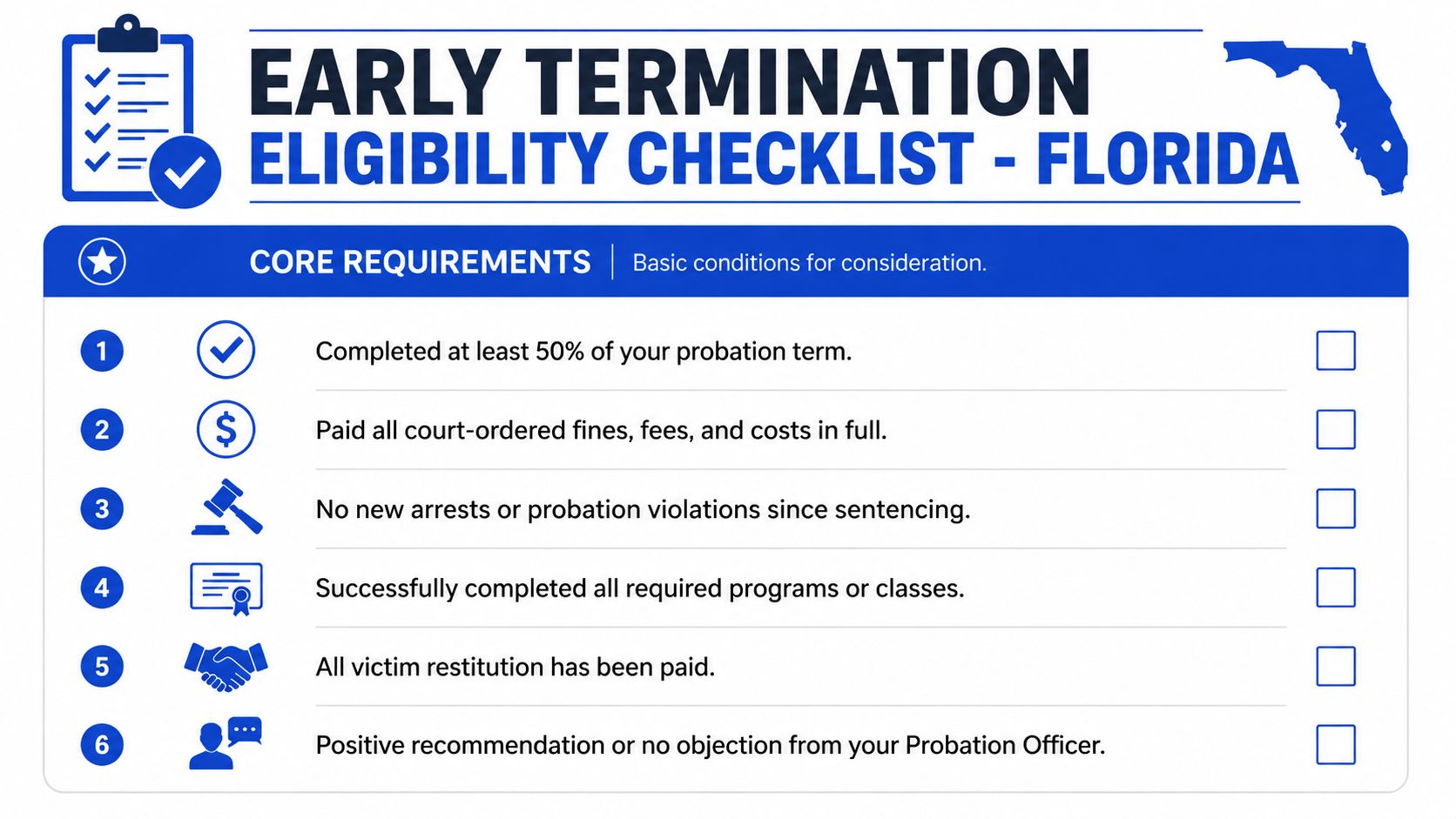
Para la mayoría de las personas que buscan la terminación anticipada de la libertad condicional en Florida, los requisitos esenciales e indispensables son:
Cumplimiento de la mitad del período impuesto. Debe haber transcurrido de forma efectiva al menos el cincuenta por ciento (50%) del tiempo de su condena.
Satisfacción total de las condiciones especiales. Es obligatorio haber concluido las clases, asesorías psicológicas, tratamientos, horas de servicio comunitario u otras condiciones específicas impuestas.
Ausencia de declaraciones oficiales de violación (affidavits) vigentes. La presentación activa de un informe de violación de términos obstaculiza de forma inmediata su elegibilidad.
Inexistencia de una exclusión pactada en el acuerdo de culpabilidad. Si en los términos de la sentencia negociada se excluyó expresamente la terminación anticipada, este elemento posee un carácter vinculante en el análisis de su caso.
No calificar como delincuente grave de especial preocupación («violent felony offender of special concern»). Esta categoría delictiva se rige por un régimen jurídico de restrictiva y distinta aplicación conforme al estatuto.
En términos estrictamente prácticos: si existe alguna condición pendiente de cumplimiento, la moción carece de la fuerza legal necesaria. Si aún adeuda montos económicos, carece de certificados oficiales de cumplimiento o no ha concluido algún programa obligatorio, la estrategia idónea consiste en subsanar estas omisiones antes de formalizar el trámite ante el juzgado.
Qué garantiza y qué no garantiza la elegibilidad
El cumplimiento estricto de los requisitos previstos en el estatuto le otorga la facultad procesal de ser escuchado por el tribunal; no obstante, esto no garantiza de manera automática la conclusión inmediata de la libertad condicional en todos los asuntos.
El juez conservará en todo momento la facultad discrecional de evaluar el nivel de riesgo, la rendición de cuentas y si la persistencia de la supervisión cumple un fin judicial útil. En consecuencia, dos individuos bajo las mismas condiciones teóricas de elegibilidad pueden obtener resoluciones distintas dependiendo de la pulcritud y solidez técnica de su expediente judicial.
Un método eficaz para analizar este panorama es el siguiente:
Factor Analizado | Elementos Favorables a la Moción | Elementos Perjudiciales para la Moción |
|---|---|---|
Obligaciones financieras | Pagado en su totalidad (multas y restitución) | Saldo deudor pendiente |
Condiciones específicas del tribunal | Completadas con certificados e informes de respaldo | Incompletas o faltas de documentación probatoria |
Historial de cumplimiento | Conducta intachable y reportes constantes | Incidentes previos de incumplimiento o incomparecencias |
Términos del acuerdo de culpabilidad (Plea) | Sin cláusula de exclusión expresa | Cláusula expresa que prohíbe la terminación anticipada |
Criterio de práctica legal: La elegibilidad normativa abre la vía judicial; la preparación rigurosa del expediente es lo que permite culminar el proceso con éxito.
Construcción de un caso sólido antes de presentar su moción
Una proporción significativa de las mociones deficientes fracasa mucho antes de la fecha fijada para la audiencia. Ello suele ocurrir, no porque el beneficio de la terminación anticipada fuese inalcanzable, sino debido a que los documentos presentados revelaron al juez asuntos pendientes, falta de probanzas o dudas procesales de relevancia.
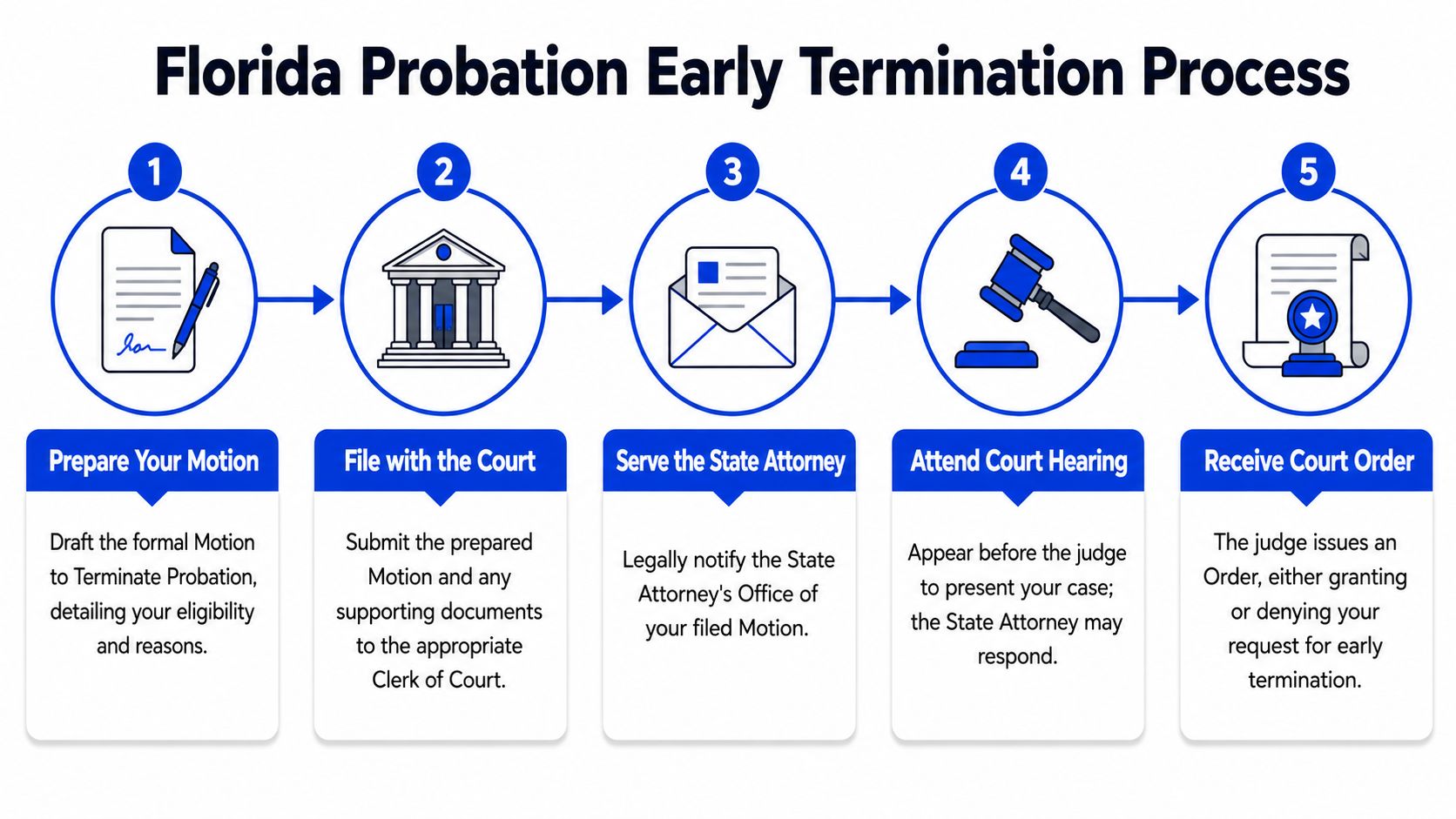
Este procedimiento es eminentemente formal y técnico. El solicitante o su representación letrada debe radicar una Moción para Dar por Terminada la Libertad Condicional ante la secretaría del tribunal, realizar la notificación legal correspondiente a la Fiscalía del Estado (State Attorney) y al oficial de supervisión, y adjuntar un proyecto de orden judicial para resolver. Posteriormente se señalará audiencia, a menos que el juez opte por resolver con base en los autos. Los errores más recurrentes consisten en detalles omitidos tales como deudas por multas o restitución, registros técnicos de violación, omisión de notificación a las partes procesales, o la fundamentación de un expediente falto de documentación de soporte. Los formularios de representación por derecho propio (pro se) de Florida expresamente instruyen a los peticionarios a coordinar previamente con su oficial de libertad condicional y aportar de forma ineludible las pruebas de cumplimiento, lo que subraya la prioridad absoluta de acreditar fehacientemente cada condición. Dicha secuencia de trabajo se detalla en este análisis de procedimientos y aspectos prácticos de la terminación anticipada en Florida.

Si le preocupa que una incidencia menor de supervisión escale a un escenario procesal complejo, le recomendamos informarse sobre el alcance de las actuaciones de un abogado especialista en violación de libertad condicional en su demarcación.
Lo que los jueces realmente desean evaluar
Los jueces no buscan dramatismo en estas gestiones; exigen claridad procesal y probatoria absoluta.
Un expediente idóneo debe manifestar al tribunal, sin margen a la duda, que todo propósito de la sentencia ha concluido satisfactoriamente. El procesado se apegó de manera constante a lo ordenado, satisfizo cada requerimiento legal y no subsiste materia alguna que justifique prolongar la intervención del aparato punitivo del Estado.
Bajo esta perspectiva penal, la narrativa fáctica adquiere un peso determinante: debe ser precisa, honesta y disciplinada:
Cumplimiento de carácter regular y continuo. Inexistencia de reportes tardíos u omisiones injustificadas.
Cumplimiento oportuno de condiciones. El procesado no postergó el cumplimiento de sus compromisos hasta el límite del plazo decretado.
Pertinencia temporal y social de la solicitud. Elementos de estabilidad laboral, familiar y de rehabilitación que fundamentan de manera razonable el fin del régimen de supervisión.
Ausencia de sorpresas para el oficial de supervisión. La oposición estatal suele acentuarse si dicho funcionario resulta marginado del trámite o desinformado respecto del escrito de moción.
El expediente debe responder a cada interrogante evidente
Previo a la radicación de la moción, debe estructurarse el material probatorio con el mismo rigor técnico que exigiría la Fiscalía para su análisis y que un juez requiere para su valoración jurídica.
Organice la documentación con estricto orden metodológico:
Comprobantes oficiales de pago. Recibos o estados de cuenta expedidos por la secretaría judicial que acrediten la liquidación completa de multas, costos procesales y restitución de daños.
Certificados de conclusión. Documentos formales que atestigüen la aprobación de clases, terapias de salud mental, tratamiento contra adicciones o servicio comunitario.
Acreditación de notificaciones procesales. Constancias procesales de que tanto la Fiscalía del Estado como el oficial de supervisión fueron notificados formalmente de la moción.
Proyecto de orden judicial. Documento formal redactado de manera que el juzgador pueda avalar y suscribir de conformidad la moción planteada.
La moción debe asimismo fundamentar jurídicamente por qué la prolongación de la libertad condicional carece hoy de utilidad social o penal. Este argumento cobra fuerza cuando se sostiene en hechos demostrables mediante constancias objetivas, y no en meras peticiones de clemencia.
Una moción con peso legal no apoya su viabilidad primeramente en argumentos emotivos de benevolencia; acredita de forma documental que no subsiste ninguna obligación pendiente que deba ser supervisada.
El Legal Process para Filing Your Motion to Terminate
Culminada la fase de preparación, la presentación del escrito de moción debe cumplir con las formalidades procesales vigentes. En las jurisdicciones de Broward, Miami-Dade, Palm Beach y demás condados de Florida, el más mínimo error de carácter adjetivo puede demorar de forma sustancial el trámite o derivar en el desechamiento de la petición.
Para comprender adecuadamente el desarrollo de esta fase, resulta conveniente visualizar la secuencia procesal.
Si su situación jurídica reviste de mayor complejidad debido a la existencia de un reporte de incumplimiento de términos o una acusación pendiente de resolver, es sumamente aconsejable analizar los lineamientos de la defensa ante una violación de libertad condicional en Florida.
Qué documentos se presentan y a dónde se dirigen
De manera habitual, el expediente de radicación se compone de:
Moción para Dar por Terminada la Libertad Condicional
Escrito formal que debe precisar el número de causa, la sentencia dictada, el término de la medida, las condiciones satisfechas y el fundamento legal que asiste la solicitud.Medios de prueba anexos
Certificados, recibos y constancias que acrediten materialmente el cumplimiento total de los compromisos adquiridos.Proyecto de resolución u orden judicial
Propuesta de documento jurídico redactada de tal modo que facilite al tribunal la suscripción inmediata del fallo favorable.Constancia de notificación a las partes obligatorias
Prueba del traslado del escrito de moción a la Fiscalía del Estado y a la correspondiente oficina de libertad condicional.
Una vez presentado formalmente el escrito ante el secretario del tribunal, el juez determinará de conformidad si es indispensable señalar fecha para audiencia o si el asunto puede resolverse basándose únicamente en el análisis de las constancias aportadas.
Un análisis esquemático breve puede proveerle de una perspectiva clara sobre el tratamiento ordinario que los tribunales otorgan a este tipo de solicitudes.
Cómo evitar errores de carácter procesal
Un escollo habitual para los recurrentes que actúan sin representación profesional radica en el hecho de que, si bien la legislación es favorable a su petición, los documentos aportados adolecen de fallas técnicas que impiden la actuación expedita del juzgador.
Los defectos procesales más recurrentes suelen ser:
Omisión de datos de identificación del expediente. Inconsistencia o ausencia de datos clave como el número de caso penal, el delito específico imputado o los datos del fallo condenatorio.
Ausencia del borrador de orden judicial. Privar al juez del medio idóneo para dictar de manera rápida y formal su resolución.
Deficiencia en las notificaciones correspondientes. Registro ante la secretaría judicial sin haber materializado en forma legal el traslado al fiscal del caso o al oficial de supervisión estatal.
Aseveraciones carentes de sustento documental. Argumentar de palabra que se ha dado cumplimiento a la totalidad de las condiciones de la sentencia sin adjuntar las constancias que de forma irrefutable lo certifiquen.
La conclusión práctica para el solicitante es evidente: el trámite debe reflejar un análisis riguroso y cerrado. Si la autoridad judicial detecta lagunas procesales o indicios de adeudos económicos de reparación del daño, dicha incertidumbre operará invariablemente en perjuicio de su causa.
Comparecencia en la audiencia judicial y argumentación de su caso
La audiencia en tribunales de lo penal suele desarrollarse de forma más breve de lo que los comparecientes presuponen de ordinario. Su expediente es llamado por el secretario; el juzgador revisa los autos; la representación de la Fiscalía expone su postura procesal, y la opinión del oficial de supervisión se introduce de manera directa o mediante reportes por escrito. Satisfecho esto, el juez resuelve si declara procedente extinguir la supervisión.
No obstante, la aparente brevedad del acto de juicio no debe llevar a equívocos. Una audiencia de corta duración exige un nivel de preparación documental impecable, puesto que el margen de tiempo para aclarar dudas o subsanar omisiones probatorias en plena sala de audiencias suele ser mínimo.
La dinámica habitual en la sala del tribunal
Desde la perspectiva del justiciable, la resolución judicial gira por lo general en torno a cuestionamientos prácticos medulares:
¿Se ha dado cumplimiento puntual a la totalidad de las obligaciones y especialidades?
¿Manifiesta la Fiscalía alguna oposición jurídicamente fundada?
¿Cuál es la recomendación u opinión técnica que vierte el oficial de libertad condicional de la causa?
¿Existen indicios que afecten la seguridad de la comunidad o los altos fines de la justicia si se decide liberar al procesado de la supervisión?
De existir respuestas favorables a estas interrogantes, el planteamiento legal de la defensa debe evitar histrionismos inútiles y conducirse con absoluta precisión técnica y sobriedad.
En una gran cantidad de juzgados, contar con una opinión favorable o de neutralidad de parte del oficial de libertad condicional reviste una gran trascendencia procesal. Los jueces asignan un peso considerable al criterio de estos funcionarios por ser quienes han evaluado de primera mano la conducta diaria del solicitante. Por ende, la conformidad de este oficial reduce de manera notable la reserva natural del juez.
Cómo se formula un argumento persuasivo ante el juez
El argumento de mayor sustento jurídico en estos casos no estriba en aducir que el defendido goza de méritos para merecer clemencia, sino en probar y sostener con rigor técnico que la persistencia en el régimen de supervisión ha dejado de cumplir una finalidad legal de carácter útil.
Esta perspectiva resulta clave. Garantiza el debido respeto a la ejecutoria de la sentencia, evidenciando de manera simultánea que la misma ya ha agotado los fines de readaptación social y control que motivaron su imposición.
Un planteamiento forense persuasivo y fundamentado suele formularse en los siguientes términos rectores:
El procesado dio debido cumplimiento a las condiciones accesorias, liquidó la totalidad de las obligaciones pecuniarias impuestas, no registró incidentes ni reportes de incumplimiento de términos a lo largo de su condena actual, y ha plenamente acreditado una conducta estable en su entorno social y productivo. No subsiste materia alguna de supervisión que requiera la intervención continuada del oficial a cargo o del tribunal.
En sentido opuesto, ¿cuáles elementos debilitan la defensa? Las justificaciones infundadas, argumentaciones abstractas de precariedad personal o apelaciones subjetivas desprovistas de respaldo testimonial o documental sólido. Los jueces analizan diariamente este tipo de planteamientos emotivos; en consecuencia, un expediente jurídico impecable y objetivo posee siempre mayor valor estratégico y legal.
De plantear la Fiscalía alguna objeción formal, la réplica legal debe enfocarse estrictamente en rebatir de forma puntual y razonada las causales invocadas, aclarando imprecisiones fácticas con serenidad procesal y reconduciendo al magistrado al análisis de las probanzas aportadas.
Resultados potenciales y la importancia real de la terminación anticipada
La sustanciación de este recurso judicial suele desembocar de ordinario en una de tres determinaciones posibles: el juez estima procedente la moción y la otorga; la deniega por considerar que no se han cumplido los presupuestos de procedencia; o bien determina modificar la medida, mutando el régimen de supervisión ordinario a libertad condicional de carácter administrativo conforme a las directrices legales aplicables al caso concreto.
Cada determinación posee relevancia para el justiciable, pero su trascendencia en su vida jurídica y laboral es sustancialmente distinta.
Otorgada, denegada o convertida
Presentamos un análisis comparativo de las diversas resoluciones:
Resolución Judicial | Significado Jurídico | Alcance Práctico |
|---|---|---|
Otorgada | Se extingue formalmente el régimen de libertad condicional | Se cancela de manera definitiva toda obligación de reporte y supervisión judicial |
Denegada | Se mantiene vigente la medida de control social decretada | Subsiste el deber de ceñirse a los términos fijados y comparecencias ordenadas |
Convertida a Libertad Condicional Administrativa | Cesa el requerimiento de reporte presencial regular, si bien la condena subsiste | Disminuye de manera notable el control diario; sin embargo, no representa una absolución total |
Un fallo de denegación no representa necesariamente la clausura perpetua de la vía de terminación prematura. En diversas ocasiones, constituye un indicativo de que el juzgador requiere que se satisfaga alguna condición remanente, que transcurra mayor término temporal que demuestre estabilidad de conducta, o que la moción careció de la solidez técnica exigible. Ante tal escenario, la decisión procesal adecuada estriba en subsanar metódicamente dicha insuficiencia en lugar de insistir con una presentación idéntica que adolezca de los mismos vicios formales.
Por qué liberarse de la supervisión judicial es crucial en la vida real
Este asunto trasciende con creces el hecho de evitar el tener que acudir a programar citas con su oficial de libertad condicional.
Un estudio de especialidad elaborado por el Florida Criminal Justice Institute en 2022 acreditó que la tasa de revocación de libertad condicional en el estado se mantuvo en un promedio cercano al 48% desde el año 2012, y que el 57% de las revocaciones judiciales dictadas entre los años 2010 y 2019 se debieron a infracciones típicamente de carácter técnico, y no a la comisión de nuevos hechos ilícitos. El propio estudio estableció que aproximadamente uno de cada tres incidentes de revocación concluyó en la imposición de una pena de internamiento en prisión estatal. Dichas estadísticas y valoraciones técnicas forman parte del análisis e informe de revocaciones elaborado por el Florida Criminal Justice Institute.
A la luz de estas preocupantes premisas estadísticas es que cobra especial relevancia la terminación anticipada de su medida. Una vez obtenida la resolución de extinción de la libertad condicional de parte del juez, el latente peligro de ser procesado e ingresado a prisión debido a una omisión meramente adjetiva o técnica cesa por completo. Para muchos ciudadanos libres de cargos vigentes, este beneficio representa el valor preeminente que justifica el inicio de este proceso legal.
La libertad condicional aparenta ser una medida de control tolerable hasta el momento preciso en que una incomparecencia involuntaria por causas imprevistas, un retraso de carácter financiero en los pagos u otra falta técnica se convierte en un procedimiento de revocación ineludible.
Expresado de manera llana y directa: el favorecerse con la terminación anticipada de la supervisión preserva su libertad personal frente a contingencias futuras, eliminando de raíz un riesgo procesal severo en lugar de resolver una simple incomodidad administrativa.
Preguntas frecuentes sobre la finalización anticipada de la libertad condicional en Florida
Muchos ciudadanos bajo supervisión judicial formulan las mismas interrogantes prácticas al conocer la existencia de este recurso de ley. Entre otras, sus dudas habituales versan sobre los tiempos estimados de resolución, la viabilidad de la petición cuando involucra causas penales por delitos graves, y si están habilitados para gestionar su trámite prescindiendo de defensa letrada.
Preguntas Frecuentes
¿Tengo la facultad legal de tramitar la moción de terminación anticipada por mi propia cuenta (pro se)?
Afirmativo, usted posee la facultad legal de radicar su escrito por derecho propio en gran parte de las causas. El reto técnico primordial, no obstante, no estriba meramente en la presentación formal del documento, sino en asegurar que el expediente no carezca de ninguna certificación probatoria obligatoria, se notifique con pulcritud formal a las contrapartes penales y responda a cabalidad a las interrogantes que evaluará el juzgador para dictar sentencia.
¿Cuál es el tiempo de resolución estimado para este proceso judicial?
Este término se encuentra condicionado por la carga del juzgado, la agenda propia del tribunal asignado, la postura de oposición o conformidad que formule la Fiscalía, y la pulcritud y suficiencia del expediente documental que sustente el reclamo. Determinadas solicitudes se resuelven con celeridad; otras requieren más tiempo si resulta imperativo señalar audiencia de debate o si subsisten asuntos formales previos que requieran ser subsanados.
¿Reviste mayor dificultad procesal el procedimiento de terminación anticipada en causas por delitos graves (felonies) que en casos de delitos menores (misdemeanors)?
Invariablemente sí. Los jueces examinan con un grado de exigencia técnica y rigor analítico mucho mayor las causas por delitos de naturaleza grave, en particular si el hecho ilícito que motivó la condena original vulneró de alguna manera la seguridad de la comunidad. No obstante, acreditar un cumplimiento intachable y allegar el expediente probatorio completo es indispensable en ambas clases de procesos penales.
¿Es indispensable contar con la conformidad de mi oficial de libertad condicional para interponer la moción?
No resulta obligatorio en términos estrictamente legales; no obstante, contar con su aval o, como mínimo, con su no oposición al trámite, confiere una solidez enorme a la moción de la defensa. En la práctica jurídica idónea, todo descontento o reparo técnico del oficial de supervisión debe procurarse conciliar y dirimir de manera previa a la comparecencia en sala de audiencias.
¿Qué consecuencias jurídicas surgen si al momento de la moción persisten deudas por pagar?
Esta constituye una de las causas más frecuentes por las cuales las mociones son denegadas de manera inmediata por el tribunal. Si el procesado mantiene deudas por concepto de multas aplicadas, costas judiciales o montos por concepto de restitución integral del daño a la víctima, el juzgador considerará la ejecución de la sentencia penal como inconclusa y desestimará su pretensión.
¿Cómo afecta el trámite el haber registrado con anterioridad alguna incidencia o reporte de incumplimiento de mis términos?
Ello dependerá de la naturaleza de la infracción y, de forma particular, de si dicha incidencia derivó en un informe definitivo de violación de términos (affidavit) radicado ante el tribunal judicial en su condena en vigor. Los pormenores y antecedentes de la causa, así como la manera técnica en que hubiere quedado solucionada dicha incidencia, serán evaluados minuciosamente por el tribunal.

Si estima que su situación jurídica particular satisface los presupuestos de elegibilidad descritos para tramitar la terminación anticipada de su libertad condicional en Florida, la decisión procesal más prudente es requerir de forma inmediata una valoración técnica individualizada de su caso penal. Aquello que pudiese configurarse como un trámite sencillo, de ordinario y en la práctica procesal penal concluye por resolverse en función de detalles insertos en el redactado del pacto de conformidad original, el estado de cuenta y pagos, el archivo de la oficina de supervisión o las prácticas judiciales de cada juzgado local.
Si se encuentra resuelto a iniciar este trámite de terminación anticipada, o de requerir asistencia letrada frente a incidencias complejas de cumplimiento de términos en los condados de Broward, Fort Lauderdale, Miami-Dade, Palm Beach, o cualquier demarcación aplicable dentro del estado de Florida, le invitamos a ponerse en contacto con la firma Ticket Shield, PLLC a fin de agendar una sesión de consulta de carácter netamente confidencial. El socio fundador de nuestra firma, Lic. Jason S. Goldsmith, se desempeñó anteriormente como agente fiscal de la Fiscalía del Estado, lo que le brinda un cabal entendimiento técnico sobre las pautas analíticas bajo las cuales jueces y fiscales valoran y resuelven estas solicitudes, aportándole de esta manera el asesoramiento indispensable para encauzar una estrategia de defensa sólida en busca de una sentencia que de manera óptima resguarde sus intereses.
La legislación del estado de Florida faculta a numerosos ciudadanos para obtener la rescisión anticipada de su régimen de libertad condicional. Conozca los requisitos de elegibilidad y el procedimiento formal para interponer una moción de terminación anticipada con altas probabilidades de éxito.