Qué es una conducta lasciva y obscena: Guía legal
Abogado Jason Goldsmith
En Florida, el delito de conducta lasciva u obscena (lewd and lascivious) no constituye un único delito, sino una categoría de infracciones penales tipificadas bajo la sección 800.04, las cuales involucran actos de naturaleza sexual con menores de 16 años. La sanción penal puede oscilar entre un delito grave de tercer grado y un delito grave de primer grado, conllevando frecuentemente la obligación de inscribirse en el registro de delincuentes sexuales tras una condena. Si ha sido contactado por agentes de investigación, notificado con una orden judicial de arresto, o ha identificado dicha imputación en un escrito de acusación formal, la calificación jurídica del cargo es fundamental, ya que delimita los elementos probatorios específicos que la Fiscalía está obligada a demostrar.
Índice de Contenidos
El significado real de la conducta lasciva y obscena en Florida
Los dos elementos de prueba obligatorios para la Fiscalía de Florida
Sanciones, Dosimetría Penal y el Significado de la Puntuación
Registro de Delincuentes Sexuales y otras consecuencias de por vida
Acciones a tomar tras un arresto o investigación en el Sur de la Florida
Preguntas frecuentes sobre cargos por conductas lascivas u obscenas
¿Se aplican las mismas consecuencias penales a menores de edad que a adultos?
¿Es viable solicitar el sellado o la eliminación del expediente penal?
¿Qué acciones proceden ante una orden de arresto activa o una investigación en curso?
¿El término legal "obsceno" o "lascivo" tiene el mismo alcance en todos los casos?
El significado real de la conducta lasciva y obscena en Florida
La situación suele desencadenar un estado de alarma procesal cuando un familiar le comunica que agentes del Alguacil del Condado de Broward pretenden interrogarlo sobre mensajes de texto intercambiados con un menor de edad, o cuando un detective deja una tarjeta de presentación mencionando el término de conducta “lasciva” en un mensaje de voz. El impacto inicial de este término suele provocar pánico debido a su connotación moral e infamante.
Sin embargo, bajo la legislación penal de Florida, este concepto posee una delimitación jurídica sumamente precisa. El término lascivo y obsceno constituye una tipificación penal vinculada a la doctrina histórica sobre la obscenidad, y no un mero juicio de valor subjetivo. Según explica la biblioteca jurídica Cornell Law, los tribunales han asimilado la conducta lasciva y obscena como una manifestación de conducta obscena, la cual carece de protección bajo la Primera Enmienda constitucional dentro de este marco de referencia Doctrina de Cornell Law sobre la conducta lasciva y obscena. Este fundamento constitucional es clave, ya que históricamente permite al legislador regular y penalizar penalmente estas conductas al no considerarse formas de expresión protegidas.
La aplicación penal moderna de este precepto en Florida es aún más restrictiva. En la práctica procesal penal, se refiere generalmente a cargos imputados bajo la sección 800.04 del Código Penal de Florida, con especial énfasis en casos que involucran a menores de edad, exhibicionismo, inducción o contacto físico de naturaleza sexual. Aunque el lenguaje común sugiera una interpretación laxa, en el ámbito jurisdiccional, la representación del Estado tiene la carga procesal de encuadrar los hechos estrictamente dentro de los elementos del tipo penal específico.
Regla procesal fundamental: Ante una imputación formal que consigne conductas "lascivas u obscenas", la estrategia de defensa no debe centrarse en debates terminológicos. Es imperativo analizar exhaustivamente la sección de la norma invocada, dado que el apartado de la acusación determina estrictamente los elementos de cargo que la Fiscalía está obligada a probar.
Este es un punto crítico de confusión procesal. Múltiples fuentes de información generalista se limitan a definir el concepto como "actos deshonestos" o "concupiscentes". No obstante, la jurisprudencia y las leyes de Florida aplican esta terminología de forma diferenciada según la conducta imputada. El litigio puede versar sobre actos de exhibicionismo público, contacto físico, captación o inducción delictiva, o bien fundamentarse estrictamente en la edad de la presunta víctima.
Para un ciudadano bajo investigación en Fort Lauderdale, Miami-Dade o Palm Beach, el debate jurídico no radica en el carácter deshonroso de la acusación, sino en determinar si la Fiscalía cuenta con elementos de convicción suficientes para acreditar la conducta típica imputada, el dolo requerido, la concurrencia de la edad de la víctima y la subsunción del hecho en el apartado legal correspondiente.

Los dos elementos de prueba obligatorios para la Fiscalía de Florida
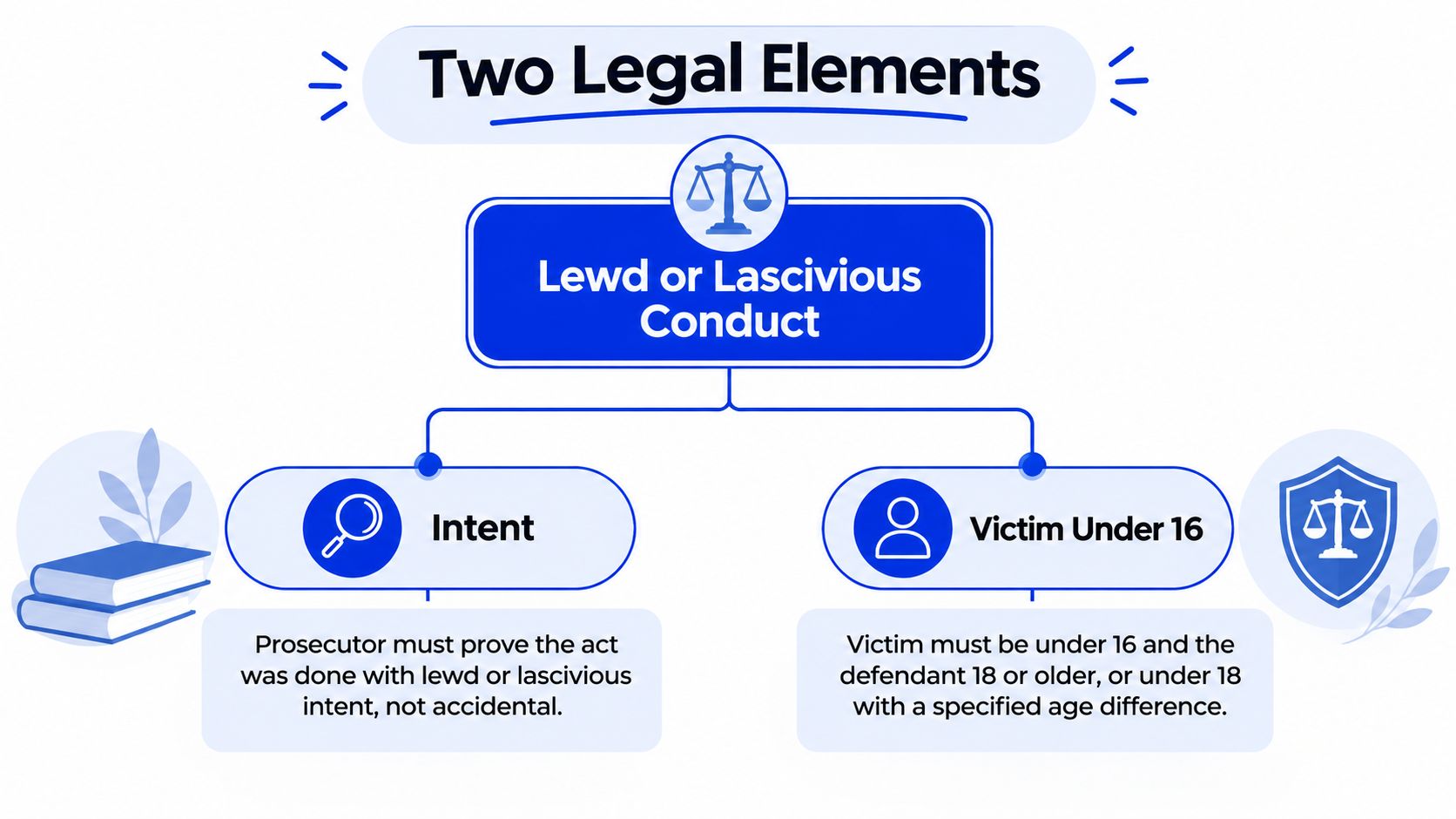
La viabilidad de una acusación por conductas lascivas u obscenas en Florida radica esencialmente en la acreditación de dos elementos de carácter concurrente: la conducta y la edad de la víctima. Si la Fiscalía no logra probar ambos extremos más allá de toda duda razonable, la acusación carece de sustento legal, independientemente de otros medios de defensa, solicitudes de exclusión de prueba o tachas de credibilidad de testigos.
El elemento conductual
Bajo el marco regulatorio de la sección 800.04 de las leyes de Florida, el Estado debe acreditar fehacientemente la comisión de un acto con connotación sexual tipificado por la norma. Esto comprende conductas tales como el contacto físico de carácter lascivo u obsceno con un menor de 16 años, la inducción o solicitación a un menor para cometer dicho acto, o la masturbación o exhibición intencional de los órganos genitales de manera obscena Estatuto de Florida 800.04. La ley no sanciona un comportamiento genéricamente inapropiado, sino una conducta que cumpla estrictamente con la definición típica del delito.
Por consiguiente, la estrategia fiscal suele enfocarse en la demostración del dolo o elemento subjetivo. Si se demuestra que el contacto fue de carácter fortuito, de índole médica, con fines de corrección disciplinaria u otra motivación ajena al propósito sexual, la teoría de cargo de la Fiscalía se desestima. Un contacto físico circunstancial en el hombro difiere sustancialmente de un tocamiento de carácter lascivo, del mismo modo que un diálogo equívoco no equivale a una inducción con fines sexuales.
El elemento de la edad
El segundo elemento esencial es la edad de la presunta víctima. En el marco legal penal de Florida bajo análisis, el límite de protección legal se fija en menores de 16 años. Este factor determina la calificación del tipo penal, pues una misma conducta delictiva deriva en consecuencias penales totalmente disímiles según la edad del sujeto pasivo. El estado de Kansas contempla una diferenciación análoga en su legislación sobre conductas lascivas, tipificando los hechos de manera distinta si el menor es mayor o menor de 16 años Estatuto del estado de Kansas sobre conducta lasciva y obscena.
Al analizar un informe policial o de investigación, resulta prioritario evaluar dos aspectos: si la conducta imputada reviste el carácter sexual exigido por el tipo penal y si la presunta víctima pertenece al grupo etario sujeto a protección especial. Estos constituyen los pilares de la imputación.
La labor de la defensa técnica penal se inicia desvinculando el impacto perjudicial del cargo de los elementos normativos del tipo. La existencia de una acusación alarmante no es prueba de culpabilidad; el Estado conserva la carga ineludible de probar el hecho imputado, la edad de la víctima y las circunstancias de ejecución delictiva de manera exacta.
Sinopsis de los cuatro delitos bajo la sección 800.04
A pesar de que el parte policial o informe de arresto emplee el término genérico de conducta lasciva u obscena, el Estatuto de Florida 800.04 establece distinciones sustanciales según la naturaleza de la acusación. La norma se estructura en distintos tipos penales independientes, cada uno provisto de su propio supuesto de hecho, reglas relativas a la edad y severidad de la pena aplicable. Es crucial comprender que una denominación penal genérica puede ocultar requerimientos probatorios sustancialmente diversos en sede judicial.
Comparativa de Delitos de Conducta Lasciva u Obscena según el Estatuto de Florida 800.04 | Conducta Típica | Grado Penal por Defecto | Criterio de Agravación |
|---|---|---|---|
Agresión física lasciva u obscena (battery) | Acto de naturaleza sexual o conducta sexual ilícita que involucra a un menor de edad, analizado en función de la edad y la intención | Por regla general, delito grave de segundo grado | Se eleva a delito grave de primer grado si el imputado cuenta con antecedentes penales por delitos específicos calificados Sinopsis del estatuto de Florida |
Abuso deshonesto o acoso lascivo u obsceno (molestation) | Contacto físico intencional de carácter sexual con un menor de edad, o la coacción o inducción al menor para que toque al imputado | Clasificado como delito grave, cuyo grado penal varía según la edad | La edad de la víctima y del imputado modifican la gravedad y la penalidad del delito |
Exhibición de órganos genitales o actos de masturbación realizados de manera obscena | Imputado habitualmente como delito grave (felony) | La exposición, la concurrencia de personas y el dolo específico determinan la gravedad del cargo | |
Conducta lasciva u obscena general | Contacto físico intencional, captación o exhibicionismo sexual que involucra a un menor de 16 años | Tipificado como delito grave (felony) | El acto específico ejecutado y la edad de la víctima determinan la aplicación de la subdivisión legal pertinente |
El análisis técnico de este estatuto se asemeja al examen minucioso de un catálogo de elementos normativos. La labor de la Fiscalía no se limita a imputar una conducta socialmente reprobable; tiene la obligación de calificar el hecho en la subdivisión legal exacta que corresponda a la conducta alegada, delimitando así los hechos que deberá probar en juicio.
Las mismas expresiones verbales pueden sustentar teorías de caso disímiles. Una acusación por tocamientos requiere una valoración probatoria distinta de una imputación por exhibicionismo, y una causa penal por solicitación o captación difiere de una fundada en contacto físico directo. Por este motivo, el estatuto procesal opera mediante clasificaciones autónomas, cada una de ellas dotada de elementos del tipo y consecuencias punitivas propias.
Los precedentes jurisprudenciales y la doctrina legal de Florida indican que estos procesos se concentran frecuentemente en tocamientos dirigidos a zonas corporales específicas, tales como los genitales, el ano, la ingle, los senos, la cara interna de los muslos o los glúteos, así como en la acreditación del dolo de excitar, satisfacer, abusar, humillar o degradar a la víctima Resumen del estatuto de Florida y debate sobre el tratamiento de la edad. Esto brinda a la defensa técnica penal un recurso procesal para desvirtuar la imputación: si los hechos alegados no se corresponden con la zona anatómica, la intención requerida o los rangos de edad exigidos por el tipo, la teoría de la Fiscalía pierde sustento jurídico.
Al correlacionar el pliego de cargos con el estatuto legal, la subdivisión del artículo invocada proporciona información más relevante que la mera designación del delito, revelando si la Fiscalía imputa un contacto físico, captación, exhibicionismo u otra modalidad de conducta sexual, determinando con precisión los hechos con relevancia jurídica en el proceso.
Sanciones, Dosimetría Penal y el Significado de la Puntuación
La primera interrogante de un cliente bajo investigación suele ser la gravedad de la pena aplicable. En el estado de Florida, la respuesta depende de la tipificación específica de la conducta, dado que estas imputaciones se persiguen penalmente como delitos graves (felonies). Esto reviste máxima trascendencia procesal, ya que una condena por delito grave compromete de manera directa la libertad individual, las oportunidades de empleo y los derechos civiles del individuo en un nivel drásticamente superior al de un delito menor.
La afectación de la pena según el grado del delito grave
La legislación penal de Florida clasifica el delito de agresión física lasciva u obscena (battery) como un delito grave de segundo grado, pudiendo agravarse a un delito grave de primer grado si concurre el antecedente de una condena previa por determinados delitos calificados Estatuto de Florida sobre agravación de agresión física lasciva u obscena. Esta previsión de agravación penal obligatoria fundamenta la necesidad de un análisis técnico preventivo del caso. La existencia de un historial delictivo puede elevar severamente los límites de la sanción.
El marco punitivo previsto en la legislación de Florida establece límites máximos de hasta 30 años de privación de libertad para delitos graves de primer grado, de hasta 15 años para delitos graves de segundo grado, y de hasta 5 años para los clasificados en tercer grado; asimismo, se contemplan multas pecuniarias de hasta $10,000 para los dos primeros grados y de hasta $5,000 para el tercer grado Infografía sobre dosimetría penal aplicable en Florida. Estos baremos representan el límite punitivo legal y no la pena aplicable de forma automática, puesto que la sanción final dependerá del puntaje resultante en la guía de sentencia (scoresheet), los hechos probados en la causa, y si el tribunal aprueba un acuerdo de resolución, impone prisión efectiva o determina otra sanción legal aplicable.
La trascendencia de la puntuación en la guía de sentencia
Los jueces en Florida no dictan sentencias de forma discrecional o aislada. El historial penal del acusado, el grado del delito imputado y los factores de agravación legal aplicables determinan la puntuación final dentro de la guía de sentencias penal. La defensa técnica penal debe evaluar de manera conjunta la imputación, los antecedentes penales del representado y la vía de acusación ejercida por la Fiscalía.
Un aspecto procesal estrechamente relacionado es la adjudicación formal de culpabilidad (adjudication of guilt), la cual puede alterar de forma permanente los efectos jurídicos a largo plazo de un acuerdo de culpabilidad o de un veredicto condenatorio, aun cuando la pena de prisión inmediata parezca similar. Para una explicación detallada sobre esta trascendental distinción jurídica, consulte nuestra guía sobre las consecuencias de la adjudicación de culpabilidad en Florida.
Asimismo, es habitual confundir los límites penales máximos establecidos por la ley con el desarrollo previsible del proceso penal. La pena máxima estipulada señala la potestad sancionatoria del tribunal, pero no predetermina la petición concreta de la Fiscalía, la solidez probatoria del caso ni la viabilidad de lograr una reducción de cargos o un sobreseimiento con anterioridad a la presentación formal de la acusación.
Registro de Delincuentes Sexuales y otras consecuencias de por vida
Los efectos jurídicos y personales derivados de una condena por conductas lascivas u obscenas no concluyen con la finalización de la audiencia judicial o el cumplimiento de la condena. Frecuentemente, el perjuicio más severo inicia con posterioridad, al verse afectada de manera permanente la libertad de tránsito, residencia, el acceso al empleo y la inclusión de datos personales en registros públicos de libre acceso.
Las directrices oficiales de las agencias de la ley en el estado identifican la sección 800.04 como una de las infracciones penales que imponen la obligación legal de inscribirse en el Registro de Delincuentes Sexuales Directrices de registro de delincuentes sexuales bajo las leyes de Florida. Esta medida resulta de extrema gravedad, por cuanto la obligación de registro persiste durante décadas tras haberse extinguido la pena privativa de libertad. No constituye únicamente una sanción penal, sino un estatus público permanente que incide en verificaciones de antecedentes, actividades laborales vinculadas a entornos educativos y en el desarrollo de la vida social ordinaria. Una resolución condenatoria puede asimismo desencadenar consecuencias accesorias vinculadas a la adjudicación de culpabilidad, razón por la cual la redacción jurídica del acta de aceptación de cargos o del veredicto penal resulta de vital importancia.
Efectos colaterales más allá del registro público
Las repercusiones de este tipo de condenas se extienden a múltiples esferas de la vida del sentenciado, manifestándose en ámbitos que el imputado no prevé al inicio del proceso penal.
Ámbito laboral: El personal docente, entrenadores deportivos, profesionales del sector salud y demás trabajadores sujetos a licencias regulatorias o colegiaturas pueden enfrentar la inhabilitación profesional o la pérdida definitiva del empleo.
Ámbito habitacional: El registro de carácter público limita severamente el acceso a arrendamientos residenciales y genera la obligación de informar sobre el estatus penal a los propietarios.
Derecho de familia: Los procesos de guarda y custodia, así como los regímenes de visitas de menores de edad, adquieren una alta complejidad jurídica tras una condena por delitos de naturaleza sexual.
Ámbito migratorio: Los ciudadanos extranjeros quedan expuestos a consecuencias migratorias severas, incluyendo la deportación o inelegibilidad de estatus, de forma independiente a la pena de prisión impuesta.
Libertad condicional y acuerdos de resolución: La existencia de una condena incide de forma directa en el control de cualquier proceso de supervisión o libertad vigilada que se encuentre activo.
La calificación jurídica del delito determina el criterio de valoración que emplearán los tribunales y los organismos gubernamentales en el futuro, por lo que todo expediente debe ser abordado desde su inicio analizando de forma conjunta la defensa penal y las consecuencias colaterales de la condena.
Existe el error frecuente de asumir que un acuerdo de culpabilidad que evite el ingreso en prisión resuelve la situación procesal de forma definitiva. En múltiples supuestos, esto no es así. Si la resolución judicial impone la obligación de registro de delincuentes de por vida, el perjuicio personal resulta considerablemente mayor de lo previsto al momento de valorar la propuesta de la Fiscalía.
Defensas procesales comunes y debilidades probatorias
Las acusaciones fundamentadas en conductas lascivas u obscenas pueden parecer insuperables en un inicio, en particular cuando se sustentan en registros de comunicaciones digitales o en denuncias extemporáneas. No obstante, estos procesos penales suelen fundarse en elementos probatorios de alta fragilidad, requiriendo de la defensa técnica penal un riguroso análisis de idoneidad sobre la hipótesis del Estado.
Vulnerabilidades en la teoría del caso de la Fiscalía
Un factor de controversia frecuente radica en la plena identificación del autor. El registro de una captura de pantalla no constituye prueba inequívoca de la autoría del mensaje, la posesión efectiva del dispositivo móvil, ni descarta la manipulación o alteración de la comunicación digital. Asimismo, la determinación de la edad de la presunta víctima ofrece margen de defensa si existen inconsistencias registrales o si la edad se sitúa en los límites que delimitan la agravación penal.
El dolo específico representa otro elemento de obligada contradicción. La tipicidad exige constatar que la conducta se ejecutó con ánimo lascivo u obsceno, y no bajo una percepción equívoca o retrospectiva del hecho. Un acto de naturaleza estrictamente médica, un contacto físico accidental o una comunicación malinterpretada no reúnen los elementos requeridos para ser calificados como actos de significación sexual.
Criterio de defensa práctica: Un caso procesal penal de gran impacto emocional puede resultar sumamente débil en el plano estrictamente probatorio. La función de la defensa técnica consiste en discernir entre la gravedad social de la imputación y la suficiencia de las pruebas de cargo.
Pruebas sometidas a riguroso escrutinio legal
Declaraciones e interrogatorios: Si la toma de declaración por parte de los agentes policiales se realizó vulnerando las advertencias legales pertinentes o bajo un régimen de detención ilegal, es viable promover la exclusión probatoria por vía de supresión. Véase la doctrina relativa a las advertencias Miranda en el proceso penal de Florida para conocer las reglas aplicables.
Prueba digital: Las transmisiones de mensajería de texto, las capturas de pantalla y los volcados de datos telefónicos suelen presentarse de manera fragmentaria, descontextualizada o con riesgo de alteración.
Cadena de custodia: Si la Fiscalía de Florida incurre en fallas al acreditar la trazabilidad de los elementos de prueba desde el momento de su incautación hasta su incorporación al juicio, se compromete la fiabilidad y la admisibilidad de las pruebas Doctrina general sobre la cadena de custodia de la prueba.
Valoración del testimonio: Las denuncias presentadas de forma tardía, las versiones contradictorias, los móviles de animadversión o los antecedentes de falsas declaraciones debilitan la teoría de cargo de la Fiscalía.
Asumir que toda denuncia penal es sólida por la gravedad de los hechos imputados constituye un grave error estratégico. Las imputaciones penales exigen la aportación de medios de prueba lícitos y suficientes, susceptibles de ser desvirtuados en juicio por la defensa técnica en los condados de Broward, Miami-Dade y Palm Beach.
What to Do After an Arrest or Investigation in South Florida
Las primeras 72 horas del proceso penal son cruciales. Si ha sido contactado por un agente de investigación, si se ha librado una orden de arresto en su contra o si ha sido interrogado por agentes policiales en Fort Lauderdale o en cualquier localidad del Sur de la Florida, la actuación más adecuada consiste en evitar la aportación de elementos de convicción que puedan ser utilizados por la Fiscalía.
Medidas de protección urgentes
Ejerza su derecho a guardar silencio. Absténgase de rendir explicaciones o declaraciones ante investigadores, autoridades escolares o administrativas.
Rechace comparecencias o entrevistas voluntarias. Una comparecencia calificada de "rutinaria" suele ser registrada y empleada como una declaración de cargo.
Conserve los dispositivos electrónicos en su estado original. No elimine archivos de mensajería ni entregue contraseñas o claves de acceso sin la asesoría de su defensor técnico.
Identifique posibles testigos de descargo. Registre de forma detallada la identidad de personas que presenciaran los hechos, así como las circunstancias de tiempo y lugar.
Designe un defensor técnico penal a la brevedad. La intervención oportuna de un abogado defensor local permite iniciar gestiones de descargo con anterioridad a la formalización de la acusación.
Es un error asumir que la fase de investigación carece de consecuencias hasta que se materialice un arresto formal. En esta tipología delictiva, los agentes policiales consolidan el expediente de cargo previamente. Al momento de formalizarse la acusación, el Estado suele contar con extracciones digitales de dispositivos, declaraciones de testigos y resultados de órdenes de registro judiciales.
Estrategia y actuación que debe ejercer la defensa técnica
Una defensa técnica sólida exige realizar un análisis autónomo de las imputaciones, la trazabilidad de los datos digitales y la exacta tipificación penal que pretende ejercer la Fiscalía. Asimismo, requiere entablar comunicación oportuna con el fiscal asignado, promover incidentes de exclusión probatoria y verificar de forma estricta si las pruebas aportadas sustentan la tipicidad del delito.
Contar con asesoría legal con experiencia en fiscalía penal aporta una perspectiva estratégica idónea para prever los criterios de imputación del Estado y detectar deficiencias procesales en el expediente de cargo. Esta asistencia adquiere especial relevancia en el Sur de la Florida, donde los casos por conductas lascivas u obscenas suelen tramitarse con celeridad, generando una alta presión procesal sobre el investigado antes de que la defensa técnica pueda examinar la licitud de las pruebas.
Preguntas frecuentes sobre cargos por conductas lascivas u obscenas
¿Cuál es la duración del registro de delincuente sexual tras una condena bajo la sección 800.04 de Florida?
La duración está determinada por la calificación del delito objeto de condena y el tipo penal aplicable. Para la mayoría de los sentenciados, la obligación legal de registro se extiende por décadas, constituyendo una carga personal de carácter vitalicio. La condena a prisión y la medida accesoria de inscripción en el registro público de delincuentes sexuales constituyen obligaciones jurídicas de carácter independiente; la imposición de una pena de prisión breve no exime del cumplimiento de la obligación de registro.
¿Se aplican las mismas consecuencias penales a menores de edad que a adultos?
La resolución de esta cuestión procesal depende de la edad del imputado y del apartado del tipo penal invocado por la Fiscalía. La legislación de Florida prevé un tratamiento diferenciado en atención a la minoría de edad del procesado, por lo que las causas penales seguidas contra menores no se tramitan bajo las mismas reglas procesales de los adultos, tal como se detalla en las disposiciones de Florida sobre tratamiento diferenciado por edad. No obstante, las resoluciones en el ámbito de la justicia juvenil conllevan consecuencias severas y de largo alcance que inciden en el futuro del menor más allá del proceso jurisdiccional.
¿Es viable solicitar el sellado o la eliminación del expediente penal?
Esta posibilidad jurídica está sujeta a restricciones. La existencia de una condena por determinados tipos penales impide la concesión de este beneficio legal, por lo que la viabilidad del trámite no debe analizarse de forma abstracta, sino en función de la resolución definitiva de la causa. Si el proceso penal concluyó sin una declaración de culpabilidad o condena formal, la solicitud de sellado o eliminación del expediente penal puede ser procedente según los cargos imputados y la resolución de la causa. El estado procesal del expediente es determinante.
¿Qué acciones proceden ante una orden de arresto activa o una investigación en curso?
La defensa del investigado debe ejercerse sin esperar a que se ejecute la orden de arresto de forma imprevista. Ante una orden de detención vigente o una investigación policial en curso, la oportuna intervención de un defensor técnico penal permite asegurar elementos de prueba útiles para la defensa, salvaguardar derechos fundamentales y mitigar las consecuencias procesales con anterioridad a la comparecencia inicial ante el tribunal.
¿El término legal "obsceno" o "lascivo" tiene el mismo alcance en todos los casos?
No. En el lenguaje de uso común, dichos conceptos pueden prestarse a interpretaciones subjetivas o generales; sin embargo, en el derecho penal, su aplicación se delimita estrictamente conforme a las exigencias normativas del estatuto aplicable y los hechos específicos que la Fiscalía pretenda acreditar. Por tal motivo, la determinación exacta de la sección legal imputada resulta de la mayor relevancia procesal, ya que delimita el grupo etario, la conducta típica y el elemento subjetivo que el Estado tiene la obligación de probar.
Si usted enfrenta una investigación o acusación penal por conductas lascivas u obscenas en Broward, Fort Lauderdale, Miami-Dade, Palm Beach, o en cualquier circunscripción del Sur de la Florida, no permita que la versión fáctica de la Fiscalía se consolide sin contradicción de parte. Póngase en contacto con Ticket Shield, PLLC para concertar una consulta jurídica de carácter estrictamente confidencial. Cuente con un equipo de defensa técnica penal capacitado para controvertir la acusación del Estado, proteger sus garantías constitucionales y actuar con la debida celeridad procesal antes de que el caso comprometa de manera irreversible su libertad.